
Stone Garden
- Medium:
- Mokuhanga (Japanese woodblock)
- Image courtesy of
- Saru Gallery
Description
The title points to the karesansui tradition of dry landscape gardens, in which raked gravel and carefully positioned stones evoke water and mountains without using either. Such gardens, associated with Zen monasteries including Ryoan-ji and Daitoku-ji in Kyoto, present compositional qualities well-suited to mokuhanga: the planar field of raked sand becomes a flat tonal area, while stones read as concentrated points of weight against it. A print of this subject would likely employ restrained color, perhaps limited to muted grays, ochres, and the warmer tones of moss or a surrounding wall. Bokashi gradation could render the textural ripples of raked gravel, while the stones themselves might be carved with visible grain to suggest their weathered surface. The subject reflects a current within twentieth-century Japanese printmaking that returned to traditional spaces of contemplation as worthy subjects, paralleling the work of artists such as Asano Takeji or Tokuriki Tomikichiro who depicted temple gardens as distinctly Japanese motifs.
More Prints by Nakagawa Isaku
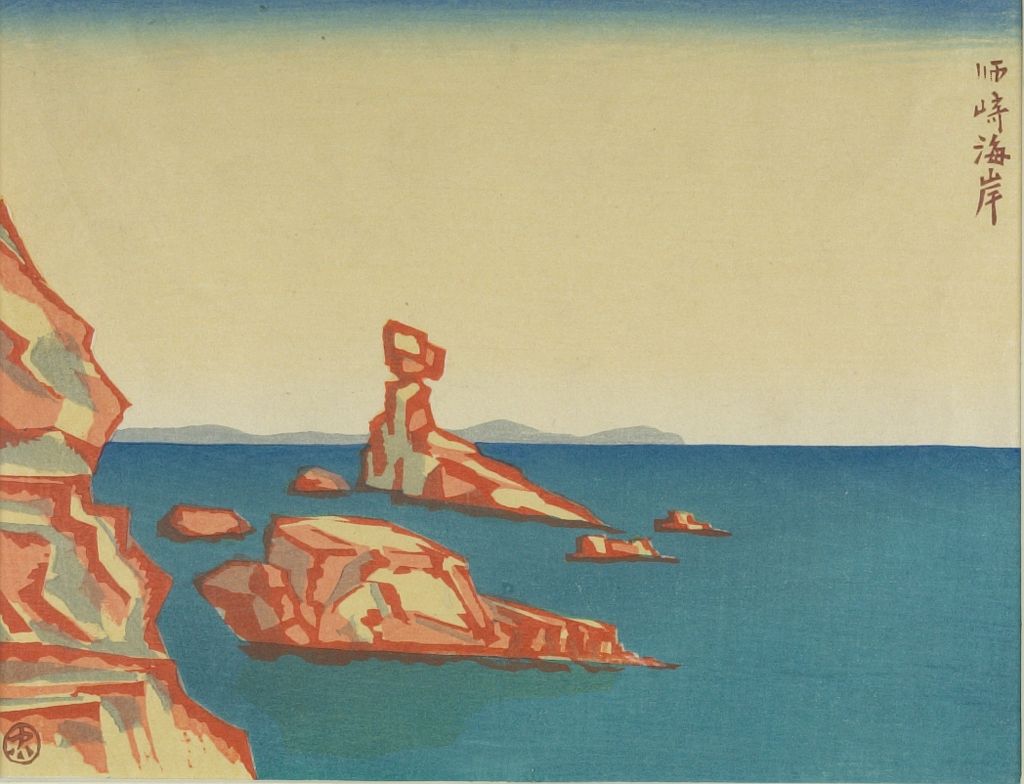


More Gardens Prints
![[Garden of] Taj Mahal, No. 1 (Taji Maharu no niwa, dai ichi) by Hiroshi Yoshida](https://www.artic.edu/iiif/2/230993a7-d4f0-c979-c267-127d48e1ef1c/full/843,/0/default.jpg)
[Garden of] Taj Mahal, No. 1 (Taji Maharu no niwa, dai ichi)
Taji Maharu no niwa, dai ichi
1931
Color woodblock print; oban

Kiyozumi Garden in Moonlight
January 1938
Woodblock print, ink and color on paper

Moon over Kiyosumi Garden (Tsuki no Kiyosumien)
1938
Color woodblock print; oban
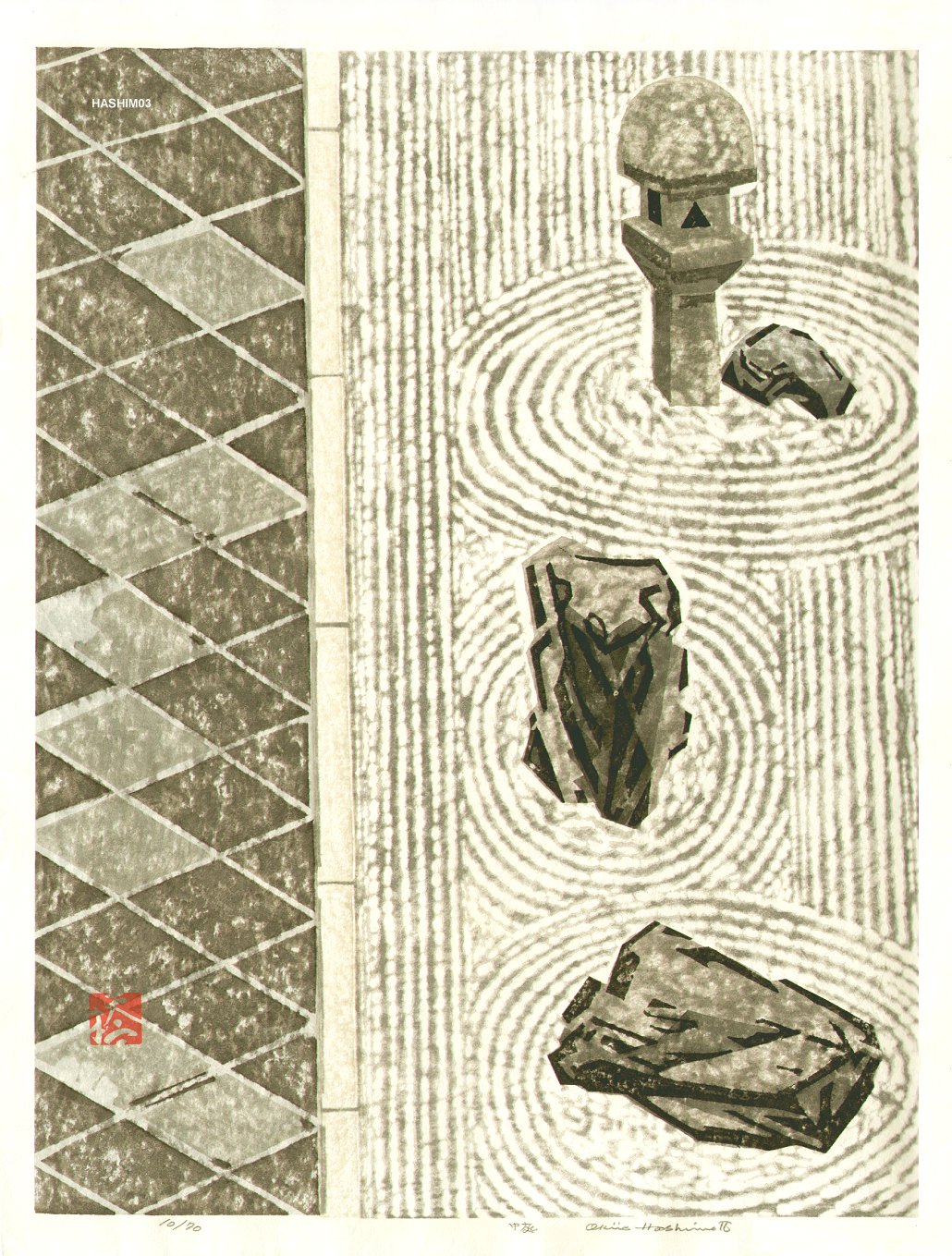
Rock garden
10/70, 1966
Woodblock print
Frequently Asked Questions
Stone Garden was created by Nakagawa Isaku (中川伊作).
Stone Garden depicts gardens.