
Moss Garden
by Ray Morimura
- Medium:
- Mokuhanga (Japanese woodblock)
- Image courtesy of
- Hanga Ten
Description
Saihoji, popularly known as Kokedera or the moss garden, is a Rinzai Zen temple in western Kyoto whose grounds host more than 120 species of moss spreading across the ground, stones, and the roots of maples surrounding a heart-shaped pond. Morimura's print likely treats the moss as a single tonally varied field of greens, carved with fine repeated marks that register the cushioned undulation of the surface, while stepping stones and tree trunks impose a darker geometry across it. Multiple shades of green printed from separate blocks build the depth, with bokashi gradations suggesting dappled light filtering through the maple canopy. Moss is a quintessentially Japanese aesthetic subject tied to wabi-sabi and the patina of time, and Morimura's treatment fits within his broader garden series that includes Kenrokuen, Ryoanji's dry garden, and the strolling gardens of Kyoto. The print exemplifies his ability to make ground itself, rather than building or tree, the principal compositional event.
More Prints by Ray Morimura



More Gardens Prints
![[Garden of] Taj Mahal, No. 1 (Taji Maharu no niwa, dai ichi) by Hiroshi Yoshida](https://www.artic.edu/iiif/2/230993a7-d4f0-c979-c267-127d48e1ef1c/full/843,/0/default.jpg)
[Garden of] Taj Mahal, No. 1 (Taji Maharu no niwa, dai ichi)
Taji Maharu no niwa, dai ichi
1931
Color woodblock print; oban

Kiyozumi Garden in Moonlight
January 1938
Woodblock print, ink and color on paper

Moon over Kiyosumi Garden (Tsuki no Kiyosumien)
1938
Color woodblock print; oban
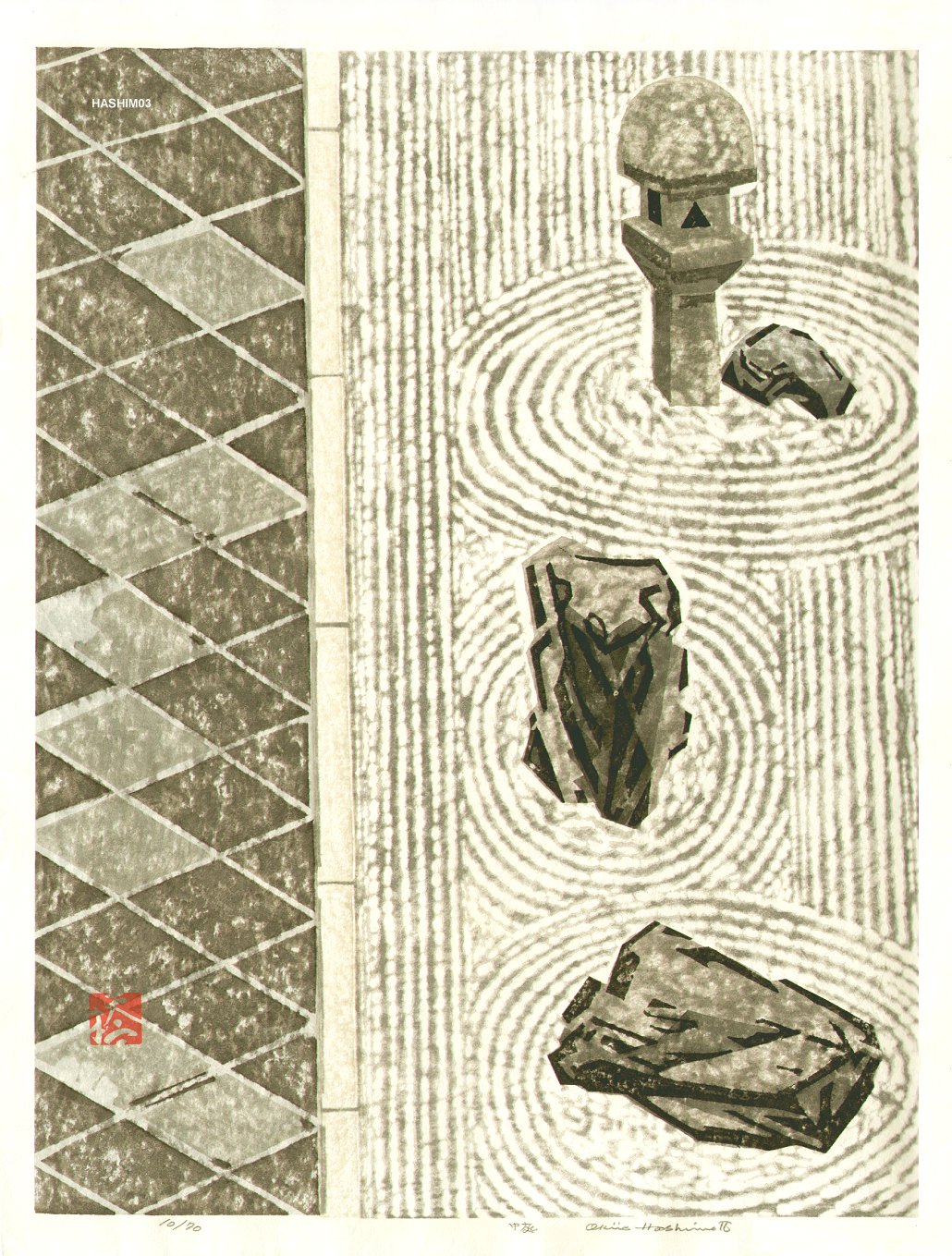
Rock garden
10/70, 1966
Woodblock print
Frequently Asked Questions
Moss Garden was created by Ray Morimura (森村玲).
Moss Garden depicts gardens.