Waterfall in the Cascades
- Date:
- 1906
- Medium:
- Hanging scroll; ink and colors on silk
Description
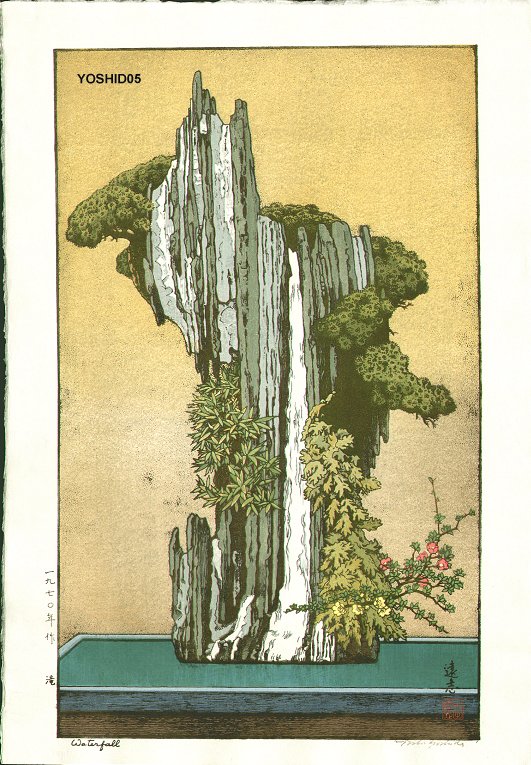
From Hokkai's series of one hundred landscape paintings completed around 1906, Waterfall in the Cascades records the painter's impression of the steep, glaciated mountains of the American Pacific Northwest, which he had seen during travels associated with the 1904 Louisiana Purchase Exposition. The composition uses the tall, narrow proportions of the traditional Chinese hanging scroll to dramatize the vertical fall of water through a deep gorge of dark, fissured rock. Hokkai handles the cliffs with broad, dynamic brushstrokes that simultaneously evoke Nanga literati convention and a geologist's reading of jointed igneous stone, while the water itself is left as a clear band of unpainted silk, its movement implied by the surrounding ink rather than described directly. Scattered conifers cling to the ledges in carefully observed clusters whose silhouettes mark a species different from the pines of any Japanese mountain. The painting is from a group of ninety-five works donated to the Freer Gallery of Art in 1976 by the Osaka industrialist Taniguchi Toyosaburō, and it is among the most striking expressions of Hokkai's distinctive fusion of literati brushwork with scientifically informed landscape observation.
More Prints by Takashima Hokkai
Early Spring at a Southern Lake
1906
Hanging scroll; ink and colors on silk
Mountains and River (scroll I)
Meiji era, early 20th century
Hanging scroll; ink and colors on silk
Mountains and River (scroll II)
Meiji era, early 20th century
Hanging scroll; ink and colors on silk
Mountain Village in Mist
Meiji era, early 20th century
Hanging scroll; ink and colors on silk
More Waterfalls Prints


Frequently Asked Questions
Waterfall in the Cascades was created by Takashima Hokkai (高島北海) in 1906.
Waterfall in the Cascades depicts waterfalls and autumn foliage.