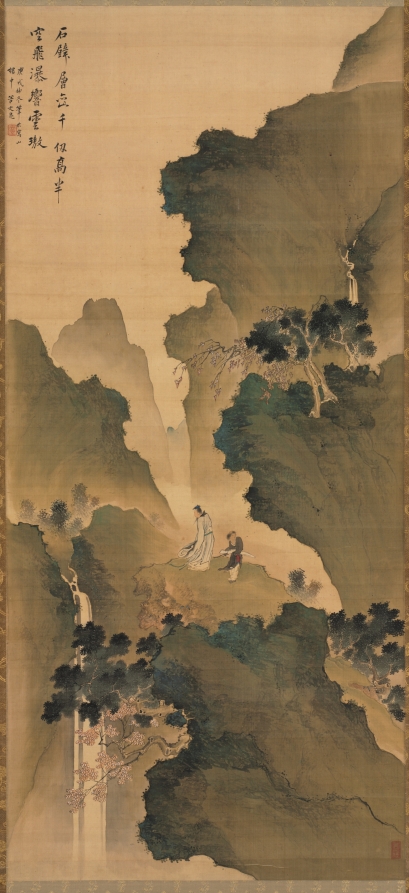
Gazing at a Waterfall
観瀑図
by Tani Bunchō
- Date:
- 1790
- Medium:
- Hanging scroll; ink and color on silk
- Source:
- Cleveland Museum of Art
Description
Gazing at a Waterfall (観瀑図, 1790) is a hanging scroll in ink and color on silk by Tani Bunchō (谷文晁, 1763-1841), held in the Cleveland Museum of Art (accession 1972.16). Painted when Bunchō was twenty-seven, the scroll belongs to a classical literati subject — the scholar in a mountain landscape contemplating a cascading waterfall — that had been a staple of Chinese painting since the Song dynasty and that Edo nanga painters adopted as a vehicle for the reclusive, philosophical mood that defined bunjinga taste. The composition typifies Bunchō's early mature manner: an upright vertical structure organized around the central plunge of water, scholar and attendant placed small in the lower foreground to give the rocks and pines their full scale, and a brushwork repertoire — alternating dry texturing strokes and wet ink washes — that draws explicitly on Ming and early Qing landscape models he had studied through copies circulating in Edo collections. The silk ground, the controlled color (ink with restrained green and ochre), and the painting's formal hanging-scroll mounting place it firmly within the elite literati commission practice that defined Bunchō's career, in this case predating by two years his appointment as official painter to Matsudaira Sadanobu. The Cleveland source provides the firm 1790 date and the dimensions (painting 112.5 × 51.1 cm), anchoring the work to the first decade of his fully independent career as a bunjinga master.
More Prints by Tani Bunchō
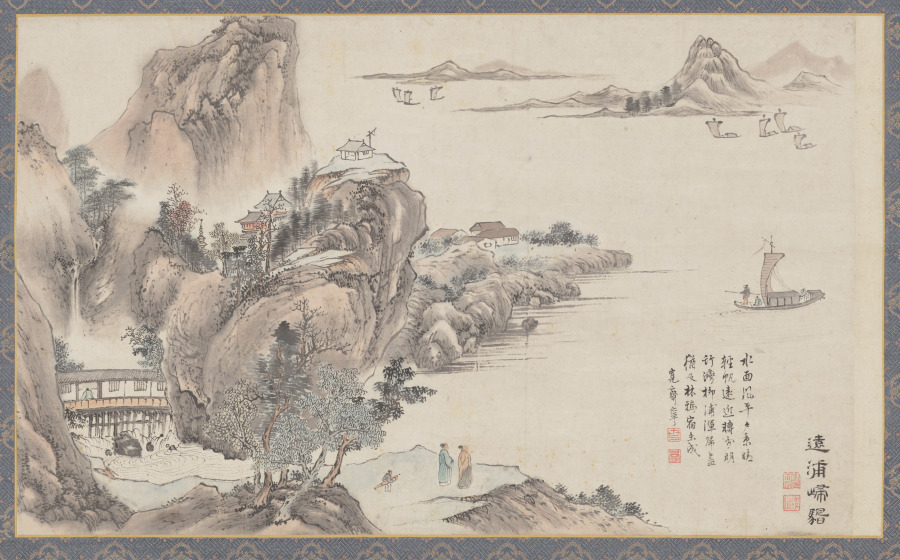
Returning Sails off a Distant Shore, from Eight Views of Xiao-Xiang
瀟湘八景・遠浦帰帆
1788
Album leaf remounted as a hanging scroll; ink and color on paper
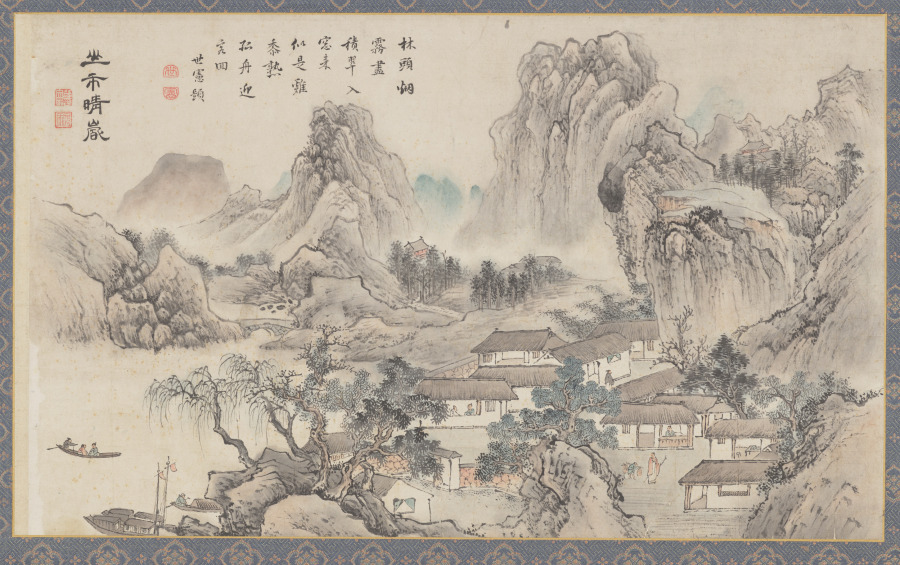
Mountain Market in Clearing Mist, from Eight Views of Xiao-Xiang
瀟湘八景・山市晴嵐
1788
Album leaf remounted as a hanging scroll; ink and color on paper

Abidingly Quiet Beneath the Frost, Design Eighteen from Shazanrō Picture Book
写山楼画譜
1816
Woodblock-printed book; ink and color on paper
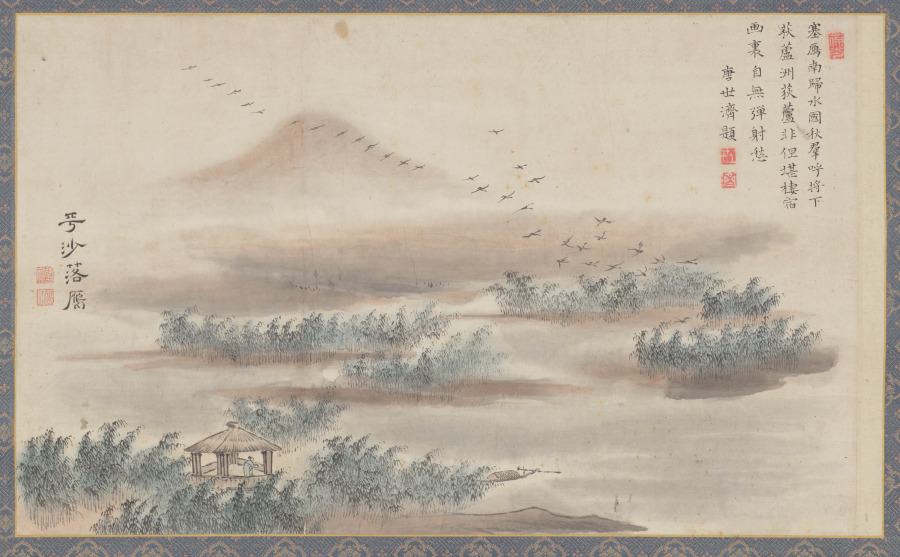
Wild Geese Descending on a Sandbar, from Eight Views of Xiao-Xiang
瀟湘八景・平沙落雁
1788
Album leaf remounted as a hanging scroll; ink and color on paper
More Waterfalls Prints


Frequently Asked Questions
Gazing at a Waterfall (観瀑図) was created by Tani Bunchō (谷文晁) in 1790.
Gazing at a Waterfall depicts waterfalls and autumn foliage.