
Village in spring
- Source:
- ukiyo-e.org
Description
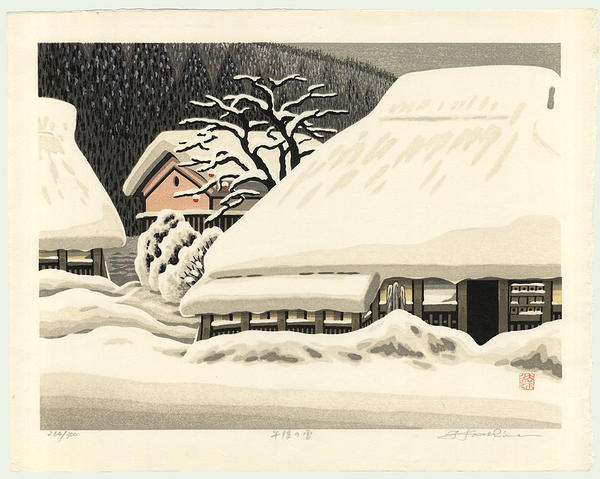
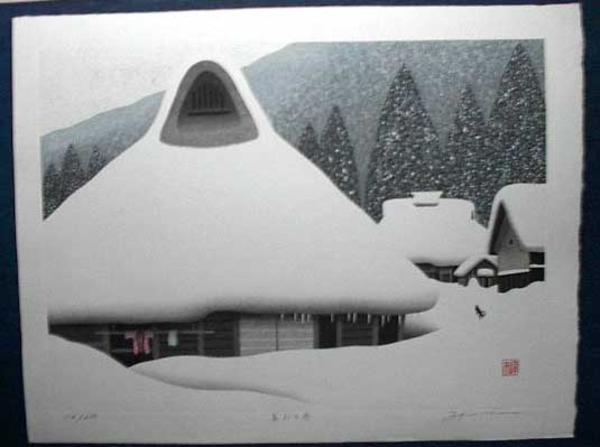
Village in Spring is a Japanese woodblock print by Tatsuo Kawashima, a sosaku-hanga (creative print) artist whose rural landscapes form a recognisable strand within the postwar self-carved, self-printed tradition. In this composition Kawashima turns from the snow-bound scenes that occupy much of his catalog to a settlement emerging into the warmer half of the year, with the architecture of clustered houses set against the softer textures of returning vegetation. The print is recorded through ukiyo-e.org, which gathers Japanese print holdings from collector and institutional sources; the entry preserves the image without a firm date, situating it within Kawashima's broader village series rather than tying it to a specific exhibition year. In keeping with sosaku-hanga practice, the artist himself designed the image, cut the blocks, and pulled the impression, so the visible grain, registration, and slight irregularities of inking are intentional traces of a single hand at work. Stylistically the print uses the same vocabulary as Kawashima's winter views — broad planes of colour, simplified roof geometry, and a tight, almost diagrammatic arrangement of buildings — but recasts it in a lighter key, with greens, ochres, and pale skies replacing the muted greys of cold weather. As a Japanese woodblock print it stands within a long lineage that runs from Edo-period ukiyo-e through the shin-hanga revival to the sosaku-hanga movement of the mid-twentieth century, and Kawashima's contribution is unmistakably of that final, modernist phase. Village in Spring rewards quiet looking: the cluster of houses reads first as a pattern, then as a community, and finally as a record of a place observed with affection over many seasons.
More Prints by Tatsuo Kawashima


More Spring Prints


Frequently Asked Questions
Village in spring was created by Tatsuo Kawashima (川島達雄).
Village in spring depicts spring.