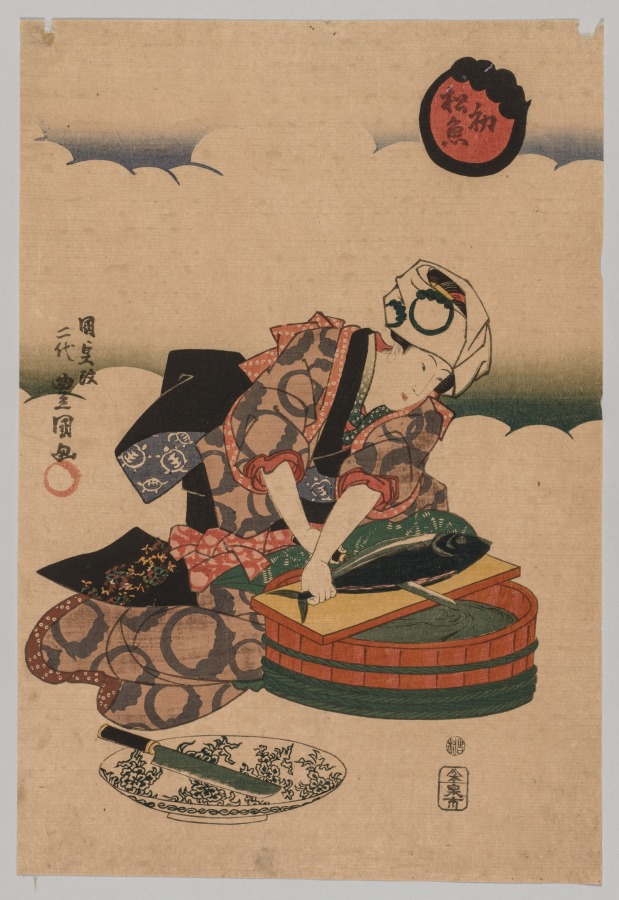
First Bonito of the Year
- Date:
- 1844–48
- Medium:
- color woodblock print
- Source:
- Cleveland Museum of Art
Description
First Bonito of the Year, a Tempo-era Edo ukiyo-e by Utagawa Kunisada dated 1844 in the Cleveland Museum of Art collection, is a genre print celebrating the hatsu-gatsuo, the first bonito of the season, one of the most ritualized markers of early summer in Edo. Edoites prized hatsu-gatsuo to such a degree that the fish became a near-religious commodity in May, fetching extravagant prices and entering proverb, senryu poetry, and ukiyo-e alike. Kunisada's design centers on a beauty - or sometimes a pair of figures - encountering the first bonito, with a fishmonger or kitchen scene supplying the context. Such bijinga linked the elegance of contemporary fashion with the seasonal calendar that organized Edo cultural life. The 1844 date places the print just after the Tempo Reforms, which had constrained erotic and luxurious print subjects and pushed publishers toward landscape, genre, and seasonal compositions; bonito subjects fit comfortably within that permissible space. Kunisada, by then Toyokuni III, refines the figural type into his late bijinga formula, with elongated faces and saturated, patterned robes. The Cleveland impression preserves the polychrome printing typical of mid-1840s Edo: indigo blues, soft yellows, and the deep reds that the print's audience expected. As both a bijinga and an example of fuzoku-ga, the print contributes to our visual record of Edo seasonal culture and to the documentary value of nineteenth-century ukiyo-e in capturing the rhythm of urban life.


