Portrait of the Sumo Wrestler Ikezuki Geitazaemon
- Date:
- c. 1845
- Medium:
- Color woodblock print
- Source:
- Art Institute of Chicago
Description
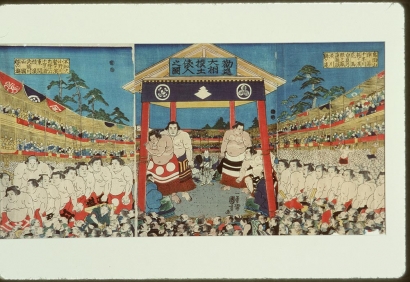
Utagawa Kunisada designed this portrait of the sumo wrestler Ikezuki Geitazaemon around 1840, an unusually direct entry into the sumo-e genre from an artist usually identified with yakusha-e and bijinga. Sumo prints occupied a smaller commercial niche within Edo ukiyo-e than kabuki portraits but obeyed many of the same conventions, with named stars, fan loyalties, and an appetite for likenesses that could be bought in the streets near tournament venues. Kunisada, soon to be known as Toyokuni III, brings to Geitazaemon the same close observation he applied to leading actors: the wrestler's broad torso fills the sheet, the topknot is drawn precisely, and the face is individuated rather than typed. The artist exploits the keyblock and color registration of Edo woodblock printing to differentiate skin tones, the dark printed band of the mawashi belt, and the textured fabrics of any accompanying costume elements. Because sumo stars often appeared alongside actors at festival benefits and in cross-disciplinary entertainment culture, a Kunisada portrait of a wrestler functioned within the same celebrity economy that drove his theatrical output. The Art Institute of Chicago's holding preserves this sheet with documentation grounding it in its production decade, offering a window into the parts of Edo ukiyo-e that lay just outside the artist's central preoccupations but still drew on his unmistakable design vocabulary.