Sumō Wrestler Koyanagi Tsunekichi from Edo
- Date:
- 1843-46
- Medium:
- Source:
- Victoria and Albert Museum
Description
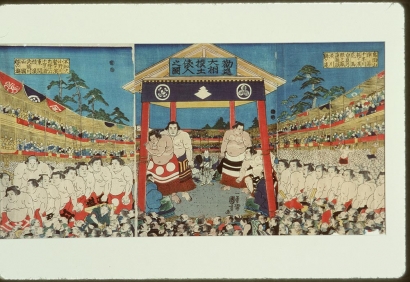
Sumō Wrestler Koyanagi Tsunekichi from Edo, designed by Utagawa Kunisada in 1843, belongs to the sumō-e tradition, a specialized branch of Edo ukiyo-e that documented the celebrities of the professional sumo circuit. Koyanagi Tsunekichi was an actual wrestler of the period, and Kunisada's portrait participates in the same star-system logic that drove his far more numerous yakusha-e prints of kabuki actors: a single recognizable figure presented frontally, identified by name cartouches, intended for fans who followed the tournaments held at Edo's main shrines. The 1840s were a difficult moment for the print trade in Edo. The Tenpō Reforms of 1841-43 restricted depictions of actors and courtesans on luxury grounds, which is one reason sumō subjects, treated as morally acceptable, remained available to designers like Kunisada during these years. The wrestler's massive physique fills the sheet, and the keshō-mawashi (ceremonial apron) would have been printed with rich color and embossing to convey the gravity of the rikishi's professional standing. The Victoria and Albert Museum holds this impression (museum number O419305) as part of its substantial Kunisada collection. Beyond celebrity portraiture, the print is a document of how Edo's commercial culture sustained itself through regulatory pressure by shifting attention from one set of approved heroes to another, and Kunisada's role as the most prolific designer of his generation made him the natural choice for publishers needing reliable, fashionable images of sporting heroes.