Actor Ichimura Uzaemon 12th (One of Three Kabuki Actors)
- Date:
- Late Edo period, circa 1847-1852
- Medium:
- Right panel from an ukiyo-e woodblock-printed "ōban" triptych; ink and color on paper
- Source:
- Harvard Art Museums
Description
Actor Ichimura Uzaemon 12th, one of three kabuki actors in a related Harvard Art Museums set, is an Edo ukiyo-e actor print by Utagawa Kuniyoshi (1797-1861) dated 1847. Ichimura Uzaemon XII (1812-1851) was a leading kabuki performer of the mid-nineteenth century and the proprietor of the Ichimura-za theater; portraits of him sold strongly in the print market, where actor prints (yakusha-e) formed one of the great pillars of the Edo ukiyo-e business alongside Kuniyoshi's celebrated warrior prints. The 1847 date places the work just before the Kaei reforms of theatrical depiction tightened, and shows Kuniyoshi at the height of his powers as a designer of actor portraits. Although his international reputation rests mainly on his warrior prints, Kuniyoshi was a thoroughly trained Utagawa-school designer, having studied under Utagawa Toyokuni I, and his actor prints participate in the same long tradition that Toyokuni I and Kunisada had defined. Kuniyoshi's contribution to the genre is often distinguished by an unusually strong sense of physical individuality: he tends to give his actors a sharper psychological focus and a more grounded body than some of his competitors, qualities that suited the heroic roles in which Ichimura Uzaemon XII frequently appeared. The Harvard Art Museums record the print as one of a group of three kabuki actor portraits acquired together, and the description here follows the museum's documentation of the actor's name, the date, and Kuniyoshi's authorship without elaborating on specific role or production details beyond what is recorded.
More Prints by Utagawa Kuniyoshi
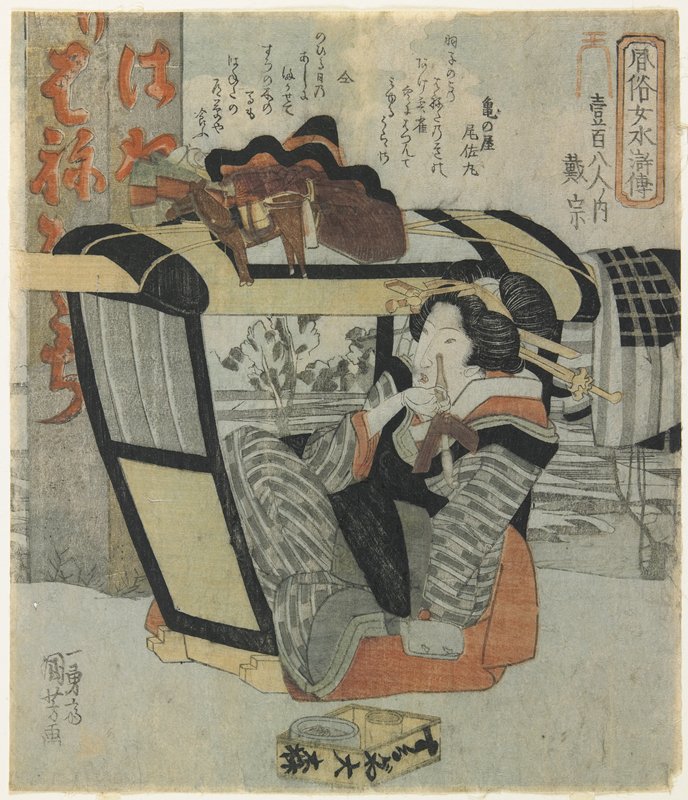
Woman as the Hero Taisō in Palanquin Holding a Pipe
c. 1830
Woodblock print (surimono), ink and color on paper

Yan Qing (Roshi Ensei), from the series "One Hundred and Eight Heroes of the Popular Water Margin (Tsuzoku Suikoden goketsu hyakuhachinin no hitori)"

Poem by Abe no Nakamaro, from an untitled series of One Hundred Poems by One Hundred Poets

Hu Sanniang (Ko Sanjo Ichijosei), from the series "One Hundred and Eight Heroes of the Popular Water Margin (Tsuzoku Suikoden goketsu hyakuhachinin no hitori)"
Frequently Asked Questions
Actor Ichimura Uzaemon 12th (One of Three Kabuki Actors) was created by Utagawa Kuniyoshi (歌川国芳) in Late Edo period, circa 1847-1852.