Actors as the Sixteen Arhats (Mitate: Jūroku Rakan)
- Date:
- Late Edo period, 19th century
- Medium:
- Center panel(?) from an ukiyo-e woodblock-printed "oban" triptych(?); ink and color on paper
- Source:
- Harvard Art Museums
Description
Actors as the Sixteen Arhats (Mitate: Jūroku Rakan), catalog-dated 1867 in the Harvard Art Museums, is a print associated with Utagawa Kuniyoshi that translates the Buddhist iconographic tradition of the sixteen rakan (arhats, enlightened disciples of the Buddha) into a parodic format featuring kabuki actors. The mitate (analogical) print was a popular Edo ukiyo-e genre, in which contemporary figures—often actors or beauties—stood in for revered religious or classical subjects, allowing the artist to play across the boundary between sacred imagery and popular culture. Kuniyoshi, an Edo ukiyo-e designer celebrated for his warrior prints and ghost prints, was a frequent contributor to the mitate tradition, and his sets translating religious figures into actor likenesses formed an important strand of his output. Since Kuniyoshi died in 1861, the 1867 catalog date most likely indicates a late printing or institutional record for a design originally produced in his lifetime. The Harvard impression preserves the strongly individualized actor portraits, each posed and dressed to suggest a specific rakan, framed in the compositional formats Kuniyoshi favored across his actor prints. The work exemplifies the Edo ukiyo-e habit of layering Buddhist iconography, theatrical celebrity, and visual humor, and reminds modern viewers that the religious tradition of the rakan was widely accessible through popular media as well as temple painting. The print contributes to understanding how Utagawa Kuniyoshi's catalog of warrior prints, ghost prints, beauty prints, and actor portraits was extended through inventive mitate sets like the present sixteen arhats. Source: Harvard Art Museums.
More Prints by Utagawa Kuniyoshi
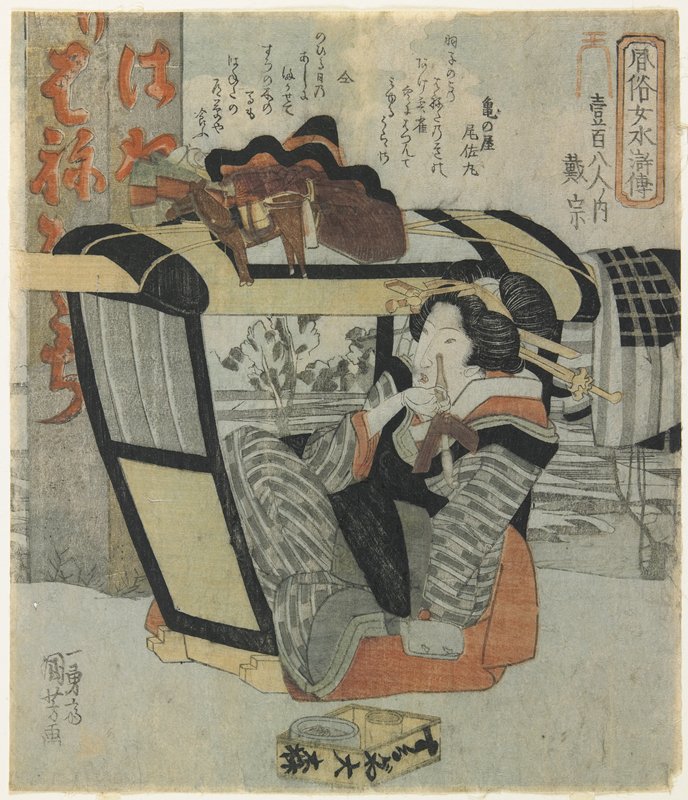
Woman as the Hero Taisō in Palanquin Holding a Pipe
c. 1830
Woodblock print (surimono), ink and color on paper

Yan Qing (Roshi Ensei), from the series "One Hundred and Eight Heroes of the Popular Water Margin (Tsuzoku Suikoden goketsu hyakuhachinin no hitori)"

Poem by Abe no Nakamaro, from an untitled series of One Hundred Poems by One Hundred Poets

Hu Sanniang (Ko Sanjo Ichijosei), from the series "One Hundred and Eight Heroes of the Popular Water Margin (Tsuzoku Suikoden goketsu hyakuhachinin no hitori)"
Frequently Asked Questions
Actors as the Sixteen Arhats (Mitate: Jūroku Rakan) was created by Utagawa Kuniyoshi (歌川国芳) in Late Edo period, 19th century.