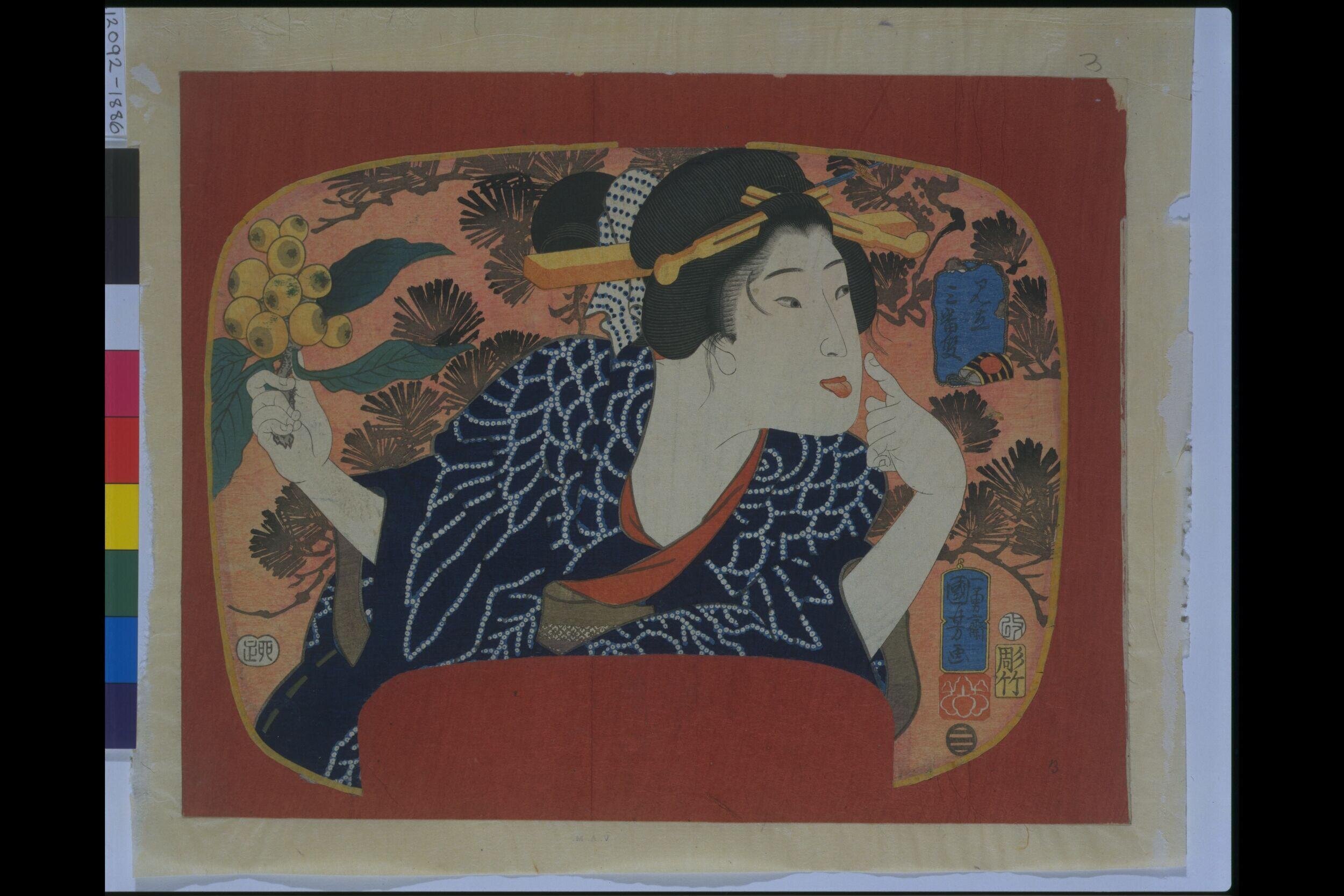
Allusion to the Character Sanbaso
- Date:
- 1855
- Medium:
- Source:
- Victoria and Albert Museum
Description
Allusion to the Character Sanbaso, dated 1855 in the records of the Victoria and Albert Museum, is a late Edo ukiyo-e print by Utagawa Kuniyoshi (1797-1861) that draws on the venerable theatrical figure of Sanbasō, the ritual celebrant whose dance, derived from the Noh play Okina, opened performances of kabuki and other theatrical programs and was associated with auspicious blessings on the stage and the community. To 'allude' to Sanbasō in print was a familiar device of mitate, in which contemporary or otherwise unexpected figures were placed in the costume or posture of a recognized character, allowing the image to play on the gap between the original role and its new wearer. Kuniyoshi was a particularly inventive practitioner of mitate, and his theatrical prints frequently combine the visual energy of his warrior prints with the witty layering that the convention allowed. The 1855 date places this sheet very near the end of Kuniyoshi's career, when his work had absorbed decades of experience as one of the dominant figures of the Utagawa school. Trained under Utagawa Toyokuni I, he had built his reputation in the late 1820s with the Suikoden warrior series and remained a leading designer of theatrical prints, satirical images, beauty prints and landscapes through the 1840s and 1850s. The Victoria and Albert Museum's record provides the title, date and Kuniyoshi attribution, and the description here follows that documentation. It presents the print as a representative late example of the mitate technique within the broader output of one of the most resourceful designers of late Edo ukiyo-e.
More Prints by Utagawa Kuniyoshi
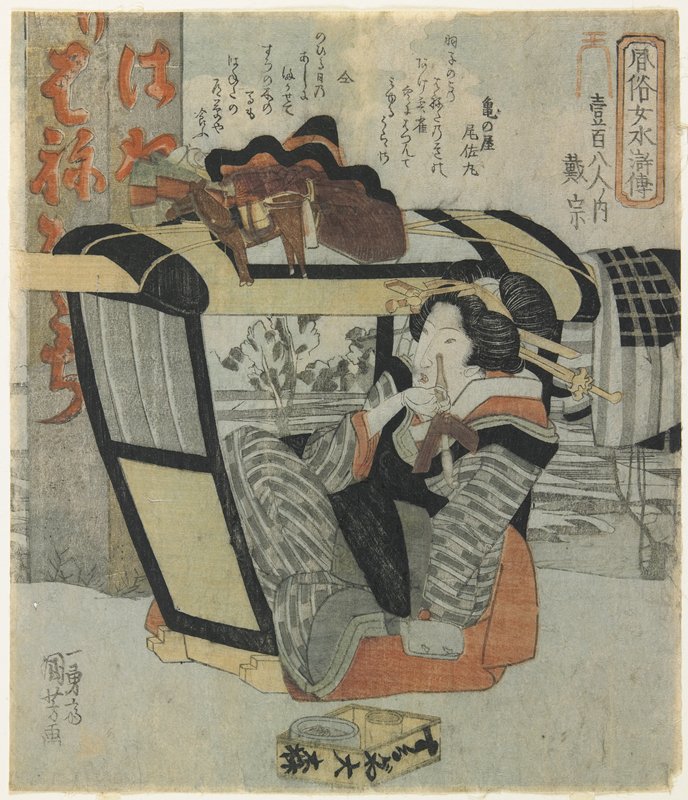
Woman as the Hero Taisō in Palanquin Holding a Pipe
c. 1830
Woodblock print (surimono), ink and color on paper

Yan Qing (Roshi Ensei), from the series "One Hundred and Eight Heroes of the Popular Water Margin (Tsuzoku Suikoden goketsu hyakuhachinin no hitori)"

Poem by Abe no Nakamaro, from an untitled series of One Hundred Poems by One Hundred Poets

Hu Sanniang (Ko Sanjo Ichijosei), from the series "One Hundred and Eight Heroes of the Popular Water Margin (Tsuzoku Suikoden goketsu hyakuhachinin no hitori)"
Frequently Asked Questions
Allusion to the Character Sanbaso was created by Utagawa Kuniyoshi (歌川国芳) in 1855.