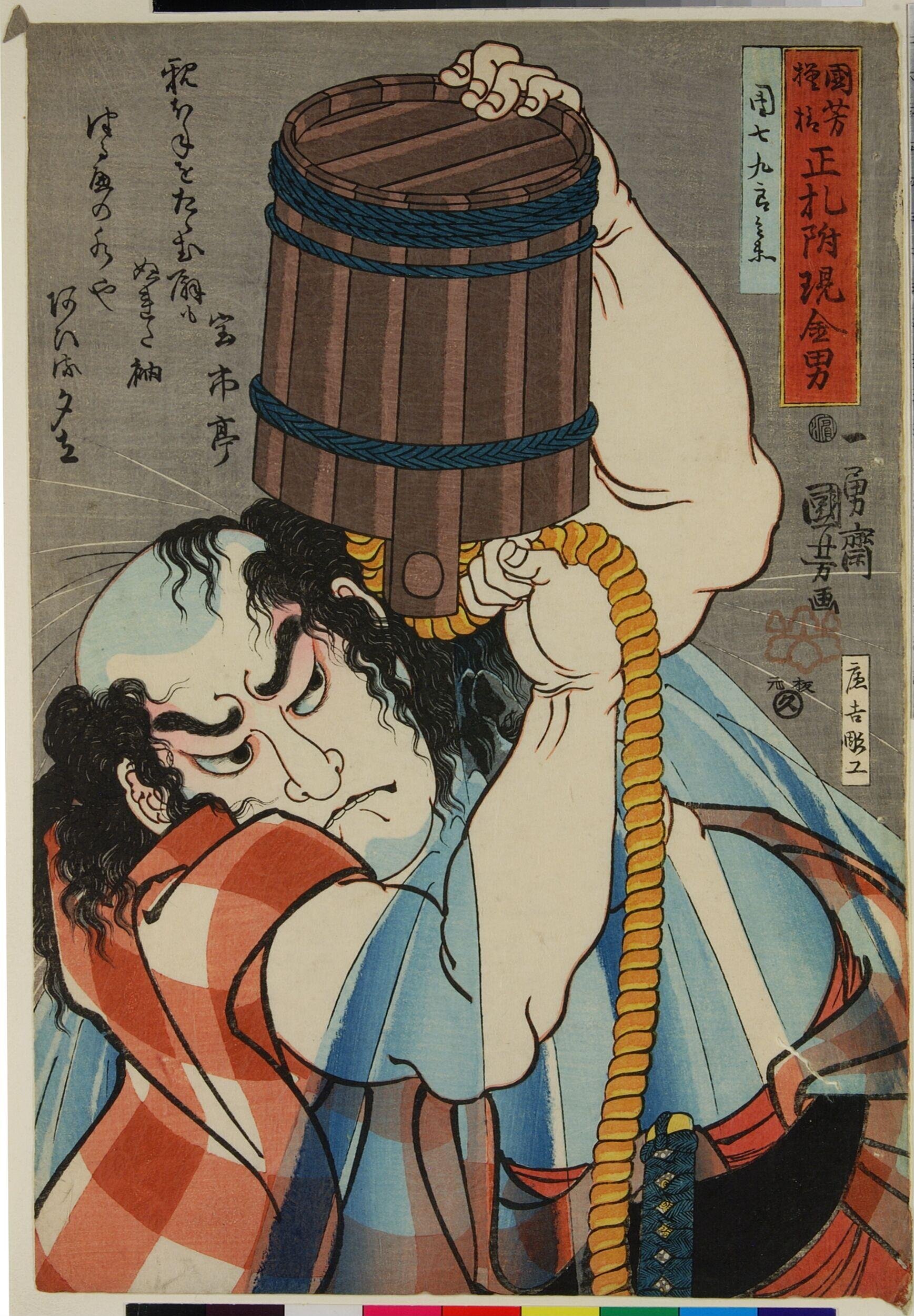
Danshichi Kurobei
- Date:
- ca. 1845
- Medium:
- Source:
- Victoria and Albert Museum
Description
Danshichi Kurobei is a 1845 woodblock print by Utagawa Kuniyoshi held in the Victoria and Albert Museum, depicting one of the most celebrated kabuki anti-heroes of the Edo stage. The fish seller Danshichi Kurobei is the central figure of the play Natsu Matsuri Naniwa Kagami, in which a violent confrontation during a summer festival in Osaka culminates in the protagonist's act of murder, staged as a tour de force of gesture, lighting, and choreographed movement. Kuniyoshi's interest in kabuki characters extended throughout his career, and his treatment of Danshichi here distils the protagonist's combination of working-class swagger and tragic intensity. Heavy musculature, exposed tattoos, and a tense pose link the design to Kuniyoshi's earlier warrior prints — most famously the tattooed heroes of his Suikoden series — and remind viewers that the boundary between samurai mythology and the urban world of Edo ukiyo-e was deliberately porous. The carving and printing reflect mid-1840s Edo workshop practices, with strong outline blocks, considered colour relationships, and careful registration. The Victoria and Albert Museum's holdings of Kuniyoshi's kabuki prints offer a particularly rich record of how the popular stage was translated into woodblock imagery for collectors and townspeople, and Danshichi Kurobei remains a key example of his ability to fix in print the heightened emotion and physical drama of a famous stage role.
More Prints by Utagawa Kuniyoshi
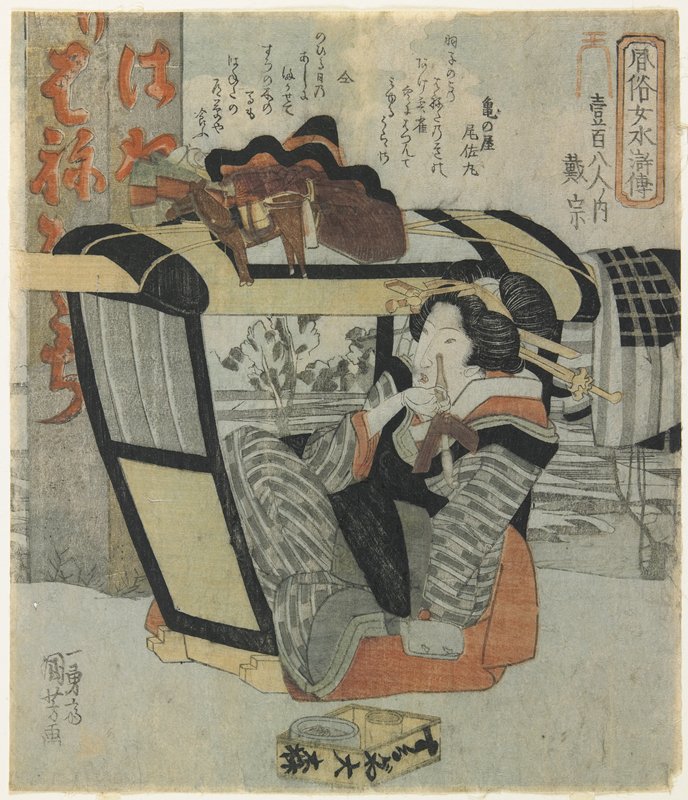
Woman as the Hero Taisō in Palanquin Holding a Pipe
c. 1830
Woodblock print (surimono), ink and color on paper

Yan Qing (Roshi Ensei), from the series "One Hundred and Eight Heroes of the Popular Water Margin (Tsuzoku Suikoden goketsu hyakuhachinin no hitori)"

Poem by Abe no Nakamaro, from an untitled series of One Hundred Poems by One Hundred Poets

Hu Sanniang (Ko Sanjo Ichijosei), from the series "One Hundred and Eight Heroes of the Popular Water Margin (Tsuzoku Suikoden goketsu hyakuhachinin no hitori)"
Frequently Asked Questions
Danshichi Kurobei was created by Utagawa Kuniyoshi (歌川国芳) in ca. 1845.