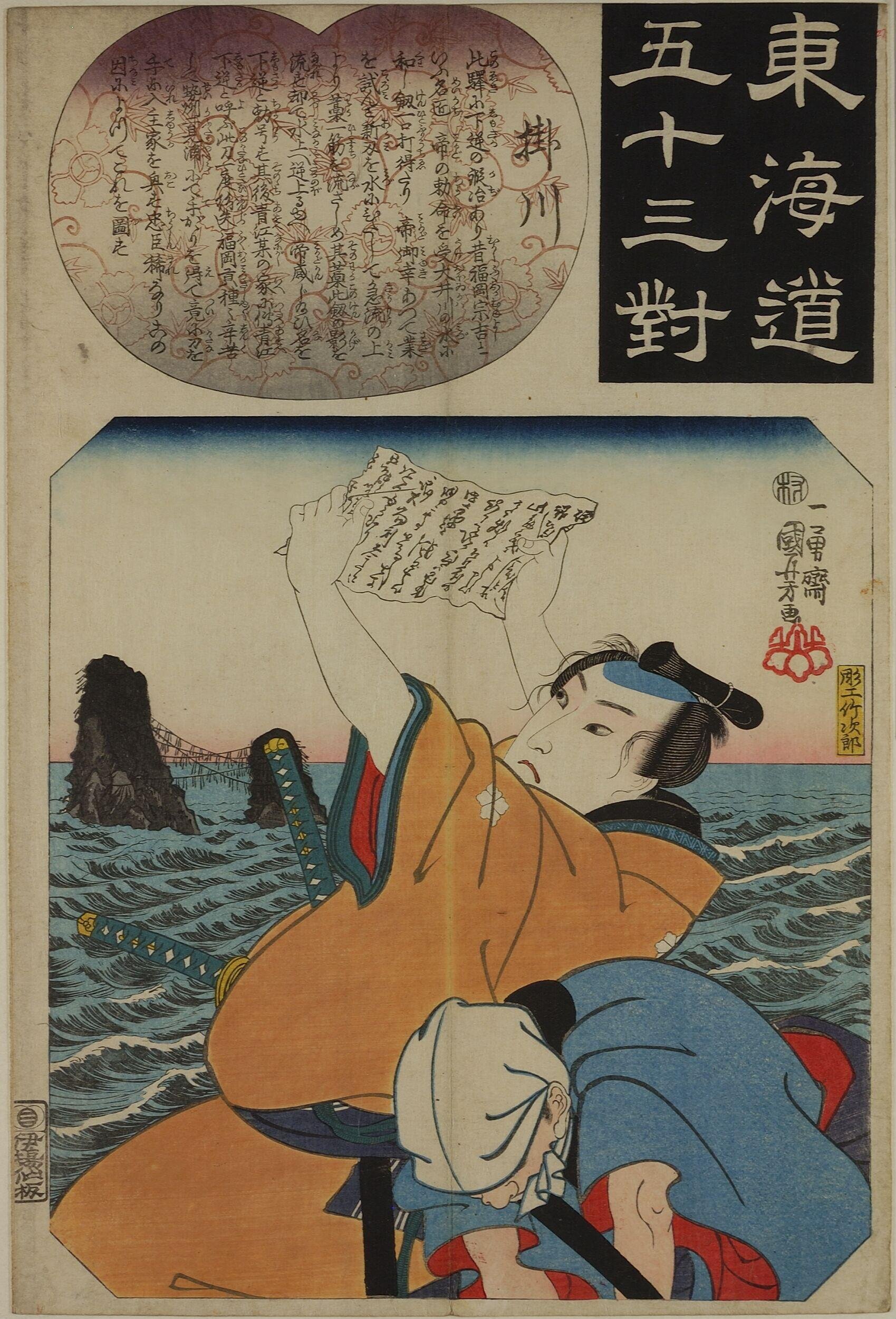
Kakegawa (Kakegawa)
- Medium:
- Source:
- Victoria and Albert Museum
Description
Kakegawa is an undated woodblock print by Utagawa Kuniyoshi, preserved in the Victoria and Albert Museum. The sheet takes its name from a station on the Tōkaidō, the great Edo-period highway that ran between Edo and Kyoto, and belongs to one of the warrior- and legend-themed Tōkaidō series for which Kuniyoshi was celebrated. Where Hiroshige's contemporary Tōkaidō prints emphasised seasonal landscape and atmosphere, Kuniyoshi typically used each station as the springboard for a figural episode drawn from history, legend, or the kabuki stage, anchoring the broader visual culture of Edo ukiyo-e in the genres of warrior prints and theatrical portraiture. The carved outlines, deftly balanced colour blocks, and lively figural drawing on this sheet are characteristic of mid-nineteenth-century Edo publishing at its mature peak. Even when the topographic identity of Kakegawa is reduced to suggestive details rather than panoramic scenery, the cartouche and place-name reinforce that the station belongs to a recognisable, deeply mapped national geography. The Victoria and Albert Museum's broader holdings of Kuniyoshi's print designs allow Kakegawa to be studied in conjunction with related sheets from the same series and with the artist's larger output of warrior, ghost, and kabuki prints. Together they demonstrate how Kuniyoshi treated the Tōkaidō as both a literal road and an imaginative armature on which Japan's heroes, lovers, and storytellers could be dramatically arranged.
More Prints by Utagawa Kuniyoshi
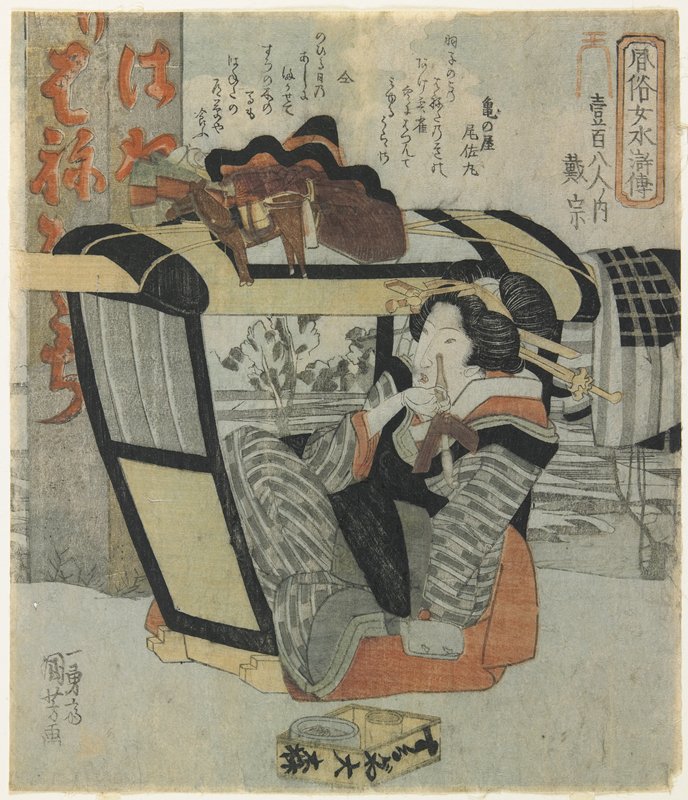
Woman as the Hero Taisō in Palanquin Holding a Pipe
c. 1830
Woodblock print (surimono), ink and color on paper

Yan Qing (Roshi Ensei), from the series "One Hundred and Eight Heroes of the Popular Water Margin (Tsuzoku Suikoden goketsu hyakuhachinin no hitori)"

Poem by Abe no Nakamaro, from an untitled series of One Hundred Poems by One Hundred Poets

Hu Sanniang (Ko Sanjo Ichijosei), from the series "One Hundred and Eight Heroes of the Popular Water Margin (Tsuzoku Suikoden goketsu hyakuhachinin no hitori)"
Frequently Asked Questions
Kakegawa (Kakegawa) was created by Utagawa Kuniyoshi (歌川国芳).