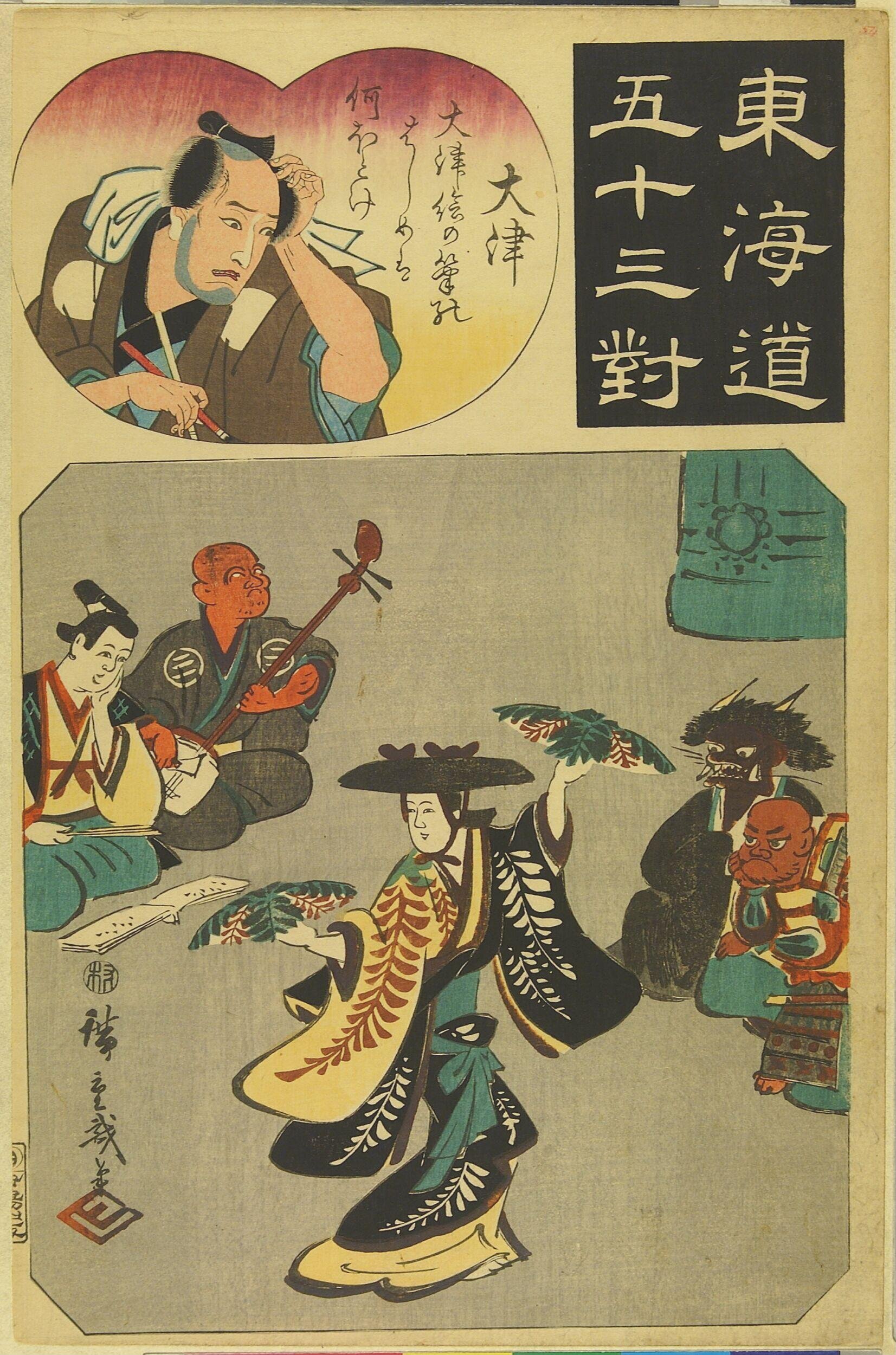
Ōtsu (Ōtsu)
- Medium:
- Source:
- Victoria and Albert Museum
Description
Otsu, the fifty-third and final station on the Tokaido before Kyoto, lay along the southern shore of Lake Biwa and was famous for Otsu-e, the folk-painting tradition associated with the legendary painter Tosa Matabei. This print by Utagawa Kuniyoshi is part of one of his Tokaido series, in which the great Edo ukiyo-e master of musha-e and warrior prints applied his skills to landscape and meisho-e. Otsu naturally invited references to Otsu-e—paintings of demons, deities, and stock comic types sold to travelers—and Kuniyoshi was unusually well placed to play with this tradition, since his own taste for the grotesque and the supernatural aligned closely with the spirit of the Otsu-e repertoire. The composition combines a recognizable topography of Lake Biwa with a foreground figure or scene, treating the station as a stage rather than a topographic record. The Victoria and Albert Museum impression preserves the firm keyblock and saturated pigments of mature Kuniyoshi. As an Utagawa-school designer trained under Toyokuni I, Kuniyoshi here extends the school's celebrated mastery of figure work into the genre of the station view, producing a print that functions as both a record of a celebrated place and a witty meditation on the popular painting tradition that bore its name.
More Prints by Utagawa Kuniyoshi
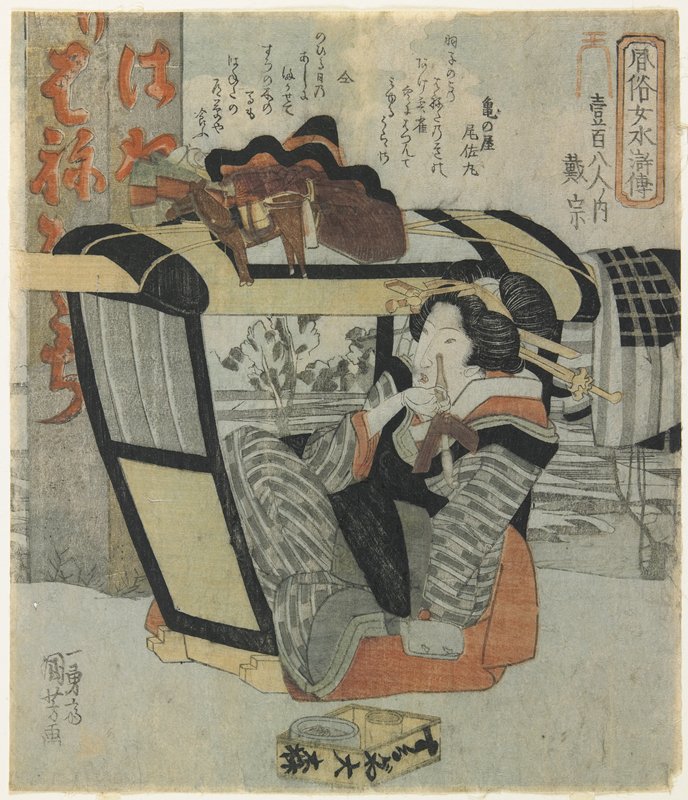
Woman as the Hero Taisō in Palanquin Holding a Pipe
c. 1830
Woodblock print (surimono), ink and color on paper

Yan Qing (Roshi Ensei), from the series "One Hundred and Eight Heroes of the Popular Water Margin (Tsuzoku Suikoden goketsu hyakuhachinin no hitori)"

Poem by Abe no Nakamaro, from an untitled series of One Hundred Poems by One Hundred Poets

Hu Sanniang (Ko Sanjo Ichijosei), from the series "One Hundred and Eight Heroes of the Popular Water Margin (Tsuzoku Suikoden goketsu hyakuhachinin no hitori)"
Frequently Asked Questions
Ōtsu (Ōtsu) was created by Utagawa Kuniyoshi (歌川国芳).