Yoshitsune as a Boy (Onzōshi Ushiwakamaru)
- Date:
- Late Edo period, 19th century
- Medium:
- Right panel from an ukiyo-e woodblock-printed "ōban" triptych; ink and color on paper
- Source:
- Harvard Art Museums
Description
This Utagawa Kuniyoshi design depicts Yoshitsune as a Boy (Onzōshi Ushiwakamaru), the youthful name of Minamoto no Yoshitsune, the twelfth-century warrior whose legend dominates Japanese martial literature. Although the Harvard Art Museums record the impression with a date of 1867—six years after Kuniyoshi's death in 1861—the design is characteristic of the warrior prints (musha-e) for which Kuniyoshi became the acknowledged master of Edo ukiyo-e, and the 1867 date reflects a later posthumous edition issued during the late Tokugawa or early Meiji moment when his designs continued to be reissued. Yoshitsune in his Ushiwakamaru phase is one of the most beloved subjects in the genre, conventionally shown as a slender, almost feminine youth training in swordsmanship with the tengu of Kurama mountain. Kuniyoshi's treatment typically isolates the young hero in dynamic, narrow-vertical compositions, using sweeping diagonals of robe and weapon, finely combed hair lines, and an emphatic keyblock to amplify the legend's romance. The print exemplifies how warrior prints functioned in Edo popular culture as both heroic biography and visual entertainment—Yoshitsune's tragic later life lurked behind every depiction of his prodigious boyhood. Harvard's impression is part of their broad Kuniyoshi holdings documenting his role as the figure who redefined the warrior print for nineteenth-century audiences. Source: Harvard Art Museums (object 199532).
More Prints by Utagawa Kuniyoshi
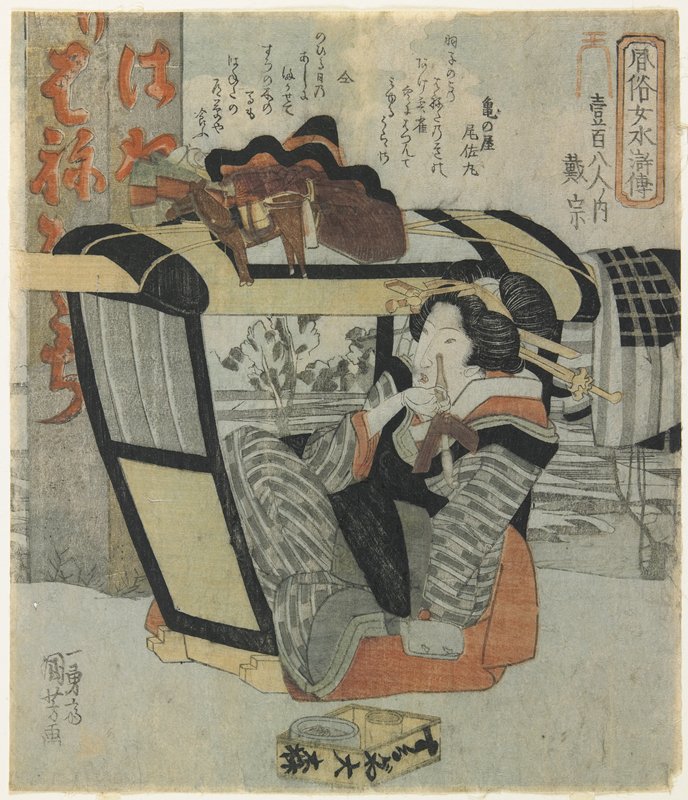
Woman as the Hero Taisō in Palanquin Holding a Pipe
c. 1830
Woodblock print (surimono), ink and color on paper

Yan Qing (Roshi Ensei), from the series "One Hundred and Eight Heroes of the Popular Water Margin (Tsuzoku Suikoden goketsu hyakuhachinin no hitori)"

Poem by Abe no Nakamaro, from an untitled series of One Hundred Poems by One Hundred Poets

Hu Sanniang (Ko Sanjo Ichijosei), from the series "One Hundred and Eight Heroes of the Popular Water Margin (Tsuzoku Suikoden goketsu hyakuhachinin no hitori)"
More Children Prints
Frequently Asked Questions
Yoshitsune as a Boy (Onzōshi Ushiwakamaru) was created by Utagawa Kuniyoshi (歌川国芳) in Late Edo period, 19th century.
Yoshitsune as a Boy (Onzōshi Ushiwakamaru) depicts children.