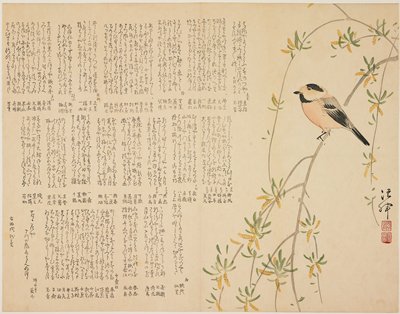
Chickadee on a Willow Branch
柳に四十雀図
- Date:
- 1826
- Medium:
- Woodblock print (surimono); ink and color on paper
- Source:
- Minneapolis Institute of Art
Description
Chickadee on a Willow Branch is a large-format Shijō-school surimono by Yokoyama Seiki, dated 1826 and produced for a Kyoto poetry society as a commemorative sheet inscribed with 102 haiku on spring themes — an exceptionally high number for a single print, suggesting that the work was commissioned for a major gathering or for a joint meeting of several societies. The composition centers on a single chickadee, identified by the white spot on its cheeks and rendered with the close observation of feathering and posture that Seiki had absorbed during his training under Matsumura Keibun, perched on a sprig of weeping willow whose yellow fuzzy flower clusters bloom in late spring. The pairing of bird and plant exemplifies the Shijō kachō-e habit of building a small lyric image around a single closely observed subject in seasonally specific context, with restrained color and ample negative space substituted for the busier compositional traditions of Edo nishiki-e. The Minneapolis Institute of Art copy (P.77.27.167) entered the collection through the Mr. and Mrs. Samuel H. Maslon gift fund and is among the more important Seiki surimono in a North American collection. The print stands at the intersection of two creative traditions Seiki worked in throughout his career: the formal Shijō painting practice he had learned from Keibun, and the literary culture of Kyoto's kyōka and haikai circles whose seasonal gatherings supported the surimono trade.
More Prints by Yokoyama Seiki
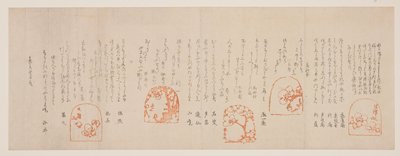
Plum Blossom Designs by Five Artists (collaborative surimono)
梅花五人画賛図
1853 (Kaei 6, spring)
Woodblock print (surimono); ink and color on paper

Plant and Seals
草花印譜図
dated 1856
Hanging scroll; ink on paper
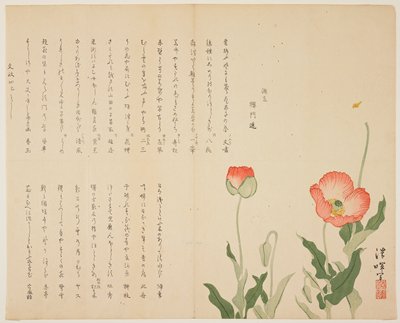
Poppies
罌粟図
1821
Woodblock print (surimono); ink and color on paper

Rocks and Stream
渓流岩石図
mid 19th century
Hanging scroll; ink and color on silk
Frequently Asked Questions
Chickadee on a Willow Branch (柳に四十雀図) was created by Yokoyama Seiki (横山清暉) in 1826.