Nagasaki (長崎)
13 prints by 7 artists
About Nagasaki
Nagasaki is a city on the southwestern coast of Kyushu, the principal city of Nagasaki Prefecture, situated on a long deep harbor opening south to the East China Sea between steeply sloping hills that descend directly to the water. The city was founded in 1571 as a Portuguese trading port at the invitation of the local daimyo Omura Sumitada, who had converted to Christianity and offered the harbor to Portuguese Jesuit traders, and across the early seventeenth century it served as the principal channel of European and Chinese trade and missionary activity with Japan. After the Tokugawa shogunate's expulsion of European missionaries and traders in the 1630s and the closure of the country to foreign contact under the sakoku (closed country) policy, Nagasaki retained a singular role as the sole port at which limited foreign trade was permitted, with Dutch traders confined to the artificial fan-shaped island of Dejima in the harbor (constructed in 1634-1636 originally for Portuguese traders and reassigned to the Dutch from 1641) and Chinese traders confined to the separate Tojin Yashiki quarter on the eastern shore (established in 1689). This restricted foreign presence at Nagasaki across the Edo period produced the genre of Nagasaki-e, woodblock prints made in the city itself and in Edo and Kyoto that depicted foreigners, foreign ships, Western technology, exotic animals brought to Nagasaki, and the costumes and customs of the Dutch and Chinese traders, and which functioned as one of the few channels through which Japanese viewers could see images of the outside world during the long period of national seclusion. The Nagasaki-e tradition is sometimes distinguished from the broader category of Nanban-e (southern barbarian pictures), which refers more specifically to the earlier seventeenth-century paintings of Portuguese subjects, while Nagasaki-e refers to the eighteenth and early nineteenth-century woodblock prints. After the opening of the country in the Bakumatsu period under the Treaty of Kanagawa (1854) and subsequent treaties, Nagasaki was one of the original treaty ports opened to general foreign trade in 1859, and it became a major shipbuilding and industrial city across the late nineteenth and early twentieth centuries with the establishment of the Mitsubishi Heavy Industries Nagasaki Shipyard, until its destruction by atomic bombing on 9 August 1945, when the plutonium-based bomb known as Fat Man killed approximately 70,000 people by the end of 1945 from the immediate blast and subsequent radiation effects. For Japanese printmaking, Nagasaki figures both as the source of the Nagasaki-e and Nanban-e foreign-subject prints of the seventeenth through nineteenth centuries, treated by anonymous and regional artists who worked specifically within the Nagasaki context for the visiting samurai and merchant market, and as a subject of late Edo, Meiji, and shin-hanga compositions. Utagawa Hiroshige treated Nagasaki in his Famous Views of the Sixty-Odd Provinces (1853-1856), in which a sheet of Hizen Province depicts the harbor with foreign ships at anchor and the surrounding city distributed along the steep slopes, and Kawase Hasui, Tsuchiya Koitsu, and other shin-hanga artists produced views of the harbor and the historical Dutch and Chinese quarters in the prewar period. The visual character of Nagasaki in prints is built on the long curving harbor, the steep terraced slopes of the surrounding district, the foreign-style architecture of the Dutch and Chinese quarters and the later Glover Garden district on the southern slope (developed in the late nineteenth century by Scottish merchant Thomas Glover), and the ships and bridges of the working port, and the post-bombing iconography centered on the Urakami Cathedral, the Peace Park, and the surviving fragments. Contemporary visitors find the Peace Park, the Atomic Bomb Museum, the Dejima reconstructed historical district (now landlocked due to harbor reclamation), Glover Garden, and the Oura Catholic Church serving as the principal sites, reached via the Sanyo Shinkansen to Hakata and the JR Limited Express Kamome to Nagasaki Station.
Prints Depicting Nagasaki (13)
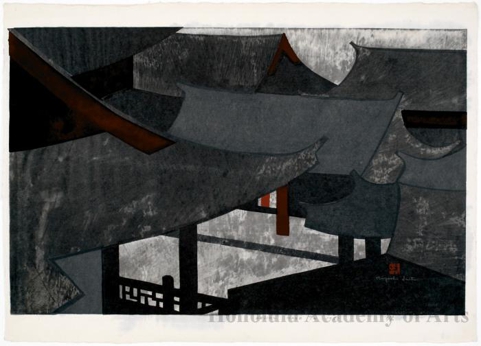
Chinese Temple Nagasaki
Woodblock print

Deshima from the series Twelve Views of Nagasaki (Nagasaki junikei no uchi)
Woodblock print

Gate, Nagasaki
1956
Color woodblock print; edition 12/50

Hirato Nagasaki (A)
Woodblock print

Hirato Nagasaki, Shôwa period, dated 1965
Woodblock print

Kanaya-cho, Nagasaki, from the series "Selection of Scenes of Japan" (Nihon fukei senshu, Nagasaki Kanaya-cho)
1923
Color woodblock print
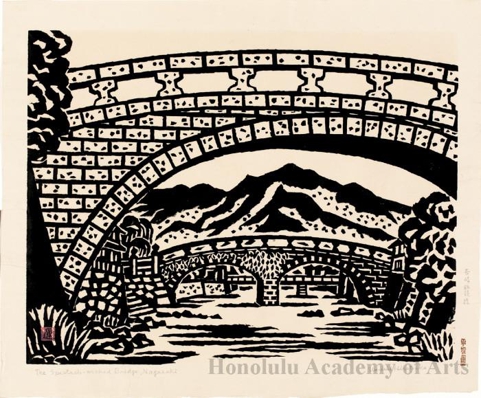
Megane Bridge in Nagasaki
Woodblock print

Nagasaki Doll (with baby on her back)
1959
Color woodblock print
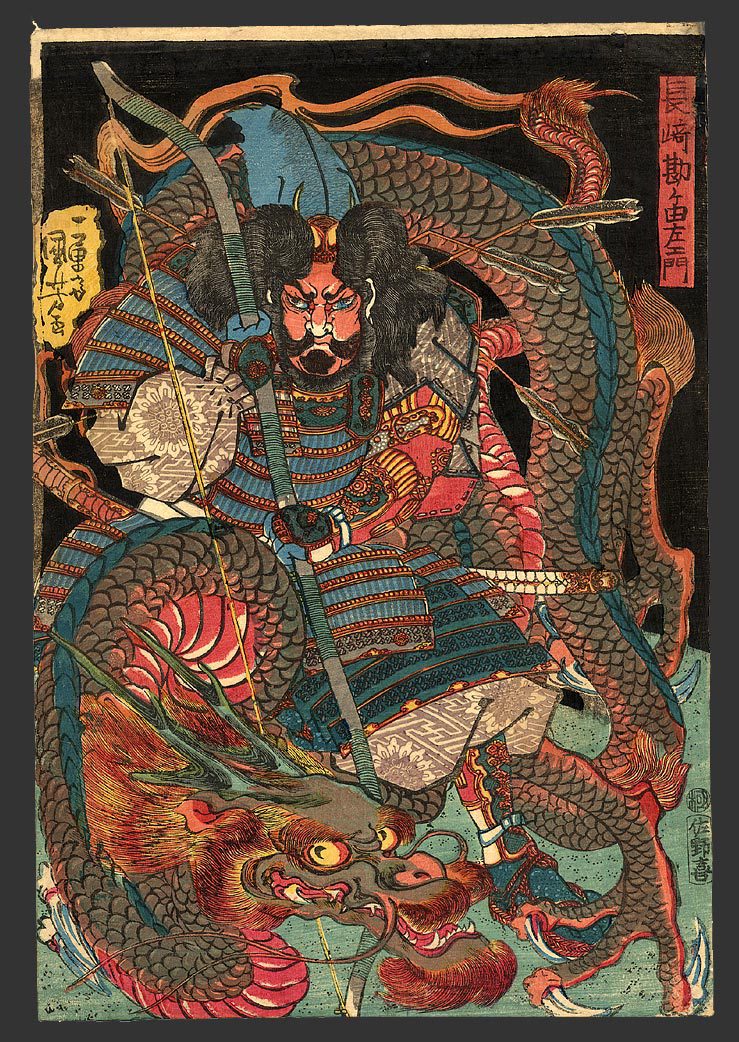
Nagasaki Kangayu-Saemon
Woodblock print
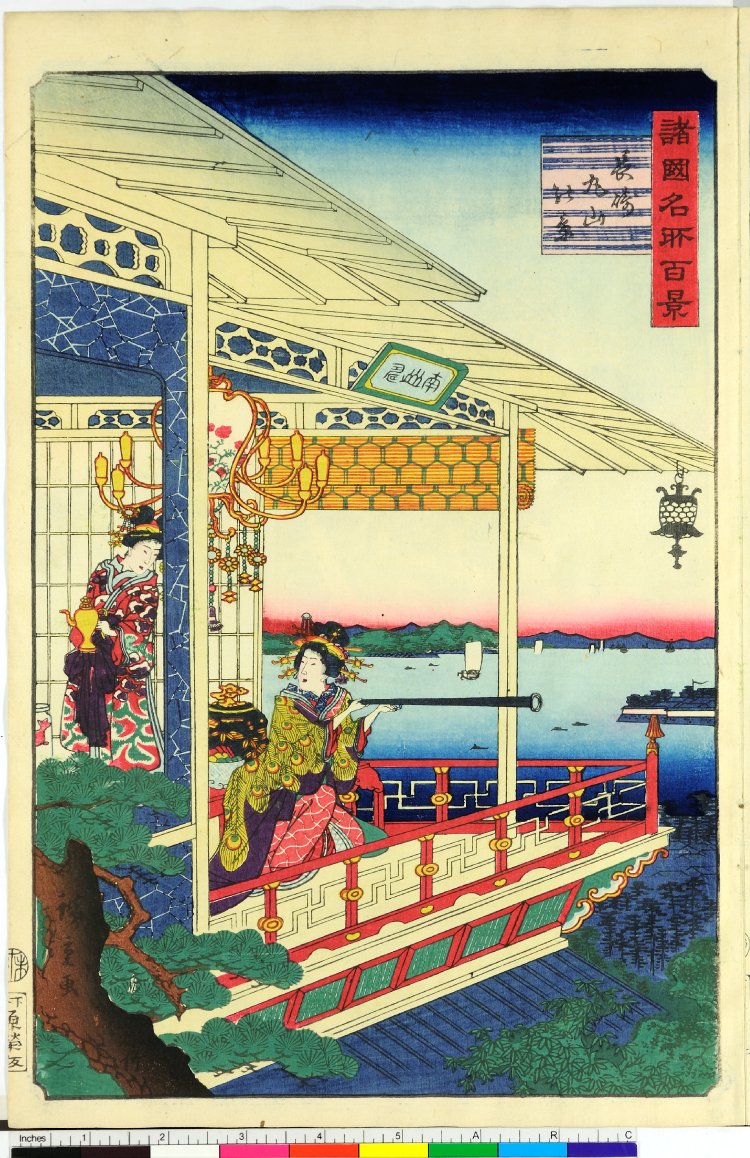
Nagasaki Maruyama no kei 長崎丸山の景 / Shokoku Meisho Hyakkei 諸国名所百景
Woodblock print
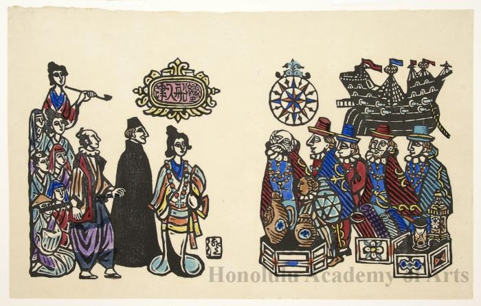
Portugese arriving in Nagasaki
Woodblock print
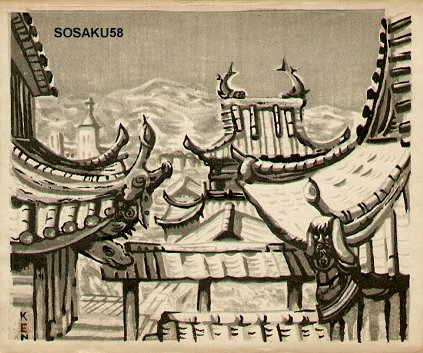
Roofs in Nagasaki
Woodblock print
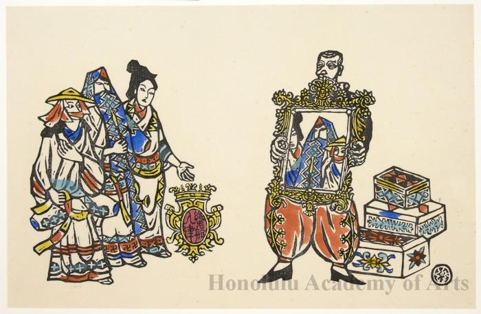
Trader showing mirror at Nagasaki
Woodblock print
Artists Who Depicted Nagasaki (7)




Frequently Asked Questions
Nagasaki is a city on the southwestern coast of Kyushu, the principal city of Nagasaki Prefecture, situated on a long deep harbor opening south to the East China Sea between steeply sloping hills that descend directly to the water. The city was founded in 1571 as a Portuguese trading port at the invitation of the local daimyo Omura Sumitada, who had converted to Christianity and offered the harbor to Portuguese Jesuit traders, and across the early seventeenth century it served as the principal channel of European and Chinese trade and missionary activity with Japan. After the Tokugawa shogunate's expulsion of European missionaries and traders in the 1630s and the closure of the country to foreign contact under the sakoku (closed country) policy, Nagasaki retained a singular role as the sole port at which limited foreign trade was permitted, with Dutch traders confined to the artificial fan-shaped island of Dejima in the harbor (constructed in 1634-1636 originally for Portuguese traders and reassigned to the Dutch from 1641) and Chinese traders confined to the separate Tojin Yashiki quarter on the eastern shore (established in 1689). This restricted foreign presence at Nagasaki across the Edo period produced the genre of Nagasaki-e, woodblock prints made in the city itself and in Edo and Kyoto that depicted foreigners, foreign ships, Western technology, exotic animals brought to Nagasaki, and the costumes and customs of the Dutch and Chinese traders, and which functioned as one of the few channels through which Japanese viewers could see images of the outside world during the long period of national seclusion. The Nagasaki-e tradition is sometimes distinguished from the broader category of Nanban-e (southern barbarian pictures), which refers more specifically to the earlier seventeenth-century paintings of Portuguese subjects, while Nagasaki-e refers to the eighteenth and early nineteenth-century woodblock prints. After the opening of the country in the Bakumatsu period under the Treaty of Kanagawa (1854) and subsequent treaties, Nagasaki was one of the original treaty ports opened to general foreign trade in 1859, and it became a major shipbuilding and industrial city across the late nineteenth and early twentieth centuries with the establishment of the Mitsubishi Heavy Industries Nagasaki Shipyard, until its destruction by atomic bombing on 9 August 1945, when the plutonium-based bomb known as Fat Man killed approximately 70,000 people by the end of 1945 from the immediate blast and subsequent radiation effects. For Japanese printmaking, Nagasaki figures both as the source of the Nagasaki-e and Nanban-e foreign-subject prints of the seventeenth through nineteenth centuries, treated by anonymous and regional artists who worked specifically within the Nagasaki context for the visiting samurai and merchant market, and as a subject of late Edo, Meiji, and shin-hanga compositions. Utagawa Hiroshige treated Nagasaki in his Famous Views of the Sixty-Odd Provinces (1853-1856), in which a sheet of Hizen Province depicts the harbor with foreign ships at anchor and the surrounding city distributed along the steep slopes, and Kawase Hasui, Tsuchiya Koitsu, and other shin-hanga artists produced views of the harbor and the historical Dutch and Chinese quarters in the prewar period. The visual character of Nagasaki in prints is built on the long curving harbor, the steep terraced slopes of the surrounding district, the foreign-style architecture of the Dutch and Chinese quarters and the later Glover Garden district on the southern slope (developed in the late nineteenth century by Scottish merchant Thomas Glover), and the ships and bridges of the working port, and the post-bombing iconography centered on the Urakami Cathedral, the Peace Park, and the surviving fragments. Contemporary visitors find the Peace Park, the Atomic Bomb Museum, the Dejima reconstructed historical district (now landlocked due to harbor reclamation), Glover Garden, and the Oura Catholic Church serving as the principal sites, reached via the Sanyo Shinkansen to Hakata and the JR Limited Express Kamome to Nagasaki Station.
Hanga catalogues 13 prints depicting Nagasaki (長崎), by 7 different artists.
Hiratsuka Un'ichi, Kawase Hasui, and Saito Kiyoshi are among the 7 artists who depicted Nagasaki in our collection.
Want to rate prints from Nagasaki?
Sign up to start rating