Twelve Actor Prints
About This Series
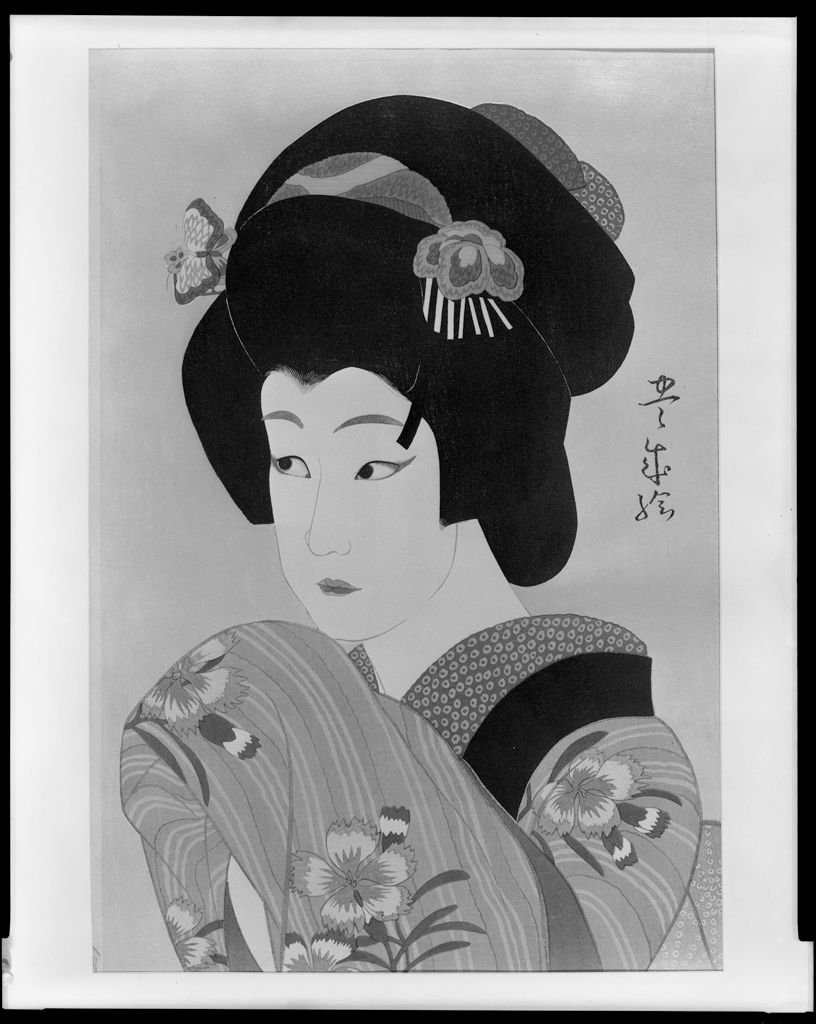
Twelve Actor Prints is the English designation for one of Yamamura Toyonari's yakusha-e cycles for the publisher Watanabe Shozaburo, a twelve-print sequence of kabuki actor portraits that belongs to the body of shin-hanga yakusha-e through which the artist established himself as the principal twentieth-century reviver of the actor-print tradition. The cycle stands alongside the larger Flowers of the Theatrical World (Rien no hana) project of the early 1920s within Toyonari's Watanabe yakusha-e output, and the relationship between the various twelve-print groupings and the larger named cycles within his actor-portrait corpus has occupied modern scholars working to disentangle their publication histories from the surviving impressions and the Watanabe firm's records. Each print presents a contemporary kabuki actor in a celebrated role, drawn through the okubi-e or head-and-shoulders convention that the late-eighteenth-century yakusha-e masters had established and that Toyonari revived in conscious dialogue with the Sharaku, Shunsho, and Toyokuni I traditions, with the stylized makeup, complex costume textures, and signature expressions of the kabuki stage rendered through the layered Watanabe printing that the shin-hanga workshop had developed for its bijin-ga and landscape programs. Yamamura Toyonari, born Yamamura Koka in 1885 and trained in both Nihonga and yoga before his association with Watanabe in the late 1910s, brought to the cycle a draftsmanship that combined the inherited linear vocabulary of the yakusha-e tradition with the modeled volumes and atmospheric register of his yoga training, distinguishing his actor portraits from their late-Edo predecessors through a pictorial sophistication addressed to twentieth-century collectors. The collaborative shin-hanga production method, in which the artist's drawing was carried by Watanabe's separately trained block carvers and printers under the publisher's coordinating direction, allowed the cycle to handle the complex costuming and makeup of the yakusha-e genre through layered overprinting and bokashi gradation that the standard commercial yakusha-e of the late Edo period had been unable to attempt. Within Toyonari's career the project stands as part of the body of actor-print work through which he was identified as the principal yakusha-e specialist of the shin-hanga movement, and modern scholarship treats the cycle as evidence of the genre revival that Watanabe undertook in parallel with the bijin-ga of Shinsui and the landscape of Hasui. Representative impressions are held by major Western collections of twentieth-century Japanese print, including the Art Institute of Chicago, the Museum of Fine Arts in Boston, and the Honolulu Museum of Art.
Prints in This Series (1)
Complete series — all 1 prints catalogued.
Frequently Asked Questions
Twelve Actor Prints is the English designation for one of Yamamura Toyonari's yakusha-e cycles for the publisher Watanabe Shozaburo, a twelve-print sequence of kabuki actor portraits that belongs to the body of shin-hanga yakusha-e through which the artist established himself as the principal twentieth-century reviver of the actor-print tradition. The cycle stands alongside the larger Flowers of the Theatrical World (Rien no hana) project of the early 1920s within Toyonari's Watanabe yakusha-e output, and the relationship between the various twelve-print groupings and the larger named cycles within his actor-portrait corpus has occupied modern scholars working to disentangle their publication histories from the surviving impressions and the Watanabe firm's records. Each print presents a contemporary kabuki actor in a celebrated role, drawn through the okubi-e or head-and-shoulders convention that the late-eighteenth-century yakusha-e masters had established and that Toyonari revived in conscious dialogue with the Sharaku, Shunsho, and Toyokuni I traditions, with the stylized makeup, complex costume textures, and signature expressions of the kabuki stage rendered through the layered Watanabe printing that the shin-hanga workshop had developed for its bijin-ga and landscape programs. Yamamura Toyonari, born Yamamura Koka in 1885 and trained in both Nihonga and yoga before his association with Watanabe in the late 1910s, brought to the cycle a draftsmanship that combined the inherited linear vocabulary of the yakusha-e tradition with the modeled volumes and atmospheric register of his yoga training, distinguishing his actor portraits from their late-Edo predecessors through a pictorial sophistication addressed to twentieth-century collectors. The collaborative shin-hanga production method, in which the artist's drawing was carried by Watanabe's separately trained block carvers and printers under the publisher's coordinating direction, allowed the cycle to handle the complex costuming and makeup of the yakusha-e genre through layered overprinting and bokashi gradation that the standard commercial yakusha-e of the late Edo period had been unable to attempt. Within Toyonari's career the project stands as part of the body of actor-print work through which he was identified as the principal yakusha-e specialist of the shin-hanga movement, and modern scholarship treats the cycle as evidence of the genre revival that Watanabe undertook in parallel with the bijin-ga of Shinsui and the landscape of Hasui. Representative impressions are held by major Western collections of twentieth-century Japanese print, including the Art Institute of Chicago, the Museum of Fine Arts in Boston, and the Honolulu Museum of Art.
The Twelve Actor Prints series contains 1 prints, created by Yamamura Toyonari.
The Twelve Actor Prints series was created by Yamamura Toyonari (山村豊成).
We currently have 1 of 1 known prints from the Twelve Actor Prints series indexed in our collection. Browse them all on this page.
Want to rate prints from Twelve Actor Prints?
Sign up to start rating