
Biography
Yamamura Toyonari (山村豊成, 1885–1942), also widely known by his art name Yamamura Koka, was a Japanese artist who produced striking woodblock prints of kabuki actors and beautiful women during the shin-hanga era. His actor portraits in particular stand as some of the most powerful and psychologically penetrating theatrical prints of the twentieth century, reviving and reinventing the great ukiyo-e tradition of yakusha-e (actor prints) for a modern audience.
Born in 1885 in Tokyo, Yamamura grew up immersed in the cultural life of the capital, developing a passion for kabuki theater that would become central to his artistic identity. He studied under the painter and print designer Ogata Gekko and completed his training at the Tokyo School of Fine Arts, graduating in 1907, cultivating a versatile style that could move between traditional Japanese refinement and modernist boldness. He adopted the art name Koka, which he generally used for his paintings, while signing much of his print work Toyonari, and he is known to collectors and scholars under both names.
Yamamura's kabuki actor prints are his most celebrated achievement. His collaboration with the publisher Watanabe Shozaburo began in 1916, and he went on to design a set of actor portraits for Watanabe, including the twelve-print series Flowers of the Theatrical World (Rien no hana kagatobi), issued between 1920 and 1922. Unlike the stylized, formulaic actor prints of late ukiyo-e, Yamamura's portraits bring a modern realist's eye to the theatrical subject, rendering the actors' expressions, makeup, and costumes with a vivid specificity that conveys both the character being portrayed and the personality of the actor behind the role. His portrait of the actor Kataoka Nizaemon XI as Sakaida Kakiemon in the play Meiko Kakiemon, for example, captures his subject's stage presence with an intensity that transcends mere likeness.
His bijin-ga (beautiful women) prints display a similar combination of traditional subject matter and modern sensibility. His depictions of women, both in traditional kimono and in modern Western dress, are characterized by clean lines, strong compositions, and a directness of observation that sets them apart from the more overtly romanticized bijin-ga of some of his contemporaries.
Yamamura was also active as a painter and illustrator, contributing designs to the portrait magazine Shin nigao and bringing his visual imagination to bear across a variety of media. His understanding of theatrical spectacle informed his print compositions, which often have a dramatic quality of staging and lighting that reflects his deep engagement with the performing arts.
He died in 1942 at the age of fifty-seven, his later career disrupted by the gathering storm of war. His relatively small body of woodblock print work — perhaps fifty to sixty known designs — has become increasingly valued by collectors who recognize his unique contribution to the shin-hanga revival of the actor print tradition. His works are held in collections including the Museum of Fine Arts, Boston, and the British Museum.
Key Facts
- Active Period
- 1885–1942
- Nationality
- 🇯🇵Japan
- Movement
- Shin-hanga
- Works Indexed
- 59
Frequently Asked Questions
Yamamura Toyonari (山村豊成, 1885–1942), also widely known by his art name Yamamura Koka, was a Japanese artist who produced striking woodblock prints of kabuki actors and beautiful women during the shin-hanga era. His actor portraits in particular stand as some of the most powerful and psychologically penetrating theatrical prints of the twentieth century, reviving and reinventing the great ukiyo-e tradition of yakusha-e (actor prints) for a modern audience.
Yamamura Toyonari was active from 1885 to 1942. They were associated with the Shin-hanga movement.
Yamamura Toyonari's work was shaped by the Shin-hanga tradition in Japanese woodblock printmaking. Shin-hanga: ## What is Shin-hanga? Shin-hanga (新版画), literally "new prints," is the early twentieth-century revival of the collaborative Japanese woodblock workshop, organized between roughly 1915 and 1960 by the Tokyo publisher Watanabe Shōzaburō (1885–1962) and a handful of competing houses.
Yamamura Toyonari's prints frequently feature kabuki, bijin-ga, figures, portraits, birds & flowers, snow scenes.
Original prints by Yamamura Toyonari can be found in collections including Minneapolis Institute of Art, wbp, Art Institute of Chicago, Harvard Art Museums.
Series by Yamamura Toyonari
Woodblock Prints by Yamamura Toyonari (59)
Actor Ichikawa Danshirō II as Henmi Tesshinsai
1919
Woodblock print, ink and color on paper
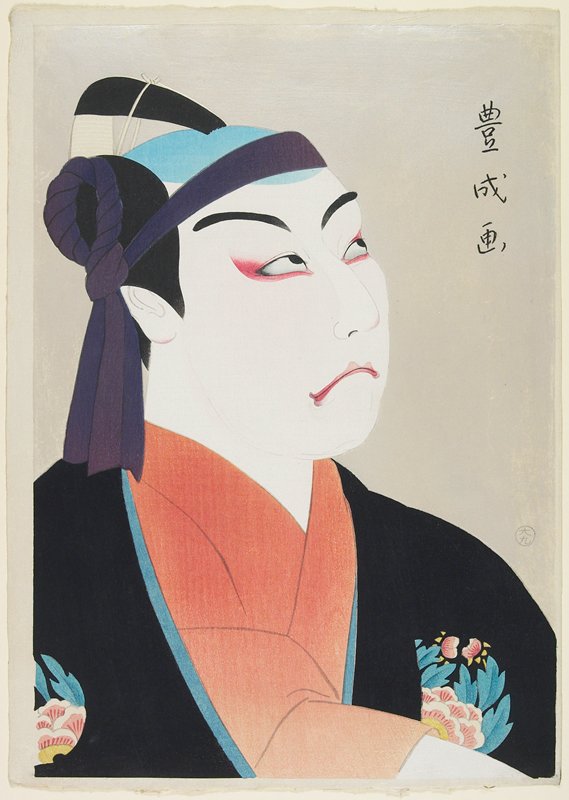
Actor Matsumoto Kōshirō VII as Sukeroku
1920
Woodblock print, ink and color on paper with mica
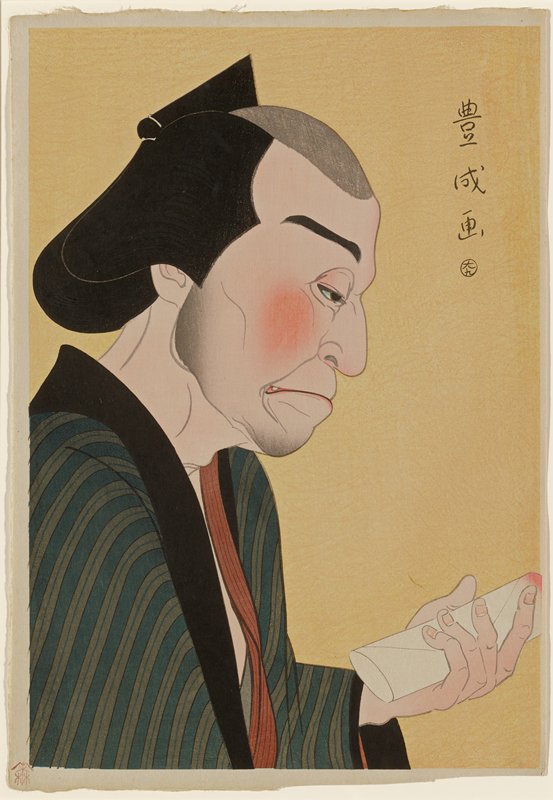
Actor Onoe Matsusuke IV as Gorōji in Kagatobi
1920
Woodblock print, ink and color on paper with nikawa and embossing

Dancing at the New Carlton Café in Shanghai
1924
Woodblock print, ink and color on paper with mica
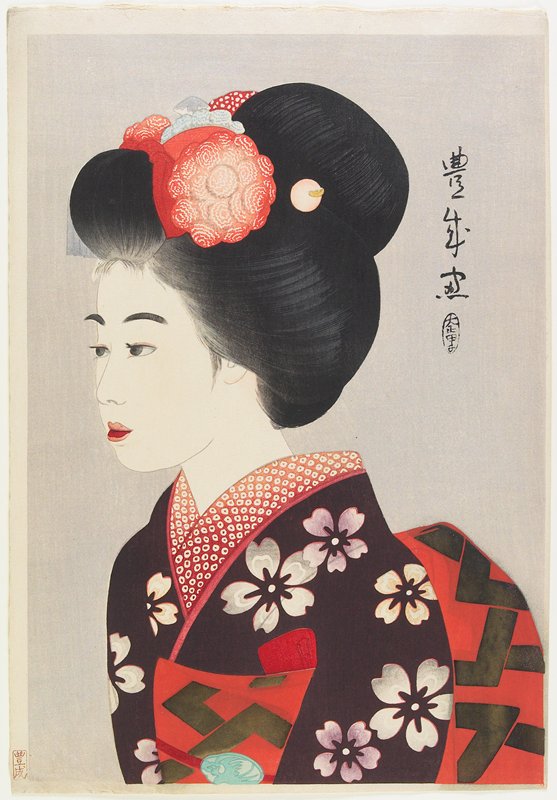
Maiko
1924
Woodblock print, ink and color on paper with mica
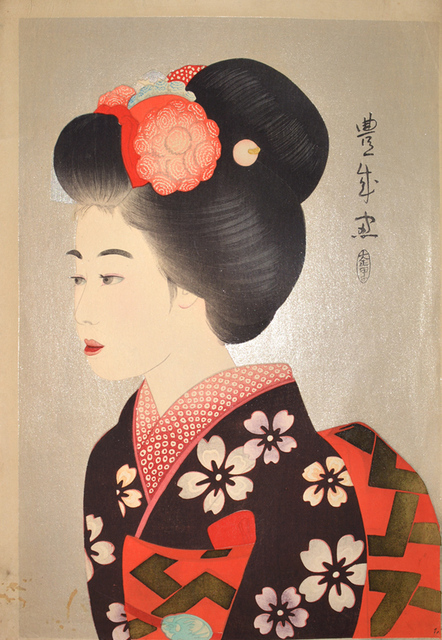
Maiko (Apprentice Geisha)
1924
Woodblock Print
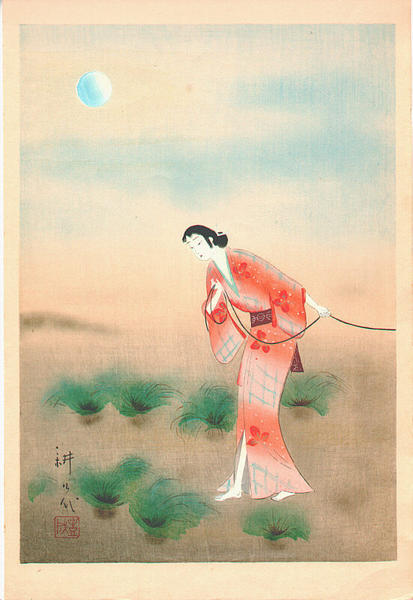
Koman
Woodblock print

Shin Nagao - Onoe Matsusuke IV in an unidentified role
Mokuhanga (Japanese woodblock)

Actor Nakamura Ganjirô as Akane Hanshichi, from the series Flowers of the Theatrical World (Rien no hana), Taishô period, dated 1920
Woodblock print
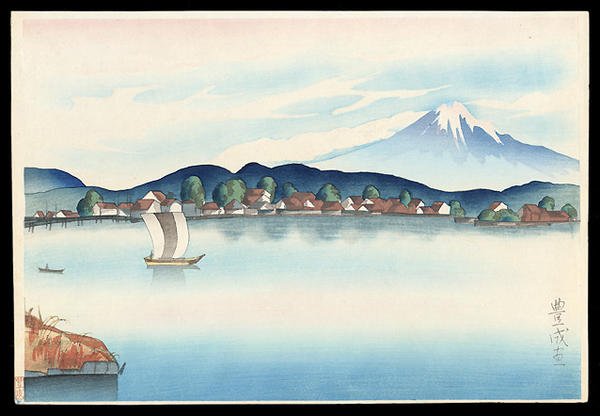
View of Fuji from Izumo
Woodblock print
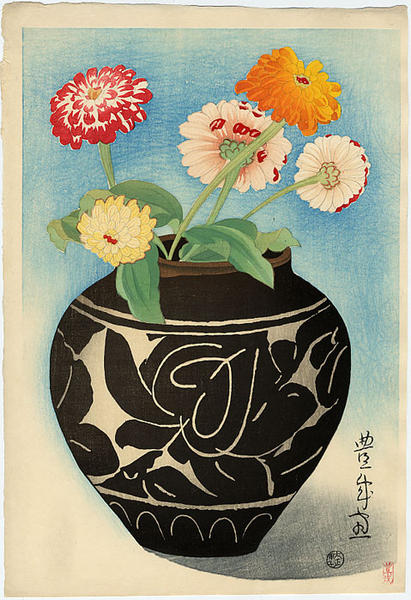
Zinnias in Vase
Woodblock print

Buddhas Hand and navel orange
Mokuhanga (Japanese woodblock)

Shocho as Oman
Mokuhanga (Japanese woodblock)

(untitled)
Maiko Girl
Woodblock print
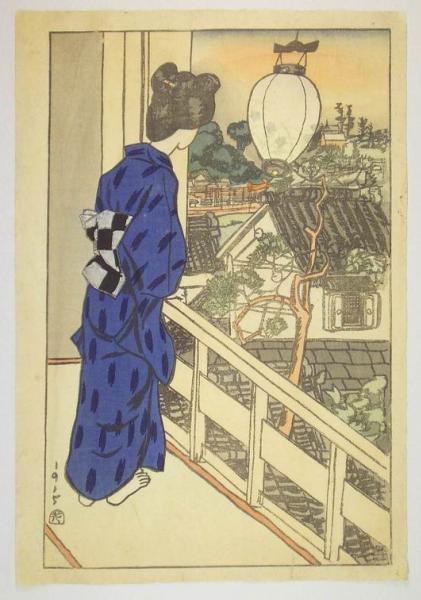
Sunset — 夕焼け
Woodblock print
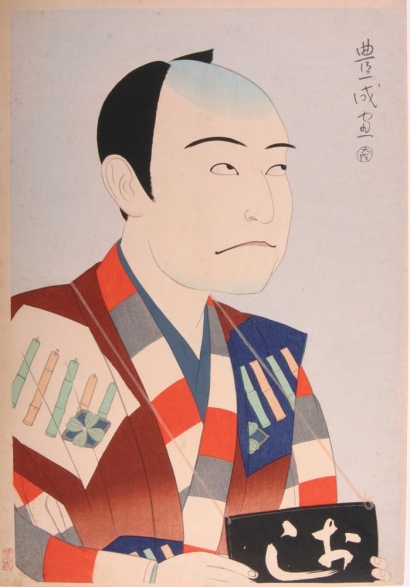
Yamamura, Toyonari
Woodblock print

Mt Fuji seen from Izumo
Mokuhanga (Japanese woodblock)
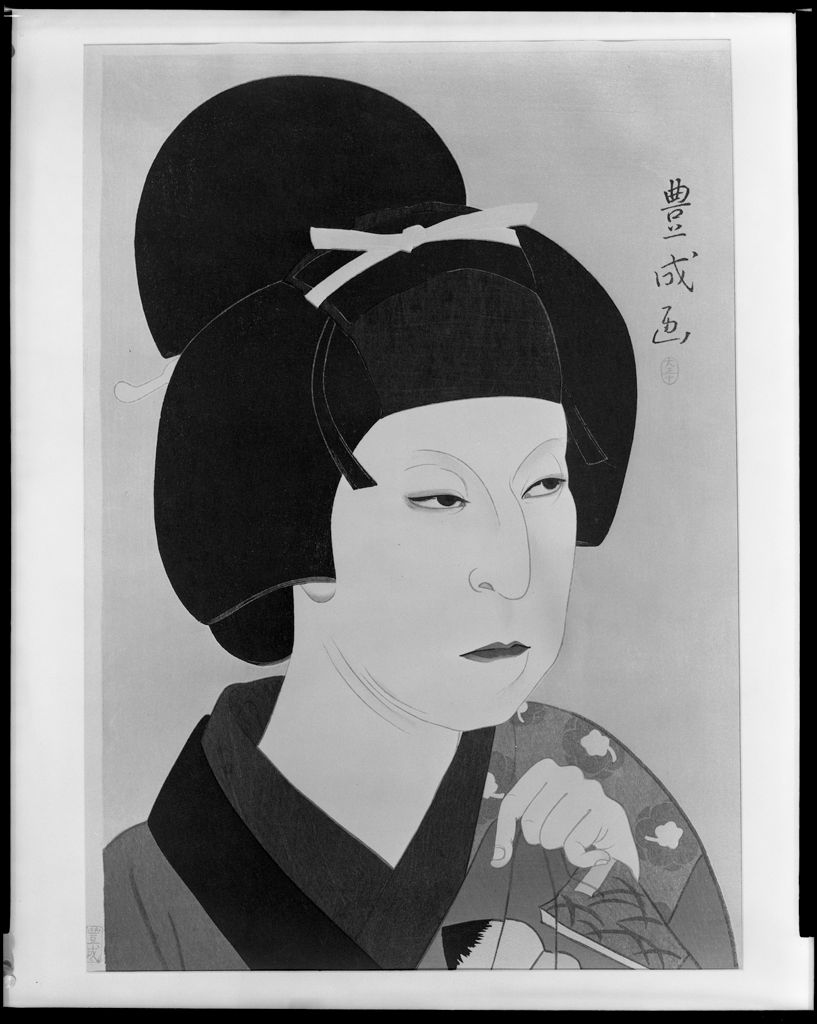
Onnagata Looking to Lower Right, Taishô period, circa 1920-1922
Woodblock print

Shin Nagao -Onoe Kikugoro VI in an unidentified role
Mokuhanga (Japanese woodblock)
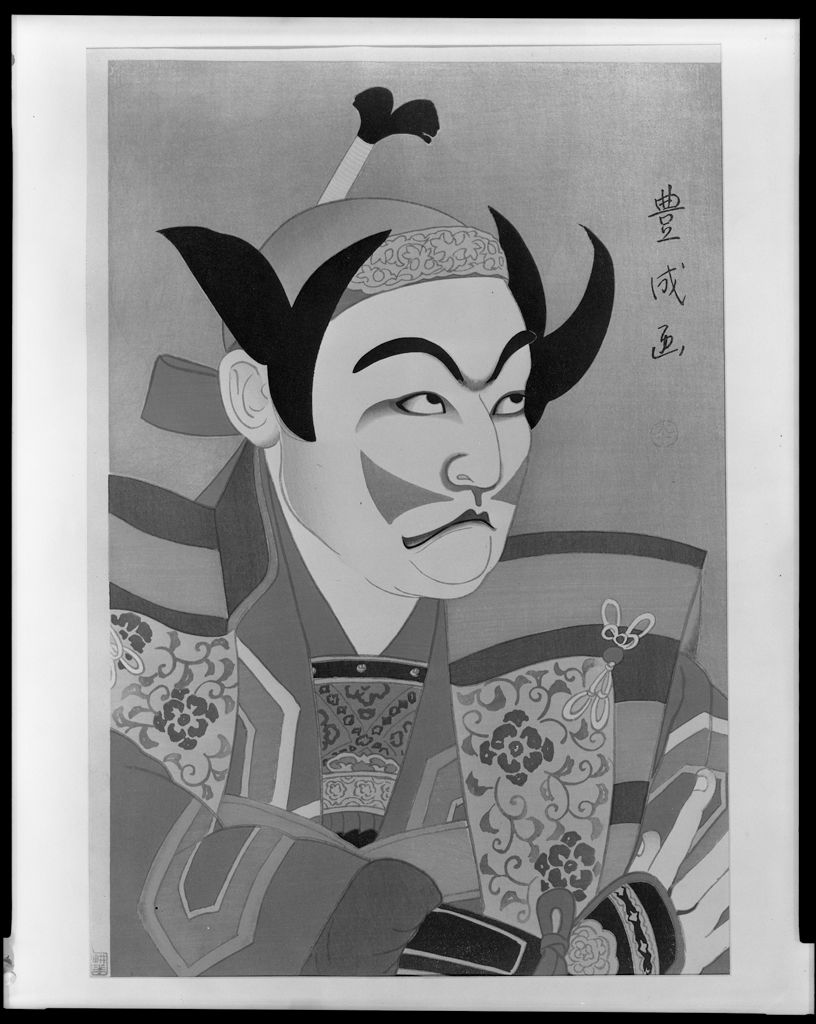
Actor Wearing Chinese Costume, Taishô period, circa 1920-1922
Woodblock print
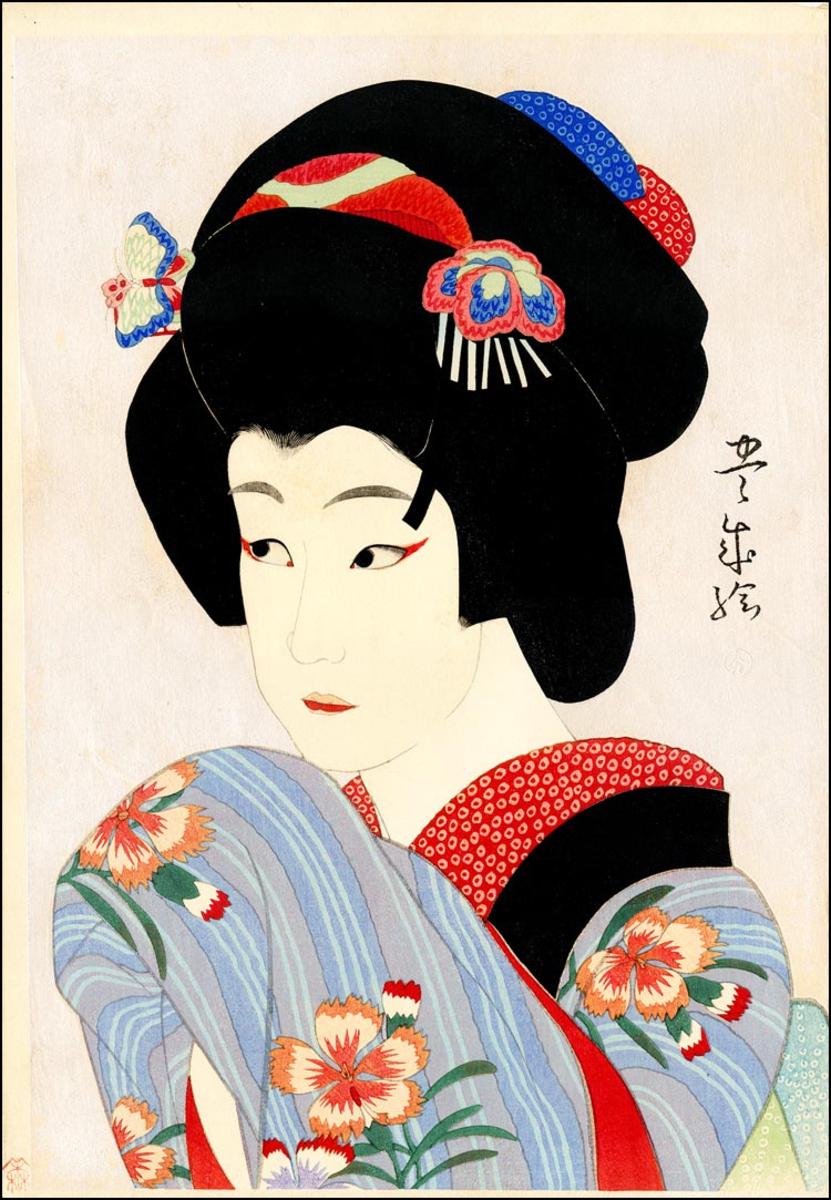
Ichikawa Shocho II as Oman
Woodblock print

Unidentified actor in the role of Okuma
Mokuhanga (Japanese woodblock)

Onoe Baiko VII- Wisteria maiden
Woodblock print