Biography
Asai Chu (浅井忠, 1856–1907) was a pioneering Western-style (yoga) painter who played a critical role in establishing oil painting and European artistic techniques in Meiji-era Japan. While he worked primarily as a painter and educator rather than a printmaker, his influence on the broader visual arts of the period and his contributions to the cross-cultural artistic exchange between Japan and Europe make him an important figure in the transitional period between traditional ukiyo-e and modern Japanese printmaking.
Born on July 22, 1856, in the Sakura domain of Shimosa Province (modern Chiba Prefecture), Asai came from a samurai family. After the Meiji Restoration dismantled the feudal social order, he turned to art, studying Western painting techniques under the Italian artist Antonio Fontanesi at the Kobu Bijutsu Gakko (Technical Fine Arts School) in Tokyo — the institution where Fontanesi taught the principles of European plein air painting and Barbizon school naturalism to the first generation of Japanese oil painters.
Under Fontanesi's influence, Asai developed a commitment to painting from direct observation of nature and to the use of oil paint to capture atmospheric light and color. His early works reflect the somber, earthy palette of the Barbizon school, depicting Japanese landscapes with a sensitivity to mood and light that was new in Japanese art. In 1889 he helped found the Meiji Art Society (Meiji Bijutsukai), the first organized association of Western-style painters in Japan.
In 1900, Asai traveled to France to study painting directly, spending two years in Paris and the surrounding countryside. There he engaged with contemporary French painting firsthand, deepening his understanding of color and light, and his formerly dark palette noticeably lightened as a result. He sketched extensively throughout his stay, producing watercolors and oil studies that show his response to the French landscape and his growing confidence as a painter working in the European tradition.
Upon returning to Japan in 1902, Asai settled in Kyoto rather than Tokyo. His encounter with Art Nouveau in France had given him a strong interest in design, and he was welcomed into the design department (zuan-ka) of the Kyoto Higher School of Arts and Crafts (Kyoto Koto Kogei Gakko), a forerunner of the Kyoto Institute of Technology. His presence had a transformative effect on the city's art world, introducing European artistic ideas to a center long dominated by traditional Japanese painting schools. He became deeply involved in the applied and decorative arts — including design for ceramics — bringing Western and Art Nouveau sensibilities into traditional Japanese craft forms, and he founded the Kansai Bijutsuin (Kansai Art Institute) to teach Western-style painting.
Asai died on December 16, 1907, at the relatively young age of fifty-one, cutting short a career of enormous influence. His legacy is primarily as a painter and educator who helped establish the foundations of Western-style art in Japan, but his broader significance lies in his role as a cultural mediator between Japanese and European artistic traditions during the critical transitional period of the Meiji era. Among his best-known paintings is Spring Ridge (Shunbo, 1903), held by the Tokyo National Museum as an Important Cultural Property; his works are also held by the National Museum of Modern Art, Tokyo, and by the Chiba Prefectural Museum of Art, which has assembled one of Japan's foremost collections of his work.
Key Facts
- Active Period
- 1856–1907
- Nationality
- 🇯🇵Japan
- Movement
- Meiji/Taishō Prints
- Subjects
- LandscapesFiguresPortraits
- Works Indexed
- 15
Frequently Asked Questions
Asai Chu (浅井忠, 1856–1907) was a pioneering Western-style (yoga) painter who played a critical role in establishing oil painting and European artistic techniques in Meiji-era Japan. While he worked primarily as a painter and educator rather than a printmaker, his influence on the broader visual arts of the period and his contributions to the cross-cultural artistic exchange between Japan and Europe make him an important figure in the transitional period between traditional ukiyo-e and modern Japanese printmaking.
Asai Chu was active from 1856 to 1907. They were associated with the Meiji/Taishō Prints movement.
Asai Chu's work was shaped by the Meiji/Taishō Prints tradition in Japanese woodblock printmaking. Meiji/Taishō Prints: Meiji and Taishō era prints (1868–1926) bridge the transition from traditional ukiyo-e to the modern shin-hanga and sosaku-hanga movements.
Asai Chu's prints frequently feature landscapes, figures, portraits.
Original prints by Asai Chu can be found in collections including Wikimedia Commons (Artizon Museum via Google Art Project), Wikimedia Commons (Mie Prefectural Art Museum), Wikimedia Commons, Wikimedia Commons (Hiroshima Museum of Art).
Woodblock Prints by Asai Chu (15)

Peasants Going Home
1887
Oil on canvas

Village near Hachioji
1887
Oil on canvas

Spring Ridge
1888
Oil on canvas

Harvest
1890
Oil on canvas

The Village of Kotaba
1893
Oil on canvas

Washing Place in Grez-sur-Loing
1901
Oil on canvas
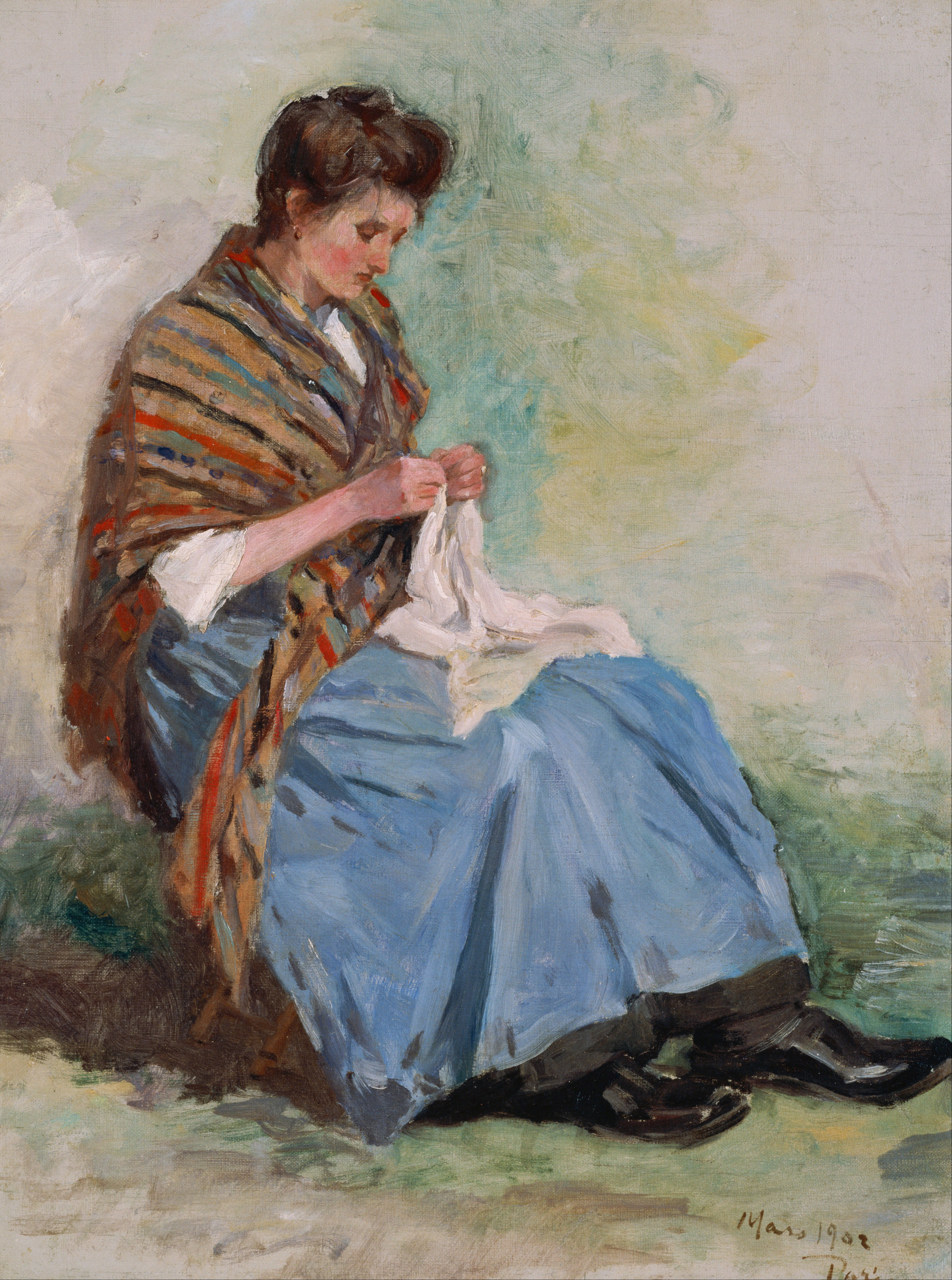
Woman Sewing
1902
Oil on canvas

Bridge in Grez-sur-Loing
1902
Oil on canvas
Asai Kiyoshi
Woodblock print

Morning Sun
Oil on canvas

Lady Driving a Cow
Oil on canvas

Cloud
Oil on canvas

Straw-Thatched Roof
Oil on canvas

Art Institute of Chicago
Woodblock print

Fisherwomen
Oil on canvas