Biography
Asai Kiyoshi (朝井清, 1902-1968) was a Japanese painter and woodblock printmaker born in Hiroshima prefecture, active in the first half of the twentieth century. He occupies a comparatively quiet position in the institutional literature on Japanese printmaking, but his name survives through specialist dealer catalogues and, above all, through a documentary photographic record that places him among the working hanga artists of pre-war and immediate post-war Japan.
He worked in the woodblock medium as an artist-carver in the creative-print (sōsaku-hanga) manner, cutting his own blocks rather than relying on a publisher's workshop — a practice captured directly in the photographic record of his studio. His subjects ranged from bijin-ga (beautiful women) and nude compositions in the modern early-Shōwa idiom to more architectural, documentary subjects, of which his Atomic Bomb Ruins (Hiroshima) print is by far the most historically significant.
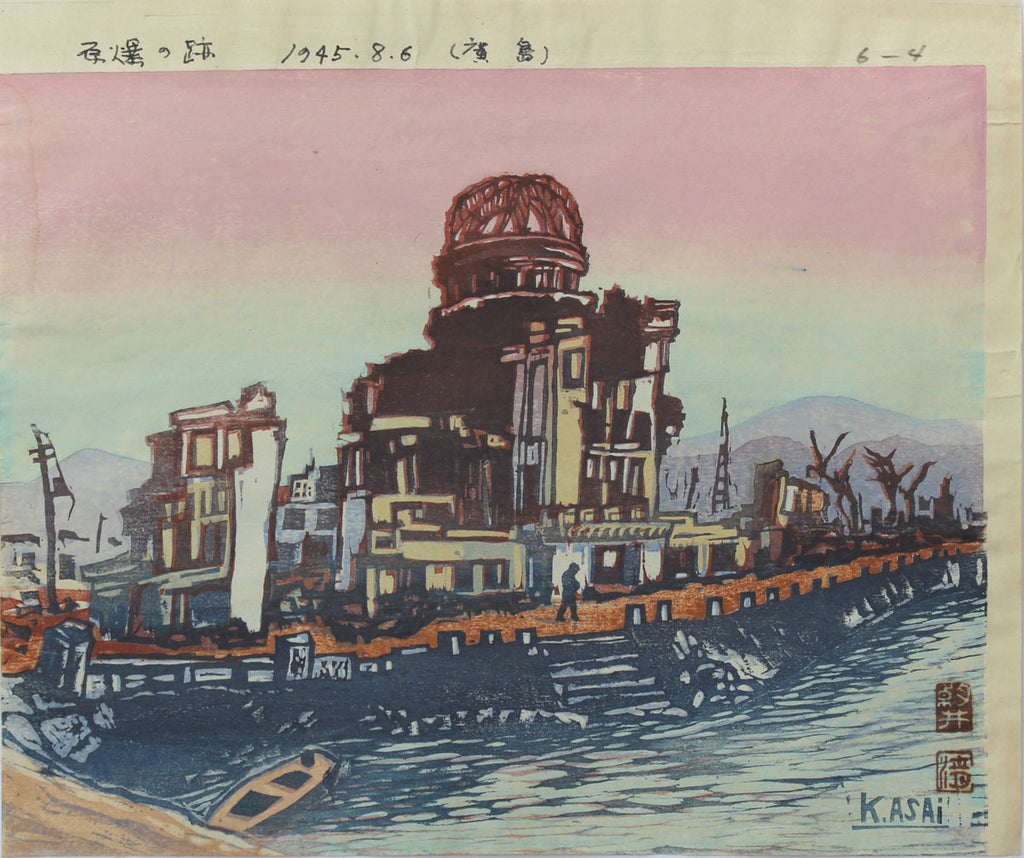
The Atomic Bomb Ruins (Hiroshima), titled in Japanese 原爆の跡(廣島) (Genbaku no ato, Hiroshima), was made in the aftermath of the bombing of 6 August 1945 and depicts the skeletal frame of the building now known as the Genbaku Dome — the former Hiroshima Prefectural Industrial Promotion Hall, preserved as the central monument of the Hiroshima Peace Memorial Park. Surviving in only a very small edition, it is one of the earliest visual responses to the bombing made by a Japanese artist with direct ties to Hiroshima, and belongs to the broader corpus of post-war Japanese art confronting the atomic bombings that includes the work of figures such as Maruki Iri and Maruki Toshi.
A particularly valuable piece of documentary evidence for Asai's working life is a photograph from the Atomic Bomb Casualty Commission (ABCC) Photograph Collection, now held at the McGovern Historical Center of the Texas Medical Center Library in Houston (image IC099). Taken by George T. Sakoda between 1948 and 1950, it shows the artist in his studio carving a woodblock to make a print, confirming that he was working actively in the medium in the immediate post-war years, in his native Hiroshima region, as the city rebuilt from the atomic bombing.
Within the larger picture of twentieth-century Japanese hanga, Asai Kiyoshi is best understood as one of the many capable working artists whose careers helped sustain the print medium between its better-known masters. He should not be confused with his much more famous contemporary Saitō Kiyoshi (斎藤清, 1907-1997), the Aizu-born sōsaku-hanga master; the shared given name Kiyoshi has led to cataloguing confusion on digital aggregators such as ukiyo-e.org. For collectors and researchers, Asai Kiyoshi's prints surface most reliably through specialist dealer channels — notably Saru Gallery in the Netherlands, which has handled a small group of his work — and through the photographic archives of the institutions that documented his working life, rather than through the major museum print rooms of Europe and North America.
Key Facts
- Active Period
- 1902–1968
- Nationality
- 🇯🇵Japan
- Movement
- Sōsaku-hanga
- Works Indexed
- 3
Frequently Asked Questions
Asai Kiyoshi (朝井清, 1902-1968) was a Japanese painter and woodblock printmaker born in Hiroshima prefecture, active in the first half of the twentieth century. He occupies a comparatively quiet position in the institutional literature on Japanese printmaking, but his name survives through specialist dealer catalogues and, above all, through a documentary photographic record that places him among the working hanga artists of pre-war and immediate post-war Japan.
Asai Kiyoshi was active from 1902 to 1968. They were associated with the Sōsaku-hanga movement.
Asai Kiyoshi's work was shaped by the Sōsaku-hanga tradition in Japanese woodblock printmaking. Sōsaku-hanga: ## What is sōsaku-hanga? Sōsaku-hanga (創作版画, "creative prints") was a twentieth-century Japanese print movement defined by a single commitment: the artist must design, carve, and print every work alone.
Original prints by Asai Kiyoshi can be found in collections including Saru Gallery.
Woodblock Prints by Asai Kiyoshi (3)
Atomic Bomb Ruins (Hiroshima)
原爆の跡(廣島)
1945 (composed after August 6, 1945)
Woodblock print on paper
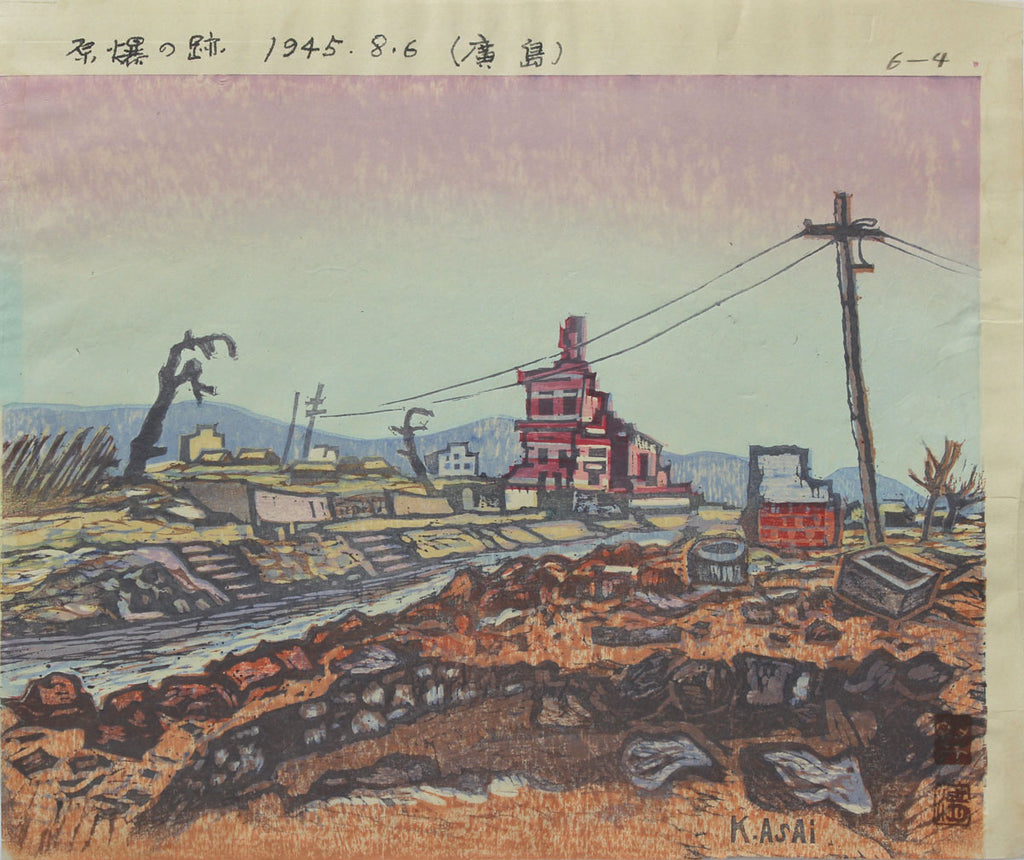
Atomic Bomb Ruins (Hiroshima), second impression
原爆の跡(廣島)
1945 (composed after August 6, 1945)
Woodblock print on paper
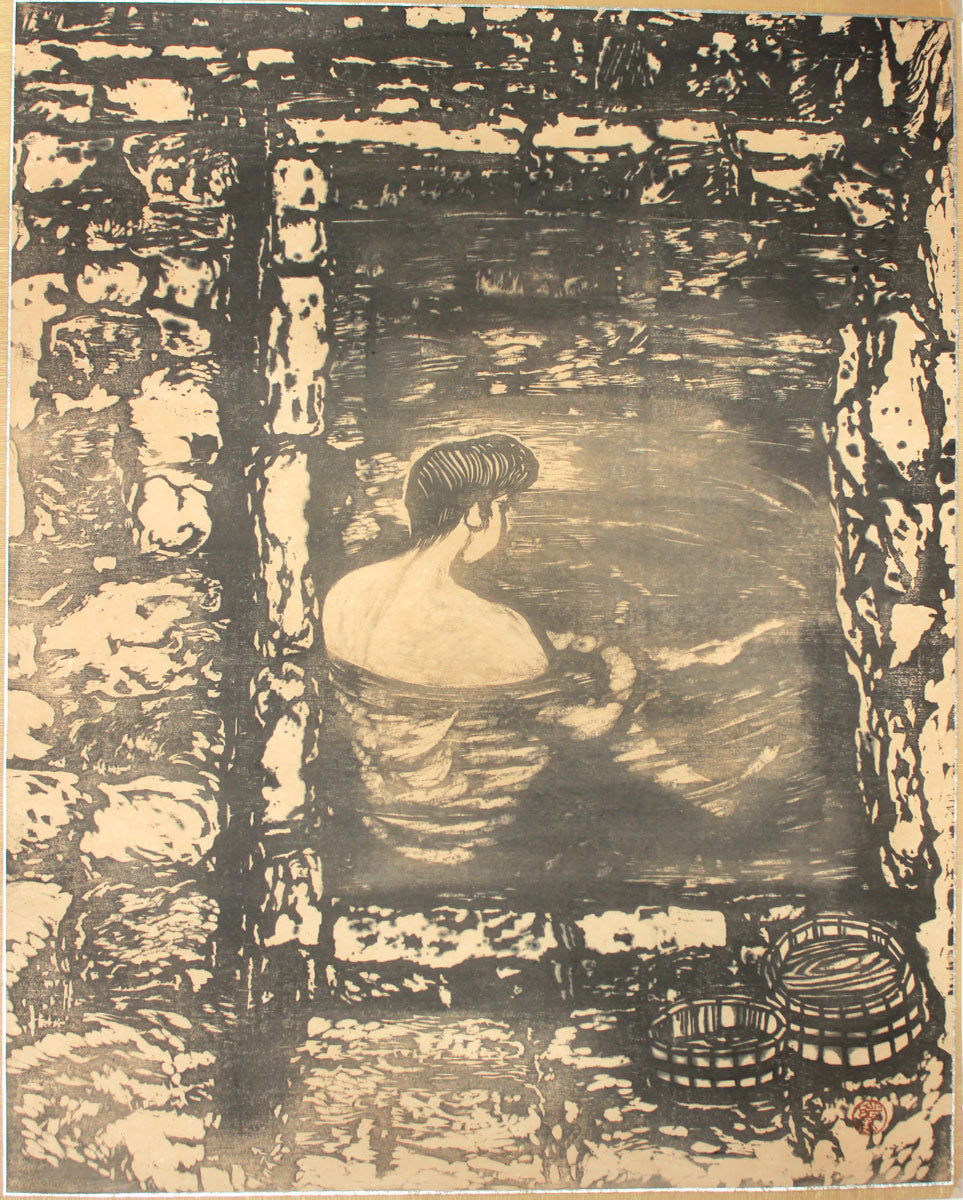
Nude in Onsen
Shōwa period
Large black-and-white woodblock print on paper (de-accessioned from the Nerima Art Museum, Tokyo)