Biography
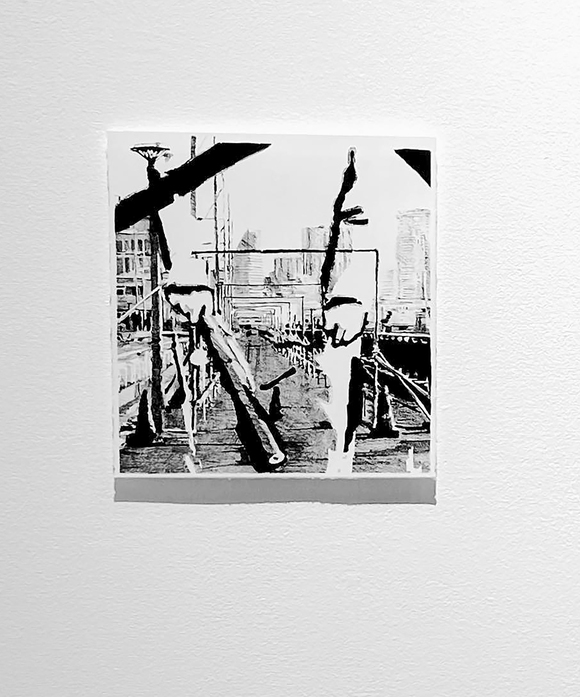
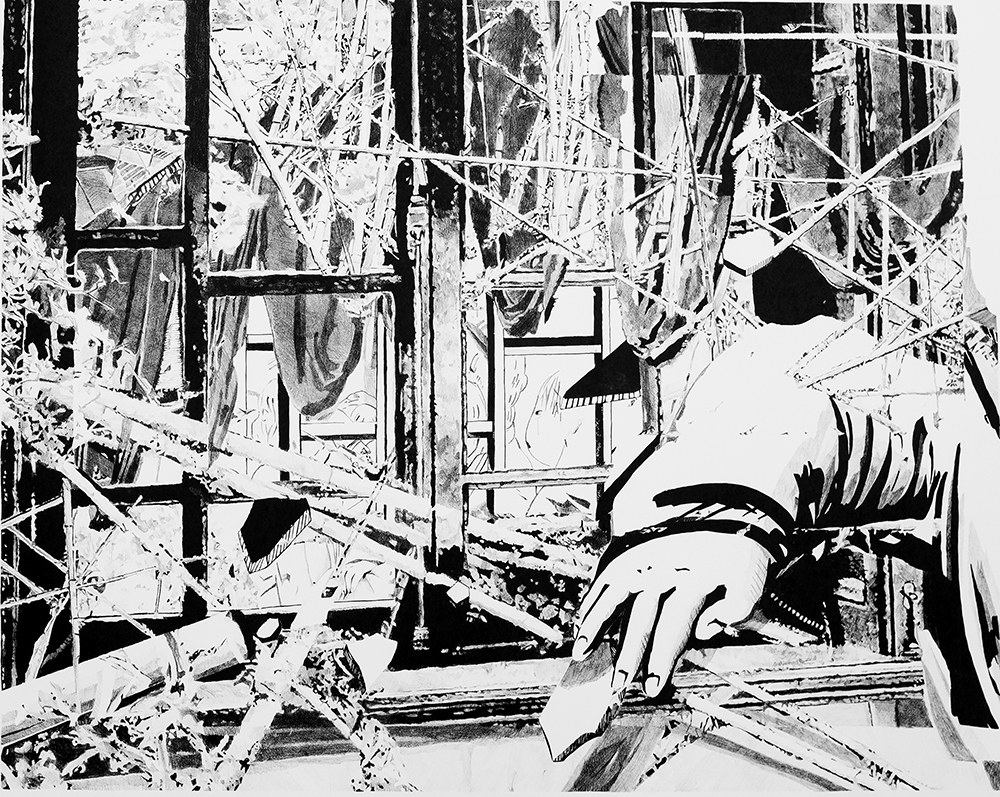
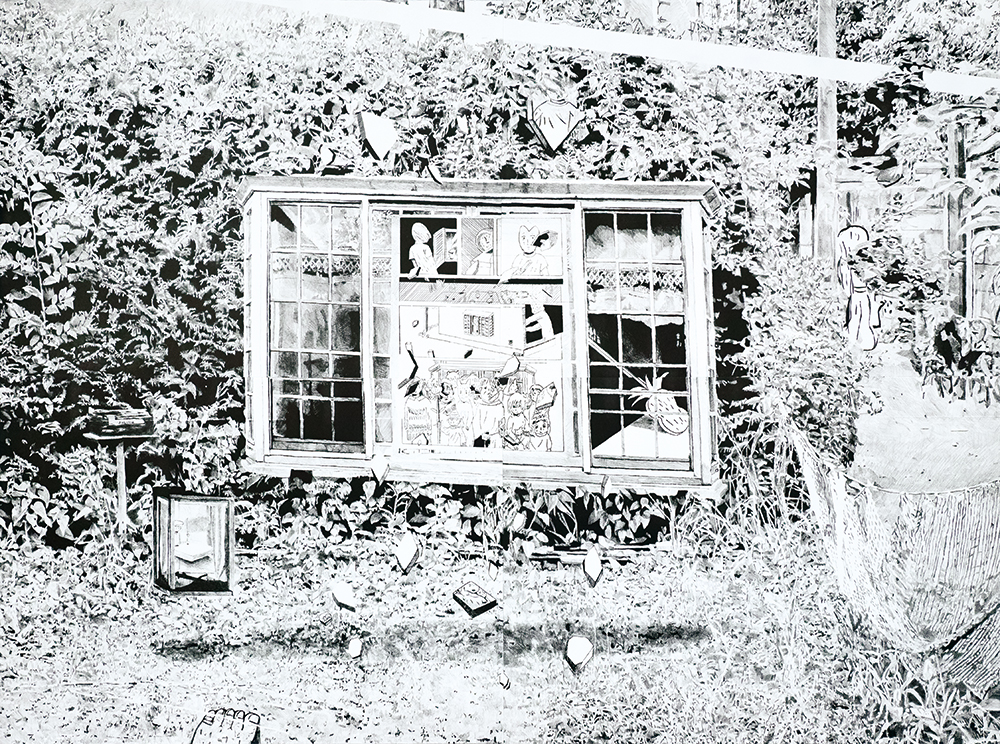
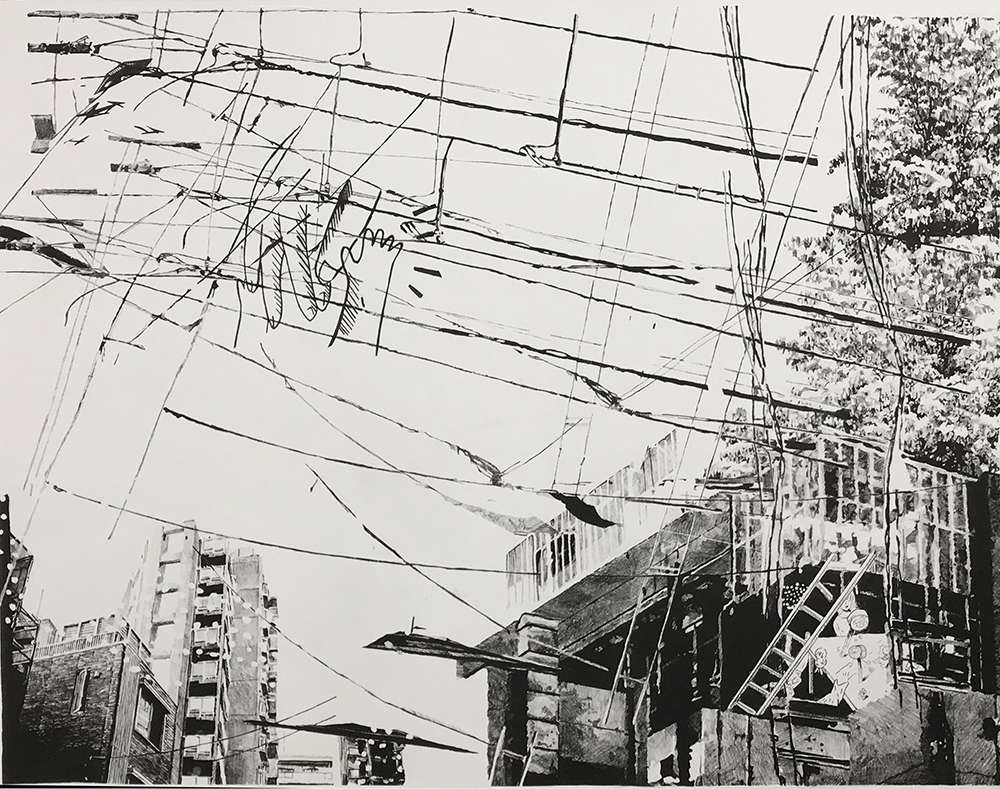
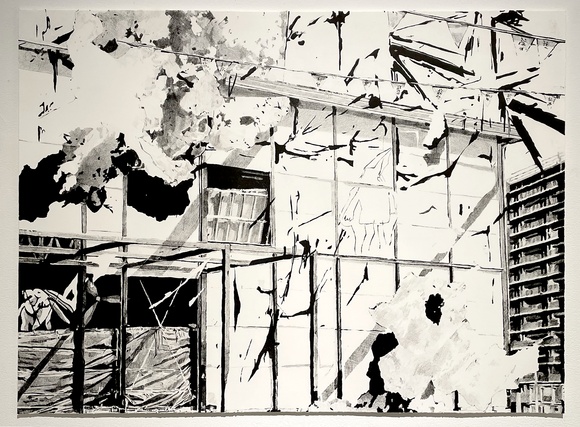
Mizuki Ashikawa (born 1994, Shizuoka Prefecture) is a Japanese printmaker whose practice is anchored in lithography — the planographic tradition of nineteenth-century European print — used at scale to depict urban infrastructure, civil-engineering forms, and the recurring 'small figure in vast landscape' motif drawn from a manga visual register. The combination of lithographic technique with manga-style figural composition at architectural scale gives her work a recognisable voice.
Ashikawa earned her BFA (2017) and MFA (2019) in Printmaking at Musashino Art University and continued there into doctoral study in fine art. Her early award profile is dense: she received the Art Award Tokyo Marunouchi 2019 (Mitsubishi Estate Co. Prize), Second Prize at the AOMORI TRIENNALE 2017, the Purchase Prize at the 42nd Annual Exhibition of the Japan Society of Printmaking, and selection at the Shell Art Award Exhibition — together marking her as a serious early-career figure in the late-2010s Japanese print scene.
Her 2019 solo exhibition 'From Out of Range' was held at Tokyo Arts and Space Hongo. In 2022 she undertook a residency under the Tokyo Arts and Space Local Creator Residency Program with the theme 'Festival Traces' — originally conceived around the Tokyo Olympic Games and reimagined, after the pandemic, as research into the city's Olympic-related landscapes: the Olympic Village and stadiums built on Tokyo Bay landfill, the Central Breakwater Outer Landfill Site, and Yumenoshima, Wakasu, and Uminomori parks. Works from the residency include 'Public and me' (2022, lithograph on paper, 18 x 18 cm), 'Critical park 2022' (lithograph on paper, 57.8 x 77.5 cm), 'Tiny guys' (2022, lithograph on paper, 18 x 18 cm), and a set of three untitled inkjet prints (2022) documenting the research.
Ashikawa was selected for the 3rd PATinKyoto Print Art Triennale 2022 at the Kyoto City KYOCERA Museum of Art, where she received the NISSHA Foundation Award. Her solo and two-person exhibitions include 'View from There' (Gallery Natsuka, Tokyo, 2019), 'Sunny Nook for Diversion' (Open Letter Gallery, Tokyo, 2020), and 'All of Being Put in Parentheses' (Mitsubishi Ichigokan Museum history archive room, Tokyo, 2020), and her group exhibitions include 'Translation of 3 Vision of Printmaking' at Silpakorn University, Thailand (2018) and 'Takeda Art / HELP Overcoming' at venues in St. Petersburg and Moscow (2018). A Tokyo-based, early-career lithographer, her engineering-meets-manga subject matter and architectural sense of scale have produced one of the more visually distinctive bodies of work among recent Japanese print graduates.
Key Facts
- Active Period
- 1994
- Nationality
- 🇯🇵Japan
- Movement
- Contemporary Mokuhanga
- Subjects
- Landscapes
- Works Indexed
- 6
Frequently Asked Questions
Mizuki Ashikawa (born 1994, Shizuoka Prefecture) is a Japanese printmaker whose practice is anchored in lithography — the planographic tradition of nineteenth-century European print — used at scale to depict urban infrastructure, civil-engineering forms, and the recurring 'small figure in vast landscape' motif drawn from a manga visual register. The combination of lithographic technique with manga-style figural composition at architectural scale gives her work a recognisable voice.
Mizuki Ashikawa was active born in 1994. They were associated with the Contemporary Mokuhanga movement.
Mizuki Ashikawa's work was shaped by the Contemporary Mokuhanga tradition in Japanese woodblock printmaking. Contemporary Mokuhanga: Contemporary mokuhanga (literally "wood-block print") encompasses artists working from approximately 1970 to the present who continue or reinvent traditional Japanese woodblock printing techniques.
Mizuki Ashikawa's prints frequently feature landscapes.