Biography
Chōkōsai Eishō (鳥高斎栄昌, active circa 1793–1800) was a Japanese ukiyo-e printmaker who emerged during the final phase of the so-called golden age of bijin-ga, the genre devoted to images of beautiful women. A leading student of Chōbunsai Eishi, Eishō produced a concentrated body of work over roughly seven years that placed the women of the Yoshiwara pleasure quarter — its star courtesans, their attendants, and the orchestrated rituals of the licensed quarter — at the center of his art. His tightly framed okubi-e (large-head portraits) of Edo's most famous oiran rank among the most coveted designs of the Kansei era (1789–1801) and stand alongside the work of Kitagawa Utamaro and Eishi himself as a high point of late eighteenth-century Japanese woodblock printing.
Little is known with certainty about Eishō's life outside his prints. His personal name, dates of birth and death, and biographical particulars are all unrecorded, a pattern that holds for most ukiyo-e artists of his generation. What can be reconstructed comes from publishers' marks, signature variations, and the dated style of his designs. He was prolific by the standards of his school, producing at least twenty print series across some fourteen Edo publishers and working most often with Yamaguchiya Chūsuke, and he signed his prints with the gō (art name) Chōkōsai Eishō, sometimes simplified to Eishō. The character 栄 (ei) in his name was shared with that of his master Eishi, a customary mark of pupillage in the Eishi school.
Eishi's lineage gave Eishō a distinctive starting point. Chōbunsai Eishi (1756–1829) was unusual among ukiyo-e masters: a samurai by birth, formally trained in the Kanō school, who turned to floating-world subjects only after leaving his hereditary post. From Eishi, Eishō inherited a refined, elongated figure type, an elegantly restrained palette, and a taste for compositions that flatter the courtesan rather than caricature her. But Eishō pushed these inherited conventions toward something more concentrated. Where Eishi's full-length bijin glide through pictorial space at a polite remove, Eishō's mature portraits crop in tightly on the face and upper body, isolating the courtesan against a plain or lightly mica-dusted ground and forcing the viewer into an intimate, almost confrontational encounter with her gaze.
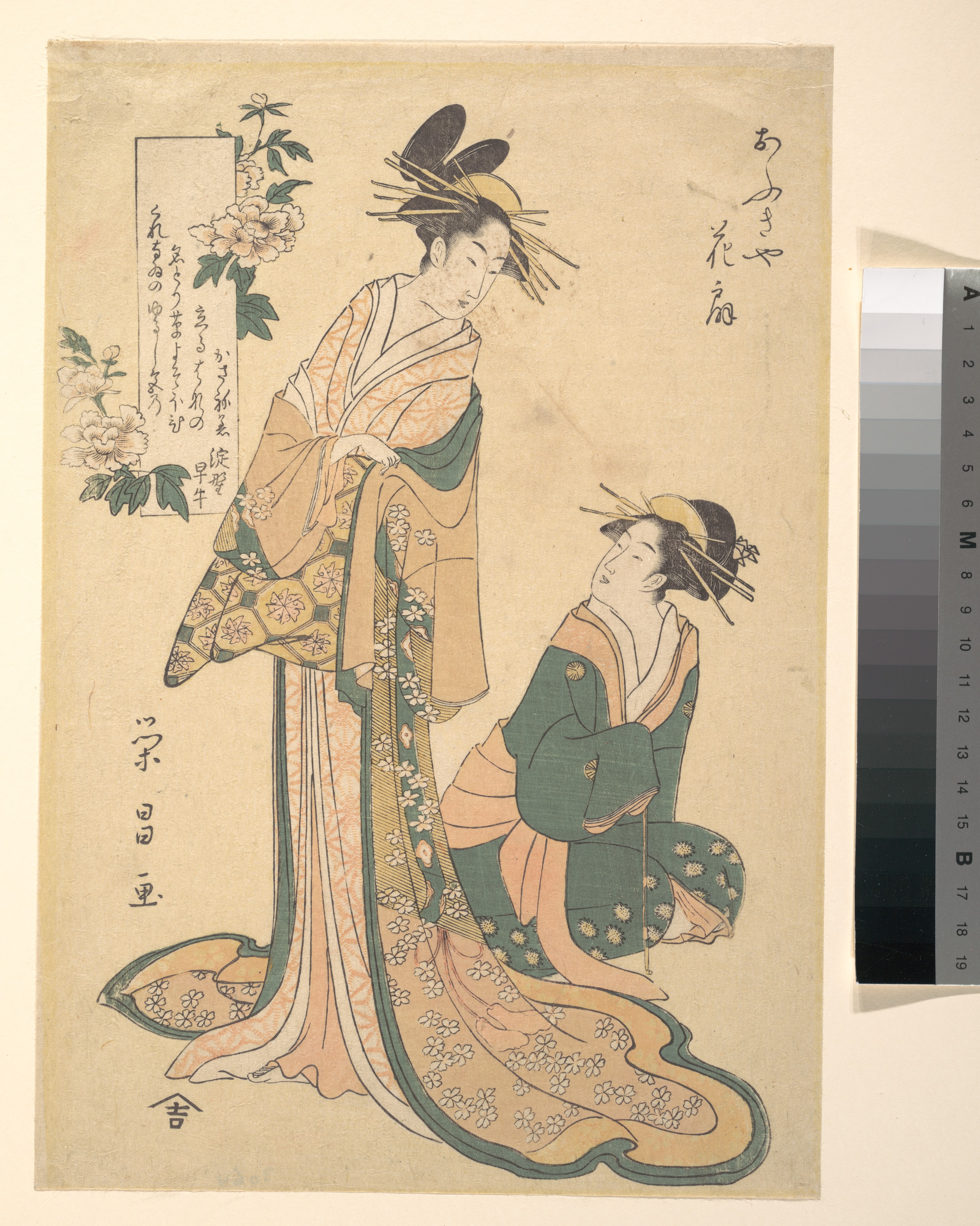
This okubi-e mode is the achievement for which Eishō is best remembered. Around 1795–1798 he produced a remarkable series of bust-length portraits of named Yoshiwara stars — Hanaōgi of the Ōgiya, Wakamurasaki of the Kadotamaya, Misayama of the Chōjiya, Somenosuke of the Matsubaya, and others — for series with titles such as Beauties of the Licensed Quarter (Kakuchū bijin kurabe) and A Comparison of Contemporary Beauties (Tōsei bijin awase). Each design names the woman and her brothel, fixing the image as a kind of celebrity portrait in an era when courtesans of the highest rank functioned as fashion icons whose hairstyles, kimono patterns, and even handwriting were imitated across Edo. Eishō's faces are long and oval, with elongated noses, narrow eyes set close to the bridge, and small mouths painted in a single crimson note; the necks are slender, the gestures small and considered. The effect is neither the warm sensuality of Utamaro nor the cool aristocracy of Eishi, but something cleaner and more graphic — a portraiture distilled to essentials.
Alongside these single-figure portraits Eishō was a confident designer of large-scale compositions. He produced numerous ōban triptychs depicting daytime scenes in the Yoshiwara — courtesans lined up behind the wooden lattices of the Ōgiya and the Chōjiya, attendants and lower-ranked girls fussing with sleeves, customers arriving on cherry-blossom afternoons. Prints such as The Courtesans of the Chōjiya on Display in the Daytime (Chōjiya hirumise) and his parodies of the courtesans on display at the Ōgiya treat the brothel as theatrical space, with figures arrayed in receding planes and the architectural framework — verandas, tatami, paper screens — providing a measured grid for the dance of textile pattern. He also tried his hand at literary parody: Parody of the Yūgao Chapter of the Tale of Genji and a Festivity at a Teahouse from a Parody of Chūshingura transpose classical and dramatic subjects into the costumes and settings of the contemporary Yoshiwara, a fashionable mode of mitate (parody picture) that Eishi's school helped popularize. Hashira-e (pillar prints) — tall narrow formats designed to be pasted on the wooden posts of Edo houses — round out his output: graceful compositions of two beauties reading a letter, women washing clothes, or a courtesan strolling beneath cherry blossoms with her young attendant.
Eishō's career coincided almost exactly with the late Kansei moment that scholars now treat as the climactic decade of bijin-ga. Utamaro, who had pioneered the okubi-e in the early 1790s, was at the peak of his powers; Eishi was producing his most elegant courtesan parades; Sharaku appeared and vanished within ten months of 1794–95; Toyokuni's Yakusha butai no sugata-e was redrawing the actor portrait. Into this saturated market Eishō pushed a tighter, harder-edged courtesan portrait that took the okubi-e and stripped it back further still, replacing Utamaro's plump-cheeked warmth with a longer, more linear face and a flatter pattern sense. His prints clearly sold: examples survive in fine impressions across major collections — the Art Institute of Chicago, the Metropolitan Museum of Art, the Victoria and Albert Museum, the British Museum, and the Tokyo National Museum among them.
Then, almost as abruptly as he appeared, Eishō stopped. His latest securely dated designs cluster around 1800–1801, and after that the trail goes cold. Whether he died young, retired, or simply ceased producing for reasons now lost is not known. The Eishi school continued under other pupils — Eishi himself withdrew from print design around the same time, returning to brush painting — but Eishō's particular voice does not recur. The brevity of his career is one reason his finest prints have always been comparatively rare on the market: he produced for only about seven years at the top of his form.
Today Chōkōsai Eishō is recognized as one of the indispensable bijin-ga designers of the late Edo period. His Yoshiwara courtesan portraits document a specific cultural moment — the celebrity culture of the licensed quarter at its commercial apex, on the eve of the Kansei Reforms' tightening grip — with a graphic clarity that has aged exceptionally well. For collectors and students of Japanese woodblock prints, an Eishō okubi-e remains a benchmark of what the form could achieve in its concentrated late-1790s flowering.
Key Facts
- Nationality
- 🇯🇵Japan
- Movement
- Ukiyo-e
- Subjects
- FishWinterBirds & Flowers
- Works Indexed
- 24
Frequently Asked Questions
Chōkōsai Eishō (鳥高斎栄昌, active circa 1793–1800) was a Japanese ukiyo-e printmaker who emerged during the final phase of the so-called golden age of bijin-ga, the genre devoted to images of beautiful women. A leading student of Chōbunsai Eishi, Eishō produced a concentrated body of work over roughly seven years that placed the women of the Yoshiwara pleasure quarter — its star courtesans, their attendants, and the orchestrated rituals of the licensed quarter — at the center of his art. His tightly framed okubi-e (large-head portraits) of Edo's most famous oiran rank among the most coveted designs of the Kansei era (1789–1801) and stand alongside the work of Kitagawa Utamaro and Eishi himself as a high point of late eighteenth-century Japanese woodblock printing.
Chōkōsai Eishō's work was shaped by the Ukiyo-e tradition in Japanese woodblock printmaking. Ukiyo-e: ## What is ukiyo-e? Ukiyo-e ([浮世絵](/glossary/ukiyo-e)) — literally "pictures of the floating world" — is the Edo-period Japanese print and painting tradition that flourished from roughly 1660 to 1868, depicting the pleasures of urban life in Edo (modern Tokyo): courtesans, kabuki actors, sumo wrestlers, famous landscapes, and seasonal beauties.
Chōkōsai Eishō's prints frequently feature fish, winter, birds & flowers.
Original prints by Chōkōsai Eishō can be found in collections including Metropolitan Museum of Art, Art Institute of Chicago, Victoria and Albert Museum.
Woodblock Prints by Chōkōsai Eishō (24)
Courtesan and Her Maid
Woodblock print; ink and color on paper

Courtesan and her Attendant under Cherry Tree
c. 1780/1800
Color woodblock print; hashira-e

Women Standing on Veranda by a River
c. 1780/1800
Color woodblock print; hashira-e

Women on a Fishing Boat
c. 1780/1800
Color woodblock print; left sheet of oban triptych (right sheet: 1997.729a, center sheet: 1997.729b)

Washing Clothes
c. 1780/1800
Color woodblock print; hashira-e

Two Beauties Reading a Letter
c. 1780/1800
Color woodblock print; hashira-e

Three Beauties of Our Time (Tosei san bijin)
n.d.
Color woodblock print; oban
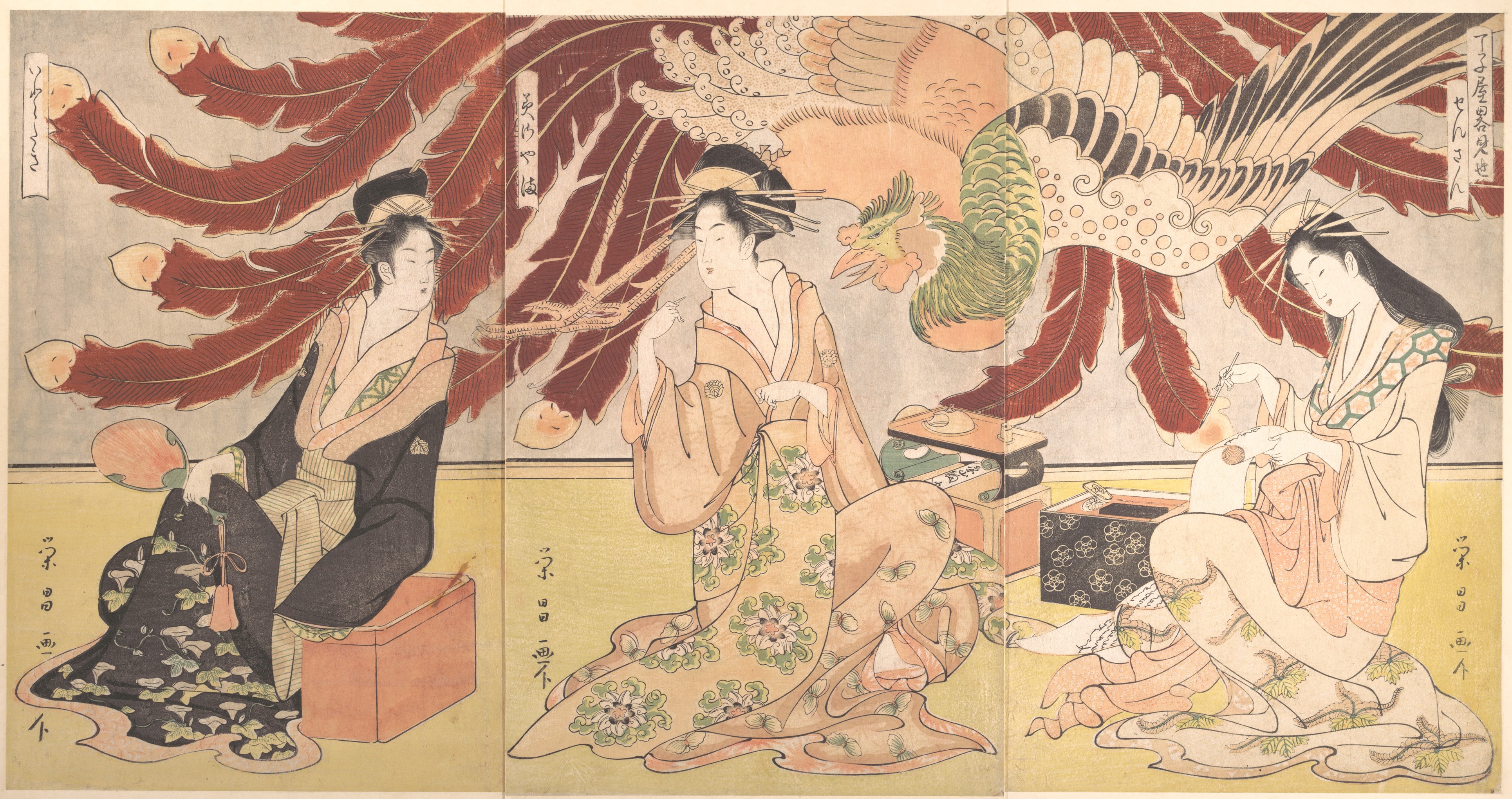
The Chōjiya Pleasure House by Day (Chōjiya hiru-mise)
ca. 1798
Triptych of woodblock prints; ink and color on paper

A parody of courtesans on display at the Ogiya (Ogiya mise yatsushi)
c. 1795
Color woodblock print; oban triptych

The Six Immortals of Poetry, Abbreviated
c. 1795
Color woodblock print; oban triptych
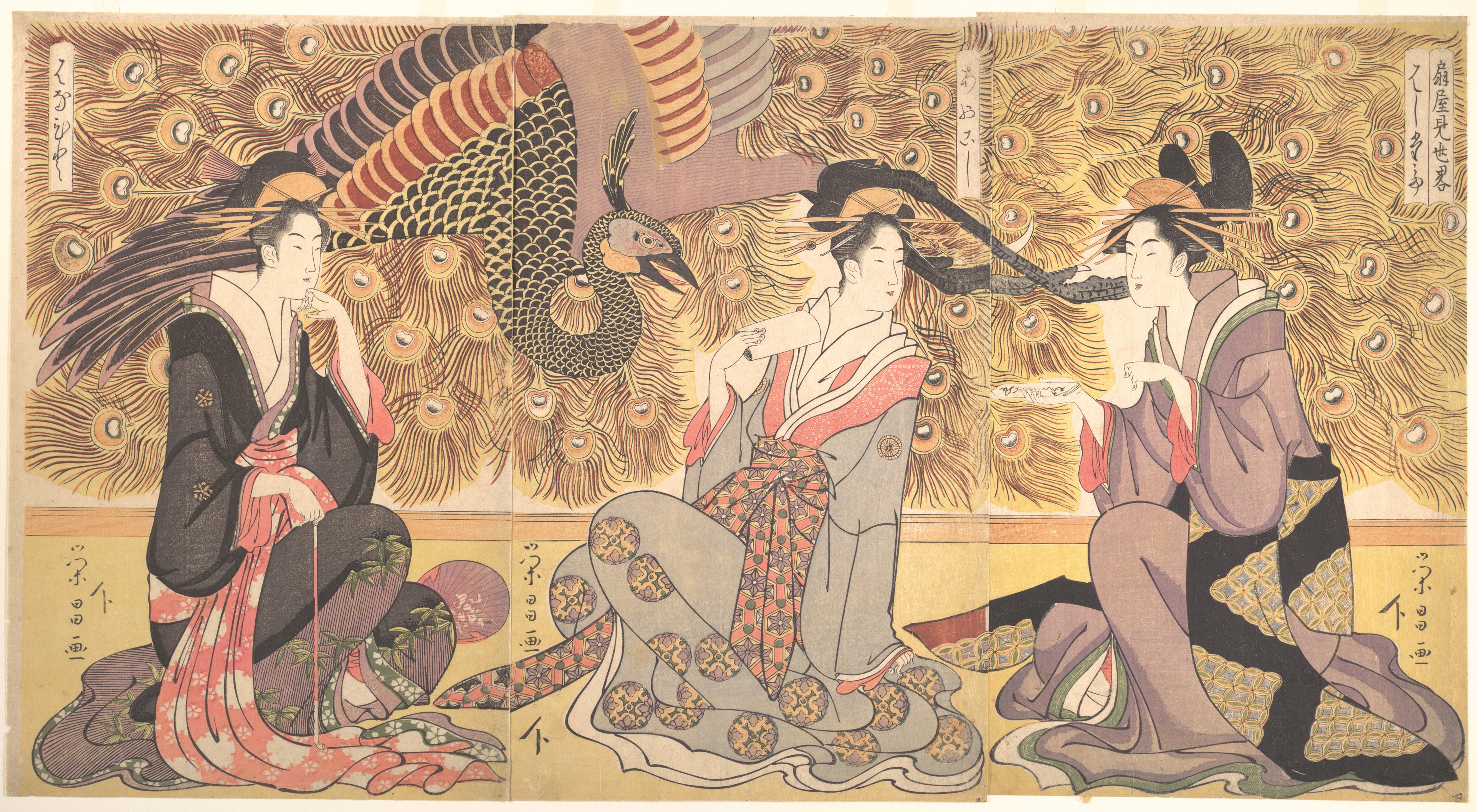
Interior of the House called Ōgiya
ca. 1800
Triptych of woodblock prints; ink and color on paper

Misayama of the Chojiya, from the series Beauties of the Licensed Quarter (Kakuchu bijin kurabe)
c. 1795
Color woodblock print; oban
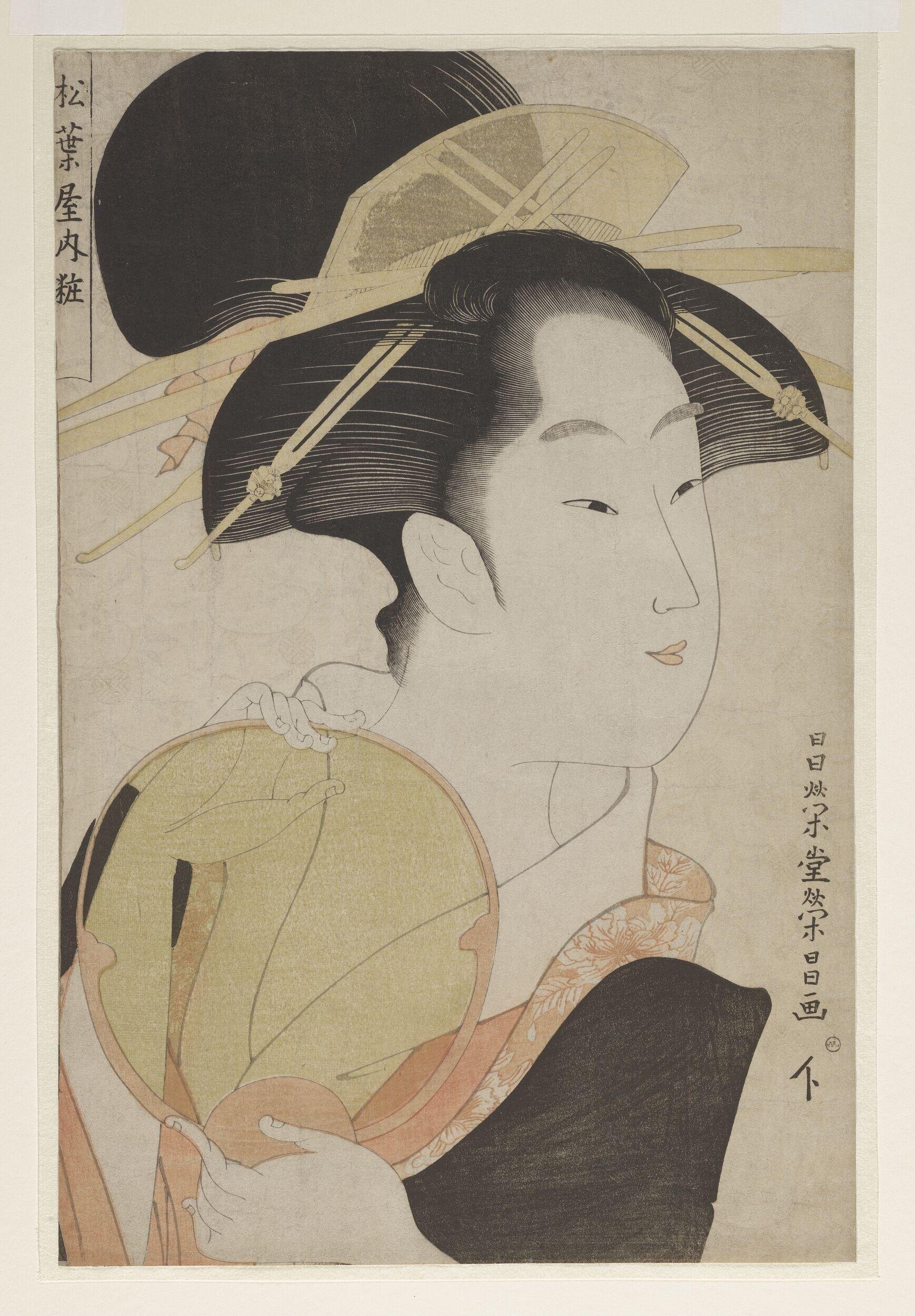
The Courtesan Yosooi
late 1790s

Parody of the Yugao Chapter of the Tale of Genji
c. 1795/97
Color woodblock print; oban triptych
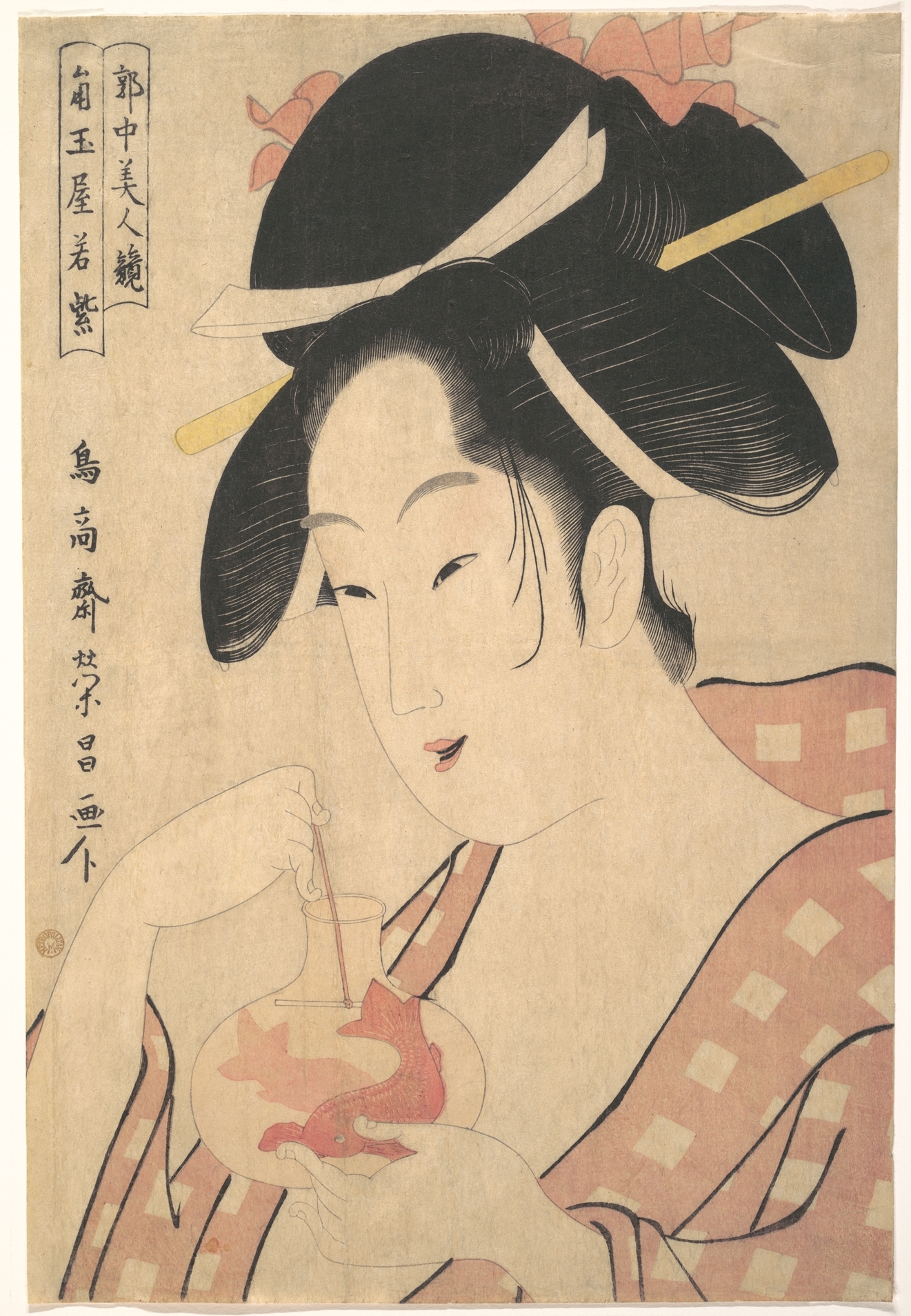
Wakamurasaki of the Kadotamaya
ca. 1800
Woodblock print; ink and color on paper

The Courtesans of the Chojiya on Display in the Daytime (Chojiya hirumise)
c. 1796/98
Color woodblock prints; oban triptych

The Courtesans Hanaogi, Segawa, and Miyahito of the Ogiya
c. 1796/97
Color woodblock print; oban
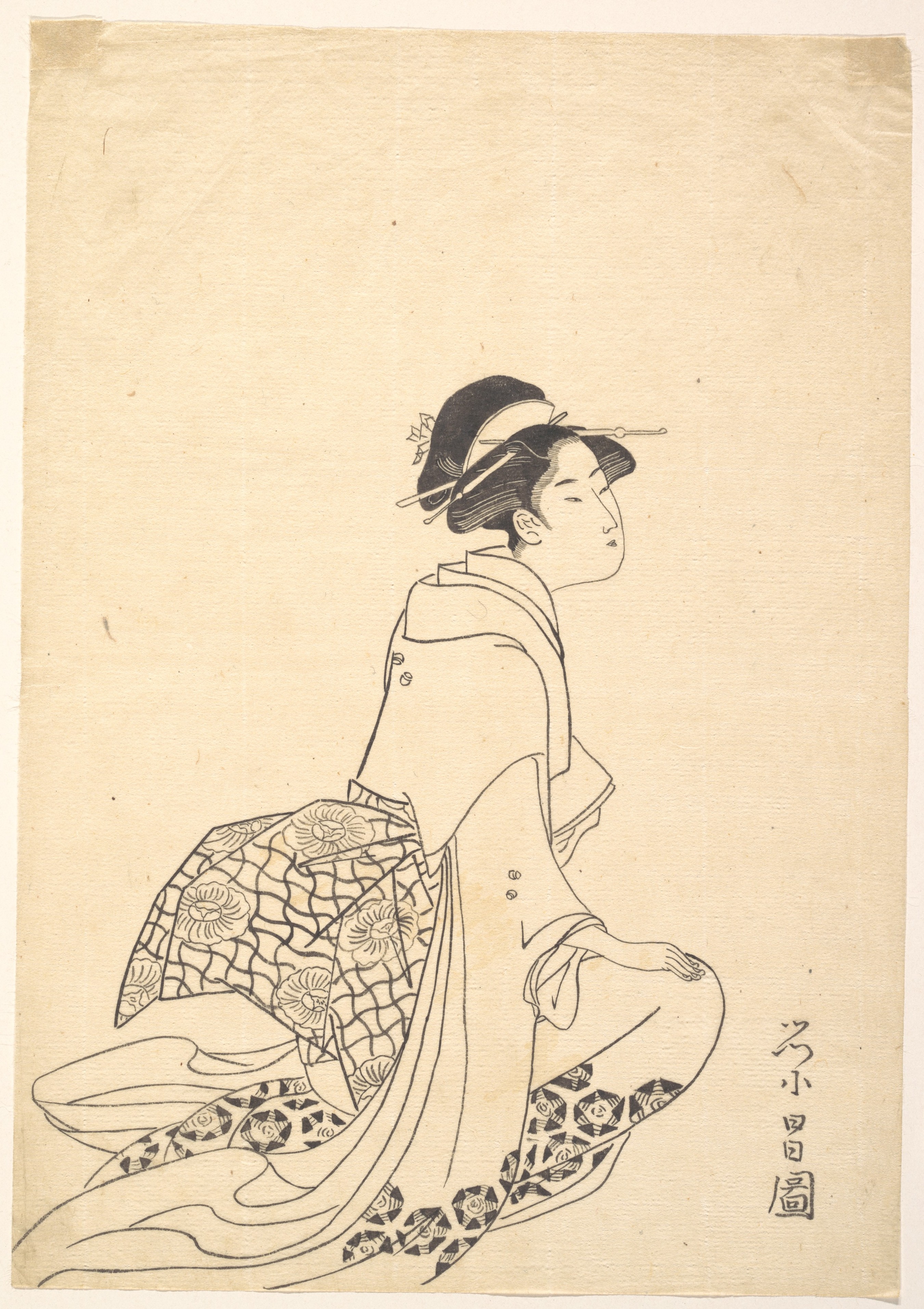
A Woman Kneeling
Monochrome woodblock print; ink on paper
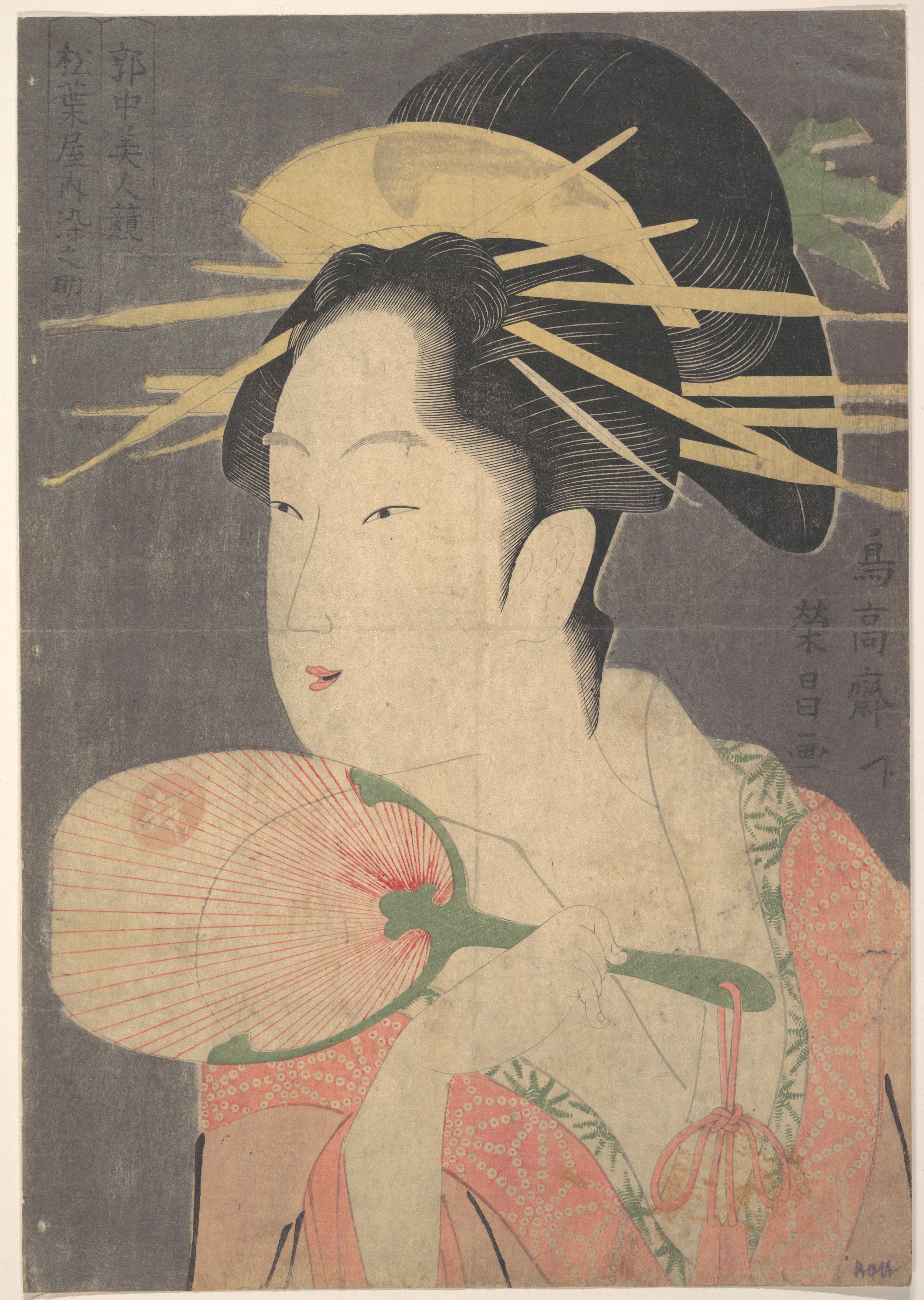
A Beauty
Woodblock print; ink and color on paper

Festivity at a teahouse, from a parody of Chushingura
c. 1797/98
Color woodblock print; right sheet of oban triptych
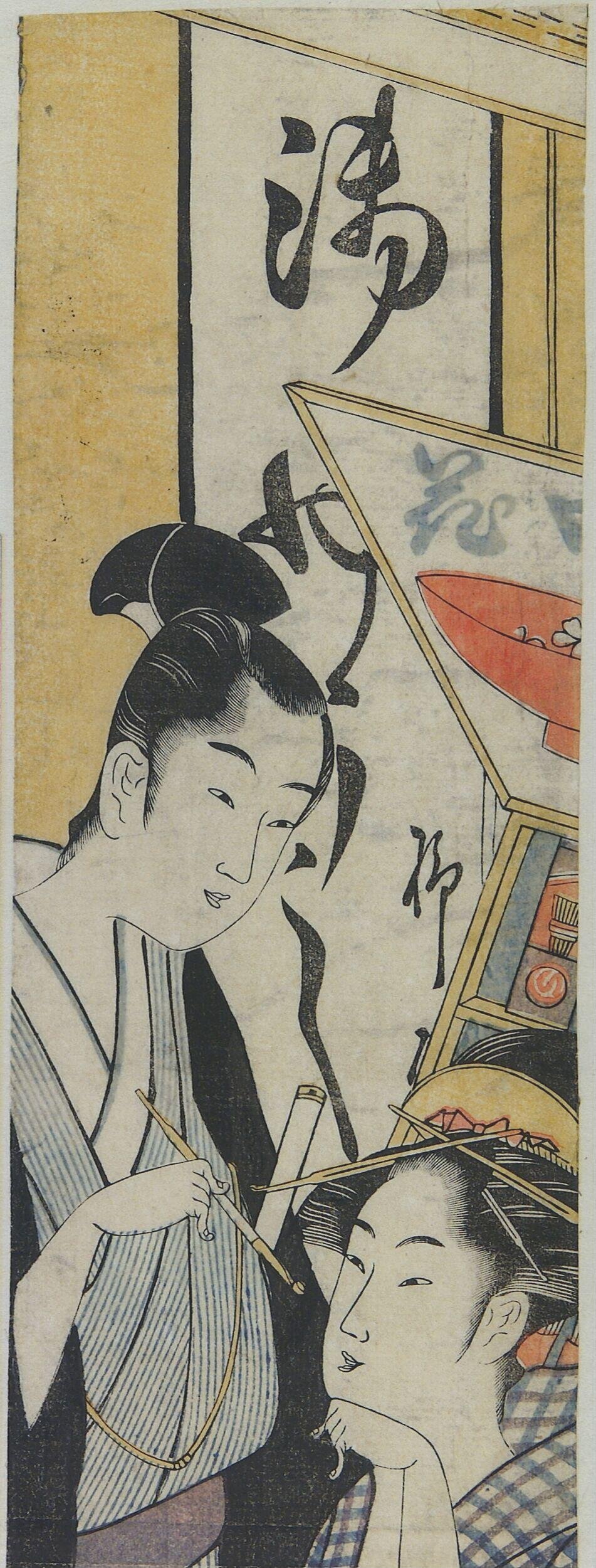
'In Front of the Toothbrush Shop'
ca.1800
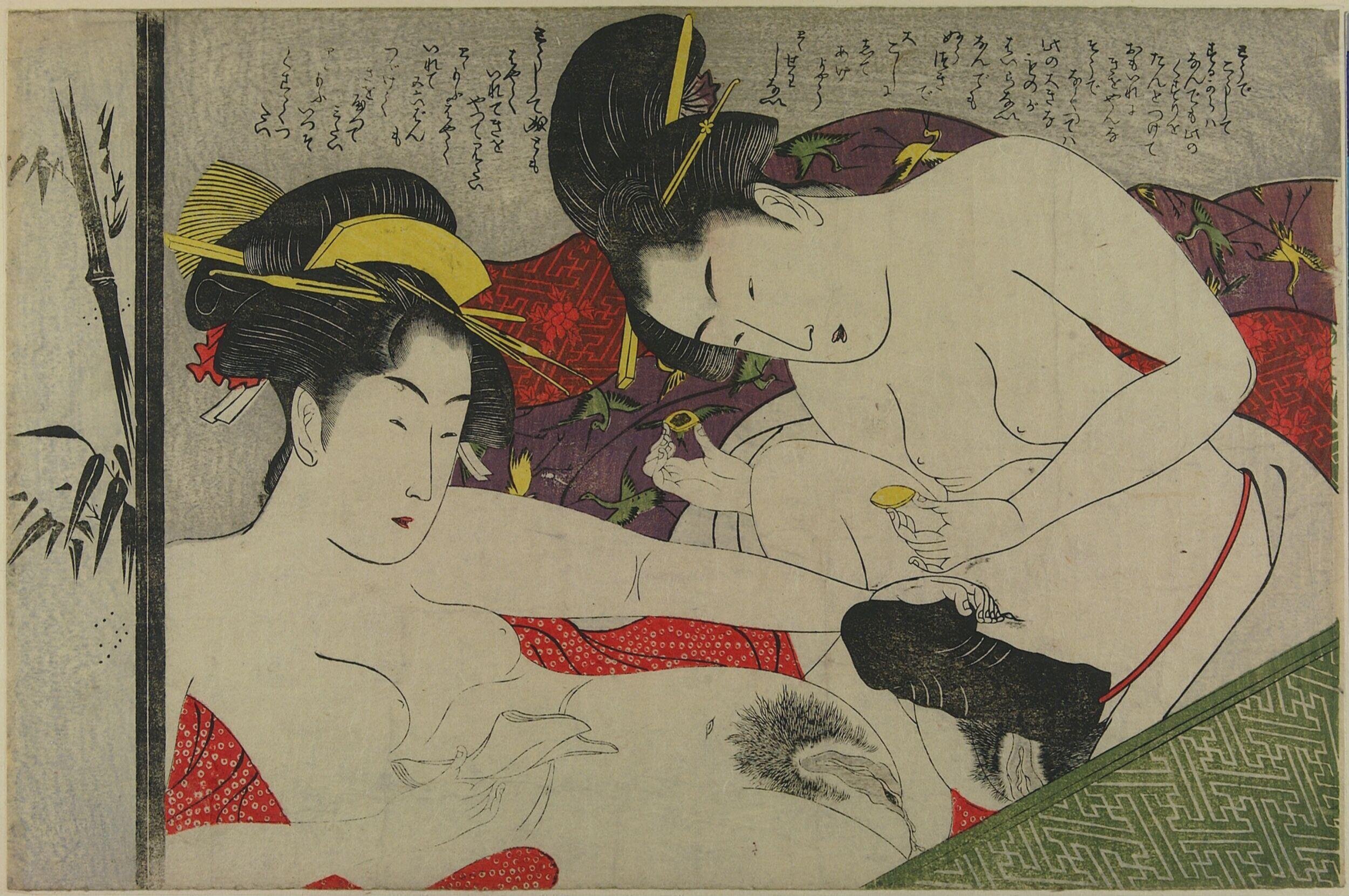
Fumi no kiyogaki
1801
Kingfisher on Snowladden Reeds
1912-1936
Color woodblock print
Asakusa Kanzeon Temple
1932
Color woodblock print