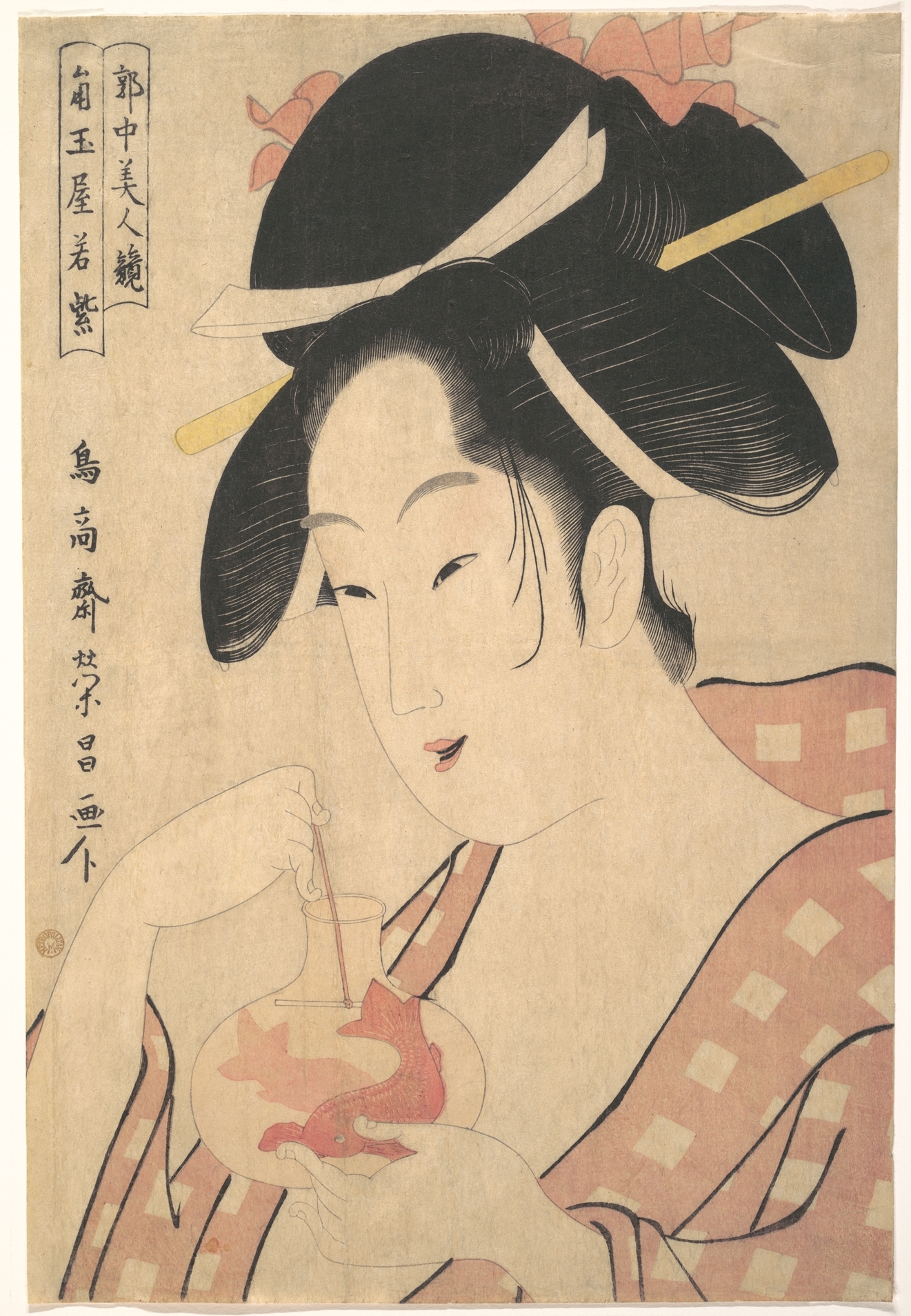
Wakamurasaki of the Kadotamaya
- Date:
- ca. 1800
- Medium:
- Woodblock print; ink and color on paper
- Source:
- Metropolitan Museum of Art
Description
An ōban print in the Metropolitan Museum of Art's collection, dated circa 1800, this is one of Eishō's mature okubi-e portraits of a named Yoshiwara star: Wakamurasaki of the Kadotamaya brothel. The name Wakamurasaki — borrowed from the young heroine of the Wakamurasaki chapter of the Tale of Genji — was a sobriquet typical of top-ranked courtesans, who often adopted classical literary names as professional identities. Eishō shows her bust-length against a plain ground, the head turned slightly off-axis so the long oval of the face reads to maximum effect; her kimono is closely patterned, her hair piled in the elaborate lacquered shimada of a tayū. The Met's impression is a strong example of the celebrity-portrait mode in which Eishō achieved his greatest critical reputation.
More Prints by Chōkōsai Eishō
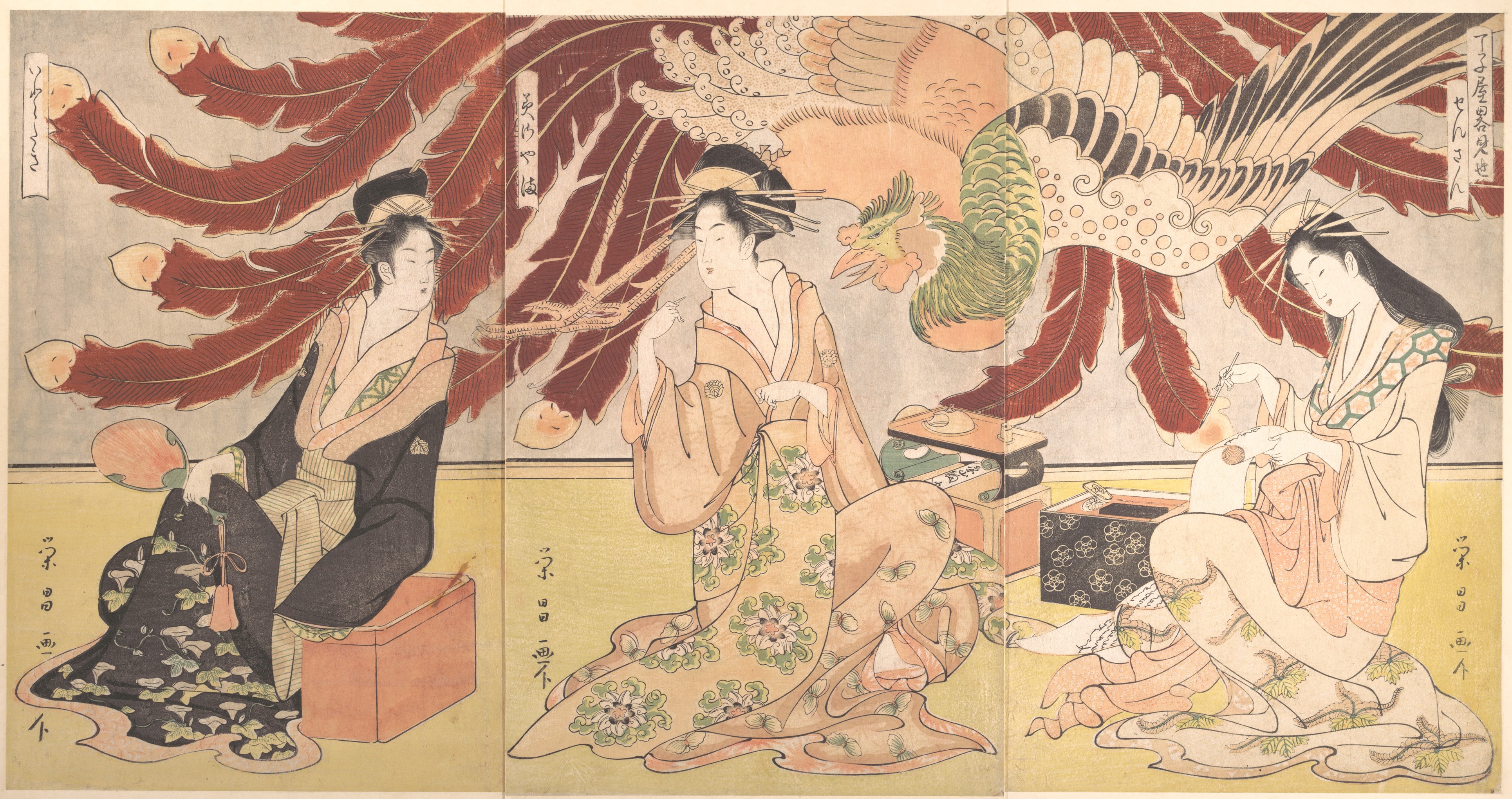
The Chōjiya Pleasure House by Day (Chōjiya hiru-mise)
ca. 1798
Triptych of woodblock prints; ink and color on paper

Two Beauties Reading a Letter
c. 1780/1800
Color woodblock print; hashira-e

Women Standing on Veranda by a River
c. 1780/1800
Color woodblock print; hashira-e

Women on a Fishing Boat
c. 1780/1800
Color woodblock print; left sheet of oban triptych (right sheet: 1997.729a, center sheet: 1997.729b)
Frequently Asked Questions
Wakamurasaki of the Kadotamaya was created by Chōkōsai Eishō (鳥高斎栄昌) in ca. 1800.