
Biography
Elizabeth Keith (1887-1956) was a Scottish-born artist who became one of the most accomplished and widely recognized Western practitioners of Japanese woodblock printmaking. Her prints depicting scenes from Korea, China, Japan, the Philippines, and other parts of East and Southeast Asia are distinguished by their sensitive observation of local customs and traditions, their masterful use of color, and their ability to convey the atmosphere and character of places and peoples with both accuracy and affection. Working primarily with the renowned shin-hanga publisher Watanabe Shozaburo, Keith produced a body of work that bridges Eastern and Western artistic sensibilities and provides an invaluable visual record of Asian life in the first half of the twentieth century.
Elizabeth Keith was born on April 30, 1887, in Aberdeenshire, Scotland. She was largely self-taught: she showed artistic inclinations from a young age and worked in watercolor and drawing, but she did not undertake formal academic art training. Her development as an artist was shaped by observation, travel, and practical experience rather than by the structured curriculum of an art academy, giving her work a freshness and directness that set it apart from the conventions of European academic painting in the early twentieth century.
Keith's life changed dramatically in 1915 when, at the age of twenty-eight, she traveled to Japan to visit her sister Elspet, who was married to a British publisher living in Tokyo. What was intended as a temporary visit became a transformative experience, and she ultimately remained in Asia for the better part of nine years. Keith was immediately captivated by the visual richness of Japanese life — the architecture, gardens, street scenes, traditional costumes, and the quality of light that suffused everyday activities with a sense of aesthetic beauty. She began sketching and painting prolifically, developing an intimate knowledge of East Asian visual culture that would inform her work for the rest of her career.
During her time in Japan, Keith exhibited her watercolors — including scenes she had brought back from Korea — in Tokyo. It was there that her work came to the attention of Watanabe Shozaburo, the publisher who was then establishing the shin-hanga movement as a major force in Japanese art. Watanabe encouraged her to translate one of her paintings, a view of the East Gate in Seoul, into a woodblock print, which would be carved and printed by his master craftsmen in the traditional collaborative manner. This partnership produced some of Keith's finest work and established her as a significant figure in the shin-hanga movement — one of very few Western artists to achieve this distinction.
From her base in Japan, Keith traveled extensively throughout East and Southeast Asia, spending extended periods in Korea, China, the Philippines, and other regions. She approached each culture with genuine curiosity and respect. Her Korean subjects are particularly notable: Keith visited Korea on several occasions, beginning around 1919, producing prints and watercolors that capture the distinctive character of Korean architecture, costume, and daily life during the Japanese colonial period. Works such as "East Gate, Seoul" and "Korean Bride," along with portraits of Korean men, women, and children in traditional hanbok dress, are among her most celebrated images, valued not only as works of art but as historical documents of a culture under tremendous pressure from colonial rule.
Keith's Chinese subjects are equally compelling. She depicted scenes from Peking (Beijing), Canton (Guangzhou), Hong Kong, and other cities, capturing the monumental architecture, the bustling street life, and the distinctive character of Chinese dress and custom. Her prints of Chinese subjects demonstrate her ability to adapt her style to different visual environments while maintaining a consistent standard of technical excellence. Whether depicting the massive walls and gates of Peking, the crowded waterways of Canton, or the quiet dignity of a Chinese scholar, Keith brought the same combination of careful observation and sympathetic engagement that characterized all her best work.
Her Japanese prints encompass a wide range of subjects, from intimate scenes of domestic life to grand views of temples and landscapes, as well as portraits of Japanese women in traditional kimono. These works show the influence of Japanese aesthetic principles in their composition — the use of asymmetry, the attention to seasonal atmosphere, and the subtle interplay of pattern and space — while retaining a distinctly Western quality in their treatment of light and three-dimensional form.
Keith's prints from the Philippines and other Southeast Asian destinations are less numerous but equally engaging. They document a world of tropical landscapes, colonial architecture, and multicultural street life that was rapidly changing during the period of Keith's travels. These works reveal her ability to respond to visual environments very different from the East Asian settings where she did most of her work, adapting her palette and compositional approach to capture the distinct character of each place.
Technically, Keith's prints reflect the high standards of the Watanabe publishing house. They are printed on fine Japanese paper using water-based pigments applied through multiple impressions from carved cherry wood blocks. The colors are rich and harmonious, with extensive use of bokashi (color gradation) to create atmospheric effects. The carving is precise and expressive, capturing the spontaneity of Keith's original brush drawings while adding the clarity and definition that the woodblock medium demands.
Beyond her printed work, Keith was also a prolific watercolorist, and she exhibited her paintings in Japan, Britain, the United States, and elsewhere. She published illustrated books drawn from her travels, including "Eastern Windows" (1928) and "Old Korea: The Land of Morning Calm" (1946), the latter with text by her sister Elspet — works that brought her art to a broader audience and consolidated her reputation as one of the foremost Western interpreters of East Asian culture.
Keith exhibited widely throughout her career, including a notable show at the Beaux Arts Gallery in London and exhibitions in the United States, and her work was received warmly by both critics and collectors. During her lifetime her prints were acquired by major institutions including the British Museum, the Musée Guimet in Paris, the National Gallery of Canada, and the Honolulu Academy of Arts (now the Honolulu Museum of Art). She was elected a Fellow of the Royal Society of Arts in London.
Elizabeth Keith died in 1956 in London, England, after a prolonged illness. Her legacy as an artist lies in her unique position as a cultural intermediary — a Western woman who immersed herself in East Asian visual traditions and produced work that speaks to audiences on both sides of the cultural divide. Her prints are held in numerous museum collections, including the British Museum, the Victoria and Albert Museum, the Honolulu Museum of Art, the Musée Guimet, and the National Gallery of Canada.
Key Facts
- Active Period
- 1887–1956
- Nationality
- 🇬🇧United Kingdom
- Movement
- Shin-hanga
- Works Indexed
- 22
Frequently Asked Questions
Elizabeth Keith (1887-1956) was a Scottish-born artist who became one of the most accomplished and widely recognized Western practitioners of Japanese woodblock printmaking. Her prints depicting scenes from Korea, China, Japan, the Philippines, and other parts of East and Southeast Asia are distinguished by their sensitive observation of local customs and traditions, their masterful use of color, and their ability to convey the atmosphere and character of places and peoples with both accuracy and affection. Working primarily with the renowned shin-hanga publisher Watanabe Shozaburo, Keith produced a body of work that bridges Eastern and Western artistic sensibilities and provides an invaluable visual record of Asian life in the first half of the twentieth century.
Elizabeth Keith was active from 1887 to 1956. They were associated with the Shin-hanga movement.
Elizabeth Keith's work was shaped by the Shin-hanga tradition in Japanese woodblock printmaking. Shin-hanga: ## What is Shin-hanga? Shin-hanga (新版画), literally "new prints," is the early twentieth-century revival of the collaborative Japanese woodblock workshop, organized between roughly 1915 and 1960 by the Tokyo publisher Watanabe Shōzaburō (1885–1962) and a handful of competing houses.
Elizabeth Keith's prints frequently feature figures, daily life, travel scenes, architecture, market scenes, children.
Original prints by Elizabeth Keith can be found in collections including Art of Japan, Japanese Art Open Database, The Art of Japan.
Based on 473 recorded auction sales from 2010–2025, most Elizabeth Keith prints sold in the $600–$1,600 range, with a median around $950. Top results exceeded $2,400. Actual prices vary widely with edition, condition, and subject.
External Resources
Woodblock Prints by Elizabeth Keith (22)

Girl with lantern
Mokuhanga (Japanese woodblock)
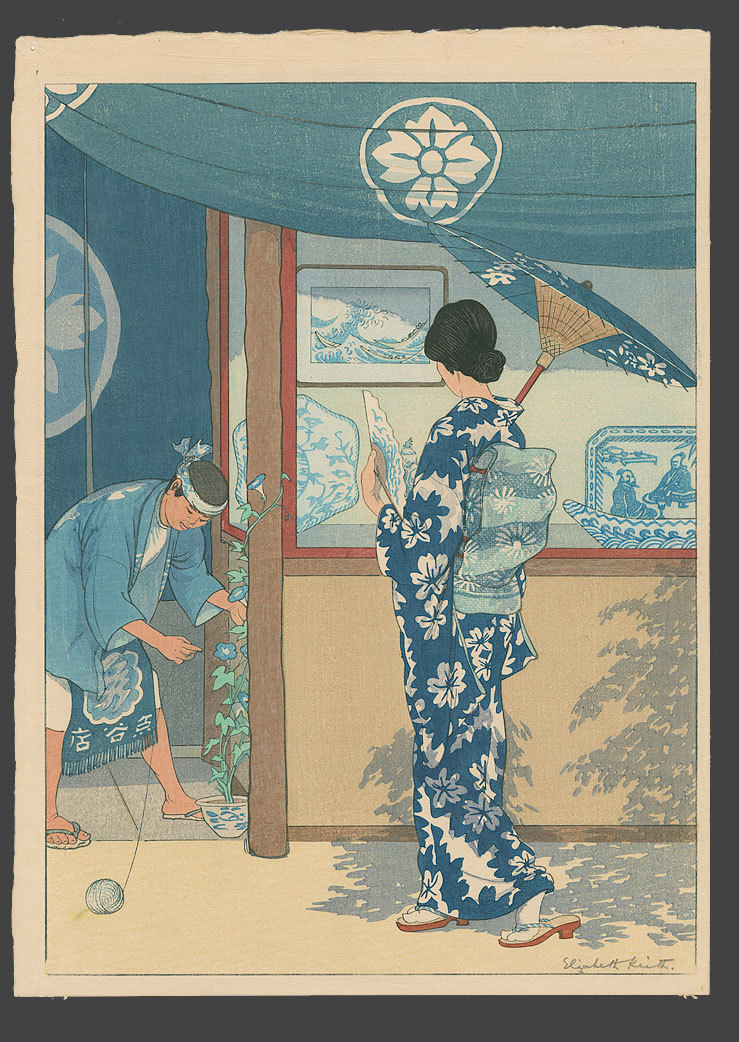
Blue and White
Woodblock print
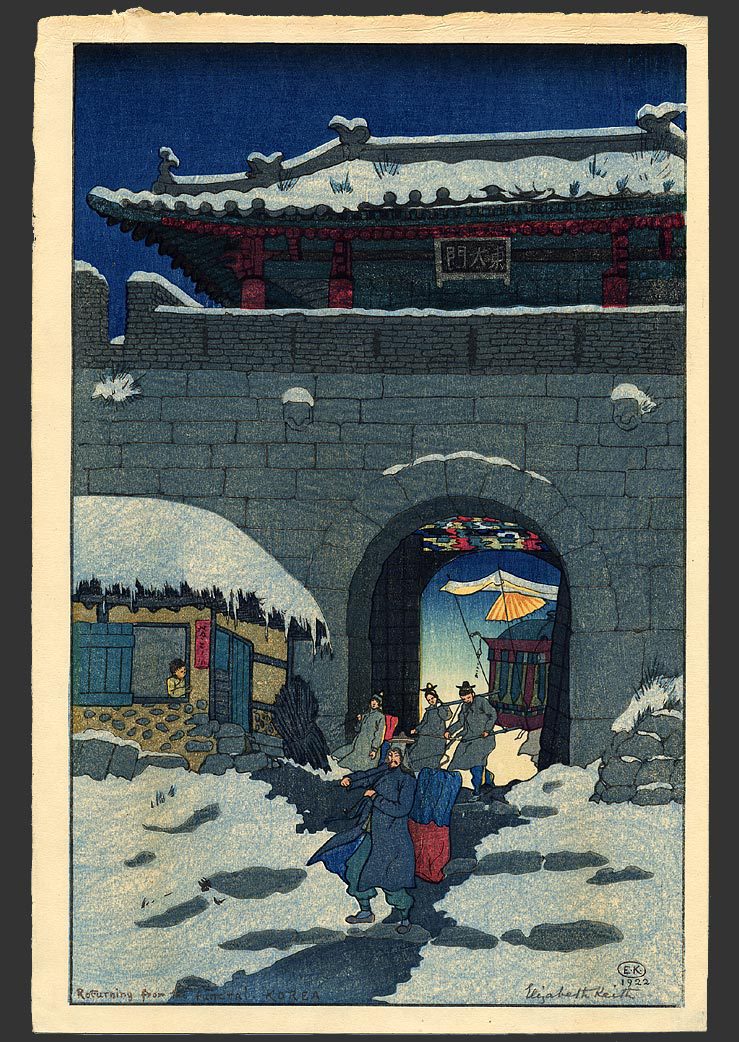
Elizabeth Keith
Woodblock print
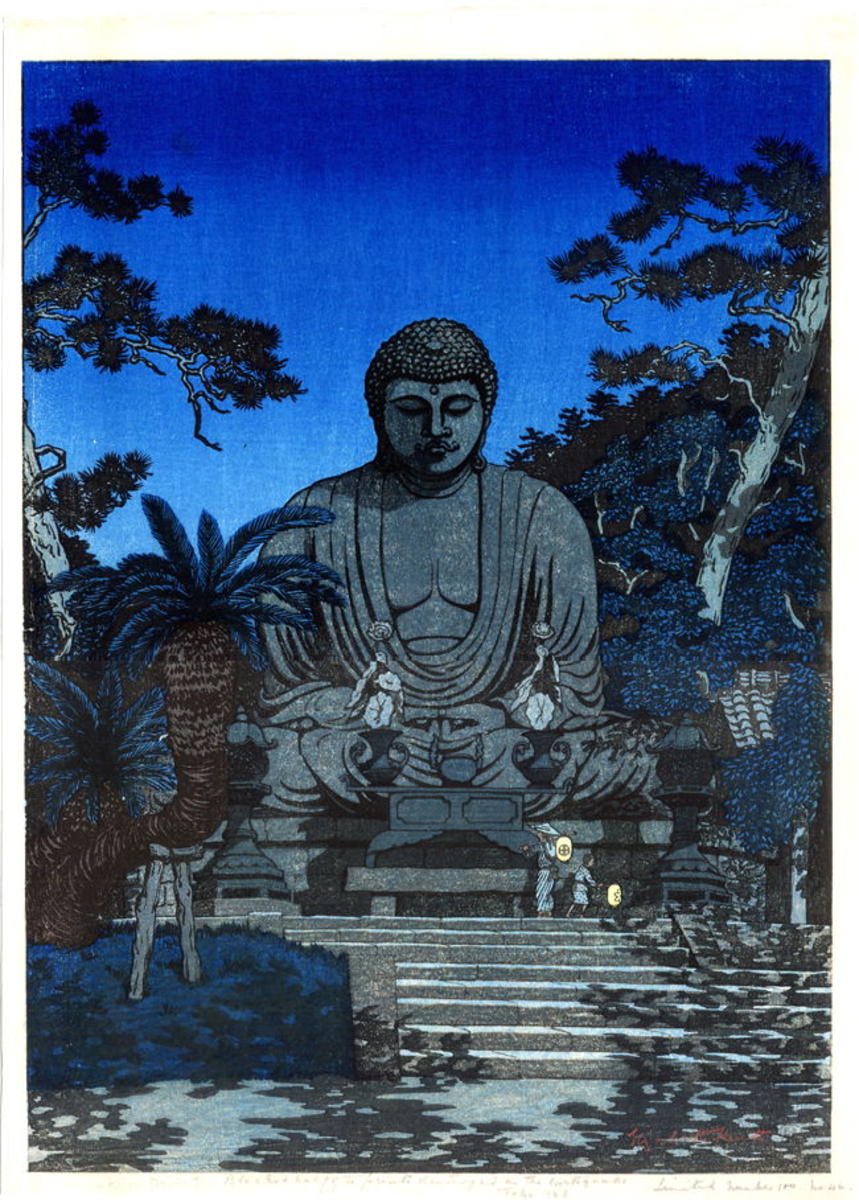
Kamakura Daibutsu
Woodblock print
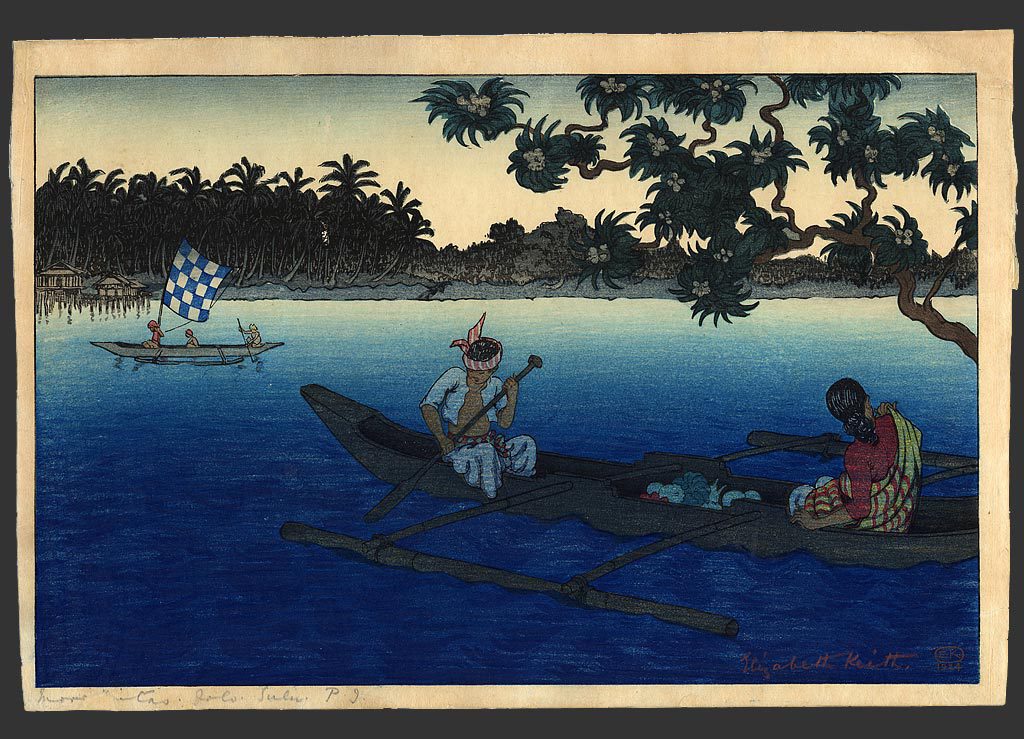
Moro vintas, Jolo Sulu
Woodblock print
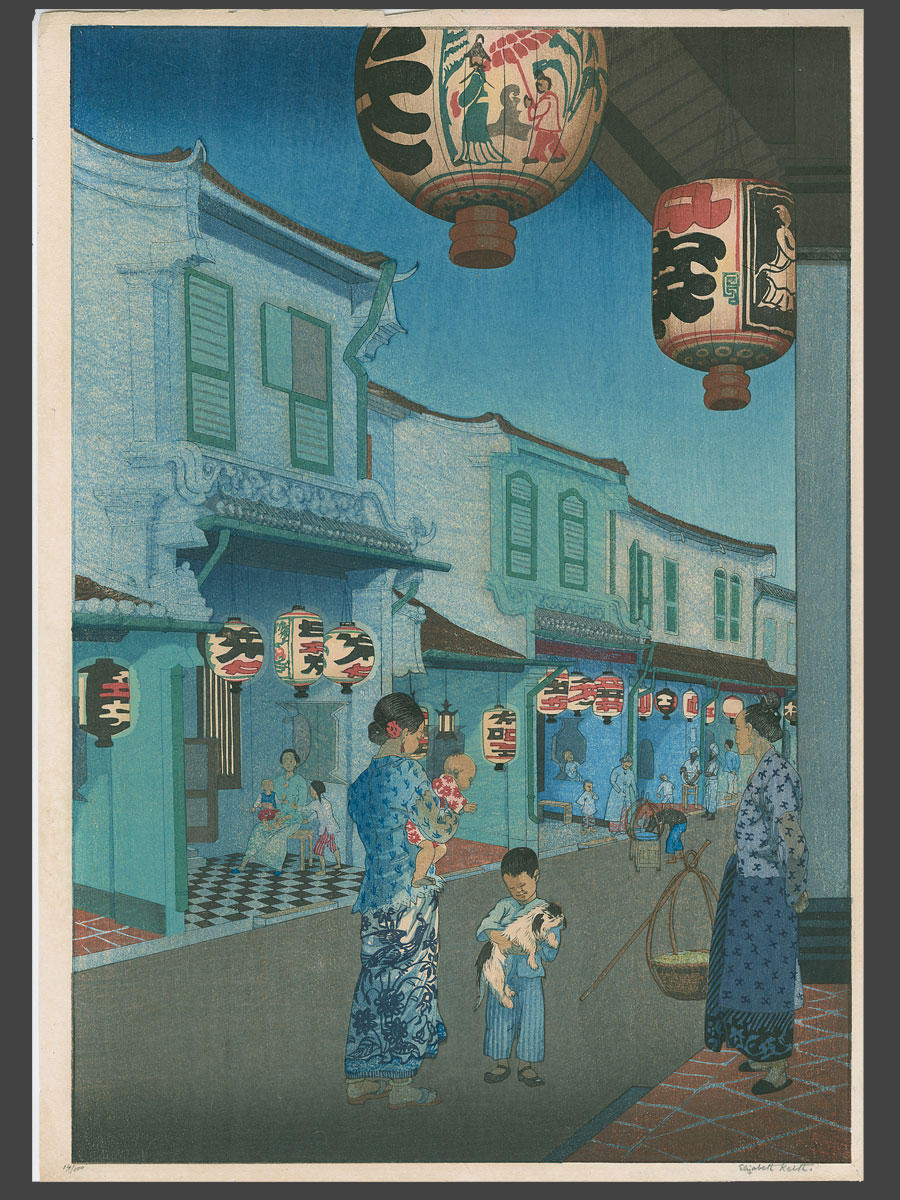
New Years Lanterns, Malacca (Morning)
Woodblock print
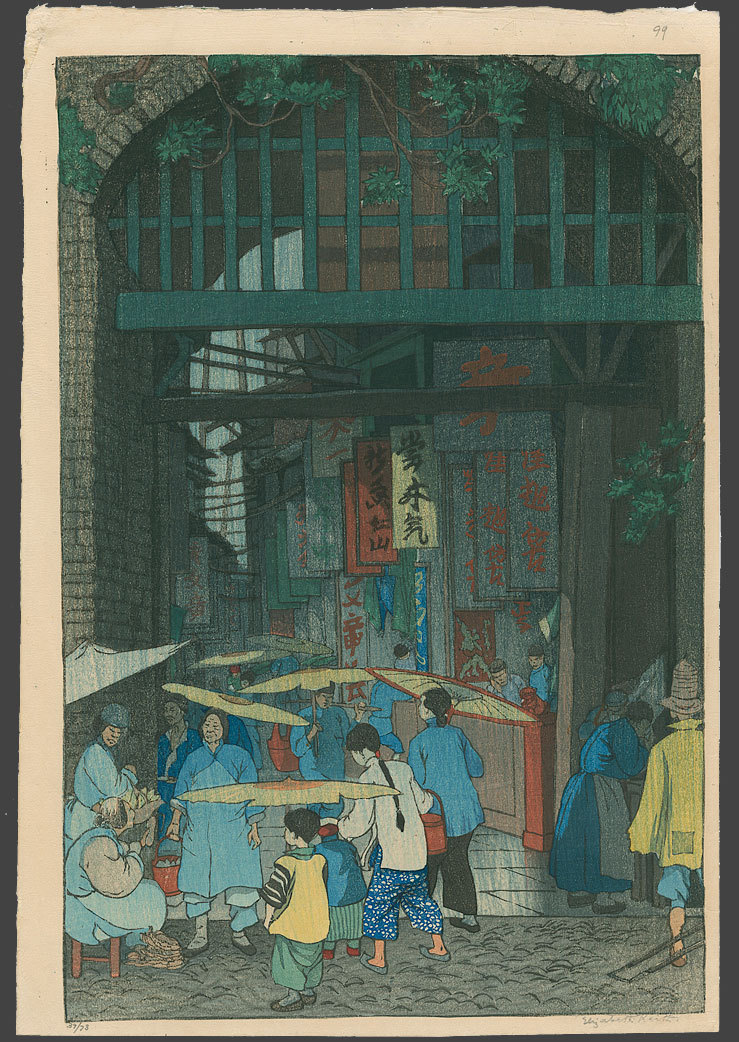
Outside Chang Man Gate, Soochow
Woodblock print

School Girl
Woodblock print
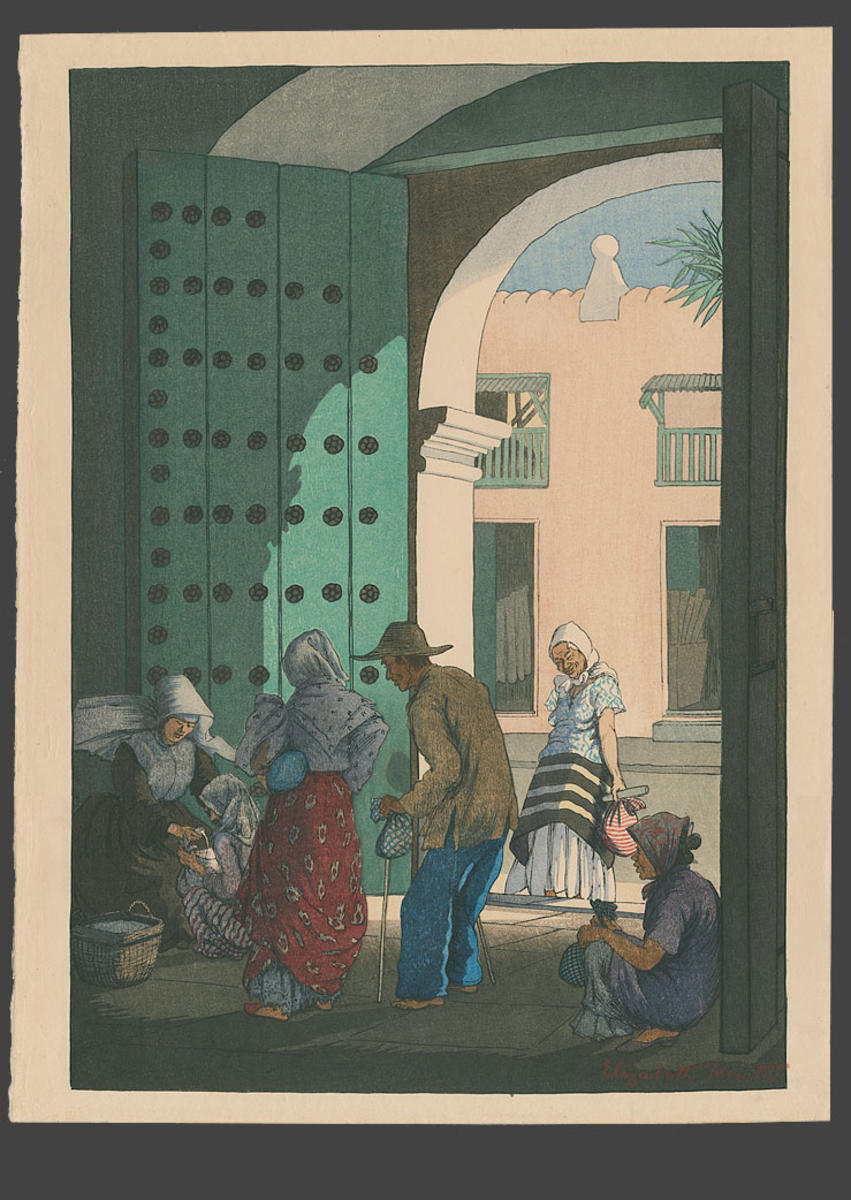
St. Isabella Tower, Manila
Woodblock print
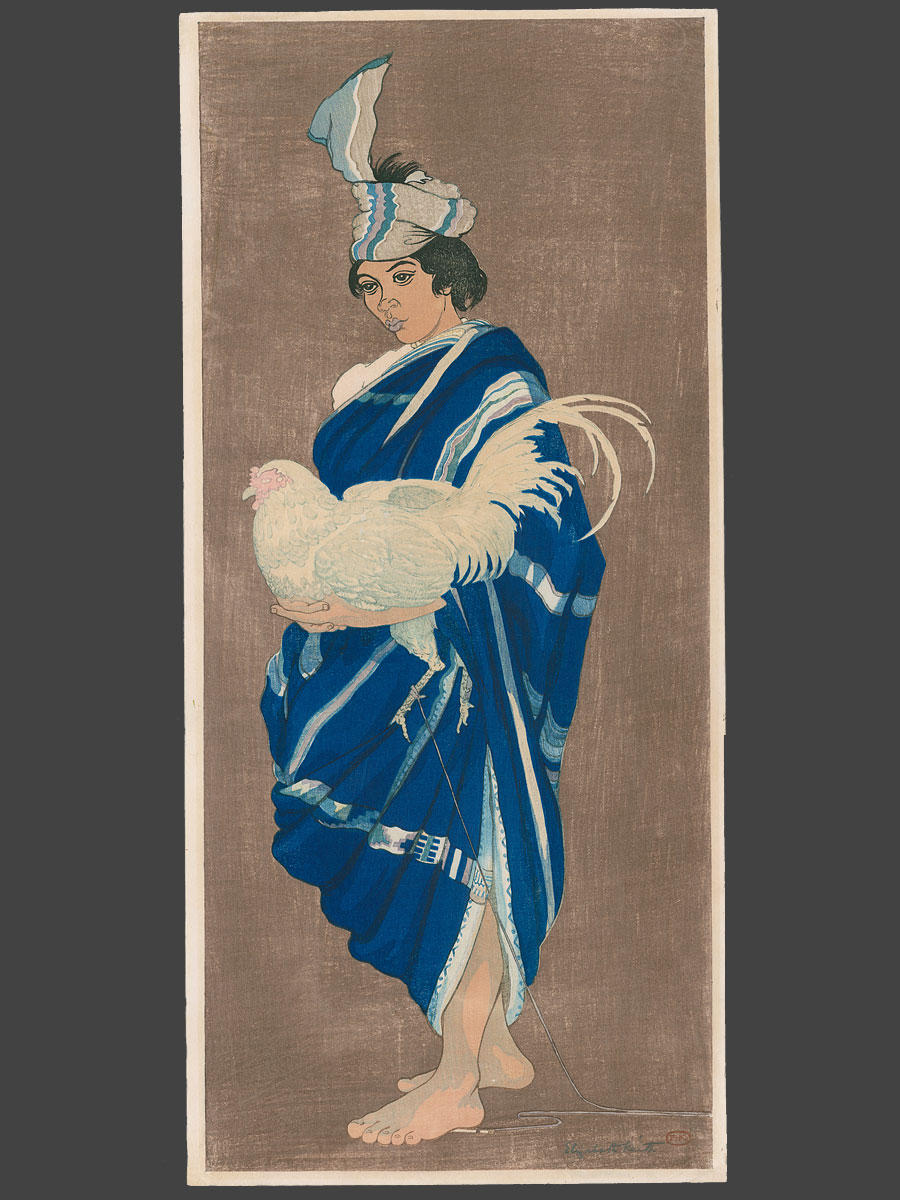
Waiting for the fight
Woodblock print
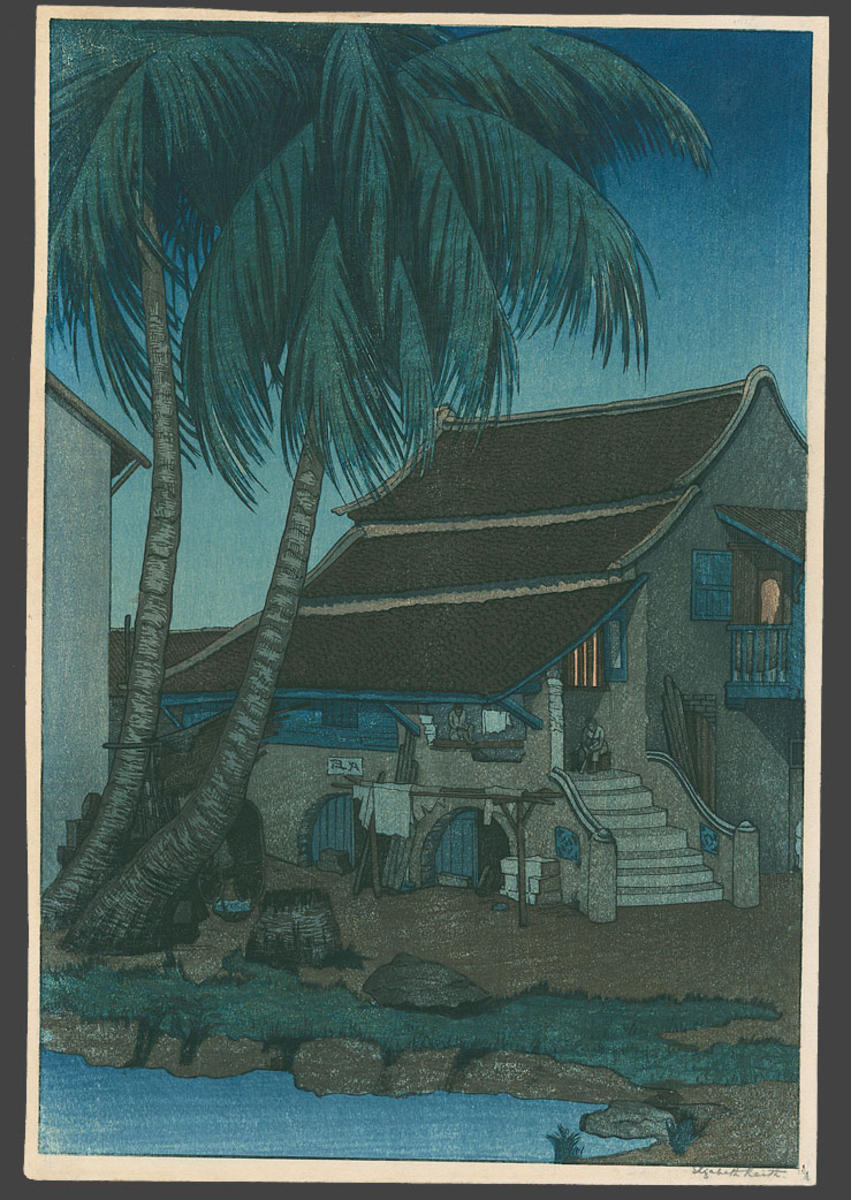
The Old House Malacca
Woodblock print
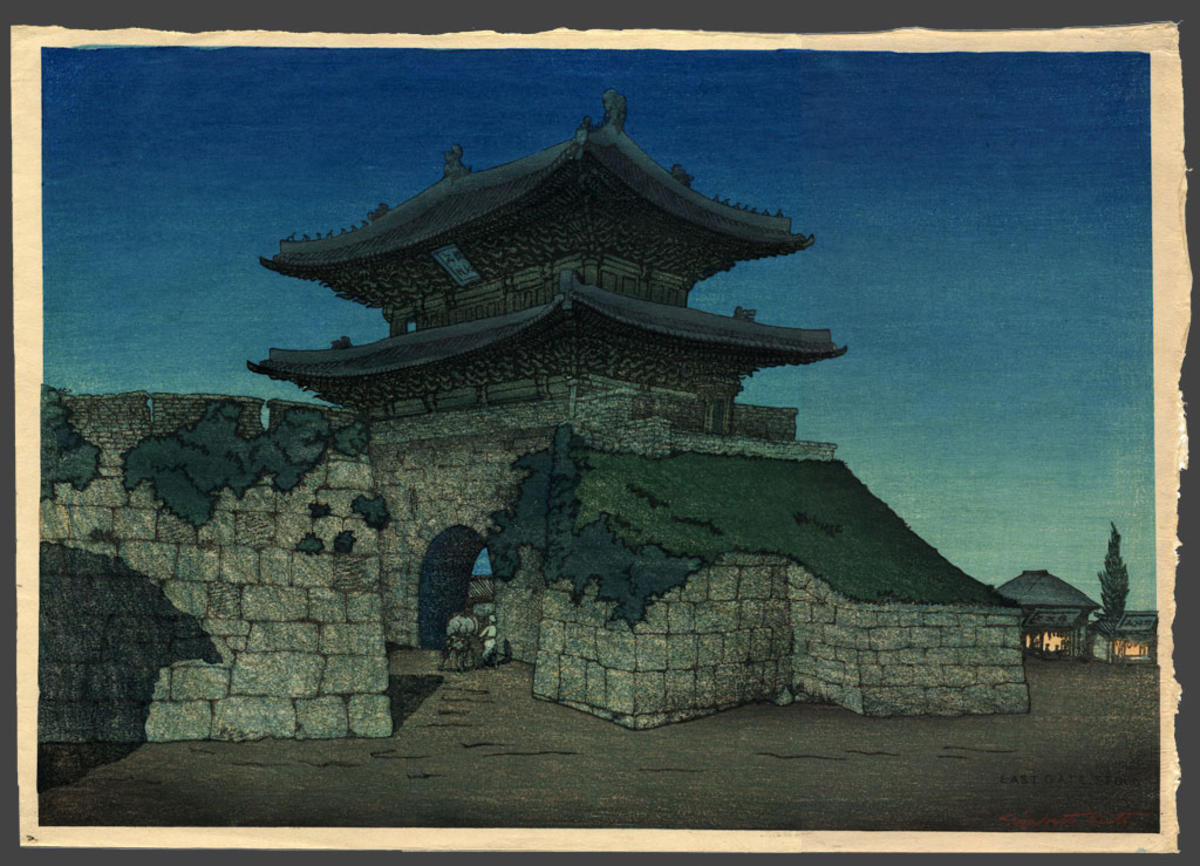
Untitled (elizabeth-keith)
Woodblock print
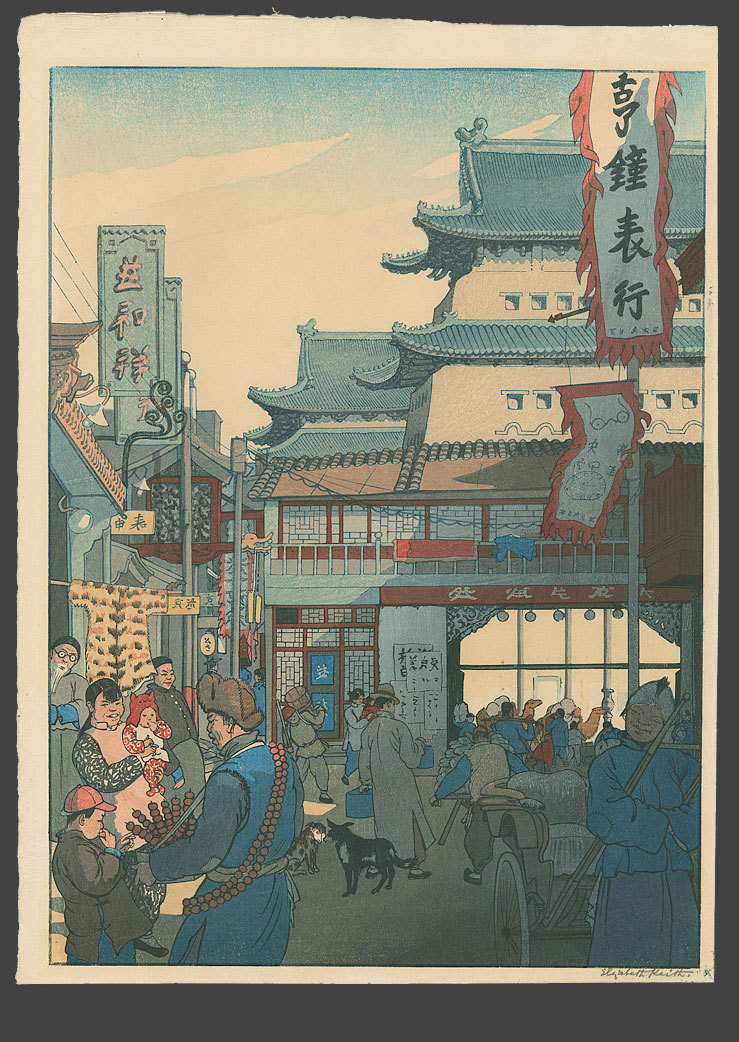
Outside Chang Man Gate, Peking
Woodblock print
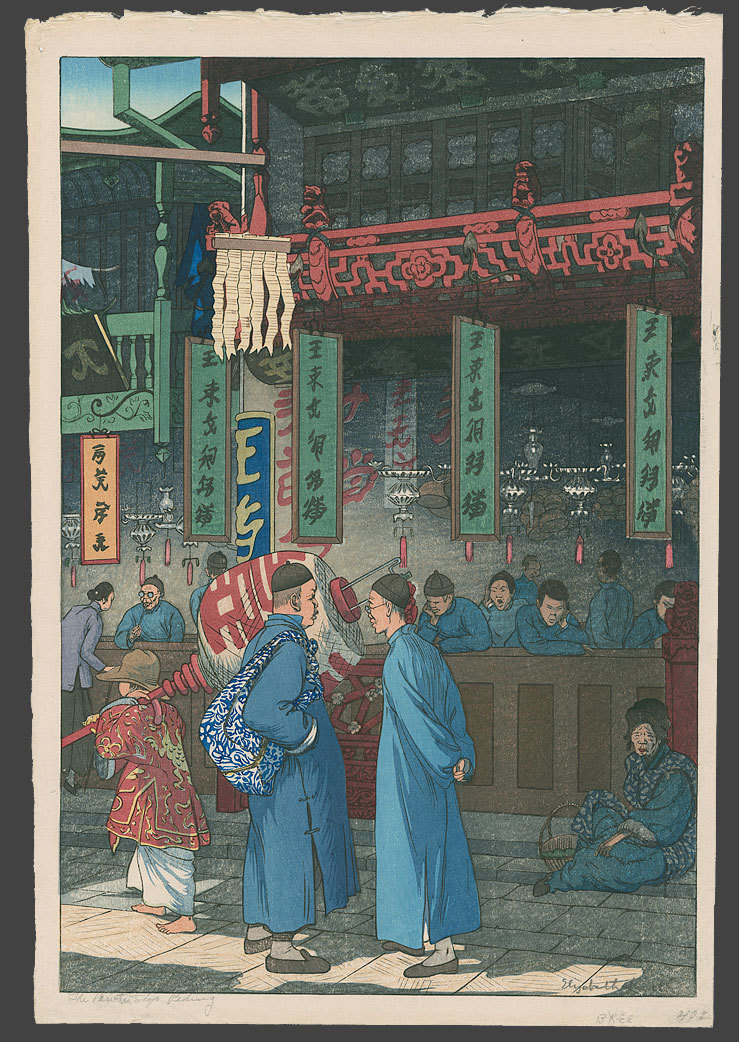
Pewter Shop, Soochow
Woodblock print
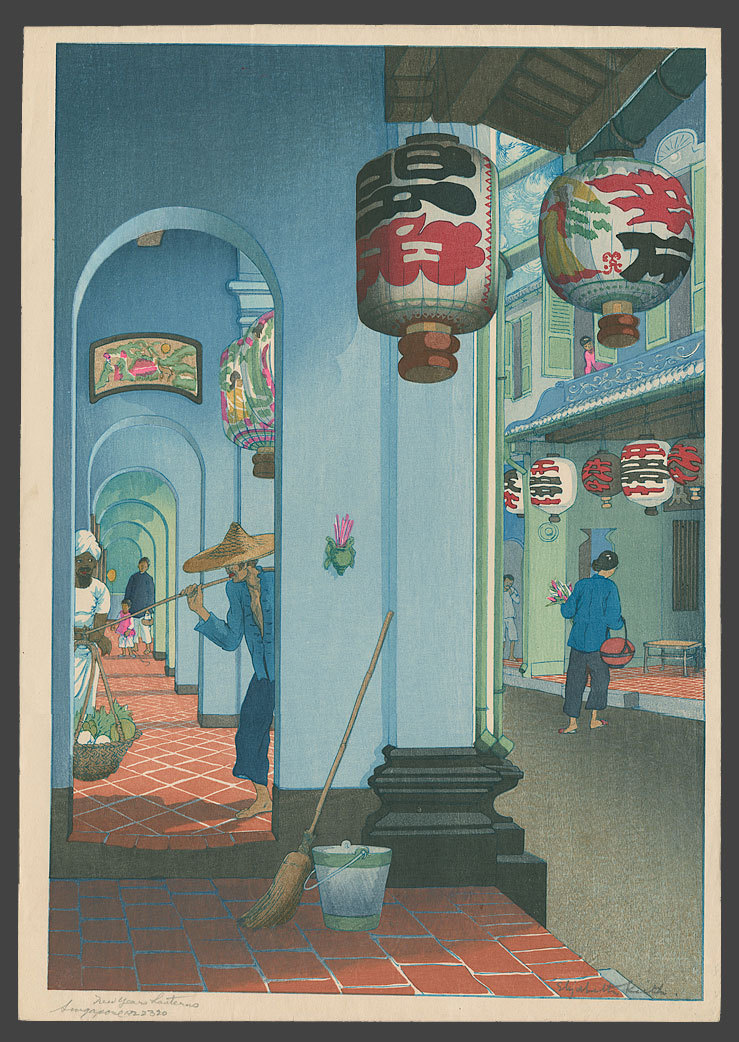
Singapore
Woodblock print
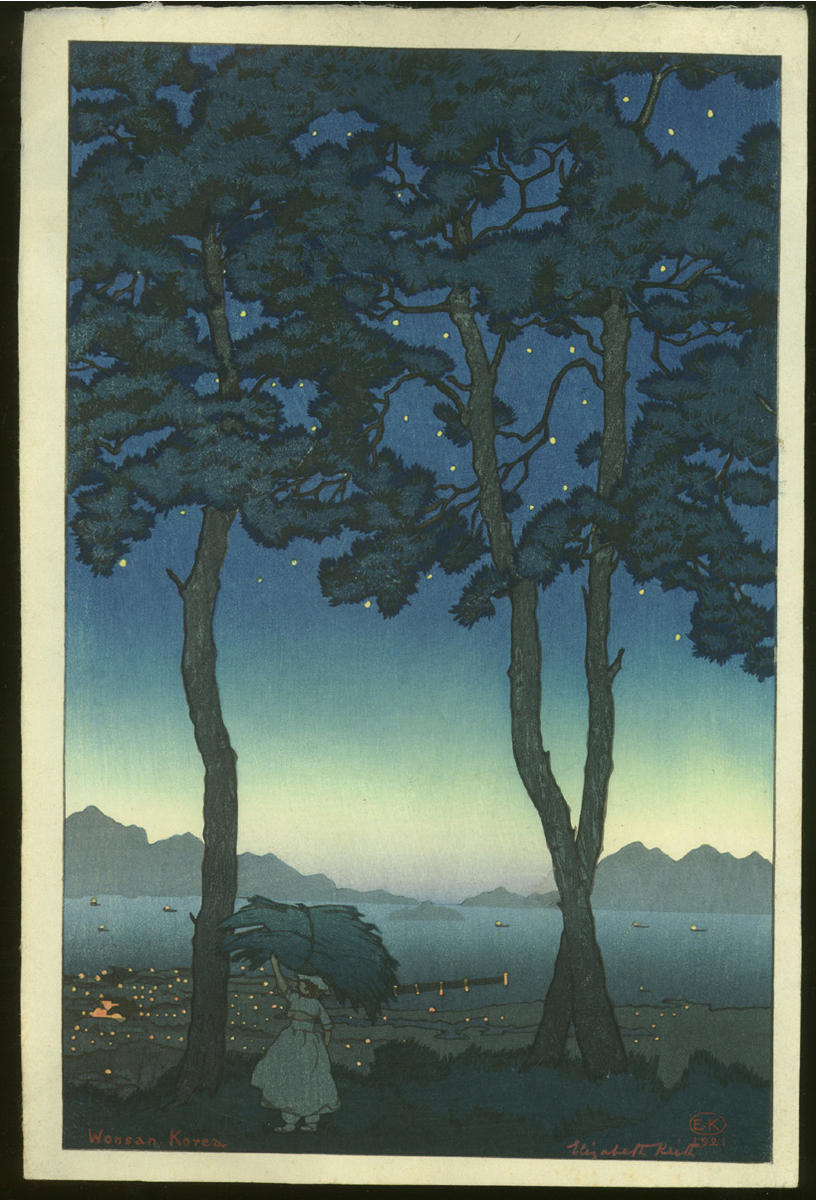
Wonsan, Korea
Woodblock print

Street Scene, Soochow in Kiang-su
Woodblock print

Blue and White
Mokuhanga (Japanese woodblock)

Leaning Pagoda, Soochow, China
Mokuhanga (Japanese woodblock)

Three men busy with a boat
Mokuhanga (Japanese woodblock)
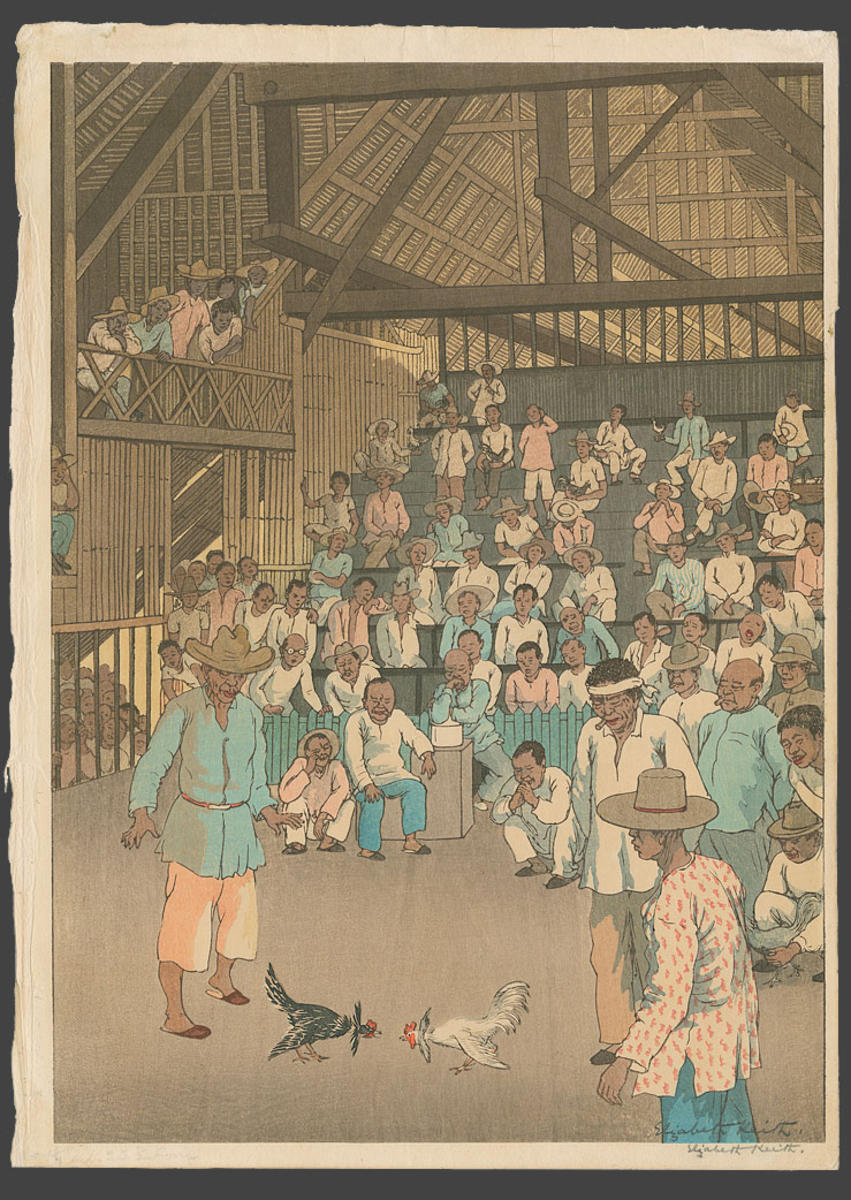
Cock Fight, Philippines
Woodblock print
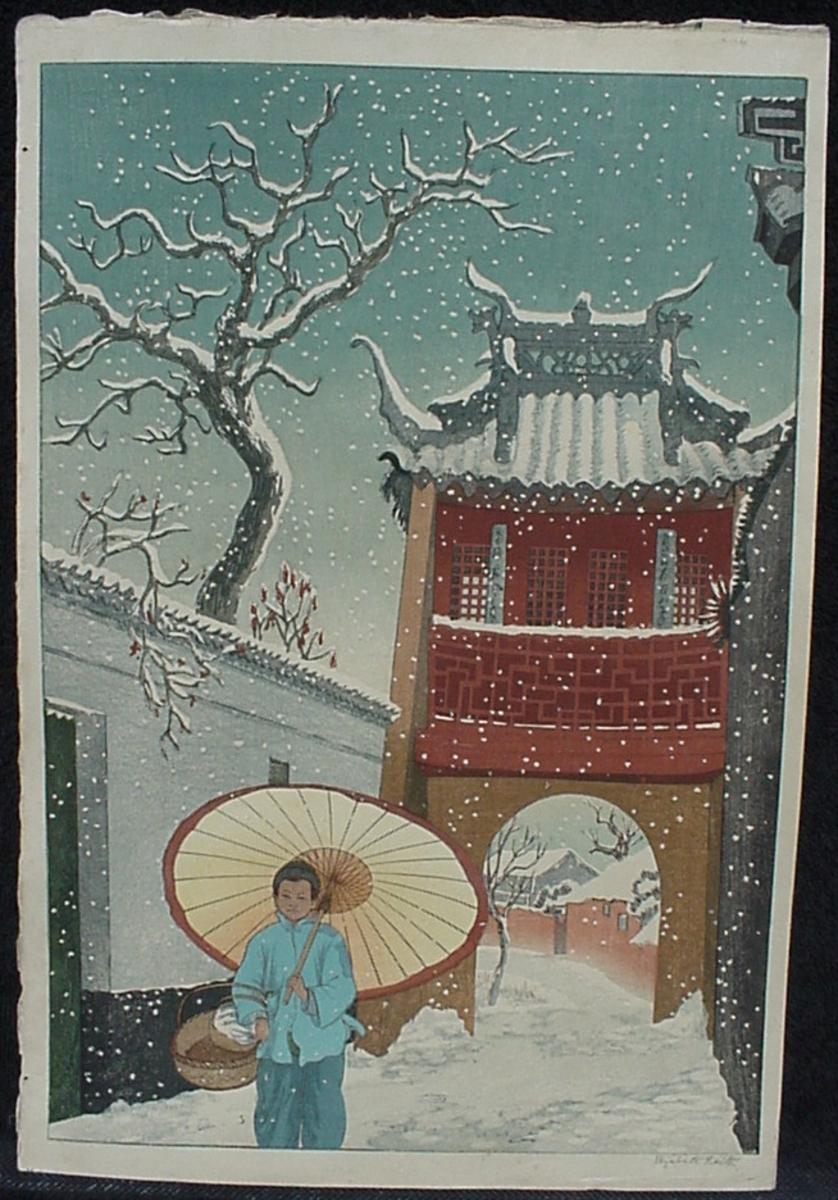
Unknown- Temple and Snow
Woodblock print