
Biography
Hamada Josen (浜田如洗, born 1875, death date unknown) is the woodblock print designer best known for his contribution to the 1926 collaborative series Pictures of the Taisho Earthquake (Taisho shinsai gashu), an ambitious documentary project that brought together nine artists to commemorate the 1923 Great Kanto Earthquake. Born Hamada Keisaku (also given as Esaku), he received his earliest training from his father and began studying in 1901 with the leading kuchi-e designer Tomioka Eisen (1864-1905), who gave him the name Josen by which he is now known. The romanization Nyosen also appears in older sources and reflects an alternate reading of the same characters; works under both names belong to the same artist. The exact date of Josen's death is not recorded in any of the standard reference works, including Helen Merritt and Nanako Yamada's Guide to Modern Japanese Woodblock Prints, and the question mark conventionally appended to his dates reflects the uncertainty that still surrounds his later years.
Josen's early career was centered on kuchi-e frontispieces — the narrow vertical foldout illustrations that accompanied Meiji-era romance novels and literary magazines. Working in the lineage of his teacher Eisen, the dominant kuchi-e specialist of the period, Josen produced frontispieces for novels including Greenwood Gingo (Gakuya ginnan) by Takeda Gyotenshi for the publisher Suzando in 1902 and Japanese Warriors (Nihon bushi) by Murakami Namiroku for the same publisher in 1901. Surviving kuchi-e impressions of this period are now held principally in the Honolulu Museum of Art and the Lavenberg Collection at the University of Oregon, the two American collections that have most systematically pursued the genre. The kuchi-e form — designed to fold into a book's spine or be inserted as a foldout — demanded a refined compositional discipline that Josen evidently relished, and his work from the period sits firmly within the late-ukiyo-e tradition adapted to modern publishing.
A second major body of Josen's work consists of bijin-ga designs in dai-oban tate-e format for the deluxe twelve-month series Comparison of New Ukiyo-e Beauties (Shin ukiyo-e bijin awase), published around 1918. The series gathered twelve different artists, each contributing one month, and Josen designed at least the May (Umbrella) and December prints — designs that depict young women in kimono against atmospheric seasonal settings and that demonstrate his confident handling of the larger vertical format. The dating of the series has been revised in recent scholarship from the long-accepted 1924 down to roughly 1918, with a truncated second installment issued around 1924.
Josen's most historically significant body of work is his contribution to Pictures of the Taisho Earthquake (Taisho shinsai gashu), the collaborative twenty-five print series published in 1926 by the Emaki Kenkyukai (Picture Scroll Research Society). The Great Kanto Earthquake of September 1, 1923 had killed over 140,000 people in Tokyo and surrounding areas, the majority not in the initial seismic event itself but in the firestorms that swept through the densely built wooden neighborhoods of the eastern city during the following twenty-four hours. The 1926 print series, issued three years after the disaster, set out to commemorate the catastrophe through the explicit graphic vocabulary of the woodblock tradition: aiban yoko-e format prints in saturated polychrome, depicting specific incidents of the disaster with documentary precision. Josen contributed some of the most striking images in the set, including Fire on the Bridges Toward Honjo and Chased by Fire, Drowned by Water. These images depict the burning Sumida River bridges, civilians trapped between fire and water, and the suffering of transport horses, and they remain among the most reproduced images from the post-earthquake commemorative print tradition. Examples of Josen's earthquake prints are held in the Lavenberg Collection at the University of Oregon and by Scholten Japanese Art. Beyond these three groupings — kuchi-e of the 1900s, bijin-ga of the 1910s, and earthquake prints of the 1920s — Josen contributed illustrations to the long-running Tokyo magazine Fuzoku Gaho (Customs Illustrated, 1889-1916), where his topographical scenes of Uji tea farming and Kyoto's Sarugatsuji corner appeared under the alternate signature Hamada Nyosen. Today his prints are held by the Metropolitan Museum of Art (accession JP3372, gift of Lincoln Kirstein 1960), the Honolulu Museum of Art, and the Lavenberg Collection at the University of Oregon.
Key Facts
- Active Period
- 1875
- Nationality
- 🇯🇵Japan
- Movement
- Shin-hanga
- Works Indexed
- 6
Frequently Asked Questions
Hamada Josen (浜田如洗, born 1875, death date unknown) is the woodblock print designer best known for his contribution to the 1926 collaborative series Pictures of the Taisho Earthquake (Taisho shinsai gashu), an ambitious documentary project that brought together nine artists to commemorate the 1923 Great Kanto Earthquake. Born Hamada Keisaku (also given as Esaku), he received his earliest training from his father and began studying in 1901 with the leading kuchi-e designer Tomioka Eisen (1864-1905), who gave him the name Josen by which he is now known. The romanization Nyosen also appears in older sources and reflects an alternate reading of the same characters; works under both names belong to the same artist. The exact date of Josen's death is not recorded in any of the standard reference works, including Helen Merritt and Nanako Yamada's Guide to Modern Japanese Woodblock Prints, and the question mark conventionally appended to his dates reflects the uncertainty that still surrounds his later years.
Hamada Josen was active born in 1875. They were associated with the Shin-hanga movement.
Hamada Josen's work was shaped by the Shin-hanga tradition in Japanese woodblock printmaking. Shin-hanga: ## What is Shin-hanga? Shin-hanga (新版画), literally "new prints," is the early twentieth-century revival of the collaborative Japanese woodblock workshop, organized between roughly 1915 and 1960 by the Tokyo publisher Watanabe Shōzaburō (1885–1962) and a handful of competing houses.
Original prints by Hamada Josen can be found in collections including Japanese Art Open Database, Metropolitan Museum of Art, Honolulu Museum of Art.
Woodblock Prints by Hamada Josen (6)
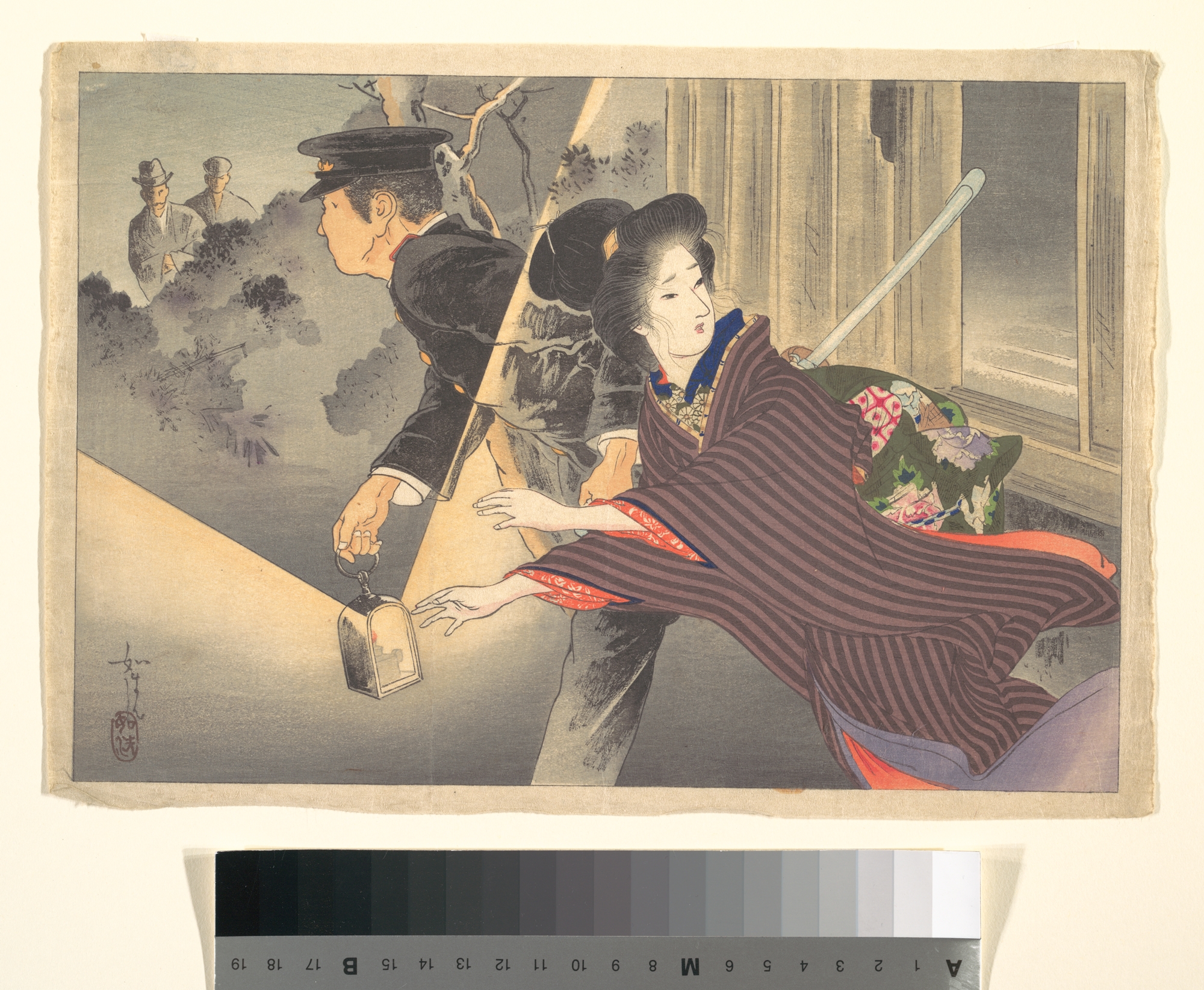
Print (Meiji Genre Scene)
ca. 1906
Polychrome woodblock print; ink and color on paper
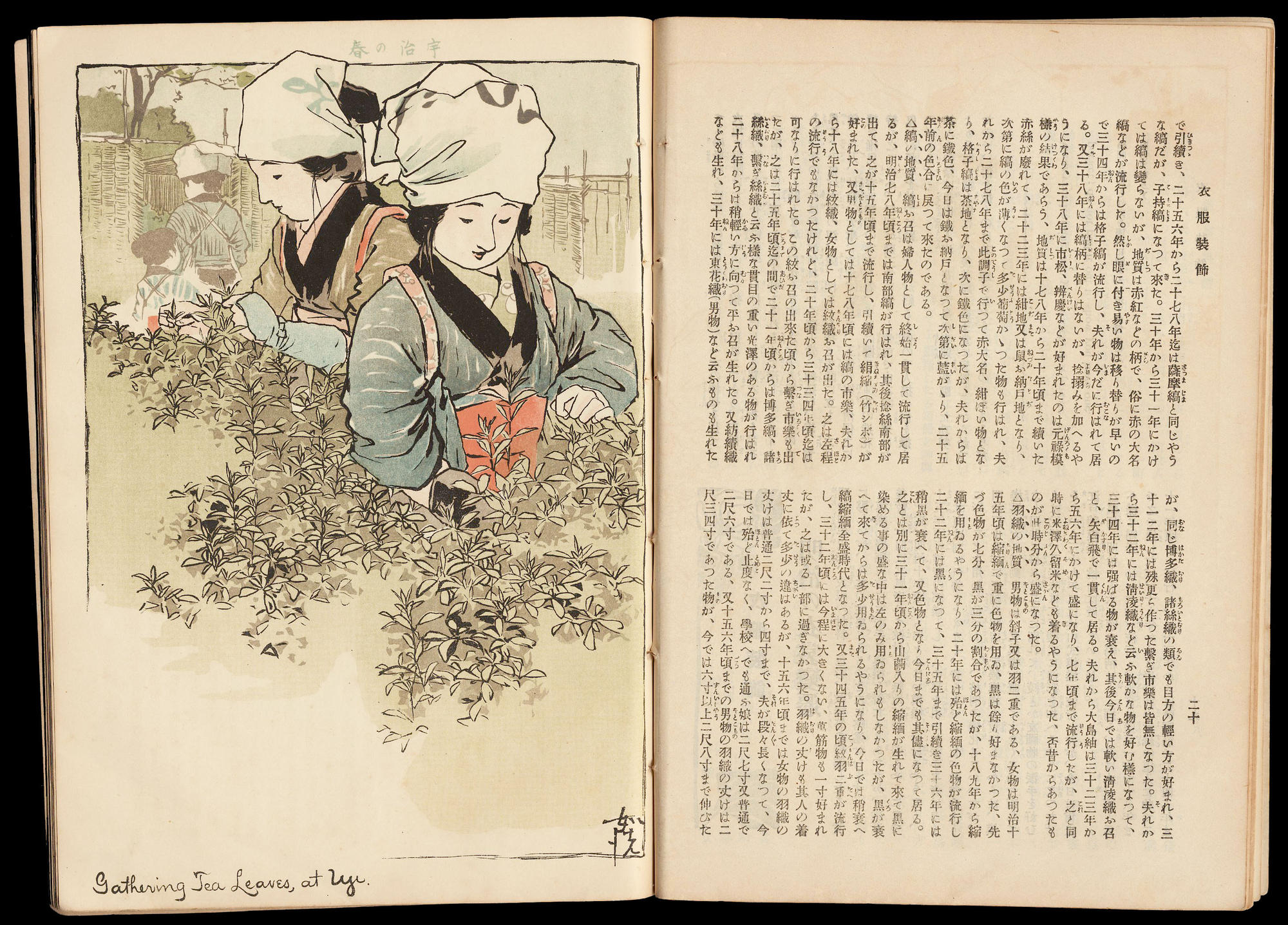
Gathering Tea Leaves at Uji
宇治の春
circa 1900-1916
Color woodblock print, from the illustrated magazine Fuzoku Gaho (Customs Illustrated)

Kyoto Sarugatsuji
京都猿ヶ辻
circa 1900-1916
Color woodblock print, from the illustrated magazine Fuzoku Gaho (Customs Illustrated)

New Year's Greetings
circa 1900-1920
Color woodblock print (kuchi-e style)
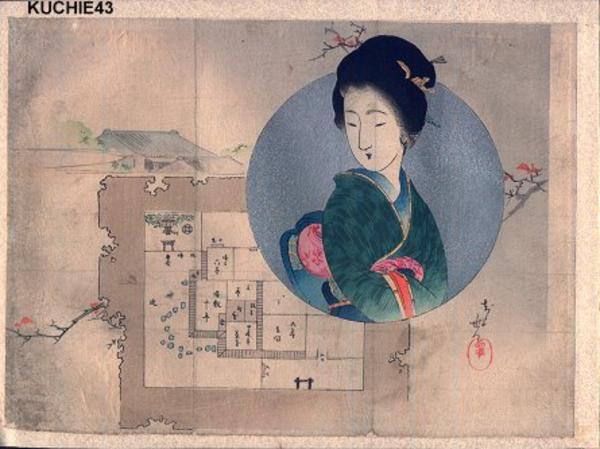
Bijin with Map
circa 1900-1920
Color woodblock print
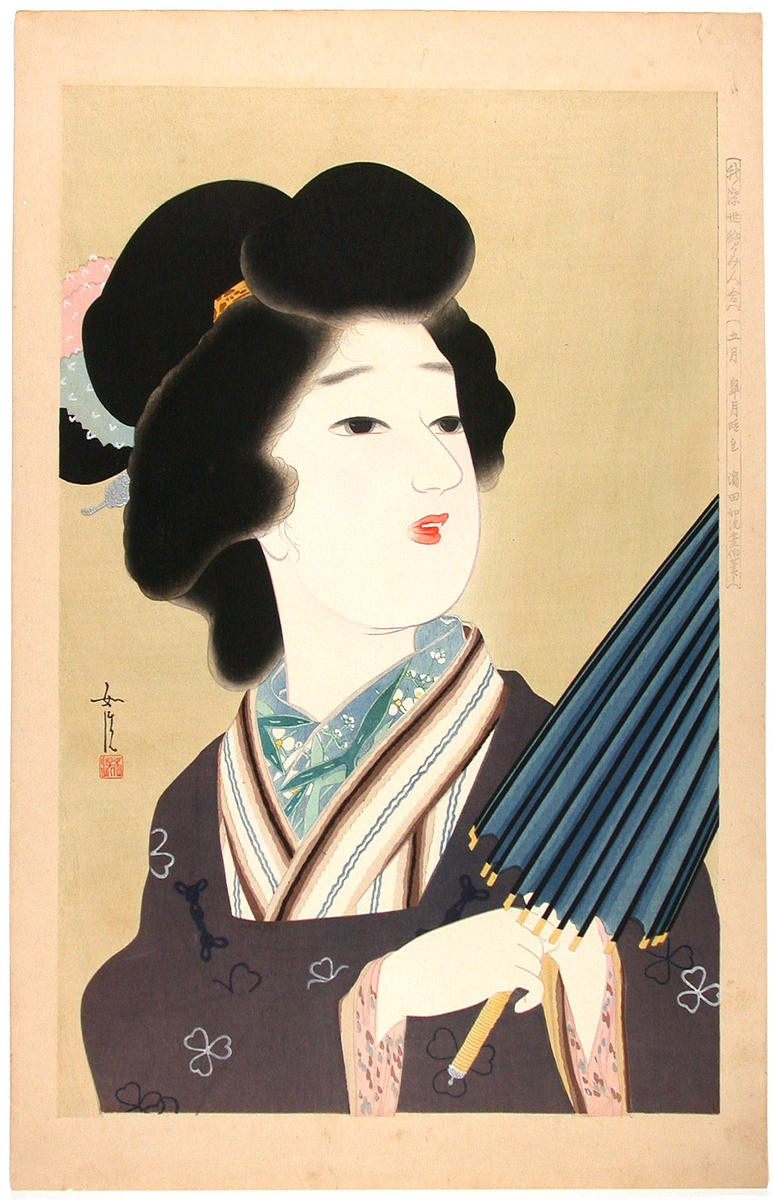
May: Umbrella
新浮世絵美人合 五月 雨傘
circa 1918
Color woodblock print (dai-oban tate-e); from the series Shin Ukiyo-e Bijin Awase (Comparison of New Ukiyo-e Beauties), published by the Publication Society of Shin Ukiyo-e Bijin Awase (Murakami)