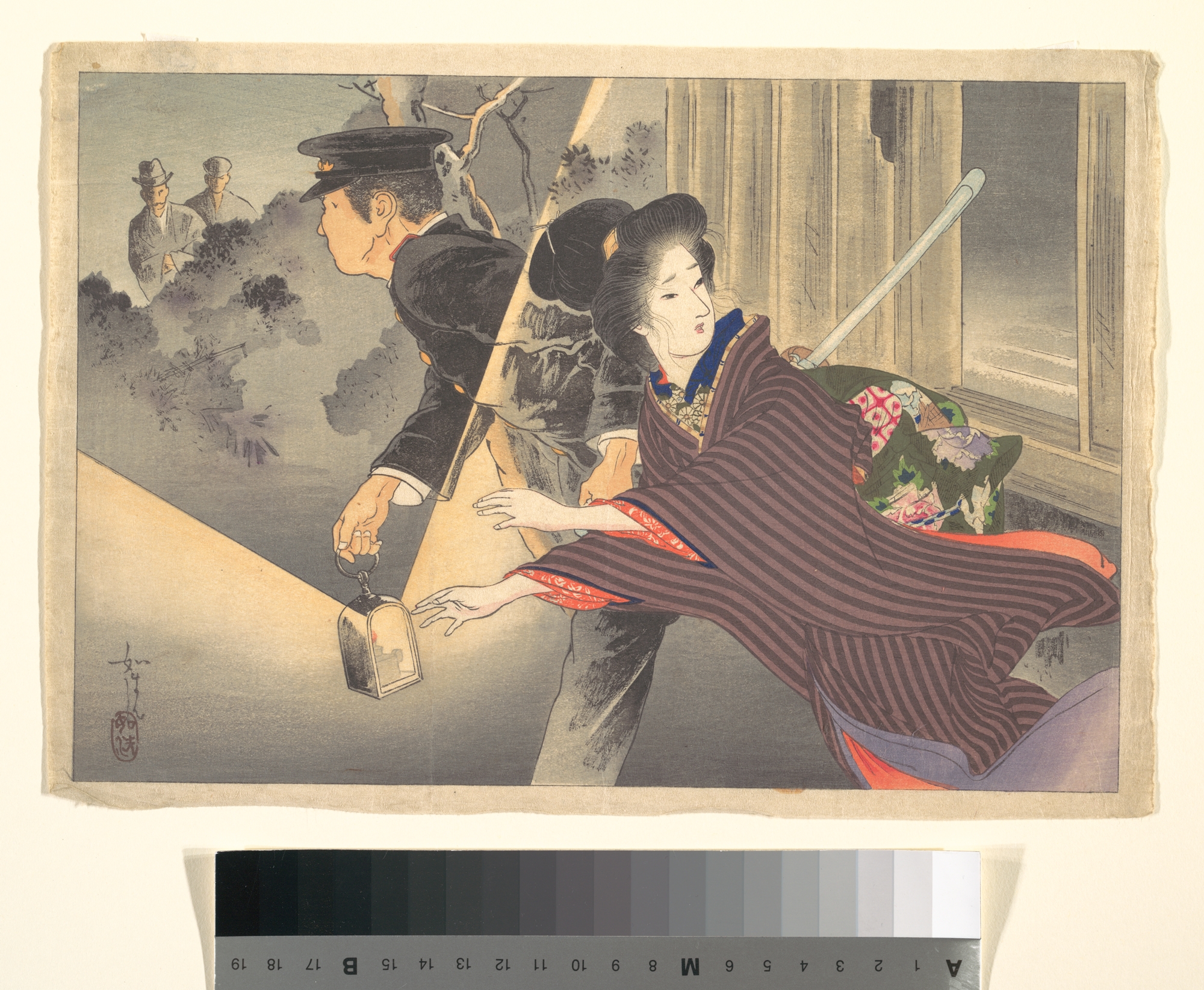
Print (Meiji Genre Scene)
by Hamada Josen
- Date:
- ca. 1906
- Medium:
- Polychrome woodblock print; ink and color on paper
- Source:
- Metropolitan Museum of Art
Description
This polychrome woodblock print at the Metropolitan Museum of Art (accession JP3372), entered the collection in 1960 as a gift of the dance critic and ballet impresario Lincoln Kirstein, who had assembled an idiosyncratic group of Japanese prints during the 1930s. The sheet measures roughly 20.5 by 29.5 centimeters and dates to about 1906, placing it in the middle of Hamada Josen's early Meiji-period activity as a designer of kuchi-e frontispieces and small-format figural prints. The composition shows both male and female figures in a domestic or street scene rendered in the warm pigmented palette of late Meiji ukiyo-e, and the cataloguing follows the museum's practice of titling such loose sheets simply as Print when the original series identification has been lost. Josen had only recently begun signing with the name Josen, given to him in 1901 by his teacher Tomioka Eisen, the leading kuchi-e designer of the moment, and works of this period sit firmly within the Eisen lineage of refined late-ukiyo-e draftsmanship adapted to modern publishing. The print represents one of the few examples of Hamada Josen in a major American museum collection outside of Honolulu and bears witness both to the unsystematic survival of late Meiji popular prints in Western museums and to the eccentric collecting taste of Lincoln Kirstein, whose Japanese material entered the Met across several gifts beginning in the 1950s. The Met record preserves the artist's active dates as turn of the twentieth century and his life dates as roughly 1880 to 1930, slightly different from the more securely documented 1875 birth year given in Japanese sources.
More Prints by Hamada Josen
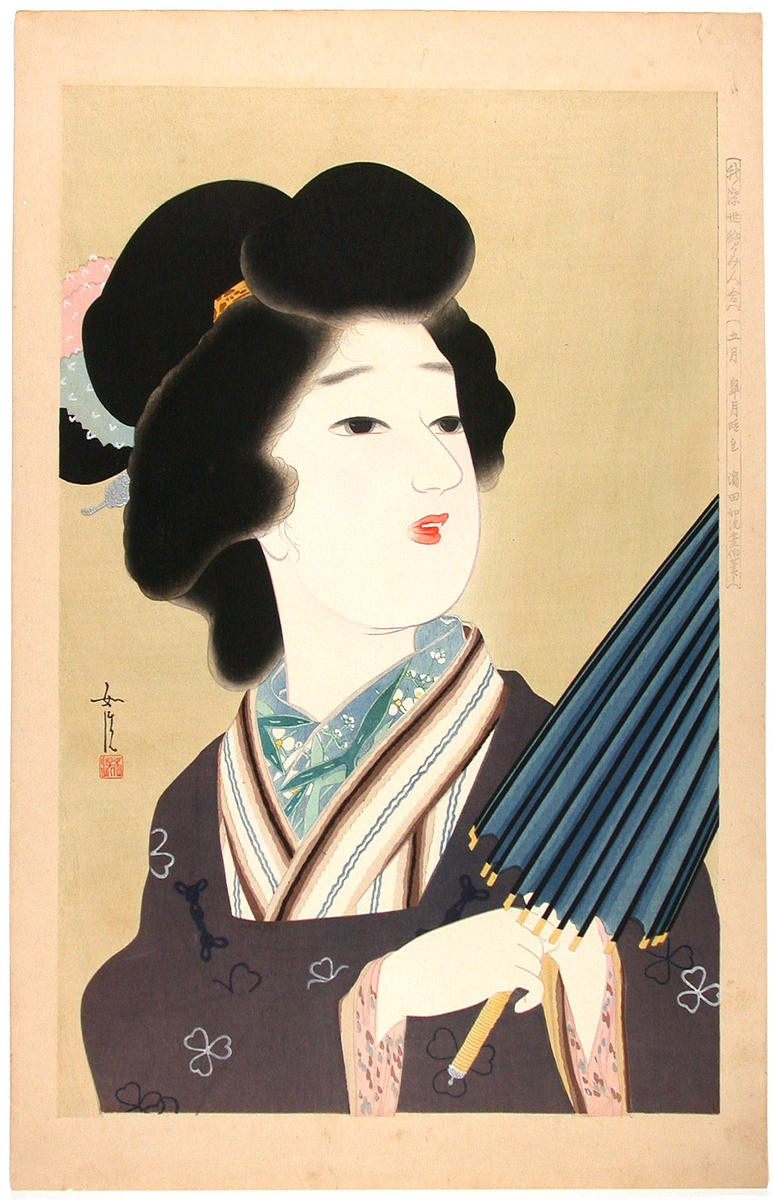
May: Umbrella
新浮世絵美人合 五月 雨傘
circa 1918
Color woodblock print (dai-oban tate-e); from the series Shin Ukiyo-e Bijin Awase (Comparison of New Ukiyo-e Beauties), published by the Publication Society of Shin Ukiyo-e Bijin Awase (Murakami)
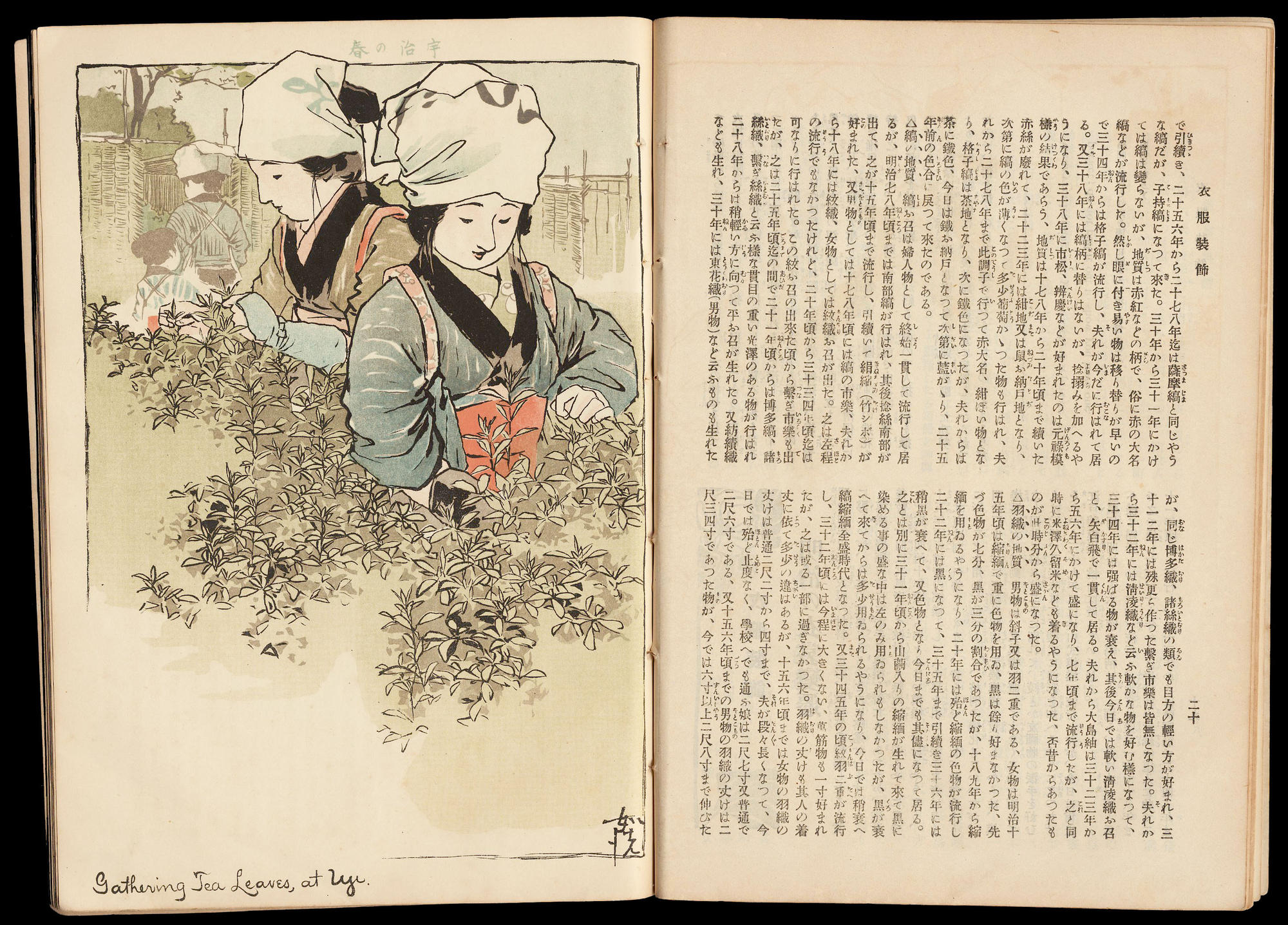
Gathering Tea Leaves at Uji
宇治の春
circa 1900-1916
Color woodblock print, from the illustrated magazine Fuzoku Gaho (Customs Illustrated)

Kyoto Sarugatsuji
京都猿ヶ辻
circa 1900-1916
Color woodblock print, from the illustrated magazine Fuzoku Gaho (Customs Illustrated)

New Year's Greetings
circa 1900-1920
Color woodblock print (kuchi-e style)
Featured in Collections
Curated cross-cuts that include this print.
Frequently Asked Questions
Print (Meiji Genre Scene) was created by Hamada Josen (浜田如洗) in ca. 1906.