Biography
Ikeda Zuigetsu (池田瑞月, active 1920s–1940s) produced kacho-e woodblock prints during the height of the shin-hanga revival, specializing in bird-and-flower compositions that drew on centuries of Japanese naturalist painting tradition while exploiting the refined color printing techniques of the Taisho and early Showa periods.
Neither Ikeda's birth nor death dates have been recorded in standard references, and almost nothing survives regarding his personal biography. What remains is the work itself: delicately rendered studies of herons wading in shallow water, songbirds perched on flowering plum branches, and carp nosing through autumn leaves — subjects rooted in the classical kacho-e vocabulary but executed with the saturated pigments and precise bokashi gradations that defined shin-hanga printmaking at its technical peak.
Ikeda's compositions favored a vertical oban format suited to his elongated subjects — a crane stretching skyward, a branch of wisteria cascading downward — and he handled negative space with the restraint of an ink painter, allowing generous areas of bare paper to serve as atmosphere. His palette leaned toward muted earth tones punctuated by flashes of vermillion or indigo, a color sense closer to nihonga painting than to the commercial brightness of some kacho-e contemporaries. The naturalistic accuracy of his bird studies suggests direct observation rather than reliance on pattern books, though whether he maintained sketchbooks or worked from specimens is unknown.
His prints were published during a period when the kacho-e genre enjoyed strong commercial demand, particularly among Western buyers in Yokohama and Kobe. This market appetite sustained a constellation of bird-and-flower specialists beyond the dominant figures of Ohara Koson and Imao Keinen, and Ikeda belonged to this wider circle of skilled practitioners whose work maintained high technical standards without achieving individual fame. His prints surface occasionally in the secondary market, valued by collectors who appreciate the genre's contemplative qualities and the craftsmanship of the shin-hanga printing process.
Key Facts
- Nationality
- 🇯🇵Japan
- Movement
- Shin-hanga
- Works Indexed
- 23
Frequently Asked Questions
Ikeda Zuigetsu (池田瑞月, active 1920s–1940s) produced kacho-e woodblock prints during the height of the shin-hanga revival, specializing in bird-and-flower compositions that drew on centuries of Japanese naturalist painting tradition while exploiting the refined color printing techniques of the Taisho and early Showa periods.
Ikeda Zuigetsu's work was shaped by the Shin-hanga tradition in Japanese woodblock printmaking. Shin-hanga: ## What is Shin-hanga? Shin-hanga (新版画), literally "new prints," is the early twentieth-century revival of the collaborative Japanese woodblock workshop, organized between roughly 1915 and 1960 by the Tokyo publisher Watanabe Shōzaburō (1885–1962) and a handful of competing houses.
Ikeda Zuigetsu's prints frequently feature birds & flowers, still life, abstract, animals, food & drink, spring.
Original prints by Ikeda Zuigetsu can be found in collections including Japanese Art Open Database, Ohmi Gallery, robynbuntin.
Woodblock Prints by Ikeda Zuigetsu (23)
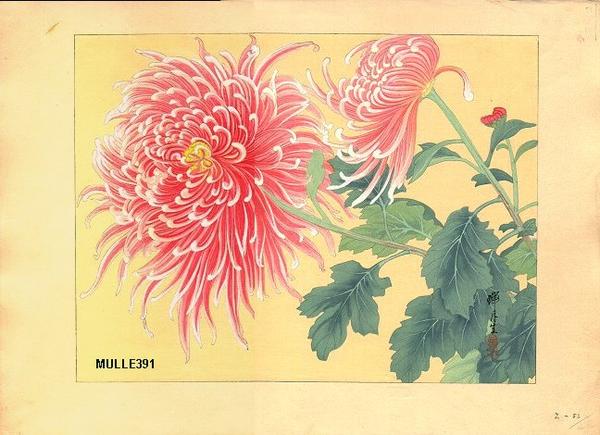
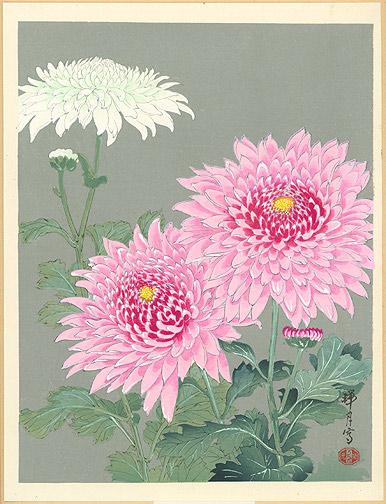
Chrysanthemum
Woodblock print
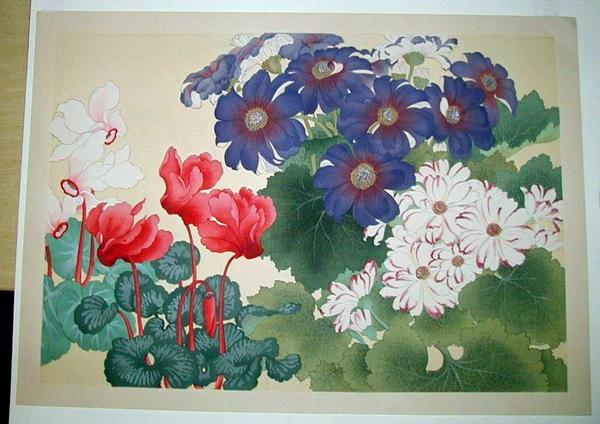
Flowers 1
Woodblock print
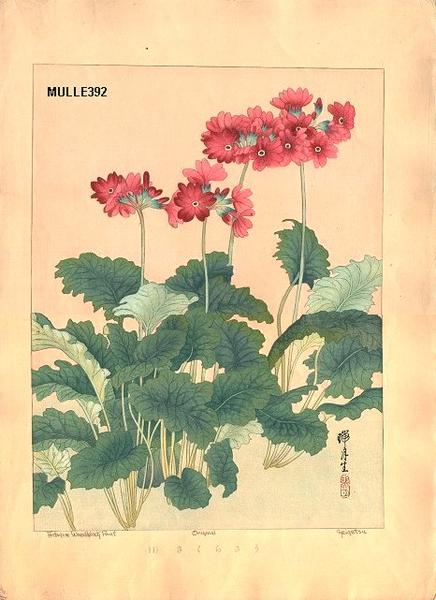
Primrose
Woodblock print
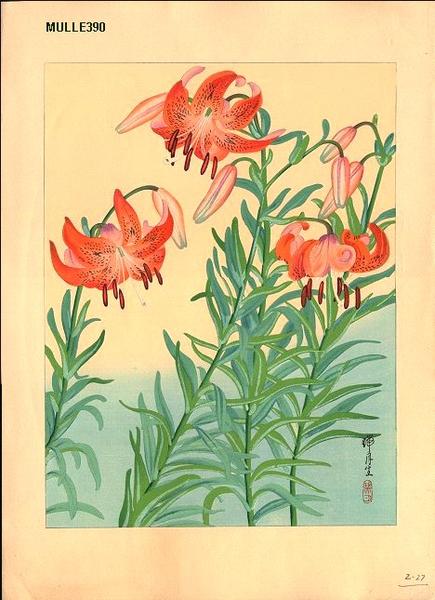
Tiger lilies
Woodblock print
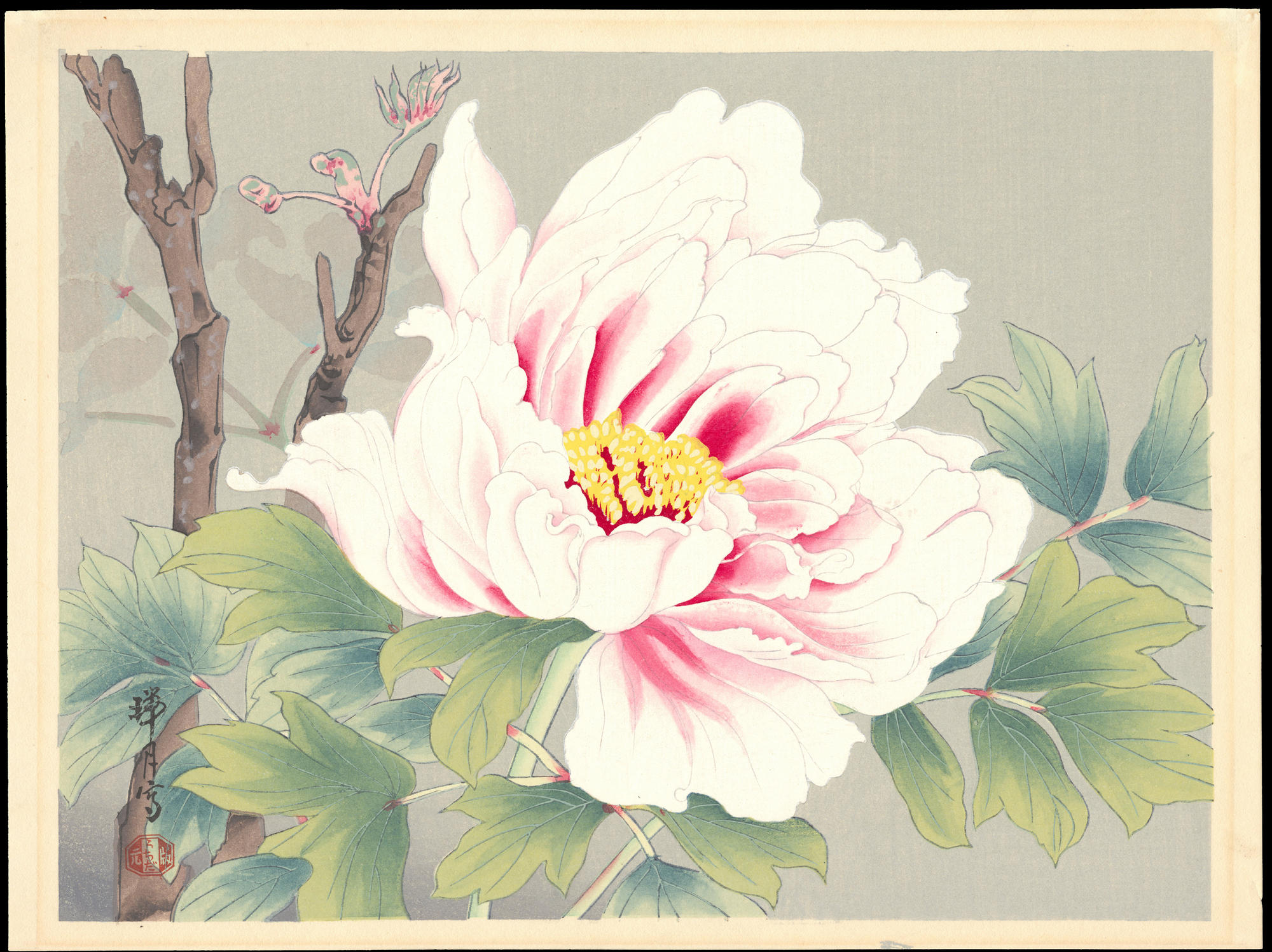
Zuigetsu Ikeda
Woodblock print
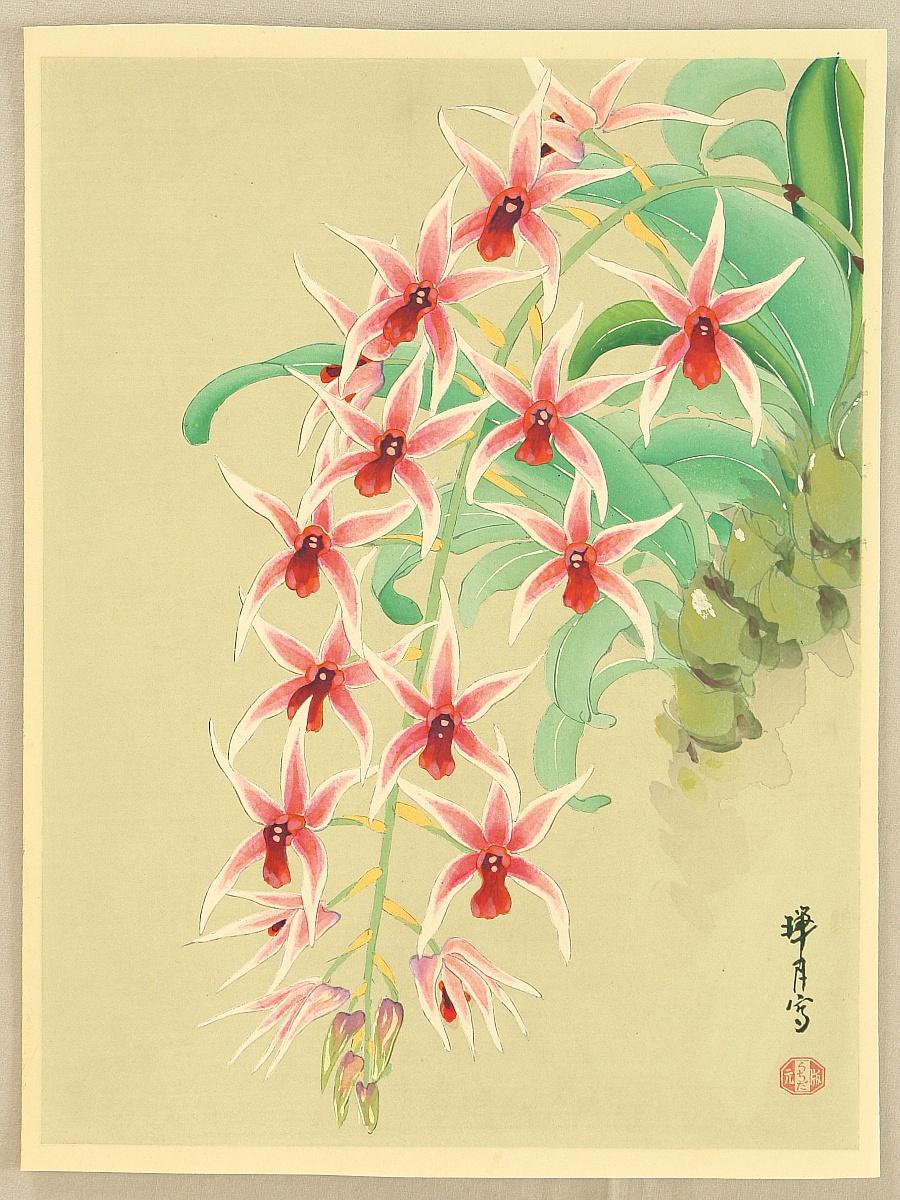
Orchid 2
Woodblock print

Tsuwabuki No LV
Mokuhanga (Japanese woodblock)

Yujuriho No II
Mokuhanga (Japanese woodblock)

Shumokuren No XVIII
Mokuhanga (Japanese woodblock)
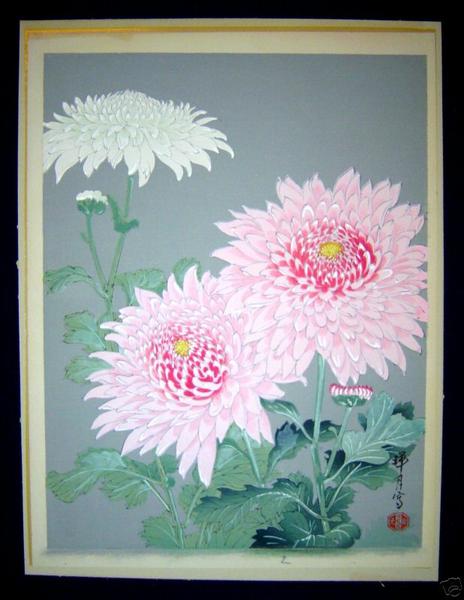
Flower 3
Woodblock print
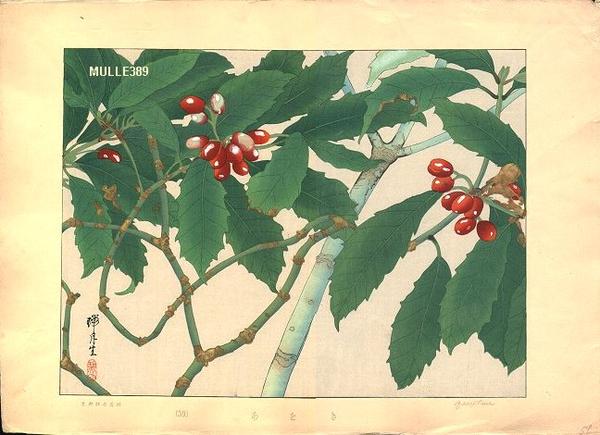
Green tea
Woodblock print
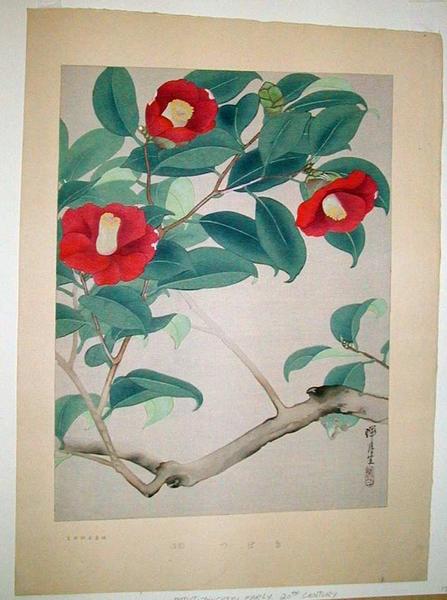
Flowers 2
Woodblock print

Omoto No IV
Mokuhanga (Japanese woodblock)

Nishikigi No XXXXVIII
Mokuhanga (Japanese woodblock)

Momiji No XXXXVII
Mokuhanga (Japanese woodblock)

Kinazuisen No. LVIII
Mokuhanga (Japanese woodblock)

Katakuriso Nirenso & Sobinbai
Mokuhanga (Japanese woodblock)

Dokudami No XXXII
Mokuhanga (Japanese woodblock)

Orchid 1
Woodblock print
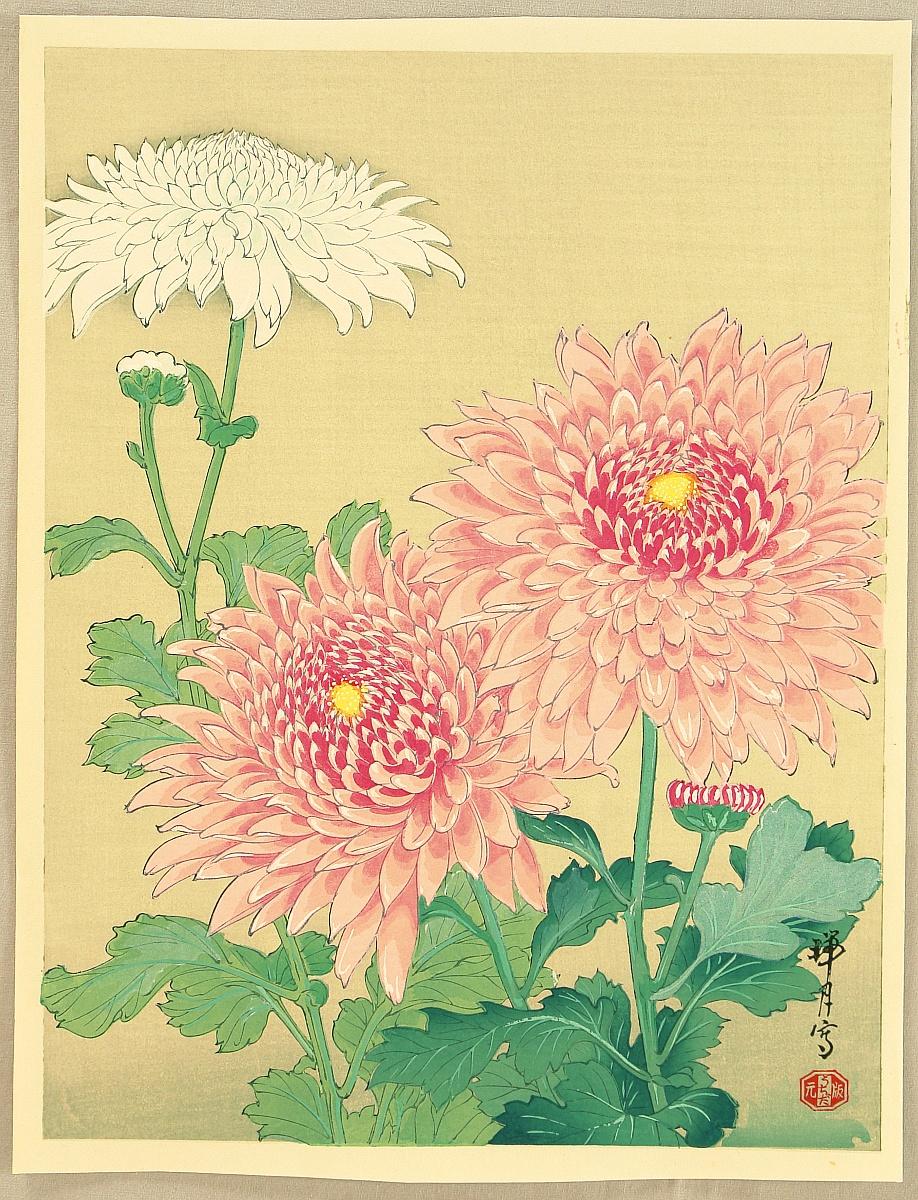
Chrysanthemums
Woodblock print
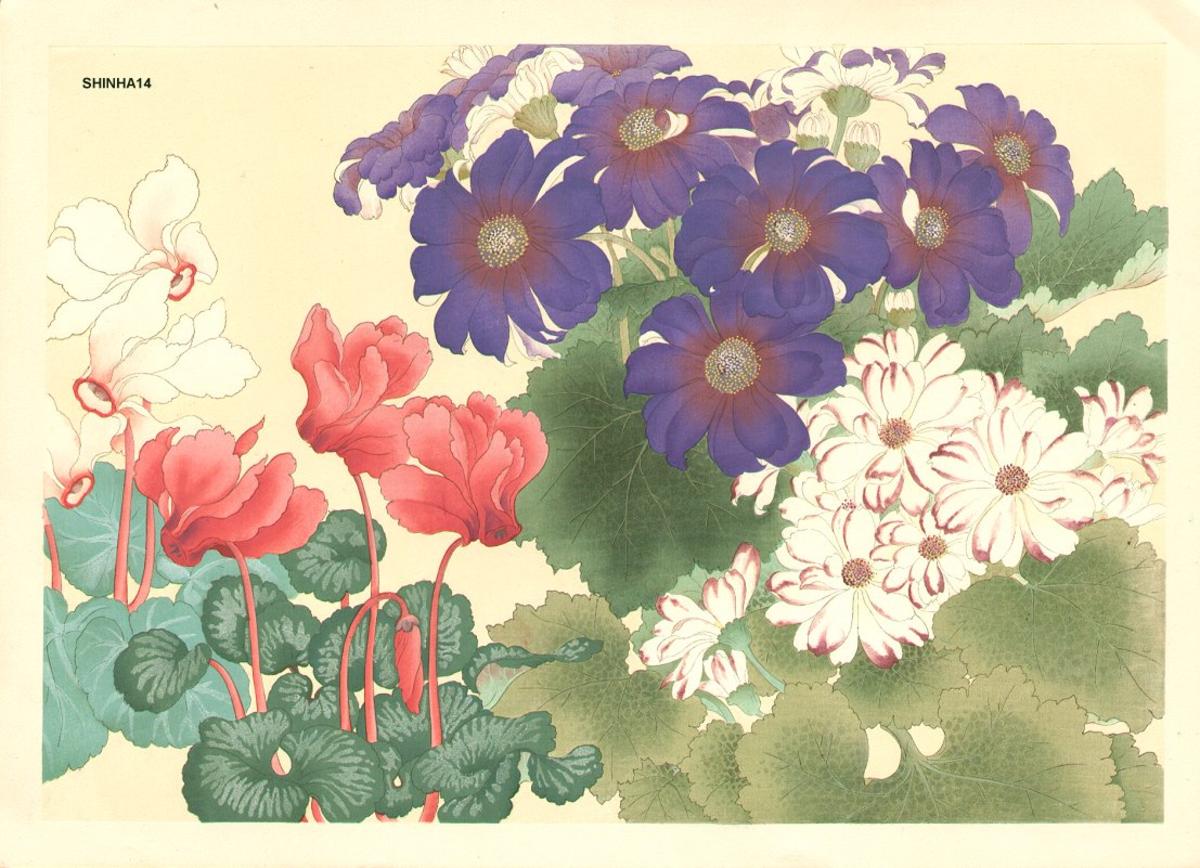
Untitled (ikeda-zuigetsu)
Woodblock print
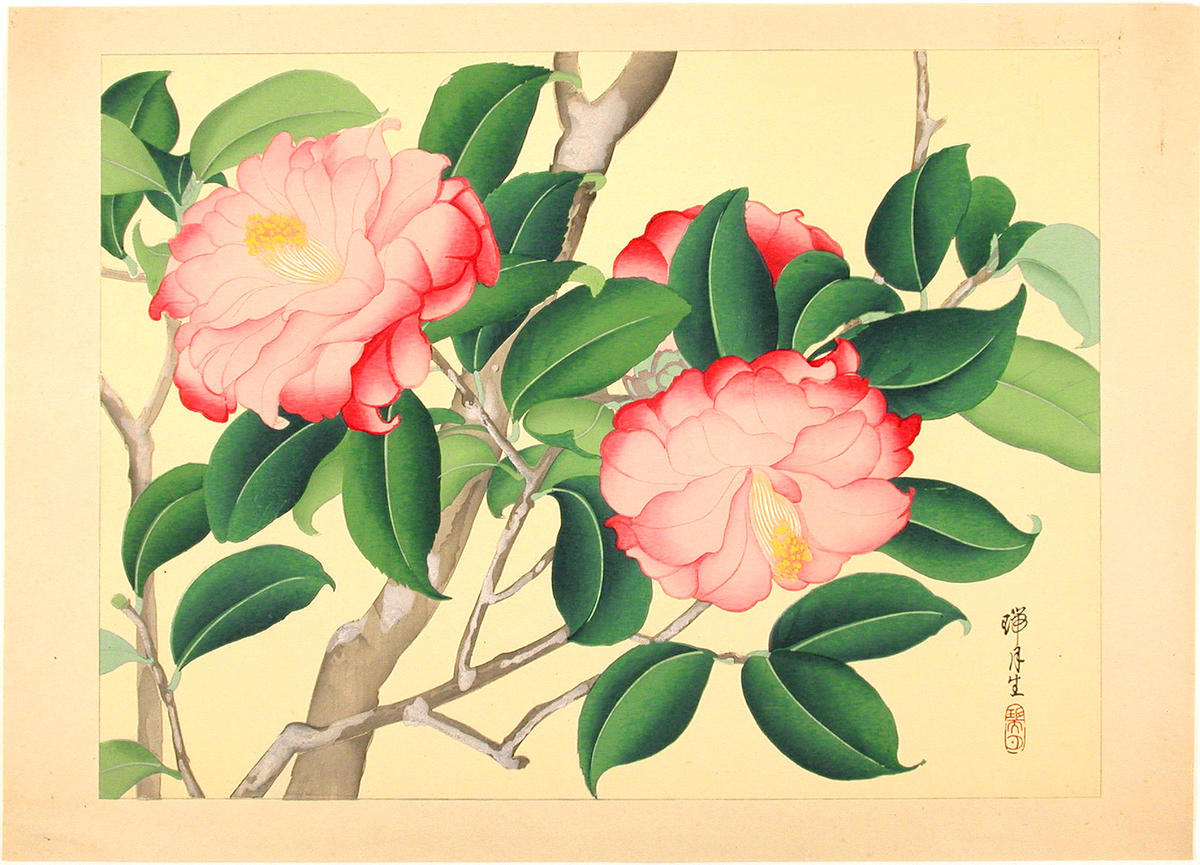
Tsubaki - Camellia
Woodblock print
Untitled (ikeda-zuigetsu)
Woodblock print