Itō Jakuchū
伊藤若冲
1716–1800
Japan
Biography
Ito Jakuchu (1716-1800) was one of the most idiosyncratic and technically inventive artists of mid-Edo Kyoto, an eccentric whose obsessive observation of the natural world and willingness to invent his own techniques placed him outside the established schools of the period. Though celebrated above all as a Kyoto painter, particularly for the monumental Doshoku Sai-e (Colorful Realm of Living Beings), Jakuchu also worked decisively in printed form, producing some of the most unusual and technically experimental prints of the eighteenth century. The afterlife of his designs in late-nineteenth and early-twentieth-century reproductive woodblock prints further extended his reach to the Western collectors and museum audiences who encounter his work today.
Jakuchu was born in 1716 in the Nishiki-koji district of Kyoto, the eldest son of a prosperous greengrocer family that ran the wholesale produce business known as the Masuya. As the heir, he assumed leadership of the business after his father's death, when he was about twenty-three, and for nearly two decades managed the shop while pursuing painting on the side. The Nishiki-koji market remains a working food street to this day, and Jakuchu's boyhood familiarity with the daily traffic of vegetables and fresh produce is reflected throughout his mature work, which returns again and again to chickens, fish, and seasonal produce with an almost devotional attentiveness to living forms. Around 1755, at the age of forty, he handed the family business to his younger brother and withdrew from commerce to devote himself entirely to painting.
A devout Buddhist with close ties to the Rinzai Zen temple Shokoku-ji, Jakuchu formed a lasting bond with the monk Daiten Kenjo — later the temple's abbot — who became his friend and mentor and gave him access to the temple's collections and to new artistic circles. His art name Jakuchu, thought to have been suggested by Daiten, derives from a passage in the Daoist Tao Te Ching and is usually glossed as meaning something like 'like the void.' The mature paintings of his middle and late career, including the Doshoku Sai-e set of thirty hanging scrolls offered to Shokoku-ji, demonstrate a singular fusion of meticulous naturalistic observation — derived in part from his own keeping of chickens in his garden for study — with an almost mystical attention to the patterns, colors, and structures of plants and animals.
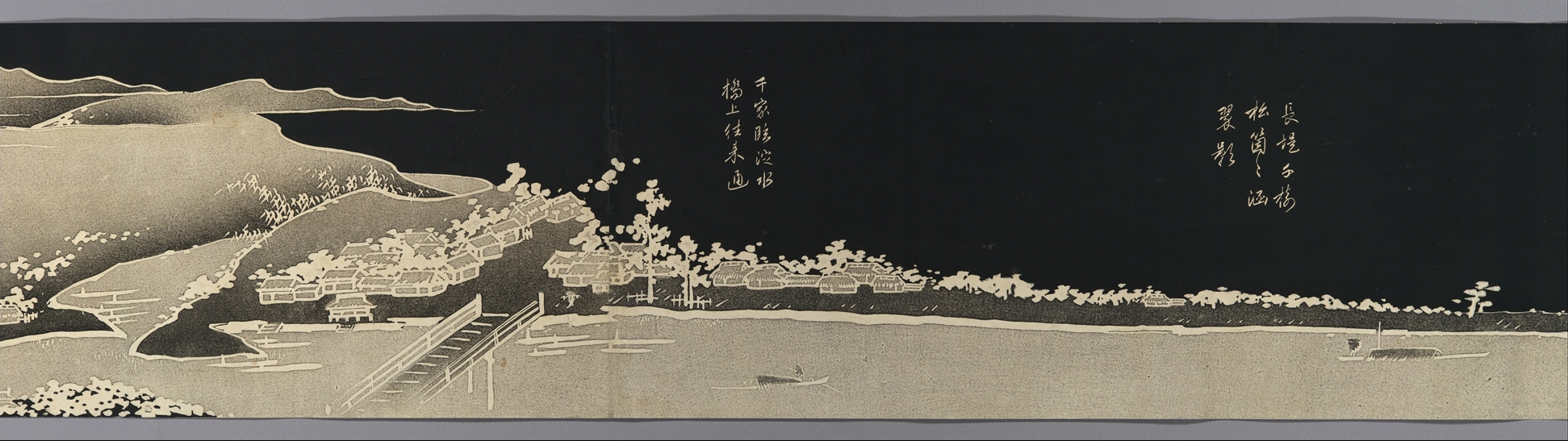
Jakuchu's contribution to printed art was as inventive as his painting. He worked in takuhanga, a stone-rubbing or reverse-printing technique adapted from Chinese practice, in which the image was rendered to produce a distinctive white-on-black aesthetic that contrasts sharply with the standard polychrome relief printing of mainstream ukiyo-e. His takuhanga books, most notably Genpo Yoka (Exquisite Flowers of the Mysterious Garden), brought the ghostly, inverted tonal logic of Chinese ink rubbings into the medium of the printed page, producing pages unlike anything else in Edo printmaking. He retired toward the end of his life to the area around Sekihoji temple in the Fukakusa district of southeastern Kyoto, where he continued working until his death in 1800 at the age of eighty-four.
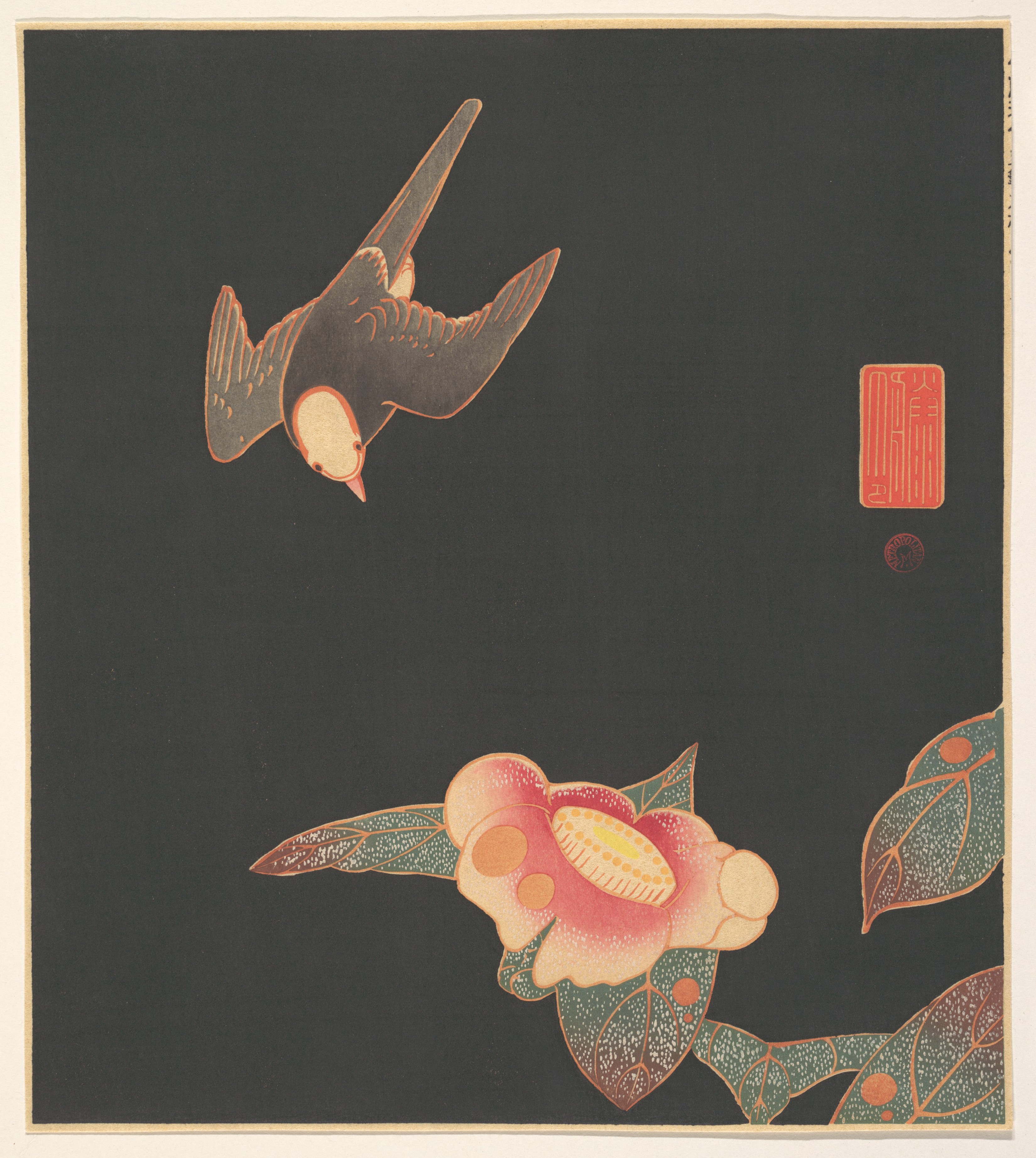
Jakuchu's reputation faded in the nineteenth century but revived through the twentieth, particularly after Meiji-era publishers produced color woodblock reproductions of his bird-and-flower paintings around 1900. These reproductions — among them A White Macaw, Red Parrot on the Branch of a Tree, Golden Pheasant in the Snow, Swallow and Camellia, and The Paroquet, now in the Metropolitan Museum of Art — brought his idiosyncratic vision to international audiences. The Met also holds a Meiji-era Jakuchu Picture Album, while his original eighteenth-century takuhanga scroll Happy Improvisations on a Riverboat Journey (Jokyoshu) — printed to mimic the look of Chinese ink rubbings taken from stone — survives in the same collection, so that both his Edo-period innovations and his later reproductive afterlife are documented side by side in major museums today.
Key Facts
- Active Period
- 1716–1800
- Nationality
- 🇯🇵Japan
- Works Indexed
- 2
Frequently Asked Questions
Ito Jakuchu (1716-1800) was one of the most idiosyncratic and technically inventive artists of mid-Edo Kyoto, an eccentric whose obsessive observation of the natural world and willingness to invent his own techniques placed him outside the established schools of the period. Though celebrated above all as a Kyoto painter, particularly for the monumental Doshoku Sai-e (Colorful Realm of Living Beings), Jakuchu also worked decisively in printed form, producing some of the most unusual and technically experimental prints of the eighteenth century. The afterlife of his designs in late-nineteenth and early-twentieth-century reproductive woodblock prints further extended his reach to the Western collectors and museum audiences who encounter his work today.
Itō Jakuchū was active from 1716 to 1800.
Original prints by Itō Jakuchū can be found in collections including Metropolitan Museum of Art, Minneapolis Institute of Art.