
Rooster
by Itō Jakuchū
- Date:
- 18th century
- Medium:
- Woodblock print (ishizuri-e), ink and color on paper
- Source:
- Minneapolis Institute of Art
Description
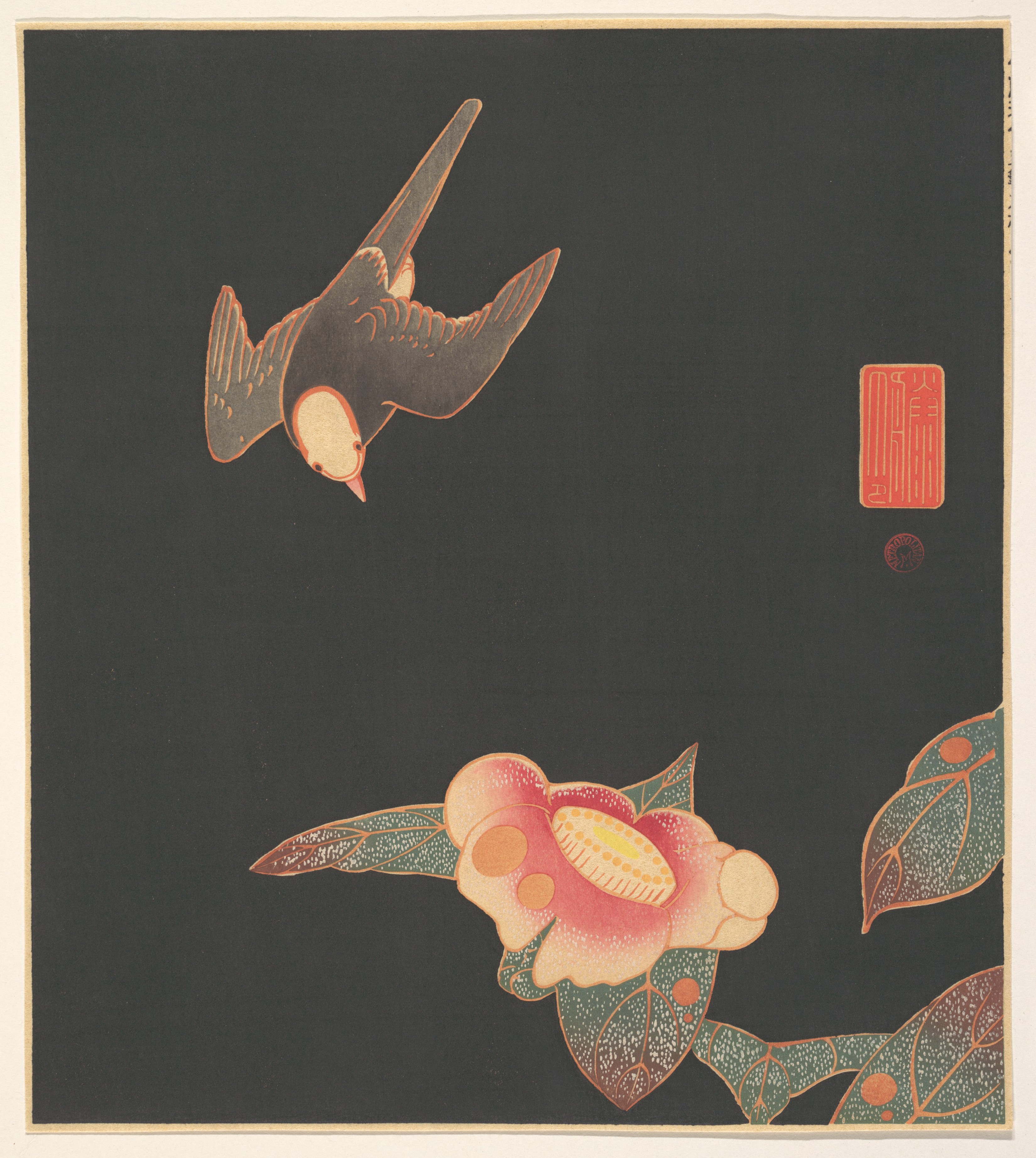
Rooster, held in the Minneapolis Institute of Art with accession number P.78.64.30, is an eighteenth-century woodblock print by Ito Jakuchu executed in the ishizuri-e technique, a distinctive stone-rubbing or reverse-printing method that produces white imagery against a dense black ground. Measuring 39 by 25.1 centimeters in ink and color on paper, the print stands among the most important original eighteenth-century printed works by the Kyoto eccentric in any American collection. Ishizuri-e, sometimes called stone-print or stone-rubbing print, was adapted in Edo Japan from Chinese stone-rubbing practices, particularly those associated with Buddhist temple steles, and Jakuchu was the most ambitious experimenter with the technique in eighteenth-century Kyoto. The choice of the rooster as subject reflects Jakuchu's lifelong devotion to the birds he kept in his Nishiki-koji garden as living models for his painted and printed work; chickens recur throughout his oeuvre, most famously in the Doshoku Sai-e scrolls at Shokoku-ji. The Minneapolis print captures the rooster in the ghostly, tonally inverted register of ishizuri-e, with the bird's silhouette, comb, and feather pattern carried in negative against a deep black ground. The work is a key document of Jakuchu's printed experimentation and one of the rare original eighteenth-century examples of his takuhanga production to circulate beyond Japan.
More Prints by Itō Jakuchū
Frequently Asked Questions
Rooster was created by Itō Jakuchū (伊藤若冲) in 18th century.