Biography
Joichi Hoshi (星襄一, 1913–1979) devoted the last decade of his life to a single obsessive subject — trees — and in doing so produced one of the most poetically unified bodies of work in postwar Japanese printmaking. Working within the sosaku-hanga tradition as sole designer, carver, and printer of every image, Hoshi transformed ordinary woodland subjects into luminous, near-sacred presences through his innovative fusion of woodblock printing and deep-relief embossing.
Born in 1913 in Koide, a town in Niigata Prefecture (now part of Uonuma City), Hoshi came to printmaking by an indirect route. He spent years as an elementary-school teacher in Taiwan before repatriating to Japan in 1946, and did not begin creating prints seriously until he was past forty — an unusually late start that lent his eventual artistic focus an air of hard-won conviction. Although he later studied oil painting at Musashino Art School, graduating in 1956, his education in woodblock printmaking itself was largely self-directed, shaped by the sosaku-hanga movement's foundational insistence that authentic creative expression required the artist's hand at every stage of production — designing the image, cutting the woodblocks, and pulling each impression by hand.
Hoshi's artistic breakthrough arrived with his recognition that trees, rendered through a combination of woodblock color printing and karazuri embossing, could carry extraordinary emotional and spiritual weight. Where other printmakers ranged across landscapes, figures, and abstractions, Hoshi narrowed his vision to solitary trees, dense groves, bare winter branches against luminous skies, and forests viewed as cathedral interiors. His method of deeply pressing thick, soft Japanese paper into carved blocks produced raised and recessed surfaces that caught ambient light in unpredictable ways, giving each impression a sculptural, three-dimensional quality unlike anything achievable through flat printing. The embossed areas appeared to glow from within, as though the trees themselves were sources of quiet radiance.
His color palette reinforced this quality of inner illumination. Many of his finest prints employ severely limited tones — silvery grays, soft blues, warm ochres, and luminous whites — applied with gradations so delicate they suggest mist gathering around trunks or light filtering through a canopy at dawn. The night scenes are particularly arresting: in works like Trees in the Starlight and The Southern Cross, pale tree forms stand against deep blue-black backgrounds with the stillness of sentinels, each trunk a column of soft light against enveloping darkness. White Tree, one of his most radical compositions, renders a solitary tree entirely through embossed white paper, its form emerging purely from the play of light and shadow across the relief surface — an image that approaches the boundary between printmaking and sculpture.
Hoshi exhibited internationally throughout the 1960s and 1970s, taking part in the Tokyo International Print Biennials and in print biennials in Geneva, São Paulo (1967), and London, and he received awards at national exhibitions in Japan. His prints entered collections at the Museum of Modern Art in New York, the Art Institute of Chicago, the British Museum, and the National Museum of Modern Art in Tokyo. Despite this international recognition, he remained a quiet, focused artist who did not seek celebrity, returning always to his singular subject.
Hoshi died in 1979 at the age of sixty-six, leaving behind a body of work that numbers in the hundreds, much of it given over to trees. The consistency borders on the monastic, but within that self-imposed constraint Hoshi found inexhaustible variation: trees in snow, in starlight, in fog, in full leaf, in skeletal winter silhouette, alone and in crowds, from a distance and in intimate close-up. Each print is a meditation on presence, patience, and the slow passage of time — qualities the trees embody and the embossed paper makes tangible beneath the viewer's fingertips.
Key Facts
- Active Period
- 1913–1979
- Nationality
- 🇯🇵Japan
- Movements
- Contemporary MokuhangaSōsaku-hanga
- Works Indexed
- 39
Frequently Asked Questions
Joichi Hoshi (星襄一, 1913–1979) devoted the last decade of his life to a single obsessive subject — trees — and in doing so produced one of the most poetically unified bodies of work in postwar Japanese printmaking. Working within the sosaku-hanga tradition as sole designer, carver, and printer of every image, Hoshi transformed ordinary woodland subjects into luminous, near-sacred presences through his innovative fusion of woodblock printing and deep-relief embossing.
Joichi Hoshi was active from 1913 to 1979. They were associated with the Contemporary Mokuhanga and Sōsaku-hanga movements.
Joichi Hoshi's work was shaped by the Contemporary Mokuhanga and Sōsaku-hanga traditions in Japanese woodblock printmaking. Contemporary Mokuhanga: Contemporary mokuhanga (literally "wood-block print") encompasses artists working from approximately 1970 to the present who continue or reinvent traditional Japanese woodblock printing techniques. Sōsaku-hanga: ## What is sōsaku-hanga? Sōsaku-hanga (創作版画, "creative prints") was a twentieth-century Japanese print movement defined by a single commitment: the artist must design, carve, and print every work alone.
Joichi Hoshi's prints frequently feature trees, abstract, night scenes, landscapes, spring, snow scenes.
Original prints by Joichi Hoshi can be found in collections including British Museum, Art Institute of Chicago, Minneapolis Institute of Art, Harvard Art Museums.
Woodblock Prints by Joichi Hoshi (39)

Snow Figure (Yuki no zo)
1958
Color woodblock print
![Inhabit (A) [Sumu (A)] by Joichi Hoshi](https://www.artic.edu/iiif/2/14e6cd5d-5c79-fc54-4722-423014057e08/full/843,/0/default.jpg)
Inhabit (A) [Sumu (A)]
1963
Color woodblock print; edition 4/50
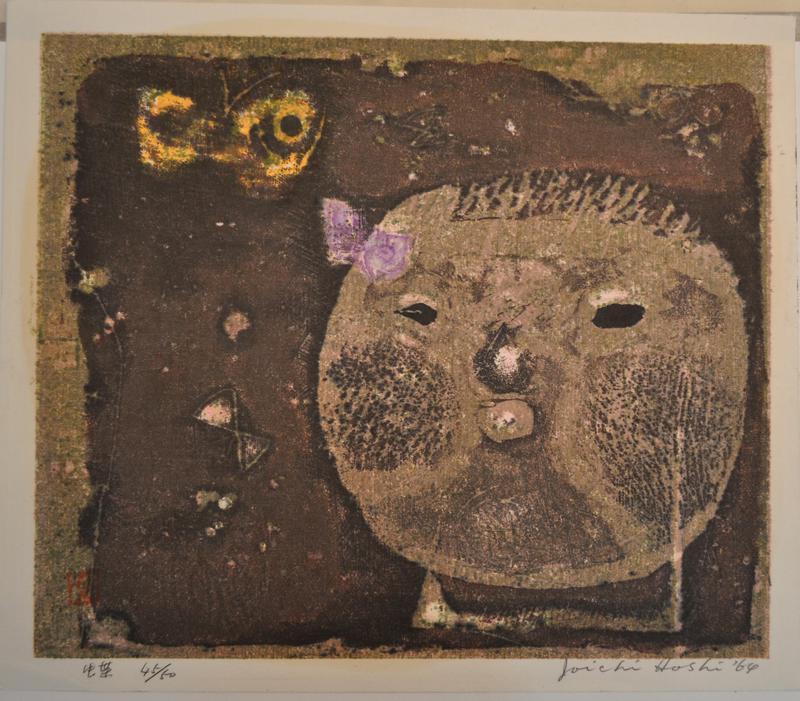
Butterfly
1964
Woodblock print, ink and color on paper
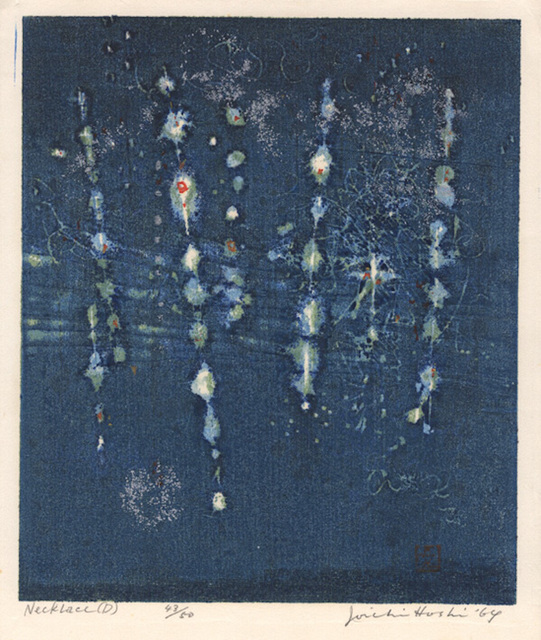
Necklace (D)
1964
Color woodcut

The night sky of lozenge
1967
Woodblock print, ink and color on paper

The Southern Cross (C)
1967
Woodblock print, ink and color on paper

The star festival
1968
Woodblock print, ink and color on paper

The Great Dipper (B)
1969
Woodblock print, ink and color on paper
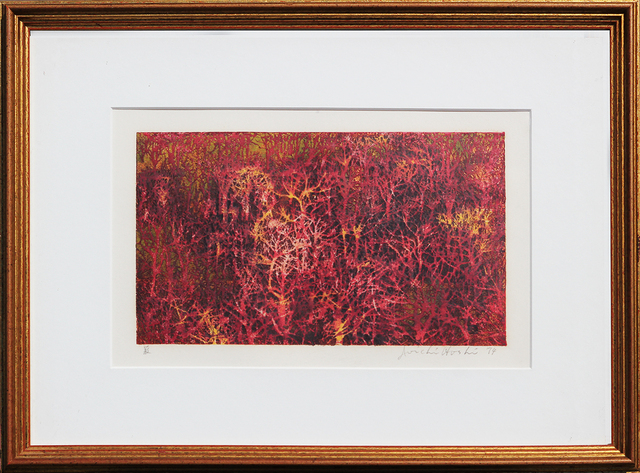
Red Monochromatic Abstract Woodblock Monoprint of a Web of Trees Landscape
1974
Monoprint; woodcut print
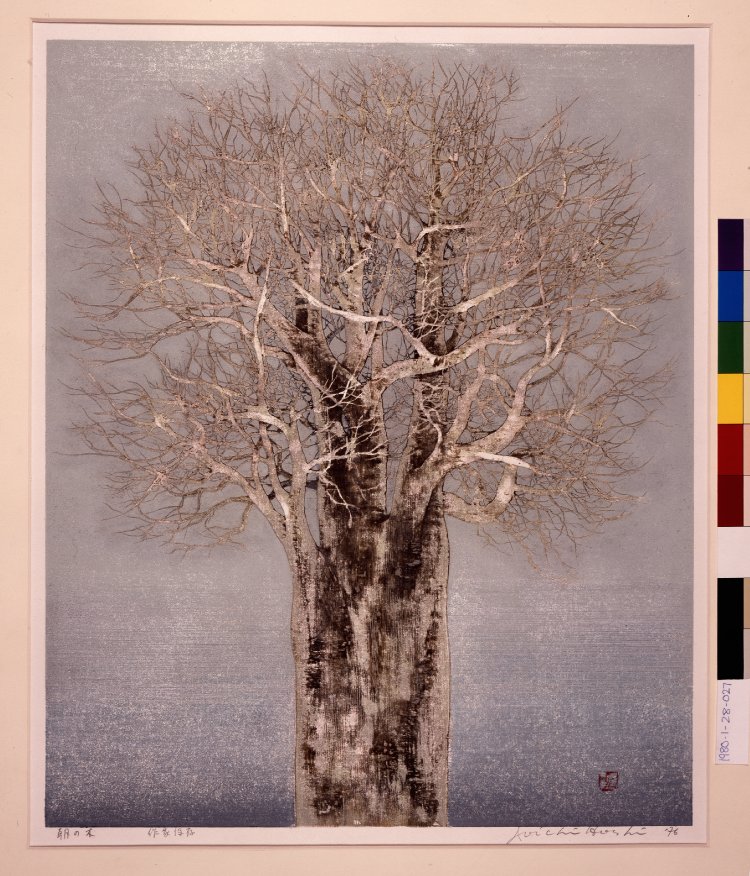
Asa no ki (Morning Tree)
Woodblock print
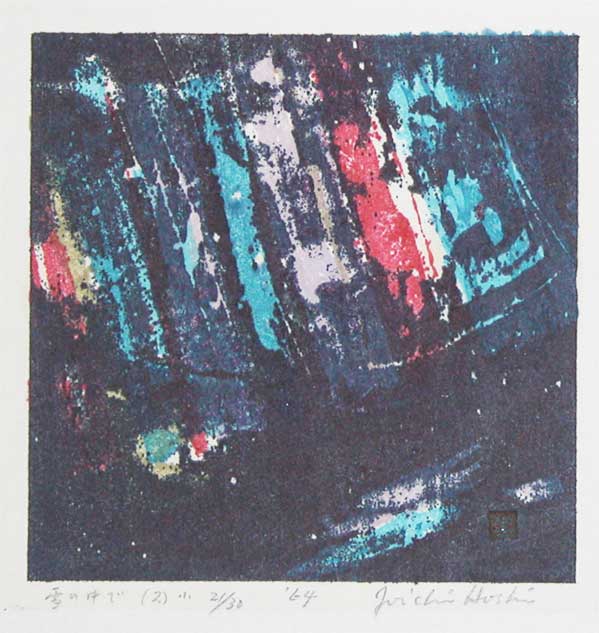
In the Snow (2)
Woodblock print
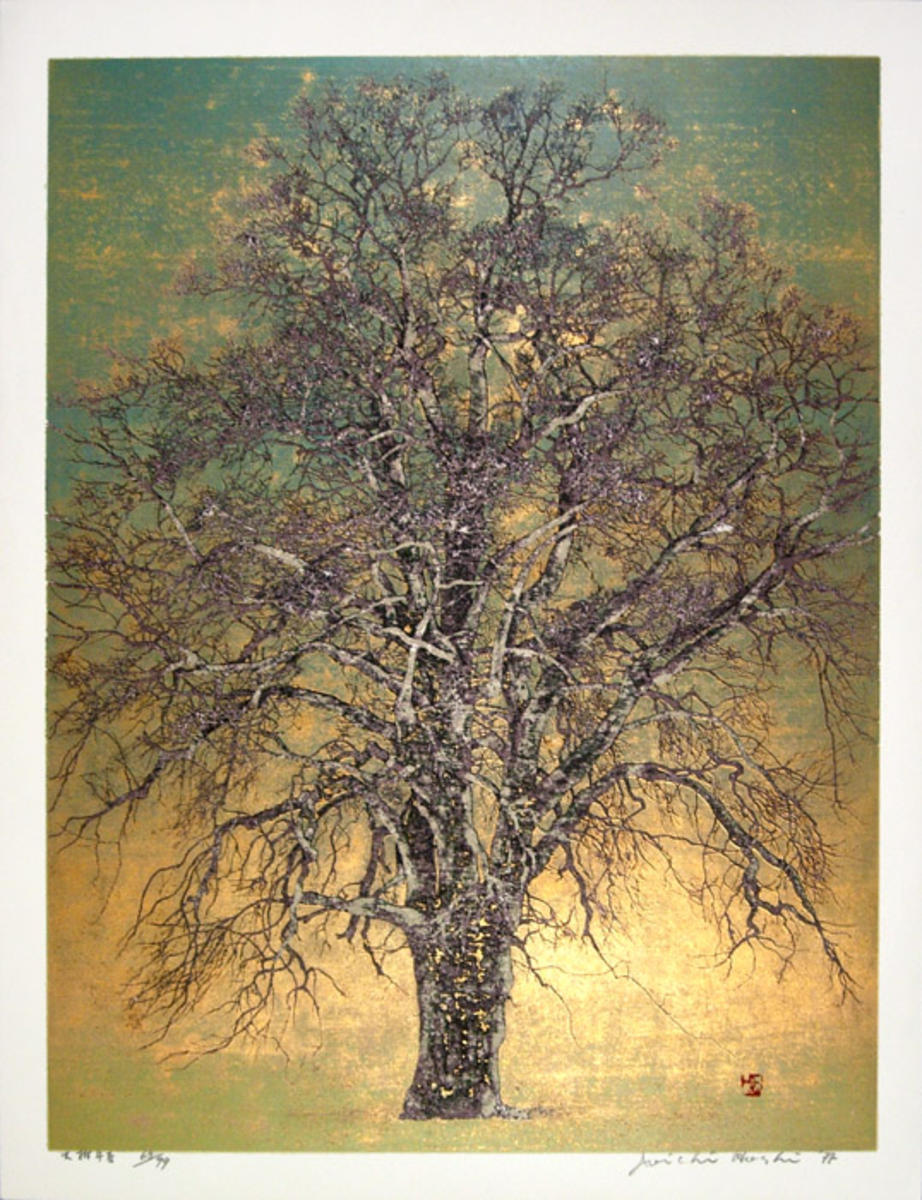
Great Tree in Early Spring
Woodblock print
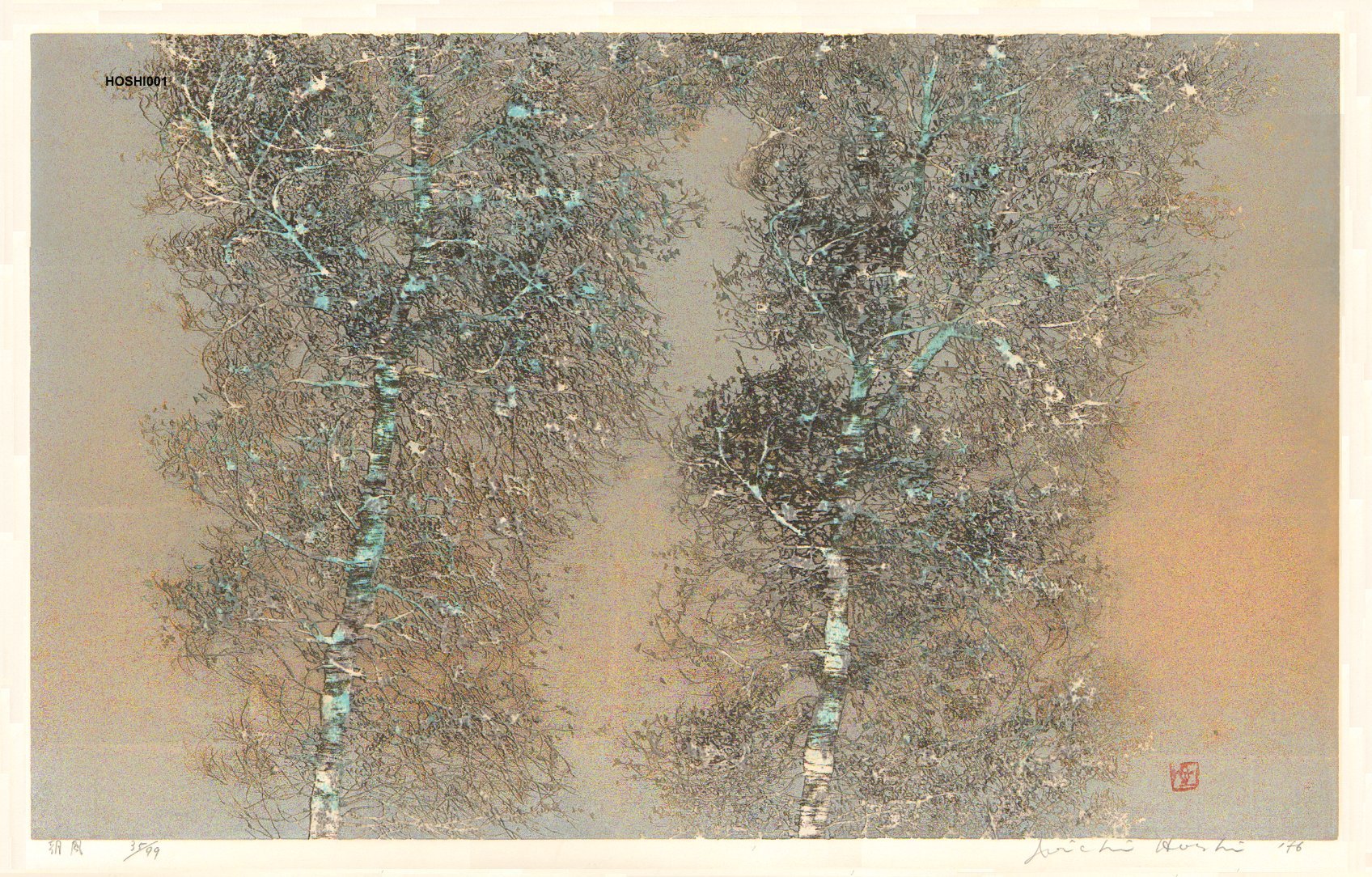
Morning Breeze
Woodblock print
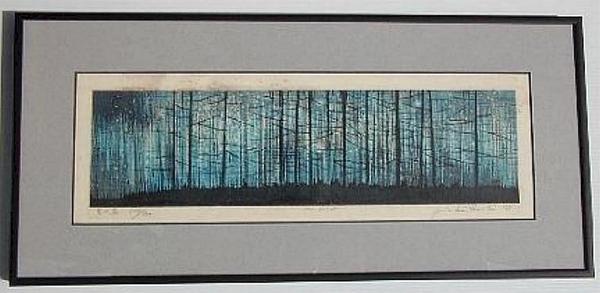
STAR FOREST
Woodblock print
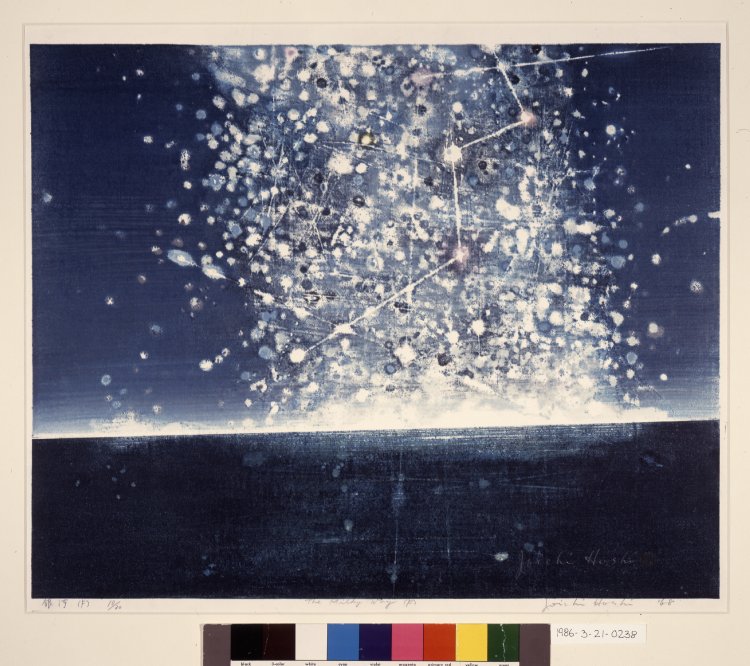
Ginga F (The Milky Way (F))
Woodblock print
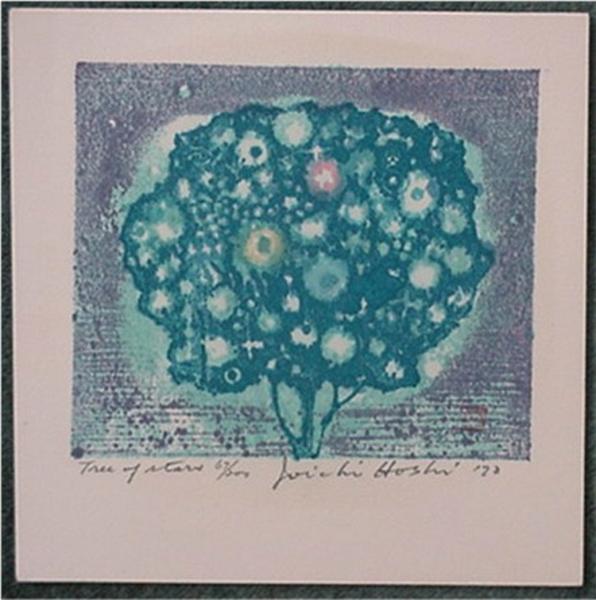
Tree of Stars
Woodblock print
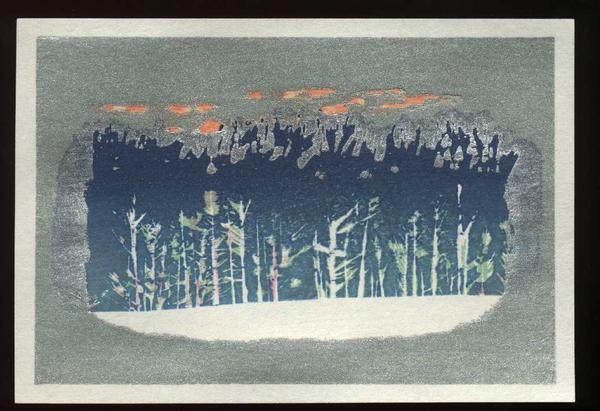
White Trees
Woodblock print
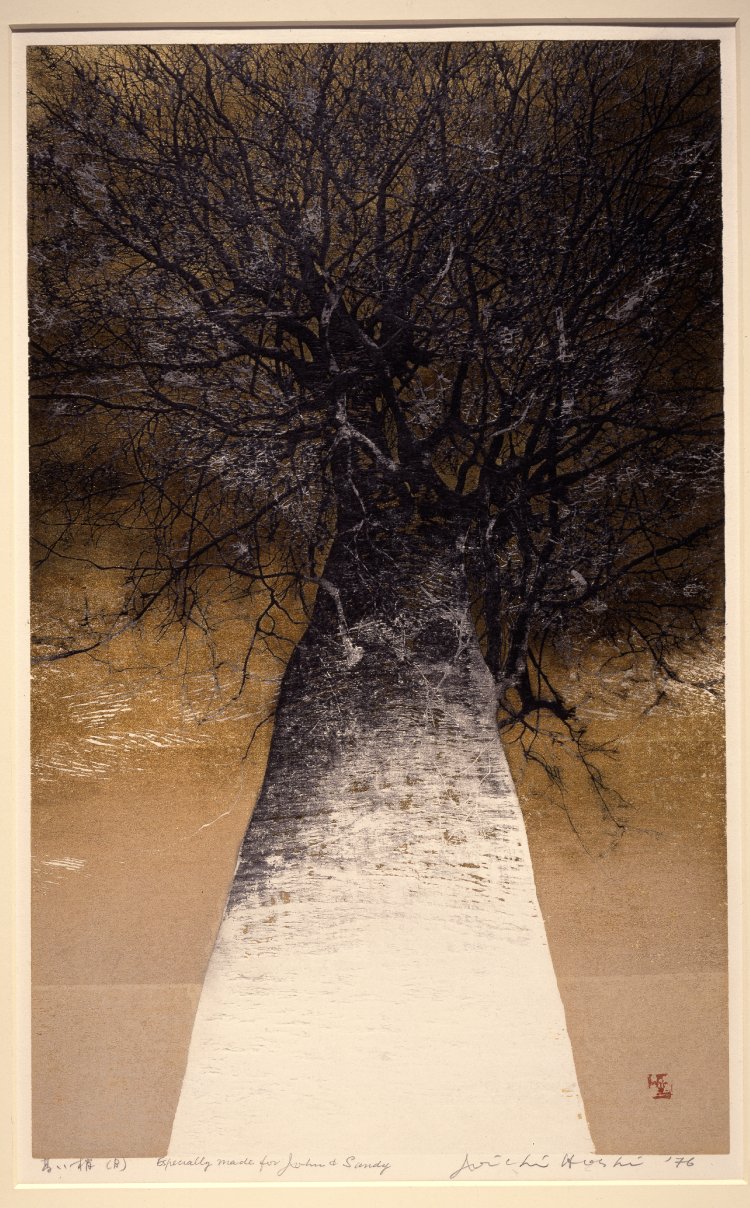
Untitled (joichi-hoshi)
Woodblock print
Takai kozue (B) 高い梢(B) (High Treetops (B))
Woodblock print

Hoshi Joichi
Mokuhanga (Japanese woodblock)

Butterflies
Mokuhanga (Japanese woodblock)

Tree under the moon
Mokuhanga (Japanese woodblock)

Artwork-B
Mokuhanga (Japanese woodblock)

Early Spring
Mokuhanga (Japanese woodblock)