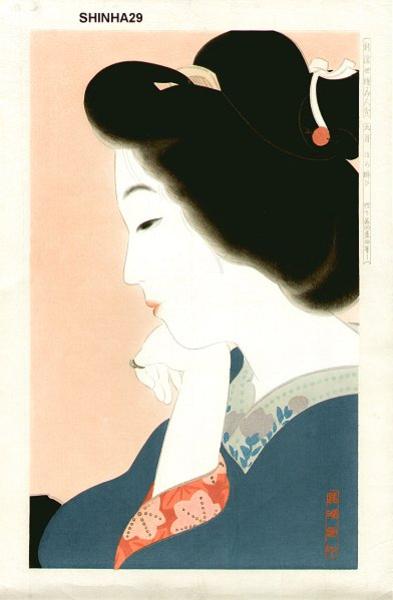
Biography
Kamoshita Chōko (鴨下晁湖, 1890–1967) was a Japanese-style (nihonga) painter and print designer who worked in both the bijin-ga (beautiful women) and historical-subject genres. He studied historical painting in the Yamato-e manner under Matsumoto Fukō, and the figure-painting skills he developed there carried over into both his paintings and his woodblock print designs. He exhibited at the government-sponsored Bunten and Teiten salons and also worked as a newspaper and magazine illustrator.
Kamoshita's prints include bijin-ga subjects depicting women in traditional dress, as well as historical and literary subjects drawn from Japanese history and legend. His historical work reflects the early-twentieth-century Japanese interest in revisiting the nation's past through visual art, with attention to period costume and setting.
Kamoshita was active during the period of the shin-hanga (new print) movement, working in the collaborative model typical of the era, in which publishers commissioned designs that were carved and printed by skilled craftsmen. He was not one of the movement's central figures, and his print output is not extensively covered in the standard shin-hanga references.
Kamoshita died in 1967. His work is represented in institutional collections — a Shōwa-period painting, Elderly Geisha (Rōgi), is held by the Metropolitan Museum of Art — and his prints continue to interest collectors of bijin-ga and historical Japanese figure prints from the early modern period.
Key Facts
- Active Period
- 1874–1950
- Nationality
- 🇯🇵Japan
- Movement
- Shin-hanga
- Works Indexed
- 17
Frequently Asked Questions
Kamoshita Chōko (鴨下晁湖, 1890–1967) was a Japanese-style (nihonga) painter and print designer who worked in both the bijin-ga (beautiful women) and historical-subject genres. He studied historical painting in the Yamato-e manner under Matsumoto Fukō, and the figure-painting skills he developed there carried over into both his paintings and his woodblock print designs. He exhibited at the government-sponsored Bunten and Teiten salons and also worked as a newspaper and magazine illustrator.
Kamoshita Chōko was active from 1874 to 1950. They were associated with the Shin-hanga movement.
Kamoshita Chōko's work was shaped by the Shin-hanga tradition in Japanese woodblock printmaking. Shin-hanga: ## What is Shin-hanga? Shin-hanga (新版画), literally "new prints," is the early twentieth-century revival of the collaborative Japanese woodblock workshop, organized between roughly 1915 and 1960 by the Tokyo publisher Watanabe Shōzaburō (1885–1962) and a handful of competing houses.
Kamoshita Chōko's prints frequently feature bijin-ga, figures, abstract, landscapes, travel scenes, portraits.
Original prints by Kamoshita Chōko can be found in collections including Japanese Art Open Database, Ohmi Gallery, Watanabe Print, ukiyo-e.org.
Woodblock Prints by Kamoshita Chōko (17)

Untitled (kamoshita-choko)
Woodblock print

Gathering at Atakoyama - 愛宕山集躡の図 (1)
Woodblock print
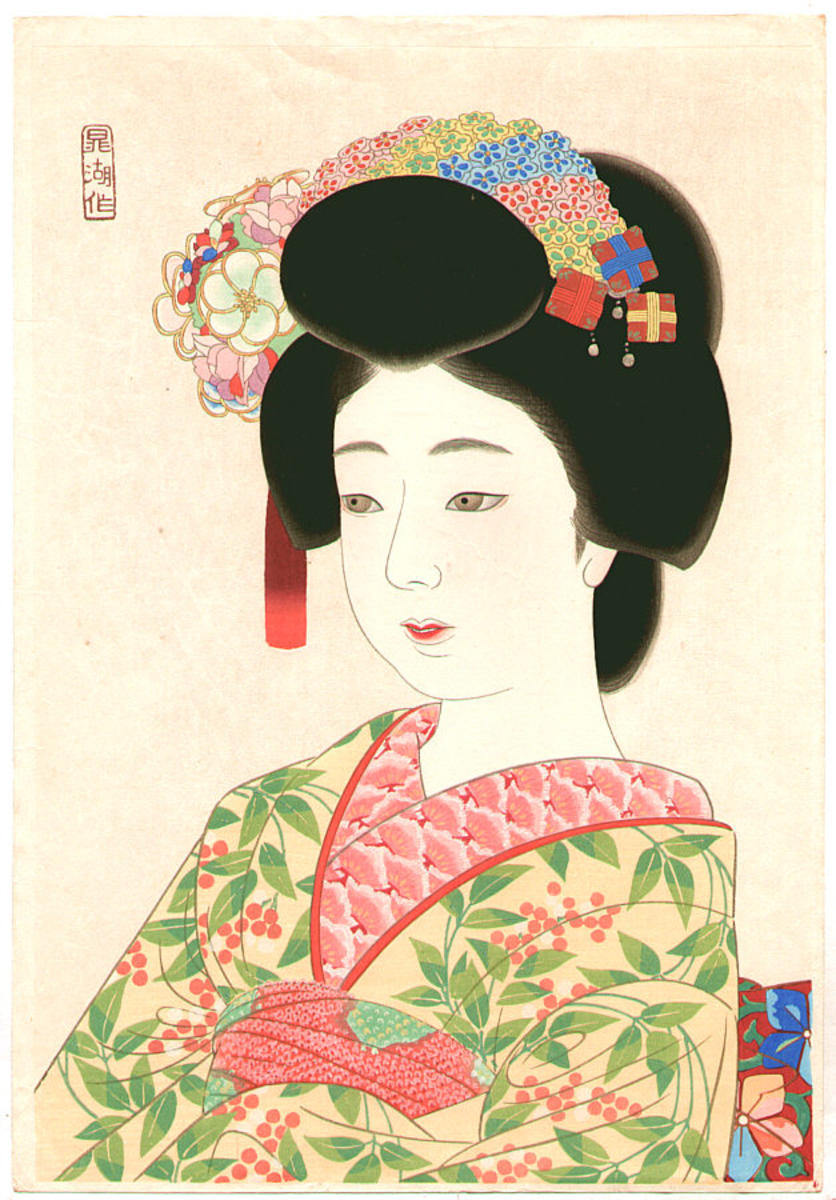
Maiko
Woodblock print
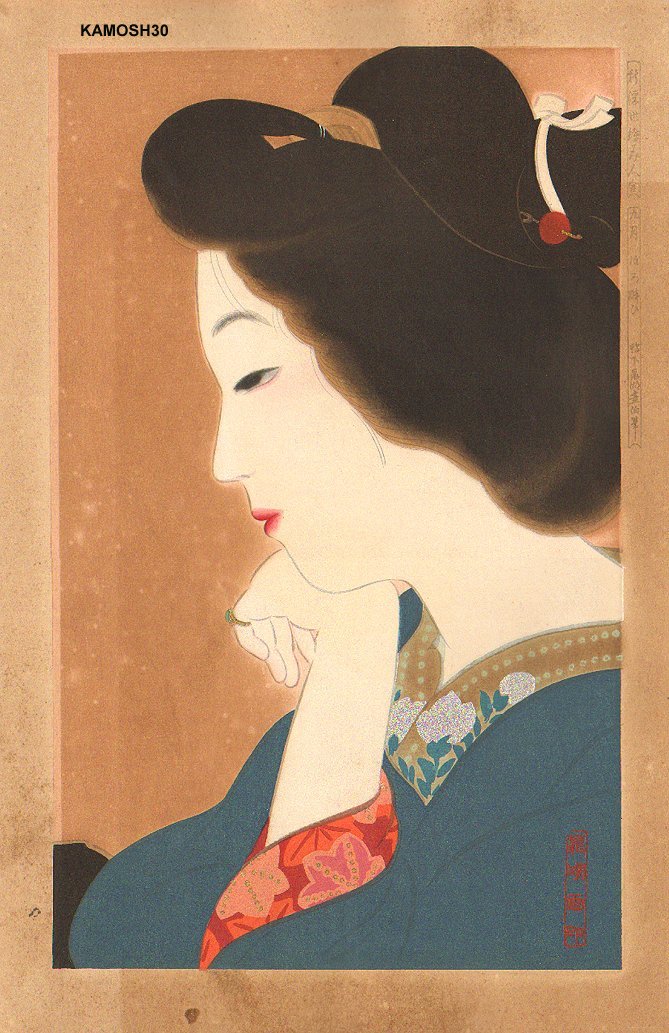
Tipsy, September
Woodblock print
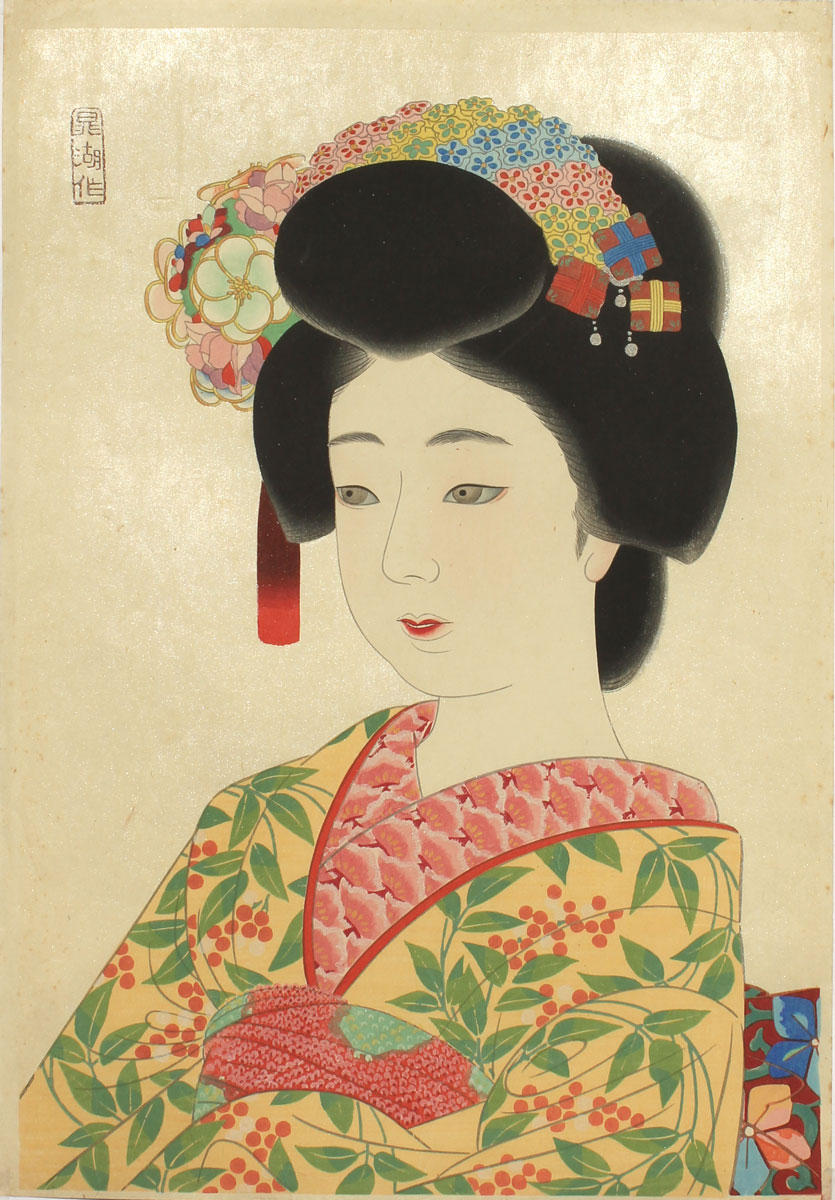
Maiko
Woodblock print
Suzuki Sujaku
Woodblock print

Maiko
Woodblock print
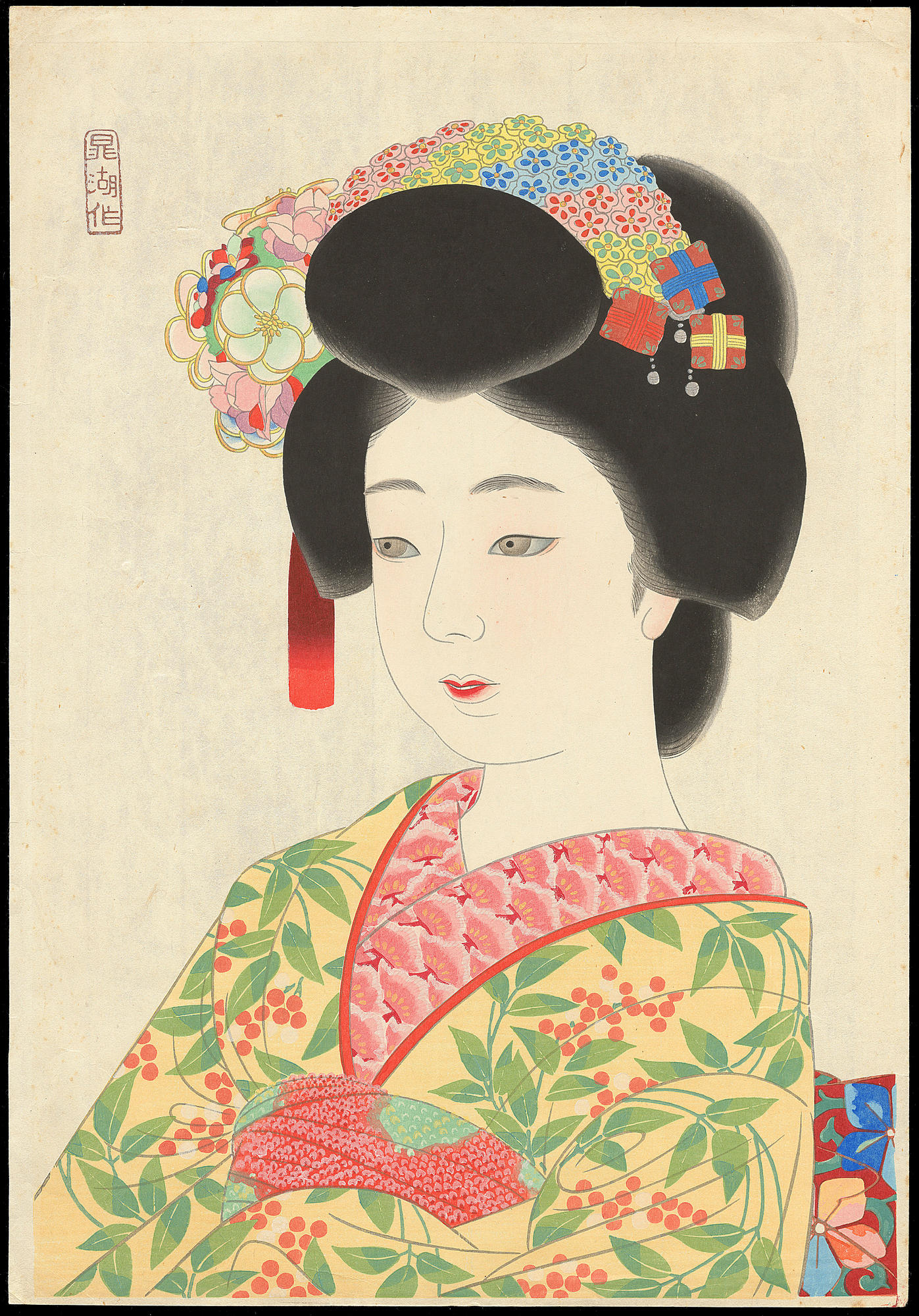
Maiko
Woodblock print
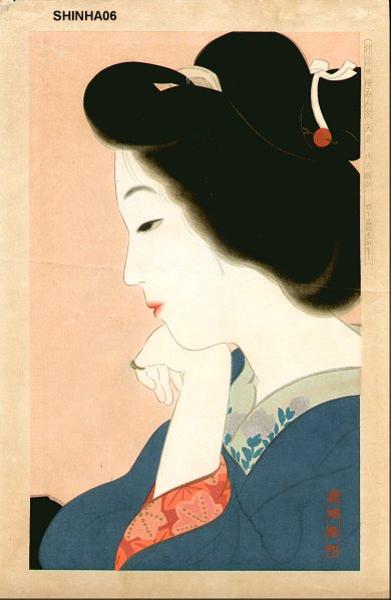
September - Tipsy — 九月 ほろ酔い
Woodblock print
September - Tipsy — 九月 ほろ酔い
Woodblock print
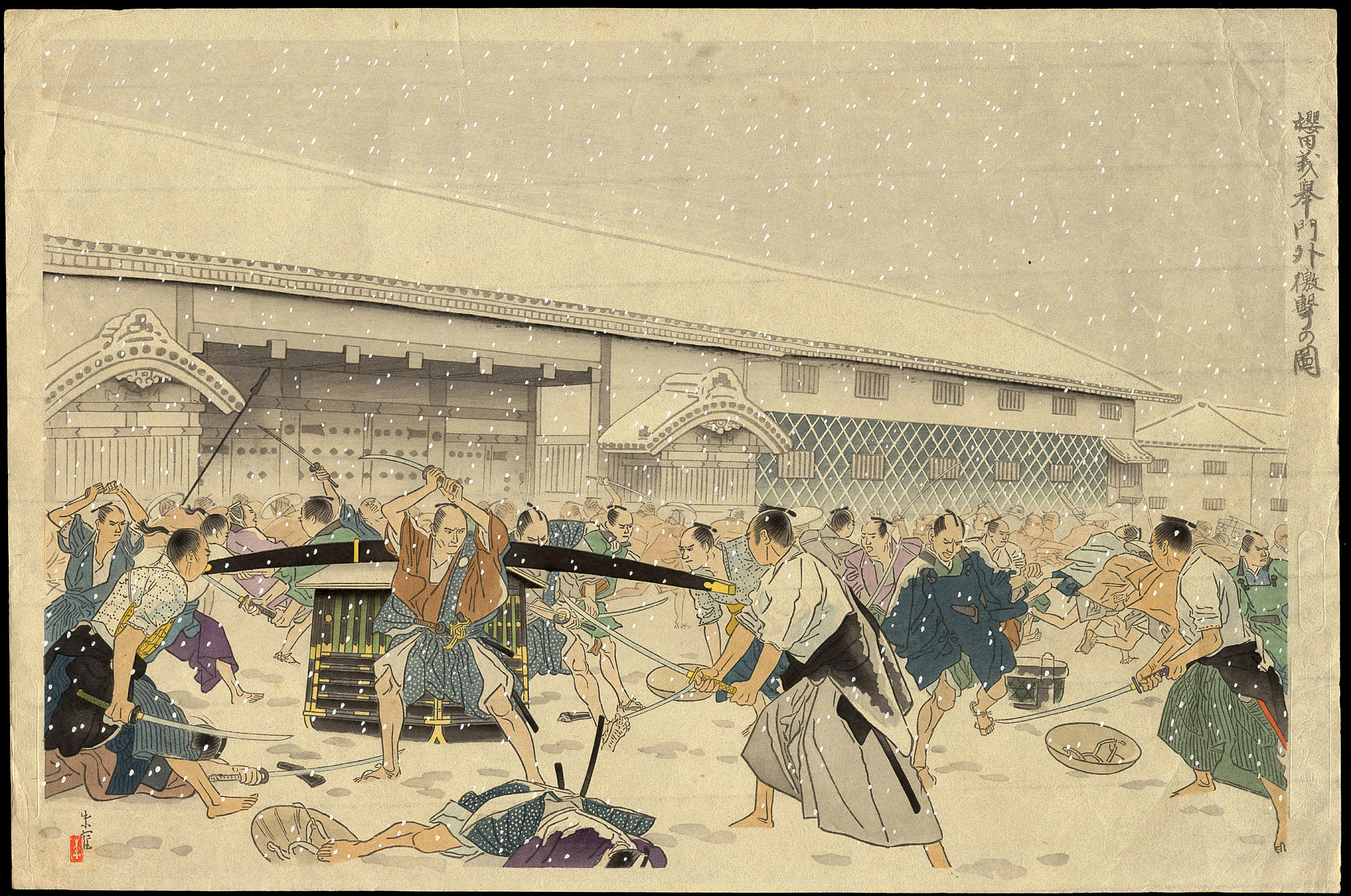
Violent Attack Outside the Gate - 門外激撃の図 (1)
Woodblock print

Maiko
Mokuhanga (Japanese woodblock)
New Ukiyo E Beauties September Tipsy
Woodblock print
Ohmi Gallery
Woodblock print
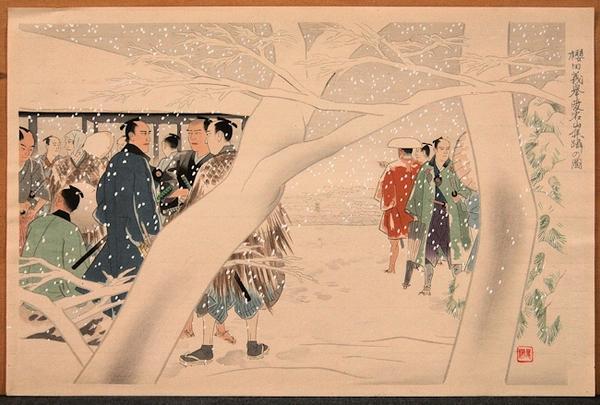
Gathering at Atakoyama — 愛宕山集躡の図
Woodblock print

Maiko
Mokuhanga (Japanese woodblock)

Kamoshita, Choko
Woodblock print