Biography
Kawada Kan (川田幹, 1927–1999) worked primarily in the katazome-inspired stencil print technique, producing color compositions that bridged traditional Japanese textile dyeing methods and the sosaku-hanga movement's emphasis on the artist as sole creator of every impression.
Born in 1927, Kawada came of age during the postwar period when sosaku-hanga was achieving international recognition through exhibitions and biennials that brought Japanese creative printmaking to audiences in Europe, the Americas, and beyond. He was a student of Serizawa Keisuke, the textile artist and Living National Treasure who had elevated katazome stencil dyeing to a fine art form. From Serizawa, Kawada absorbed the stencil technique's particular aesthetic — bold, flat color areas defined by the cut paper stencil's crisp edges, with patterns that echoed the geometric and organic vocabulary of traditional Japanese textile design.
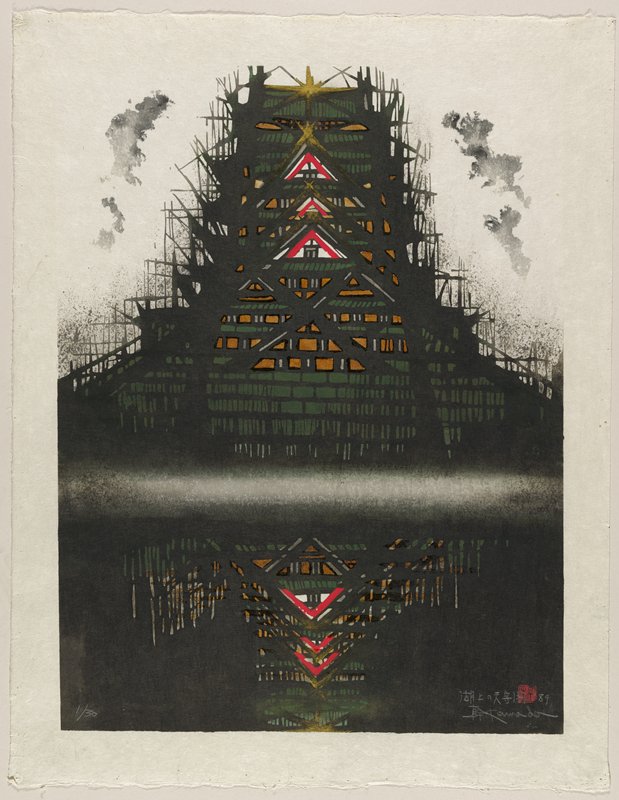
Kawada adapted these methods to the production of fine art prints, cutting stencils from washi paper, applying pigments through the stencil openings, and building up multi-layered color compositions that combined the graphic clarity of stencil work with the rich surface texture of handmade paper and mineral pigments. His subjects included Japanese architectural scenes — temples, pagodas, and castle towers reflected in moat water — rendered in the warm, saturated palette that stencil printing achieves through the direct application of pigment to paper.
Castle Tower above a Lake, held by the Minneapolis Institute of Art, typifies Kawada's mature approach: an architectural subject reduced to its essential geometric forms, realized in flat planes of rich color that recall both the stencil-dyed textiles of the mingei folk art movement and the bold simplifications of modernist graphic design. The result occupies an unusual position in Japanese printmaking — neither the tonal atmospherics of shin-hanga nor the expressive carving of woodblock sosaku-hanga, but a distinct third path rooted in the stencil tradition's own visual logic.
Kawada died in 1999 at the age of seventy-two, leaving a body of stencil prints that documents one of the less-traveled creative approaches within the broader sosaku-hanga movement.
Key Facts
- Active Period
- 1927–1999
- Nationality
- 🇯🇵Japan
- Movement
- Sōsaku-hanga
- Works Indexed
- 11
Frequently Asked Questions
Kawada Kan (川田幹, 1927–1999) worked primarily in the katazome-inspired stencil print technique, producing color compositions that bridged traditional Japanese textile dyeing methods and the sosaku-hanga movement's emphasis on the artist as sole creator of every impression.
Kawada Kan was active from 1927 to 1999. They were associated with the Sōsaku-hanga movement.
Kawada Kan's work was shaped by the Sōsaku-hanga tradition in Japanese woodblock printmaking. Sōsaku-hanga: ## What is sōsaku-hanga? Sōsaku-hanga (創作版画, "creative prints") was a twentieth-century Japanese print movement defined by a single commitment: the artist must design, carve, and print every work alone.
Original prints by Kawada Kan can be found in collections including robynbuntin, ukiyo-e.org, Robyn Buntin of Honolulu, Watanabe Print.
Woodblock Prints by Kawada Kan (11)
Castle Tower above a Lake
1989
Color stencil print

No Series Takayama Festival
Woodblock print
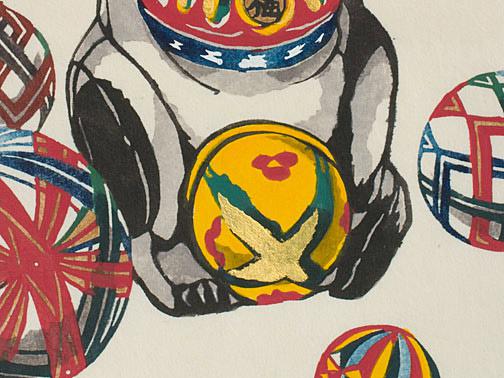
Maneki Neko
Woodblock print
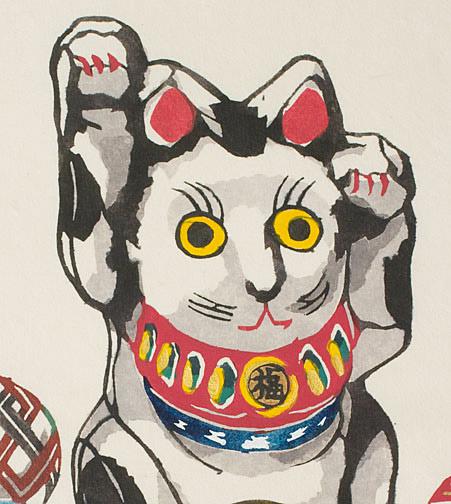
Maneki Neko
Woodblock print
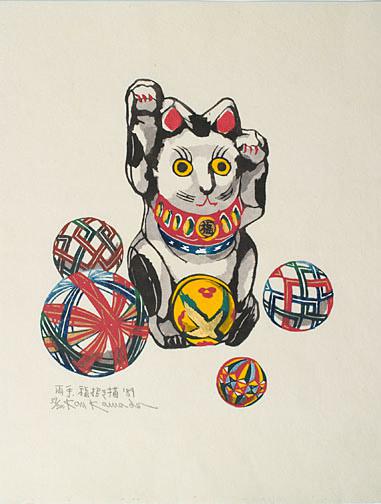
Maneki Neko
Woodblock print
Untitled (kan-kawada)
Woodblock print
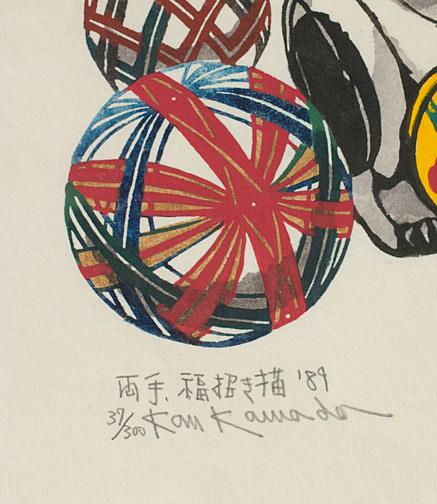
Maneki Neko
Woodblock print
Print 1
Woodblock print

Wooden house on a slope
Mokuhanga (Japanese woodblock)

Storehouse
Mokuhanga (Japanese woodblock)
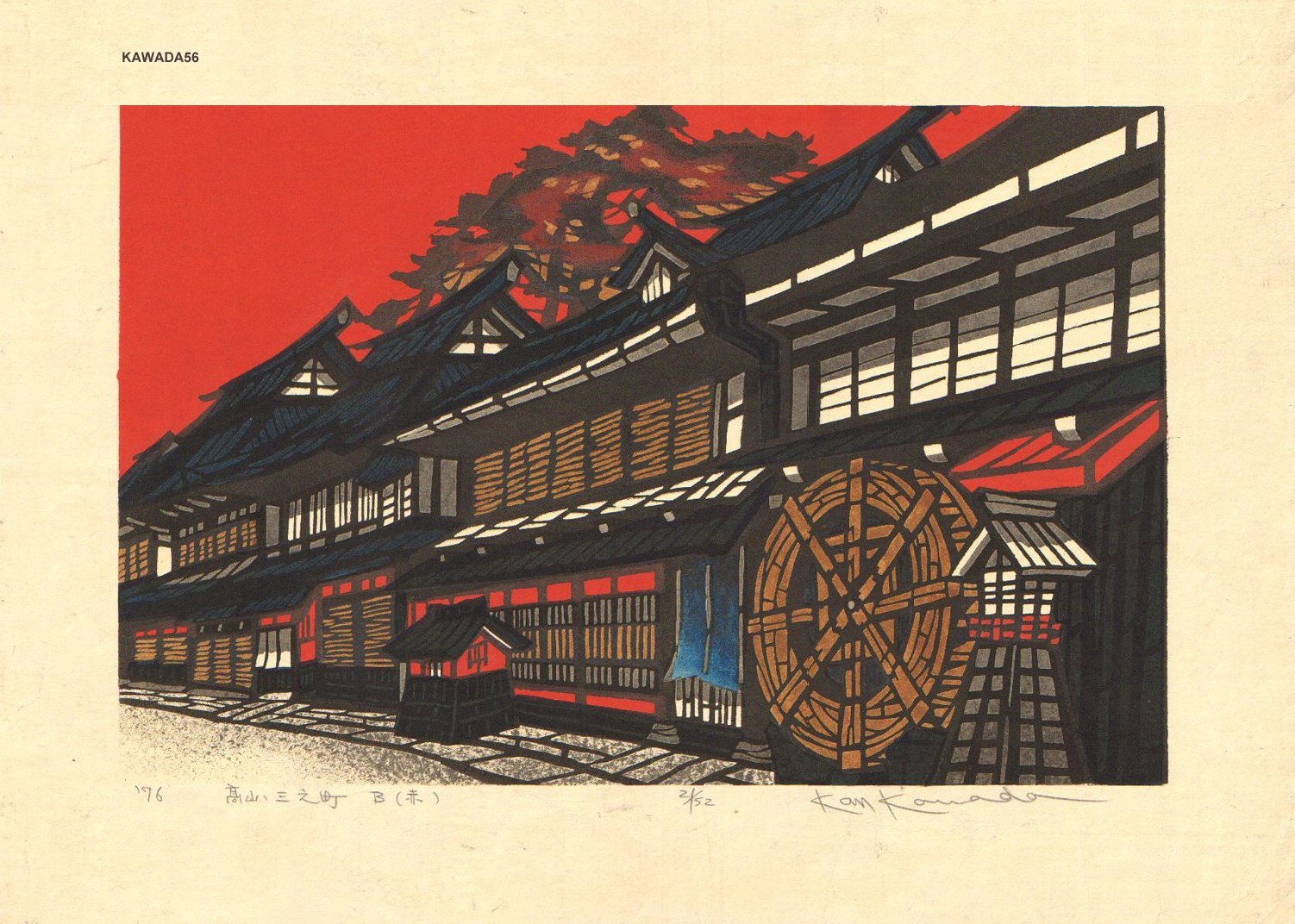
Takyama San no Machi B
Woodblock print