Biography
The Kanbun Master (寛文の名手, active c. 1660-1673) is the scholarly designation assigned by twentieth-century ukiyo-e historians to the anonymous lead painter and print designer whose distinctive figural style dominates the small body of surviving illustrated books, single-sheet prints, and hand-colored kakemono-e (hanging-scroll pictures) produced during the Kanbun era, the cultural reign that spanned the years 1661 through 1673 in the early Edo period. Working in Edo at the moment when the genre paintings of the Kyoto and Nara picture studios were being reformulated into the urban, market-oriented imagery that would coalesce a decade later under Hishikawa Moronobu as the ukiyo-e tradition proper, the Kanbun Master is the most consequential single artistic personality of the pre-Moronobu Kanbun era and is recognized today as the principal precursor of the floating-world print idiom.
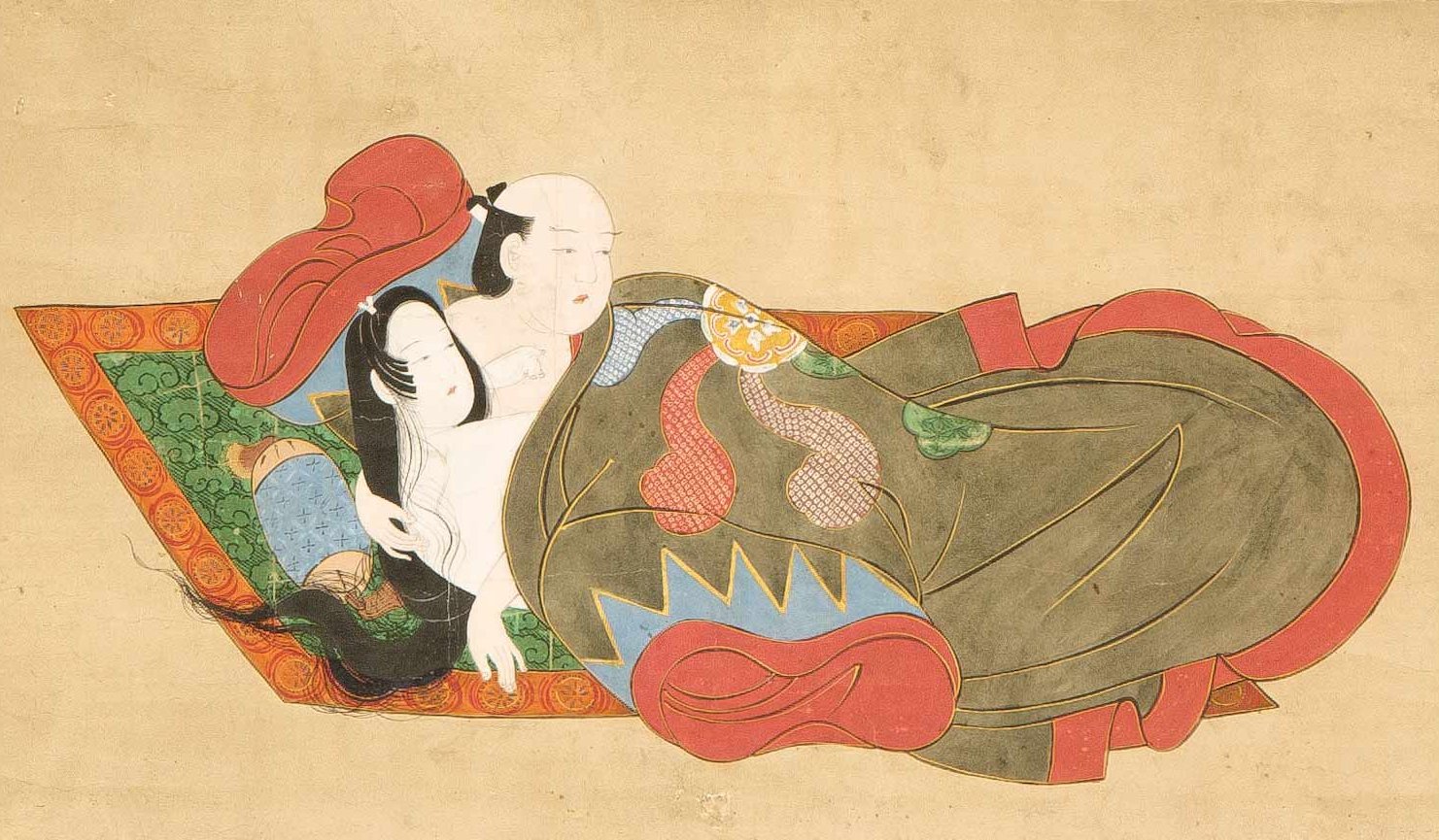
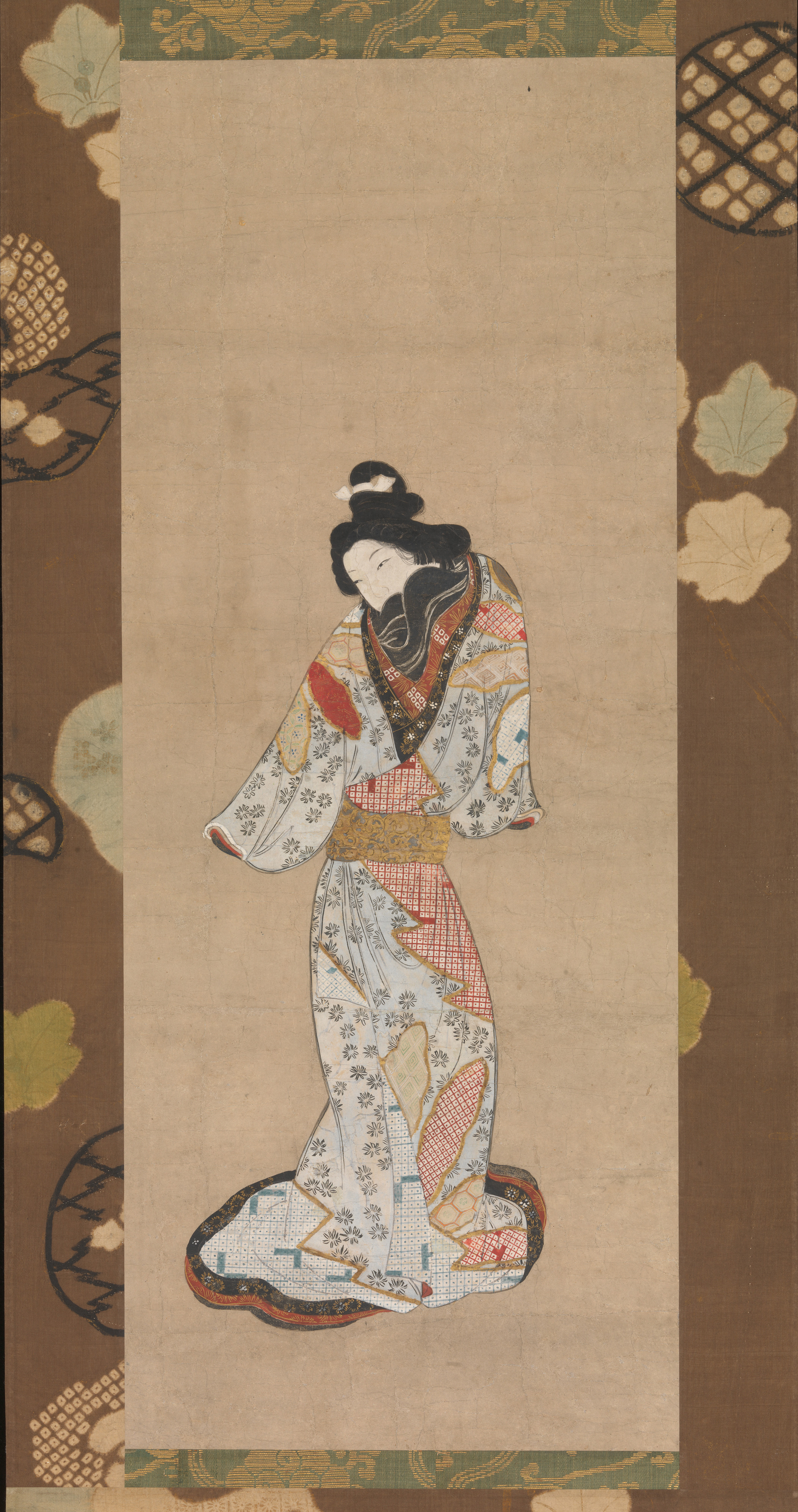
The name 'Kanbun Master' was coined by the ukiyo-e scholar Richard Lane, who assigned the pseudonym on account of the artist's having flourished during the Kanbun era, recognizing that a substantial number of surviving Kanbun-era illustrated books, broadsheets, and genre paintings share a single, characteristic figural vocabulary — distinct enough to suggest the work of one master designer or his close studio, though scholars remain uncertain whether these works are in fact all by a single hand. The hallmarks of the Kanbun Master's style include strongly outlined, full-bodied female figures rendered with a confident and slightly mannerist line; elongated facial features with small, set mouths and angled eyes; voluminous and richly patterned kimono whose sweeping curves dominate the picture surface; and an organization of figural groups in shallow, frieze-like pictorial space derived from earlier Tosa and Kano genre painting but distilled into a vocabulary suitable for the woodblock-printed page. These traits anticipate, often by a decade, the foundational stylistic elements that Hishikawa Moronobu would consolidate into the first commercially successful single-sheet ukiyo-e prints of the Enpo and Tenna eras of the late 1670s and early 1680s.
The Kanbun Master's surviving body of work is concentrated in three forms. First and most numerous are the illustrations to Kanbun-era ehon (illustrated books), which include erotic shunga albums, courtesan critique books (yujo hyobanki), tales of the pleasure quarters, and various ukiyo-zoshi (floating-world fiction). Second are the small group of surviving sumizuri-e (black-ink single-sheet prints) and hand-colored tan-e (orange-toned prints) that represent the earliest experiments in transferring his book-illustration style into the larger commercial single-sheet format. Third, and rarest of all, are the hand-painted hanging scrolls (kakemono-e) depicting Yoshiwara courtesans and amorous couples, of which only a handful of authenticated examples survive in Japanese and Western collections, among them the Honolulu Museum of Art.
The Kanbun Master worked at a pivotal moment for the visual culture of the new Edo capital. The city had undergone catastrophic reconstruction following the Great Meireki Fire of 1657, the licensed Yoshiwara pleasure quarter had been relocated to its permanent site near Asakusa as the Shin Yoshiwara, and a substantial urban merchant readership had emerged with appetites for printed books and pictures depicting the entertainments, fashions, and personalities of the floating world. Painters trained in the Tosa and Kano academic traditions were beginning to apply their skills to commercial subjects, and woodblock printers were experimenting with new formats beyond the religious and didactic texts that had dominated Japanese publishing since the early seventeenth century. The Kanbun Master stands at the very center of this convergence, his distinctive style providing the bridge between the courtly classicism of earlier Tosa-school genre painting and the boldly populist commercial print idiom that Moronobu would crystallize.
Though his actual identity remains unknown, the Kanbun Master is recognized as one of the most important anonymous figures in Japanese art history, a designer whose vocabulary shaped the visual grammar of early ukiyo-e and whose surviving works provide indispensable evidence of the formative stage of the floating-world tradition.
Key Facts
- Nationality
- 🇯🇵Japan
- Movement
- Ukiyo-e
- Works Indexed
- 2
Frequently Asked Questions
The Kanbun Master (寛文の名手, active c. 1660-1673) is the scholarly designation assigned by twentieth-century ukiyo-e historians to the anonymous lead painter and print designer whose distinctive figural style dominates the small body of surviving illustrated books, single-sheet prints, and hand-colored kakemono-e (hanging-scroll pictures) produced during the Kanbun era, the cultural reign that spanned the years 1661 through 1673 in the early Edo period. Working in Edo at the moment when the genre paintings of the Kyoto and Nara picture studios were being reformulated into the urban, market-oriented imagery that would coalesce a decade later under Hishikawa Moronobu as the ukiyo-e tradition proper, the Kanbun Master is the most consequential single artistic personality of the pre-Moronobu Kanbun era and is recognized today as the principal precursor of the floating-world print idiom.
Kanbun Master (anonymous)'s work was shaped by the Ukiyo-e tradition in Japanese woodblock printmaking. Ukiyo-e: ## What is ukiyo-e? Ukiyo-e ([浮世絵](/glossary/ukiyo-e)) — literally "pictures of the floating world" — is the Edo-period Japanese print and painting tradition that flourished from roughly 1660 to 1868, depicting the pleasures of urban life in Edo (modern Tokyo): courtesans, kabuki actors, sumo wrestlers, famous landscapes, and seasonal beauties.
Original prints by Kanbun Master (anonymous) can be found in collections including Honolulu Museum of Art, Metropolitan Museum of Art.