
Biography
Kanpo Yoshikawa (吉川観方, 1894–1979) was a Japanese painter, collector, and historian of costume and customs from Kyoto whose woodblock prints of beautiful women and historical figures reflect a deep scholarly knowledge of Japanese dress, customs, and visual culture. Yoshikawa's unusual combination of artistic talent and antiquarian expertise produced prints distinguished by their accuracy in the depiction of historical costume and their evocation of the cultural life of old Kyoto.
Born in 1894 in Kyoto, Yoshikawa grew up surrounded by the ancient capital's rich artistic and cultural heritage. He trained as a nihonga painter and developed a passionate interest in Japanese costume history and the material culture of the Edo period and earlier eras. This dual passion — for painting and for historical research — shaped a career that was as much scholarly as artistic, and from the mid-1920s onward he devoted himself increasingly to the study of Japanese dress, theatrical costume, and the visual customs of premodern Japan.
Yoshikawa was an avid collector of historical costumes, textiles, and materials documenting Japanese dress and daily customs. Assembled over the course of his life, the Yoshikawa collection grew to many thousands of items — garments and textiles alongside paintings, illustrated books, and other reference materials — and is today divided chiefly among Kyoto Prefecture, the Nara Prefectural Museum of Art, and the Fukuoka City Museum. This firsthand knowledge of historical textiles and costume gave his prints an authority and specificity in the depiction of dress that few other artists of beautiful women could match.
His woodblock prints draw on this expertise to create images of women in historical costume that function simultaneously as works of art and as visual documents of Japanese dress history. His subjects include women of the Edo period, geisha and maiko of Kyoto, and figures drawn from Japanese literature and theater — each rendered with attention to the specific garments, hairstyles, and accessories appropriate to the period and social class being depicted.
Yoshikawa was also closely involved with the theater, serving as a stage designer and adviser to the Shōchiku company in Kyoto, and he brought his knowledge of theatrical costume to bear on prints of kabuki actors in character. His understanding of the specific costumes, wigs, and makeup associated with different roles gives these prints a documentary value that complements their aesthetic appeal.
Yoshikawa exhibited his paintings and prints and earned recognition for both his artistic achievements and his contributions to the study of Japanese costume history. His research, publications, and collection of historical materials were important contributions to the field that have endured beyond his lifetime.
He died in 1979 at the age of eighty-five, leaving a legacy that encompasses art, scholarship, and collecting. His prints are valued by collectors who appreciate the combination of artistic beauty and historical accuracy that distinguishes his work within the shin-hanga tradition of bijin-ga.
Key Facts
- Active Period
- 1894–1979
- Nationality
- 🇯🇵Japan
- Movement
- Shin-hanga
- Works Indexed
- 47
Frequently Asked Questions
Kanpo Yoshikawa (吉川観方, 1894–1979) was a Japanese painter, collector, and historian of costume and customs from Kyoto whose woodblock prints of beautiful women and historical figures reflect a deep scholarly knowledge of Japanese dress, customs, and visual culture. Yoshikawa's unusual combination of artistic talent and antiquarian expertise produced prints distinguished by their accuracy in the depiction of historical costume and their evocation of the cultural life of old Kyoto.
Kanpo Yoshikawa was active from 1894 to 1979. They were associated with the Shin-hanga movement.
Kanpo Yoshikawa's work was shaped by the Shin-hanga tradition in Japanese woodblock printmaking. Shin-hanga: ## What is Shin-hanga? Shin-hanga (新版画), literally "new prints," is the early twentieth-century revival of the collaborative Japanese woodblock workshop, organized between roughly 1915 and 1960 by the Tokyo publisher Watanabe Shōzaburō (1885–1962) and a handful of competing houses.
Kanpo Yoshikawa's prints frequently feature kabuki, night scenes, theater, bridges, bijin-ga, landscapes.
Original prints by Kanpo Yoshikawa can be found in collections including Art Institute of Chicago, Minneapolis Institute of Art, Minneapolis Institute of Arts, Honolulu Museum of Art.
Woodblock Prints by Kanpo Yoshikawa (47)
Portrait of the Actor Nakamura Ganjiro I as Kamiya Jihei in the play Shinju ten no Amijima (The Love Suicides at Amijima)
c. 1922
Color woodblock print; oban

The Actor Kataoka Gado IV as Miyuki in the play Shoutsushi Asagao Nikki (The Diary of the Morning Glory)
c. 1924
Color woodblock print; oban

Five, Hinazō
early summer 1922
Woodblock print, ink and color on paper with mica

Cherry Blossoms at Night in Maruyama Park (Maruyama no yozakura)
1925
Color woodblock print; oban
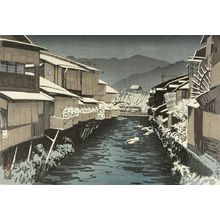
Fair Weather After Snow at Yamato Bridge, Kyoto (Yamato bashi no yukibare), Taishô period, dated 1924
Woodblock print
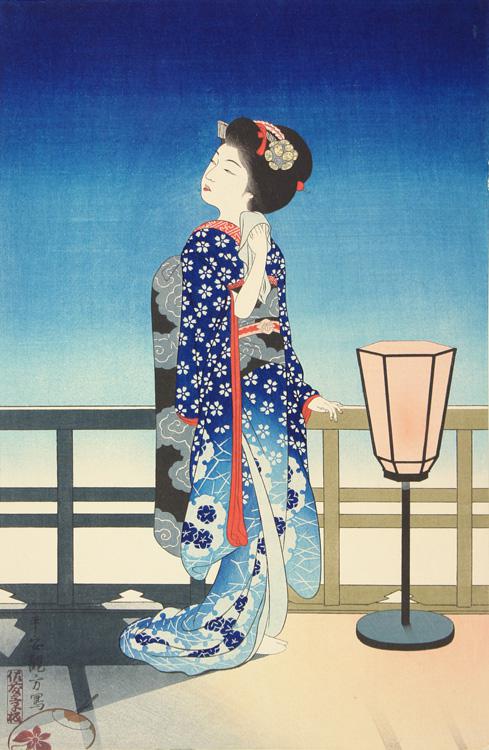
Dancing Girl by Lantern
Woodblock print
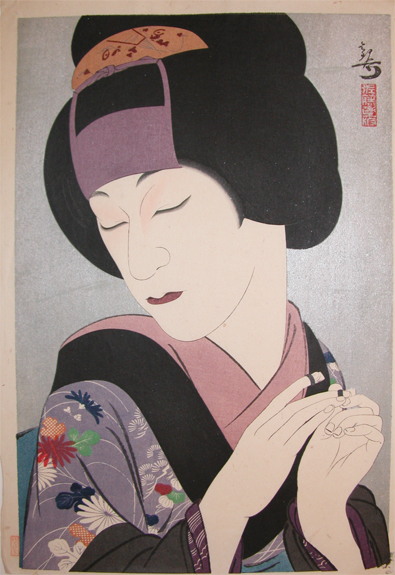
Kataoka Gado
Woodblock print
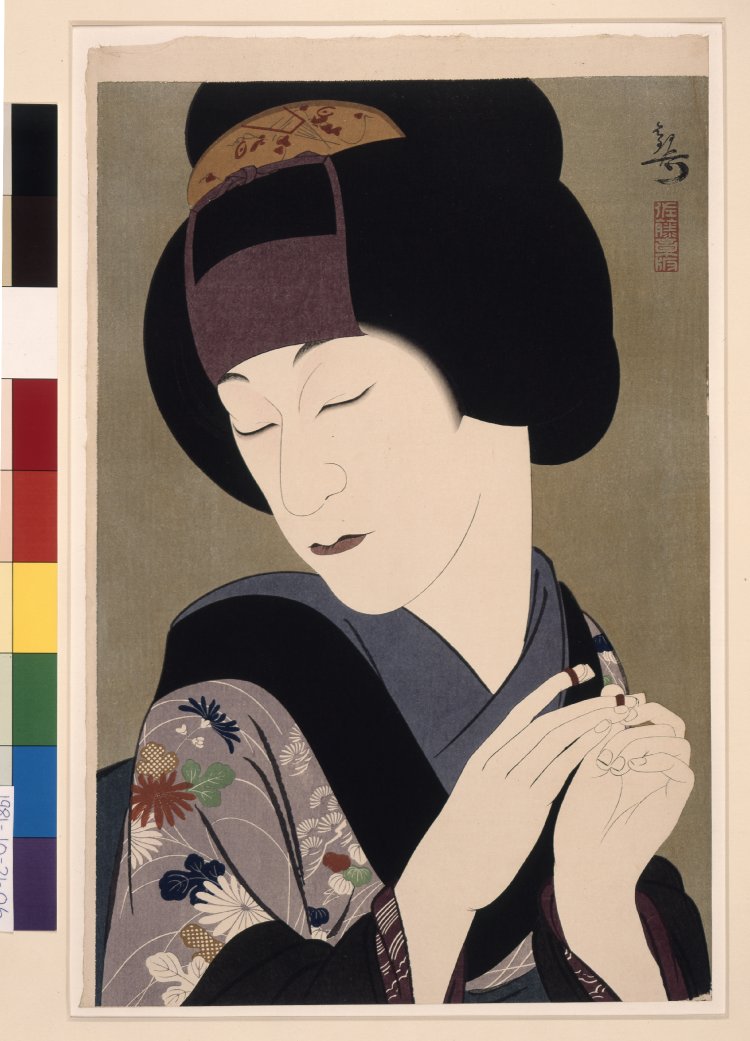
Kataoka Gado as Miyuki in 'Shoutsushi asagao nikki'
Woodblock print
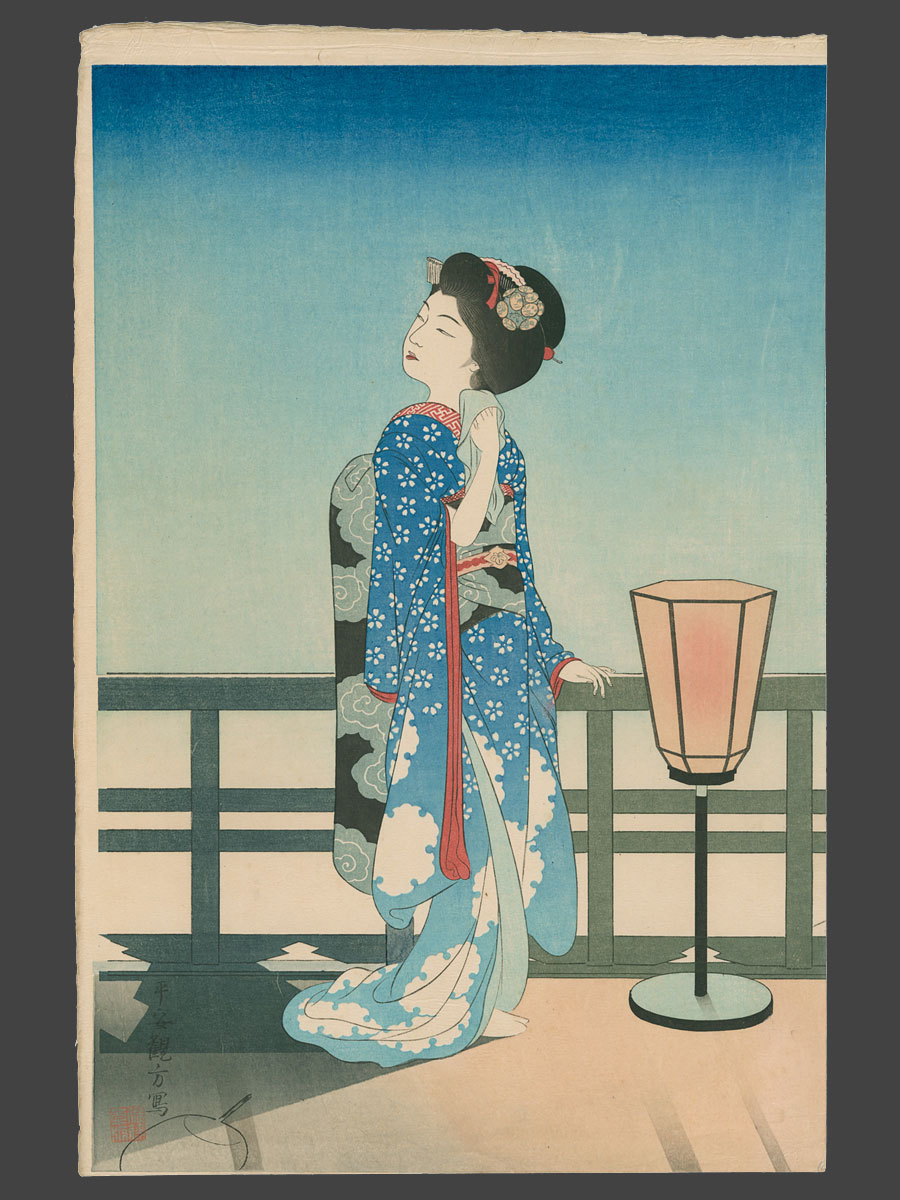
Maiko Admiring the Moon
Woodblock print
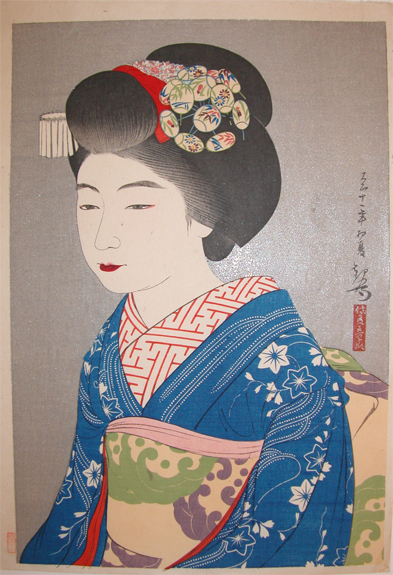
Young Dancer Hinazo
Woodblock print
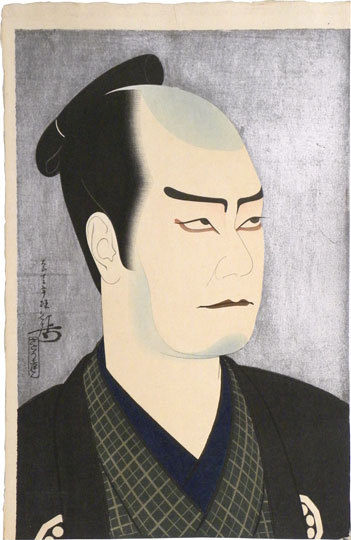
Kanpo’s Creative Prints, First Series: Ichikawa Sadanji II as Hishikawa Gengobei (Kanpo Sosaku-Hanga Shu Daiishu: Ichikawa Sadanji II)
Woodblock print
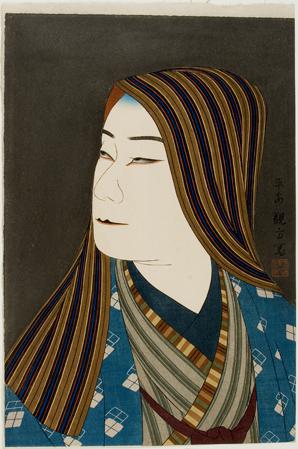
Actor as Young Man with a Striped Cowl
Woodblock print
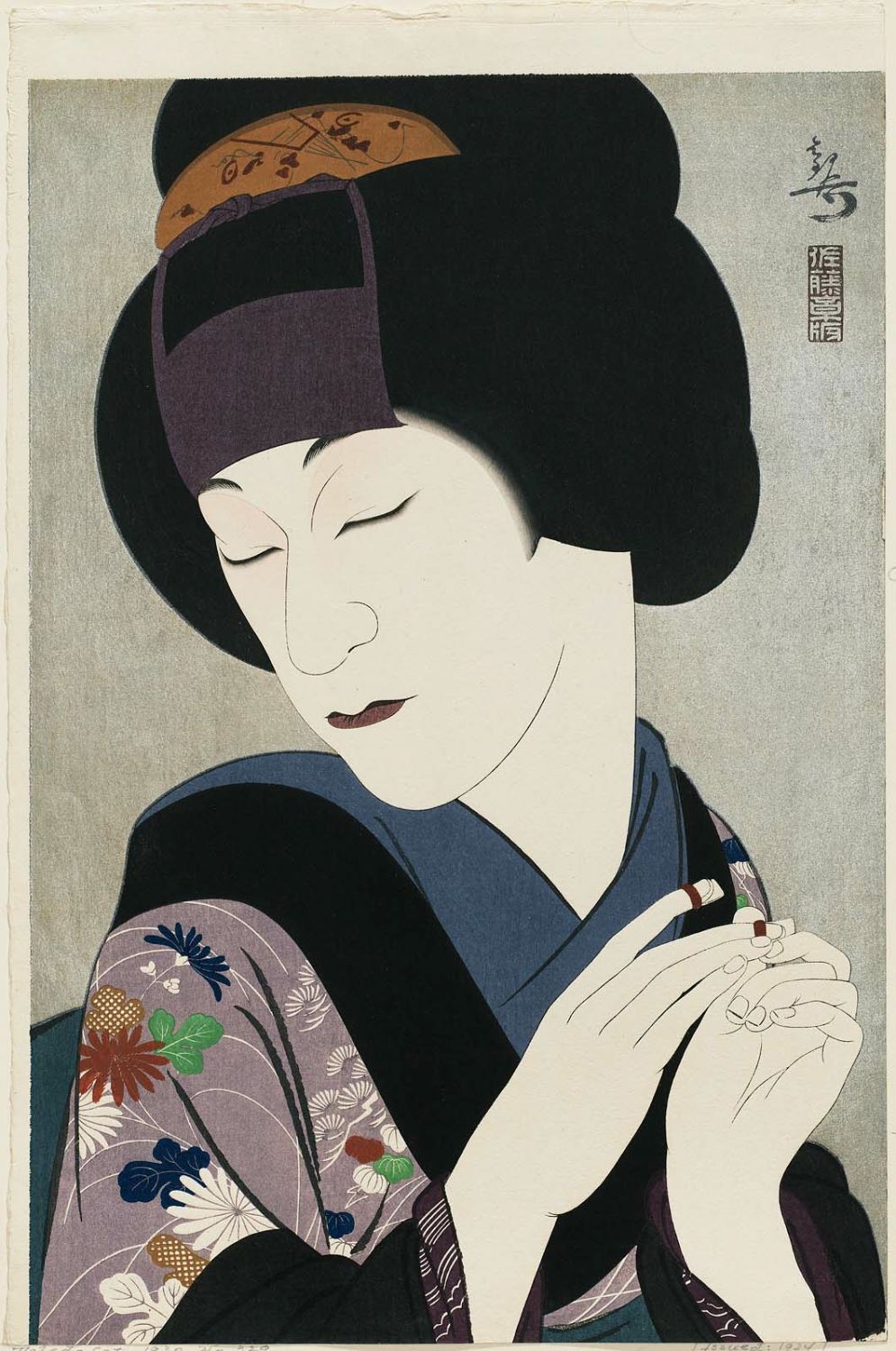
Actor Kataoka Gado as Miyuki
Woodblock print
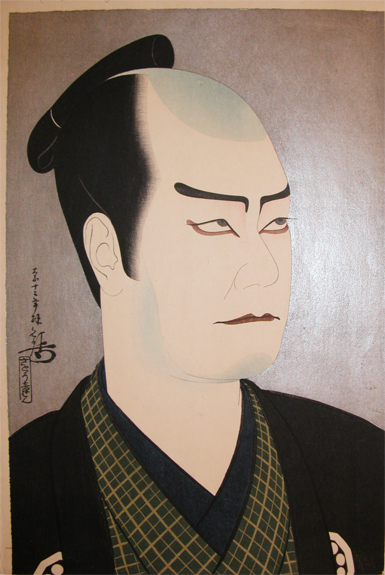
Ichikawa Sadanji
Woodblock print
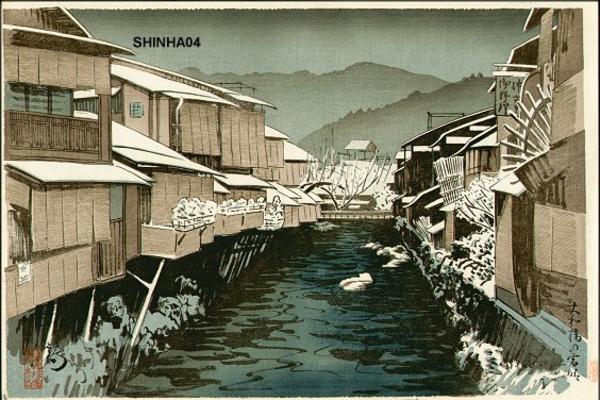
Kyoto riverbanks
Woodblock print
Cherry Blossoms at Night- Maruyama Park
Woodblock print
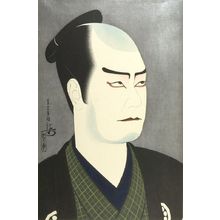
Actor Ichikawa Sadanji as Hishikawa Gengobei, Taishô period, circa 1923
Woodblock print
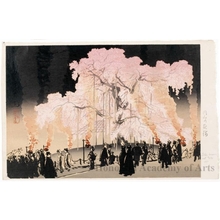
Cherry Blossoms at Night in Maruyama Park in Kyoto
Woodblock print
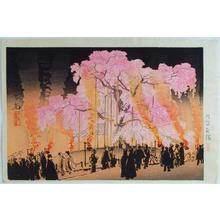
Cherry Blossoms at Night- Maruyama Park
Woodblock print
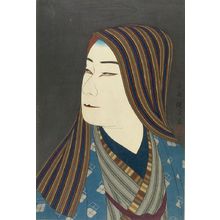
Kabuki Actor Nakamura Ganjirô as Kamiya Jihei, Taishô period, circa 1922
Woodblock print
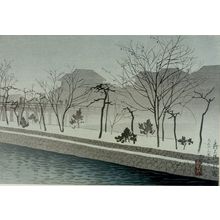
Morning Mist at Sanjô Bridge, Kyoto (Sanjô ôhashi no asagiri), Taishô period, dated 1924
Woodblock print

Kabuki Actor Portrait, Taishô period, circa 1922-1924
Woodblock print
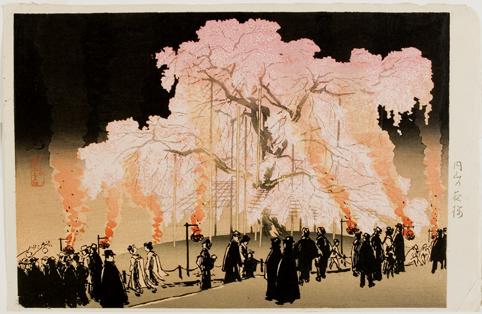
Cherry Blossoms at Night in Maruyama Park
Woodblock print
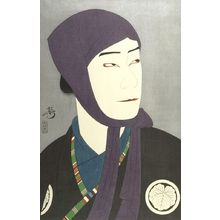
Actor Nakamura Ganjirô as Kamiya Jihei, Taishô period, circa 1922
Woodblock print