Biography
Katsukawa Shunzan (勝川春山, active c. 1782–1798) was an Edo ukiyo-e designer of the late Tenmei and Kansei eras, a pupil of Katsukawa Shunshō and a contemporary of the leading second-generation Katsukawa school designers Shunkō, Shun'ei, and Shunchō. He worked across the principal commercial genres of his moment — yakusha-e (kabuki actor prints), musha-e (warrior prints), bijin-ga (pictures of beautiful women), and illustrated books — and stands out within the Katsukawa lineage for the degree to which his bijin-ga abandoned his teacher's house style in favor of the manner of Torii Kiyonaga, the dominant designer of women's images during the 1780s. His surviving prints in major museum collections in Chicago, Cleveland, the British Museum, and other institutions confirm a substantial body of work and a distinctive position within the Katsukawa school.
The Katsukawa school had been founded by Shunshō in the late 1760s as the first studio to systematically replace the generic, mask-like actor faces of the Torii lineage with individualized likenesses based on observation of specific performers. By the early 1780s, when Shunzan's career began, Shunshō's atelier had become the dominant force in Edo yakusha-e and had trained the most influential actor-print designers of the era. Shunkō (1743–1812), the senior pupil, pioneered the ōkubi-e or large-head actor portrait around 1788 before a stroke ended his designing career. Shun'ei (1762–1819) succeeded him as the school's leading actor specialist and bridged the Katsukawa style to the bust-portrait revolution of Sharaku in 1794. Shunchō (active in the 1780s and 1790s) developed primarily as a designer of tall, elegant bijin in the Kiyonaga manner. Shunzan belonged to this second generation but pursued a more eclectic course than any of them.
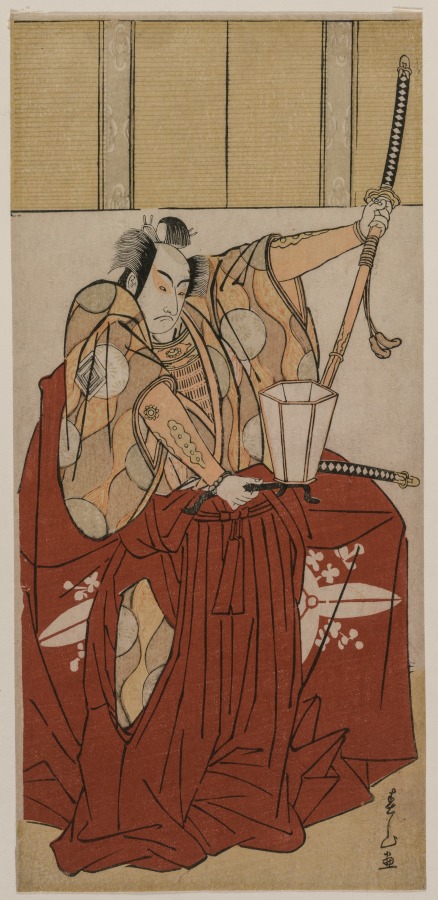
One of Shunzan's earliest dated prints, from 1781, is a triptych held by the Cleveland Museum of Art depicting The Four Heavenly Kings Costumed as the Night Watch — a kabuki adaptation of the medieval Shitennō cycle, the legendary warriors who served Minamoto no Yorimitsu. This work shows Shunzan operating squarely in the Katsukawa actor-print tradition: individualized likenesses of Ichikawa Monnosuke II, Onoe Matsusuke I, and Nakamura Nakazō I in role-specific armor and costuming. His portrait of Nakamura Nakazō I as a peddler of toys (c. 1782–1790, Art Institute of Chicago) extends this body of yakusha-e into actor-genre crossover scenes popular in the An'ei and Tenmei years, while Kojuro as Sadakuro (c. 1786, also Art Institute) records a role from the kabuki canon — Ono Sadakurō, the bandit-villain of the eleven-act Chūshingura (Treasury of Loyal Retainers).
During the later 1780s and 1790s Shunzan increasingly turned to bijin-ga and to genre compositions in the manner of Kiyonaga. His series Five Virtues in the Manners of Women, of which Courteousness (Rei) survives at the Art Institute of Chicago, applies the Confucian cardinal-virtues framework — by then a standard organizing conceit for bijin-ga series — to elegant standing figures. The allegorical framing and refined figures are characteristic of the period's bijin-ga commerce, where designers competed with Kiyonaga, Eishi, and Utamaro for the upper end of the genre. His print Kuronushi, from the series The New Six Immortal Poets (Cleveland Museum of Art), shows a courtesan at her mirror as an attendant looks on, pairing a poem by the classical poet Ōtomo no Kuronushi — one of the Rokkasen, or Six Immortal Poets — with a contemporary Yoshiwara subject in the Kiyonaga manner. Shunzan's musha-e drew on the same Shitennō and Minamoto-era source material that animated his early actor-print triptych and that remained a staple subject of Edo print culture.
Shunzan also produced illustrated books that carried his activity into the early nineteenth century: the book Settan kigū, dated 1803 by the Art Institute of Chicago, comes from this later phase of his career and indicates continued professional work after the c. 1798 end-date that some catalogers assign to him. His surviving works are held in significant numbers by the Art Institute of Chicago and the Cleveland Museum of Art, with further impressions documented in the British Museum, the Fine Arts Museums of San Francisco, the Brooklyn Museum, and the Museum of Fine Arts, Boston. For collectors and scholars of Japanese woodblock prints, Shunzan represents the Katsukawa school's productive accommodation to the dominant Kiyonaga manner of the 1780s — a designer who, while never reaching the prominence of Shunkō, Shun'ei, or Shunchō, contributed substantially to the school's collective output across the actor-print, warrior-print, and bijin-ga genres at the peak of its commercial influence.
Key Facts
- Nationality
- 🇯🇵Japan
- Movement
- Ukiyo-e
- Works Indexed
- 5
Frequently Asked Questions
Katsukawa Shunzan (勝川春山, active c. 1782–1798) was an Edo ukiyo-e designer of the late Tenmei and Kansei eras, a pupil of Katsukawa Shunshō and a contemporary of the leading second-generation Katsukawa school designers Shunkō, Shun'ei, and Shunchō. He worked across the principal commercial genres of his moment — yakusha-e (kabuki actor prints), musha-e (warrior prints), bijin-ga (pictures of beautiful women), and illustrated books — and stands out within the Katsukawa lineage for the degree to which his bijin-ga abandoned his teacher's house style in favor of the manner of Torii Kiyonaga, the dominant designer of women's images during the 1780s. His surviving prints in major museum collections in Chicago, Cleveland, the British Museum, and other institutions confirm a substantial body of work and a distinctive position within the Katsukawa school.
Katsukawa Shunzan's work was shaped by the Ukiyo-e tradition in Japanese woodblock printmaking. Ukiyo-e: ## What is ukiyo-e? Ukiyo-e ([浮世絵](/glossary/ukiyo-e)) — literally "pictures of the floating world" — is the Edo-period Japanese print and painting tradition that flourished from roughly 1660 to 1868, depicting the pleasures of urban life in Edo (modern Tokyo): courtesans, kabuki actors, sumo wrestlers, famous landscapes, and seasonal beauties.
Original prints by Katsukawa Shunzan can be found in collections including Cleveland Museum of Art, Art Institute of Chicago.
Woodblock Prints by Katsukawa Shunzan (5)
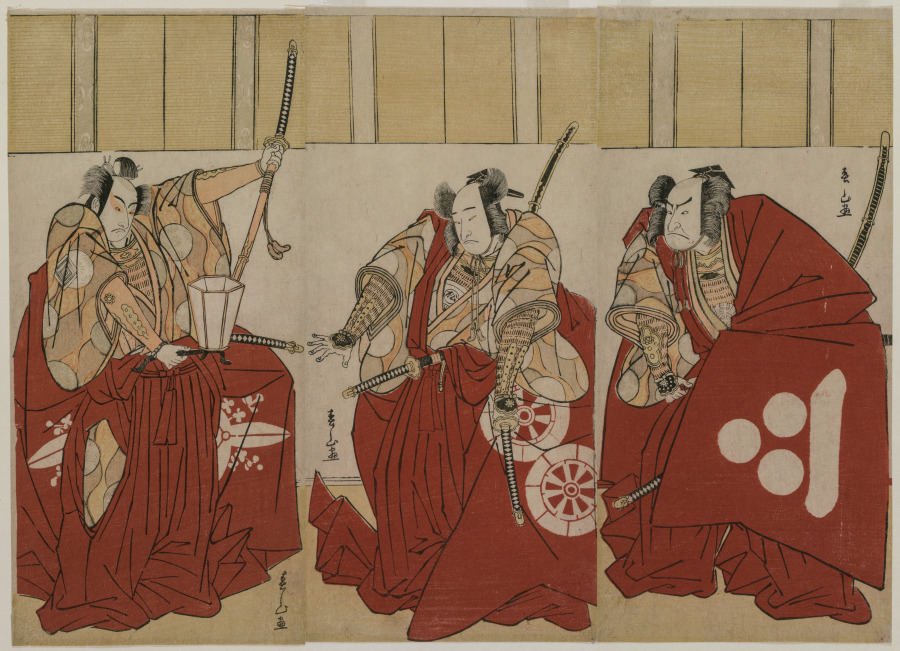
The Four Heavenly Kings Costumed as the Night Watch (Triptych)
1781
Color woodblock triptych
Ichikawa Monnosuke II as Urabe no Suetake
1781
Color woodblock print
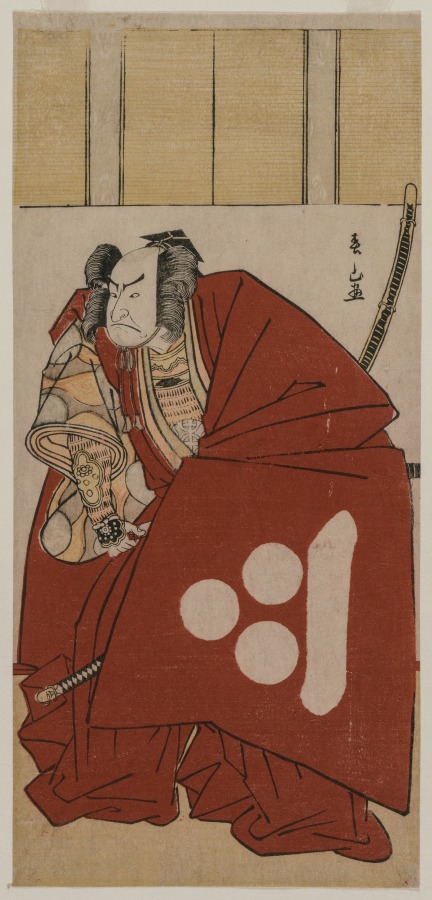
Nakamura Nakazo I as Watanabe no Tsuna
1781
Color woodblock print
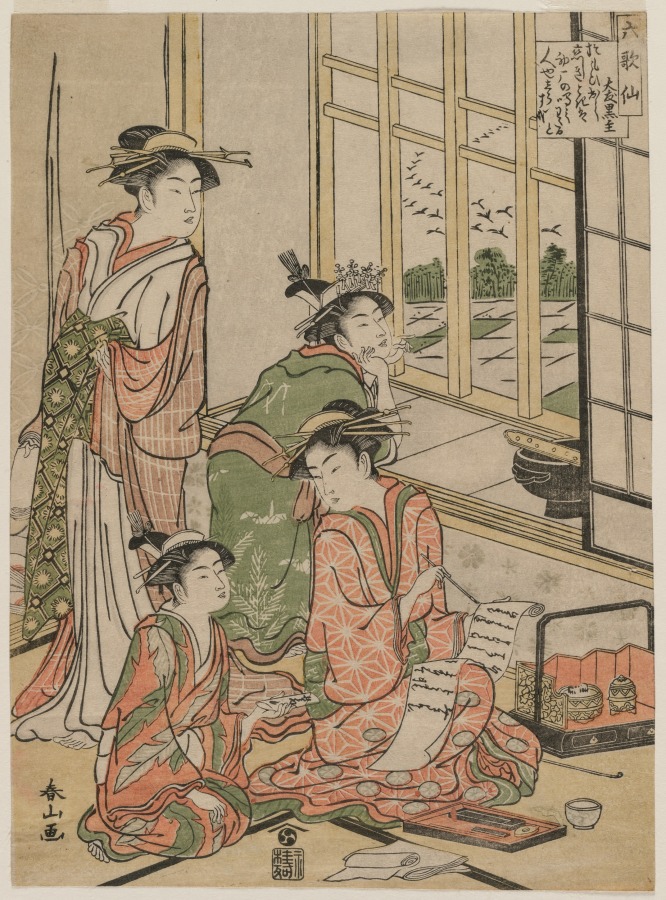
Courtesans at Leisure from the series The Six Immortal Poets
early 1780s
Color woodblock print

Settan kigū
1803
Woodblock-printed book; 5 vols.