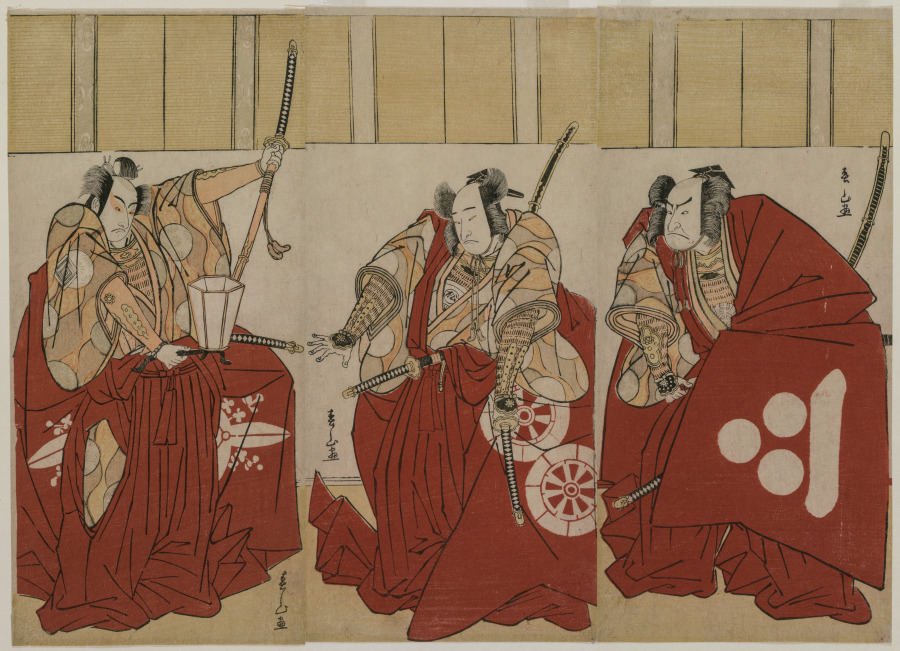
The Four Heavenly Kings Costumed as the Night Watch (Triptych)
- Date:
- 1781
- Medium:
- Color woodblock triptych
- Source:
- Cleveland Museum of Art
Description
Held by the Cleveland Museum of Art and dated 1781, this Katsukawa Shunzan color woodblock triptych depicts the Shitennō or Four Heavenly Kings — the legendary warriors who served Minamoto no Yorimitsu (Raikō) in the late tenth and early eleventh centuries — costumed as members of the night watch (yomawari). The historical Shitennō, comprising Watanabe no Tsuna, Sakata no Kintoki, Urabe no Suetake, and Usui Sadamitsu, had become one of the richest source materials for Edo kabuki and ukiyo-e by the late eighteenth century, supplying the stage with the apparatus of the kumadori makeup, the heroic exaggerations of aragoto acting, and a steady stream of new variants on the basic warrior-band material. The night-watch costuming framework, in which the historical warriors appear in the guise of contemporary Edo urban functionaries, belongs to the mitate (parody-substitution) tradition in which classical or historical subjects are recast in contemporary forms — a favored conceit of late-eighteenth-century print commerce that allowed designers to flatter their viewers with multi-layered visual reference. The Cleveland triptych assembles three Katsukawa-style actor portraits — Ichikawa Monnosuke II as Urabe no Suetake, Onoe Matsusuke I as Usui Sadamitsu, and Nakamura Nakazō I as Watanabe no Tsuna — into a single composition. As an early dated Shunzan and a complete surviving triptych, this work is an anchor example for the study of his oeuvre and of Katsukawa school musha-e of the An'ei era.
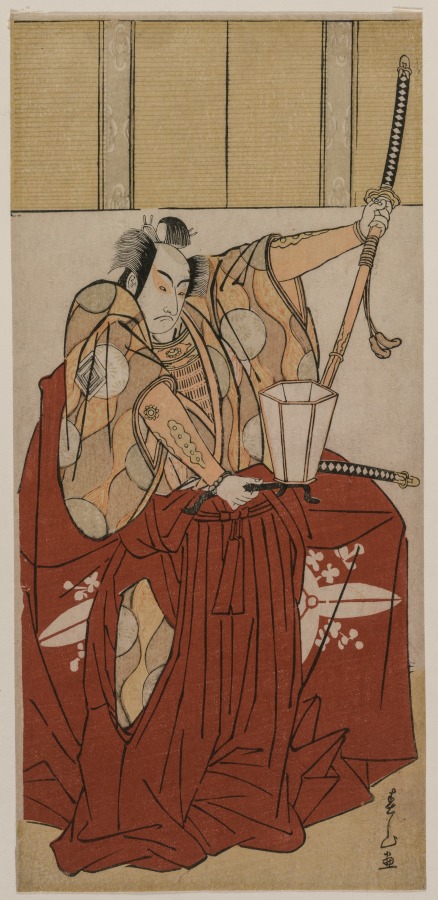
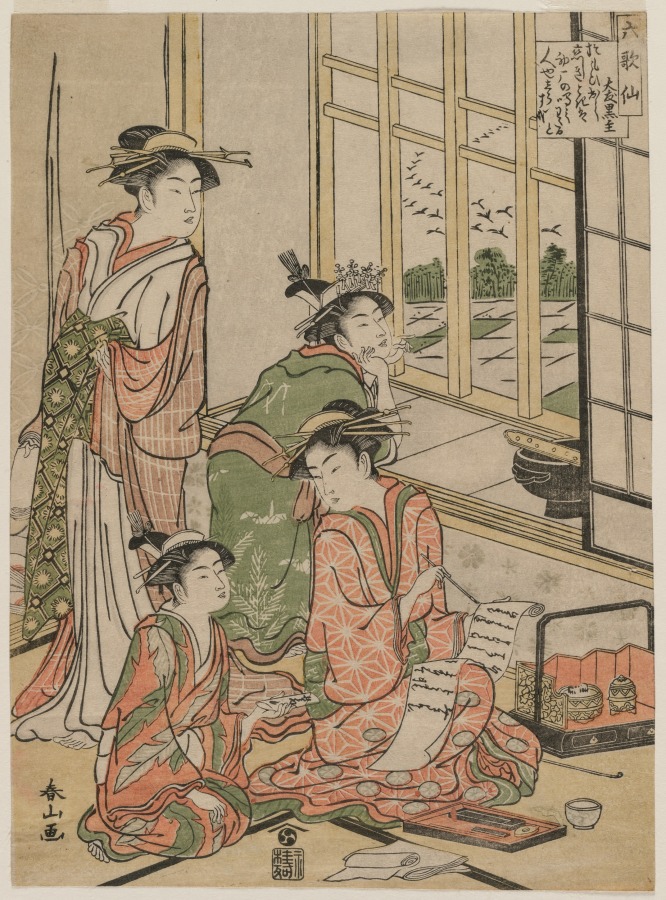
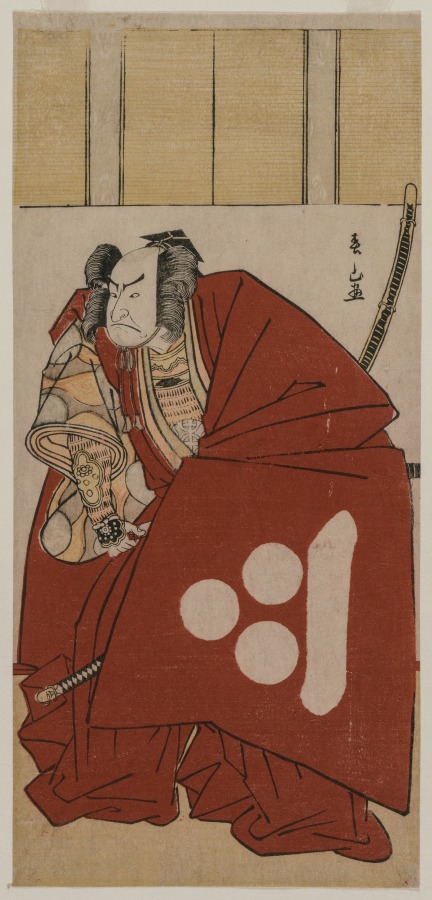
More Prints by Katsukawa Shunzan

Frequently Asked Questions
The Four Heavenly Kings Costumed as the Night Watch (Triptych) was created by Katsukawa Shunzan (勝川春山) in 1781.