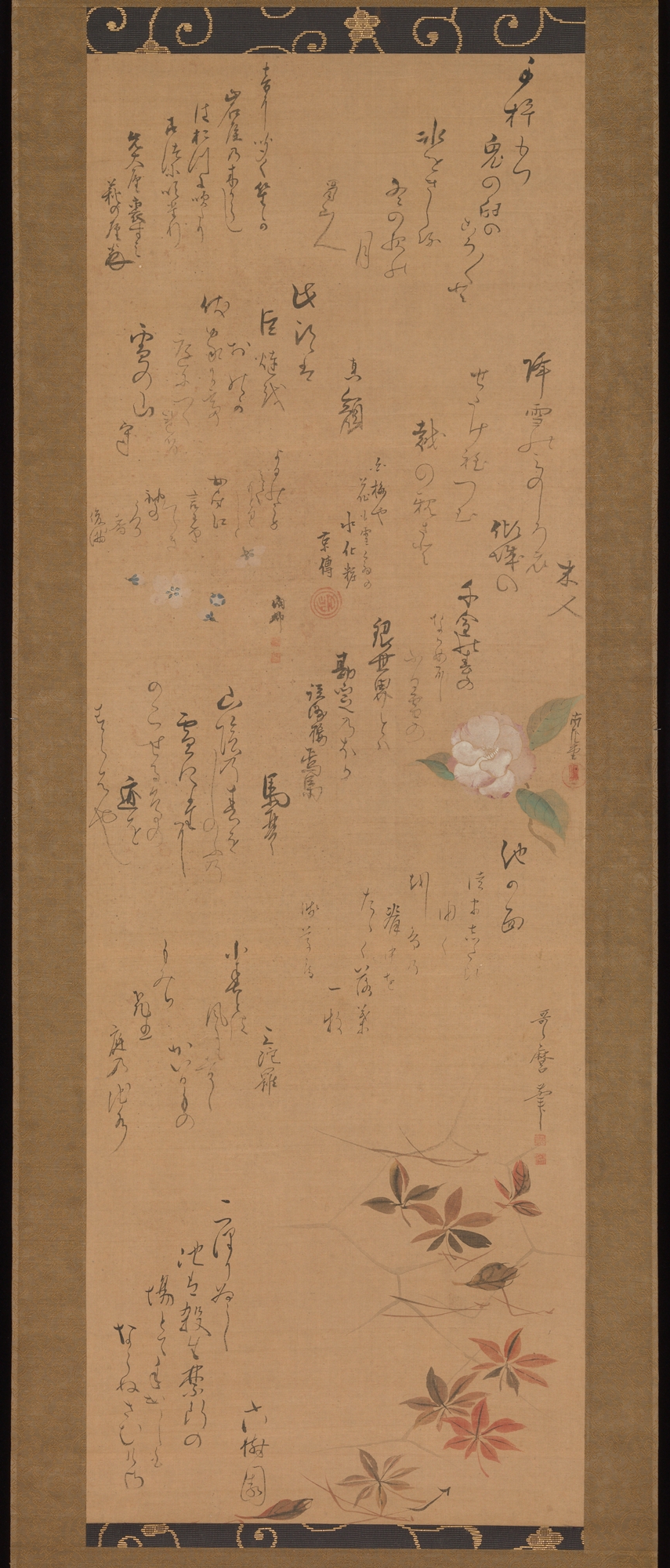
Biography
Kitagawa Utamaro II (二代目喜多川歌麿, died 1831) was the second-generation bearer of one of the most commercially valuable names in late-Edo ukiyo-e. His historical identity has long been debated by scholars, but the generally accepted reconstruction is that he began his career as the print artist Koikawa Shunchō — a name also linked in the literature to the gō Koikawa Harumachi II — and studied under Utamaro I, closely assisting on the prints his master produced in his final years. When Utamaro I died in 1806, this pupil married his master's widow, took over the studio, and assumed the Utamaro name. He continued to sign his prints "Utamaro" until about 1820, after which he is recorded working under the name Kitagawa Tetsugorō until his death in 1831.
The central problem in Utamaro II scholarship is one of transition — determining where Utamaro I's hand ends and his successor's begins. Utamaro I produced an enormous volume of work in his final years, some of it executed in part by studio assistants who remained in the workshop after his death. The "Utamaro" signature was therefore applied both to late works finished by pupils and to subsequent designs by Utamaro II, making secure attribution difficult. This question has been examined in modern print scholarship, including the British Museum's 1995 study The Passionate Art of Kitagawa Utamaro by Shūgō Asano and Timothy Clark.
Utamaro II's surviving output is overwhelmingly bijin-ga in the late-Kansei mode he inherited from his master — portraits of beautiful women and Yoshiwara courtesans continued in the established Kitagawa manner. His designs belong to the Bunka (1804–1818) and Bunsei (1818–1830) eras, and document the pleasure quarters during a period when their commercial primacy was waning. Because his prints carried the valuable Utamaro name, works attributed to the second-generation hand entered the major public ukiyo-e collections, where they are typically catalogued with cautiously bracketed dates that signal the enduring uncertainty of the I/II attribution; the Art Institute of Chicago, for instance, maintains a distinct "Utamaro II" artist record. What emerges is an artist with a circumscribed but real identity: not his master's equal, but the successor who kept the Kitagawa house viable into the 1810s.
Key Facts
Frequently Asked Questions
Kitagawa Utamaro II (二代目喜多川歌麿, died 1831) was the second-generation bearer of one of the most commercially valuable names in late-Edo ukiyo-e. His historical identity has long been debated by scholars, but the generally accepted reconstruction is that he began his career as the print artist Koikawa Shunchō — a name also linked in the literature to the gō Koikawa Harumachi II — and studied under Utamaro I, closely assisting on the prints his master produced in his final years. When Utamaro I died in 1806, this pupil married his master's widow, took over the studio, and assumed the Utamaro name. He continued to sign his prints "Utamaro" until about 1820, after which he is recorded working under the name Kitagawa Tetsugorō until his death in 1831.
Kitagawa Utamaro II's work was shaped by the Ukiyo-e tradition in Japanese woodblock printmaking. Ukiyo-e: ## What is ukiyo-e? Ukiyo-e ([浮世絵](/glossary/ukiyo-e)) — literally "pictures of the floating world" — is the Edo-period Japanese print and painting tradition that flourished from roughly 1660 to 1868, depicting the pleasures of urban life in Edo (modern Tokyo): courtesans, kabuki actors, sumo wrestlers, famous landscapes, and seasonal beauties.
Kitagawa Utamaro II's prints frequently feature spring.
Original prints by Kitagawa Utamaro II can be found in collections including Cleveland Museum of Art, Metropolitan Museum of Art.
Woodblock Prints by Kitagawa Utamaro II (3)
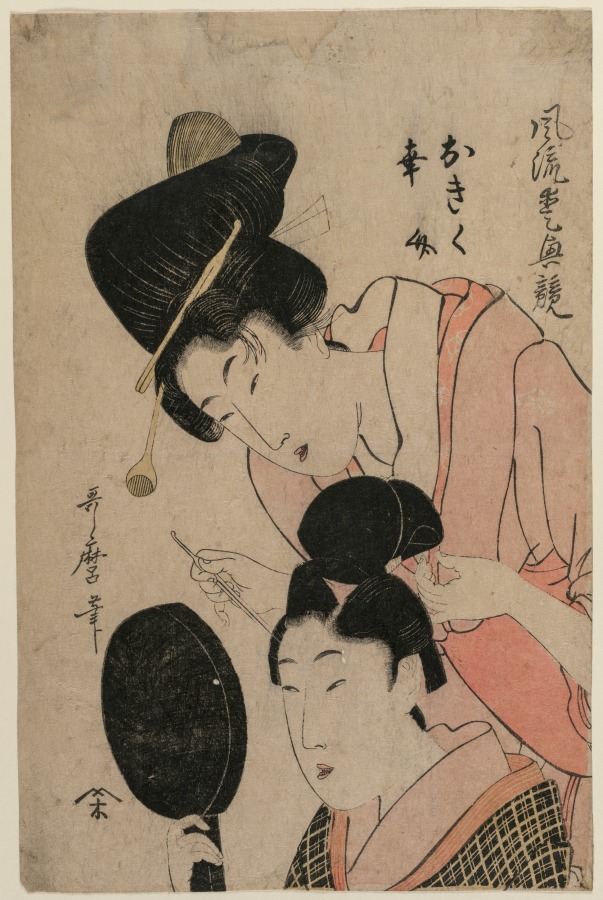
The Lovers Okiku and Kozuke (from the series An Elegant Comparison of Charming Features)
mid 1800s (1804-1807)
Color woodblock print
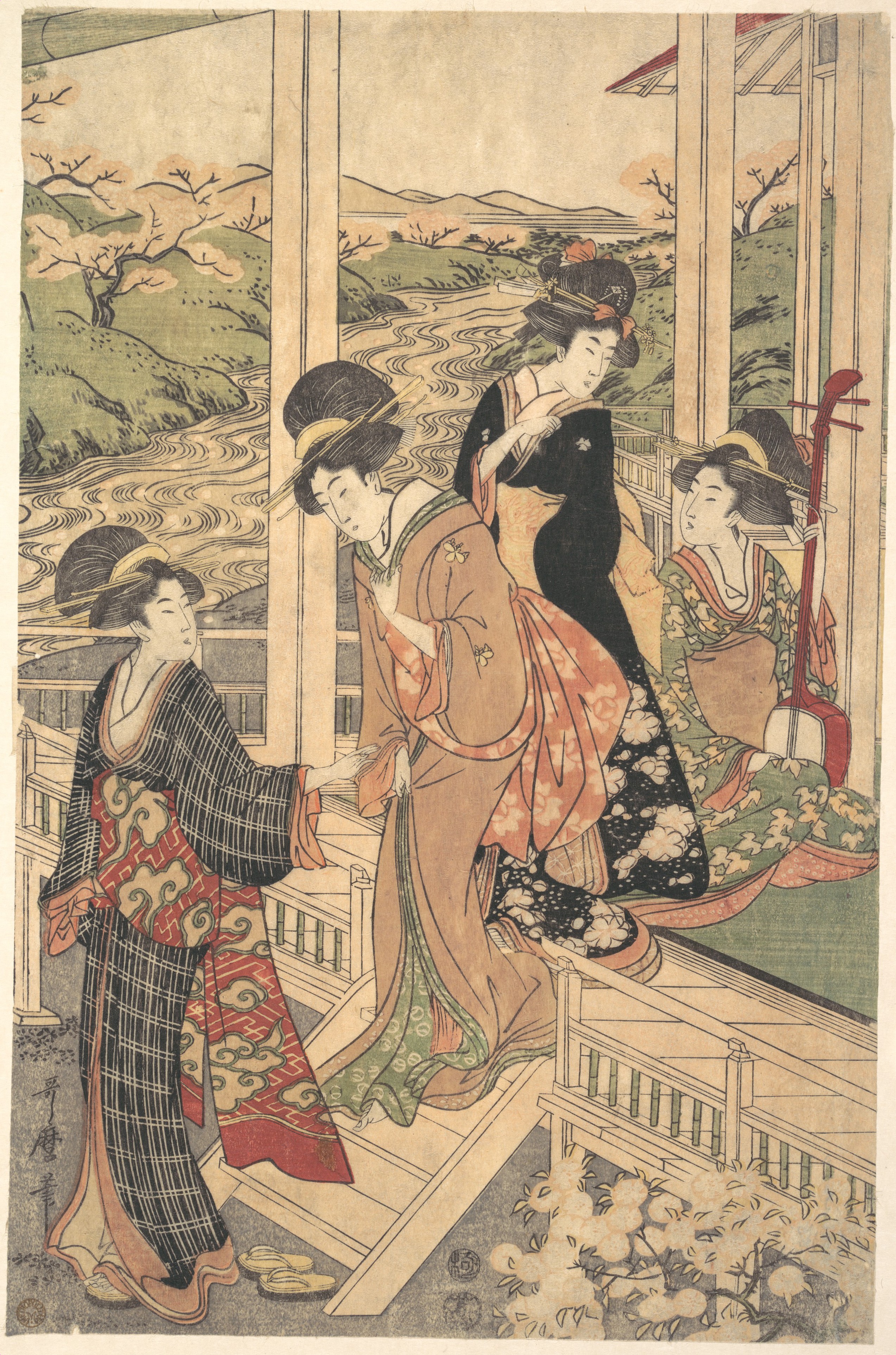
Group of Women on the Engawa of a Country House, in the time of the Cherry Blossoming
ca. 1806
Woodblock print; ink and color on paper
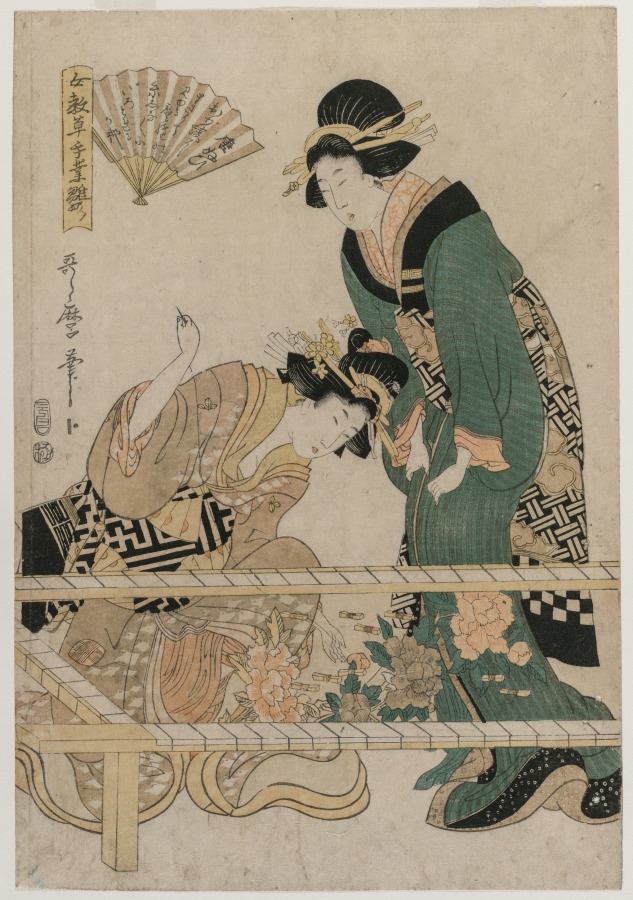
Chinese Embroidery (from the series Instructive Patterns for Women's Handicraft)
1808
Color woodblock print