
Biography
Mizufune Rokushu (水船六洲, 1912–1980) was a Japanese printmaker of the sosaku-hanga (creative print) movement, in which the artist designs, carves, and prints his own blocks rather than dividing the work among specialists. Trained first as a sculptor, he brought a strong sense of form and structure to his prints, which are predominantly abstract or semi-abstract in character.
Born in 1912 in Kure, in Hiroshima Prefecture, Mizufune studied sculpture at the Tokyo School of Fine Arts, graduating in 1936. He learned the fundamentals of woodblock printmaking through the study group led by Hiratsuka Un'ichi, one of the pioneers of the creative-print movement. While still a young artist, he was among the founding members of the Shin Hanga Shudan (New Print Collective) in 1932, a creative-print group whose members included Ono Tadashige; it was later reorganized as the Zokei Hanga Kyokai.
For much of his life Mizufune worked as a schoolteacher, teaching art at Kanto Gakuin in Yokohama and later serving as principal of its primary school. He began to exhibit his prints seriously around 1955, and in 1959 he joined the Japan Print Association. His work was shown at the international print biennials held in Tokyo, and in 1961–62 he lived in the United States, spending time in Vermont.
Rather than the figural or landscape imagery of many of his contemporaries, Mizufune's prints reflect his sculptor's sensibility — strong, simplified forms, carefully balanced compositions, and a rich, opaque handling of color. His mature work carries a meditative, weathered quality that he associated with a Buddhist sense of "aware," the pathos of natural and time-worn things.
While he did not attain the international renown of sosaku-hanga figures such as Munakata Shiko, Saito Kiyoshi, or Maki Haku, Mizufune was an early and committed participant in the creative-print movement, and his prints remain of interest to collectors drawn to the broader circle of artists who sustained sosaku-hanga across the twentieth century.
Key Facts
- Active Period
- 1912–1980
- Nationality
- 🇯🇵Japan
- Movement
- Sōsaku-hanga
- Works Indexed
- 17
Frequently Asked Questions
Mizufune Rokushu (水船六洲, 1912–1980) was a Japanese printmaker of the sosaku-hanga (creative print) movement, in which the artist designs, carves, and prints his own blocks rather than dividing the work among specialists. Trained first as a sculptor, he brought a strong sense of form and structure to his prints, which are predominantly abstract or semi-abstract in character.
Mizufune Rokushu was active from 1912 to 1980. They were associated with the Sōsaku-hanga movement.
Mizufune Rokushu's work was shaped by the Sōsaku-hanga tradition in Japanese woodblock printmaking. Sōsaku-hanga: ## What is sōsaku-hanga? Sōsaku-hanga (創作版画, "creative prints") was a twentieth-century Japanese print movement defined by a single commitment: the artist must design, carve, and print every work alone.
Mizufune Rokushu's prints frequently feature abstract, landscapes, seascapes, still life, music, birds & flowers.
Original prints by Mizufune Rokushu can be found in collections including Harvard Art Museums, Minneapolis Institute of Art, Legion of Honor, mfa.
Woodblock Prints by Mizufune Rokushu (17)

Sea Stone (Umi no ishi)
20th century
Color woodblock print; edition 26/50

Pastorale
1959
Color woodblock print; edition 3/30

Crows
1961
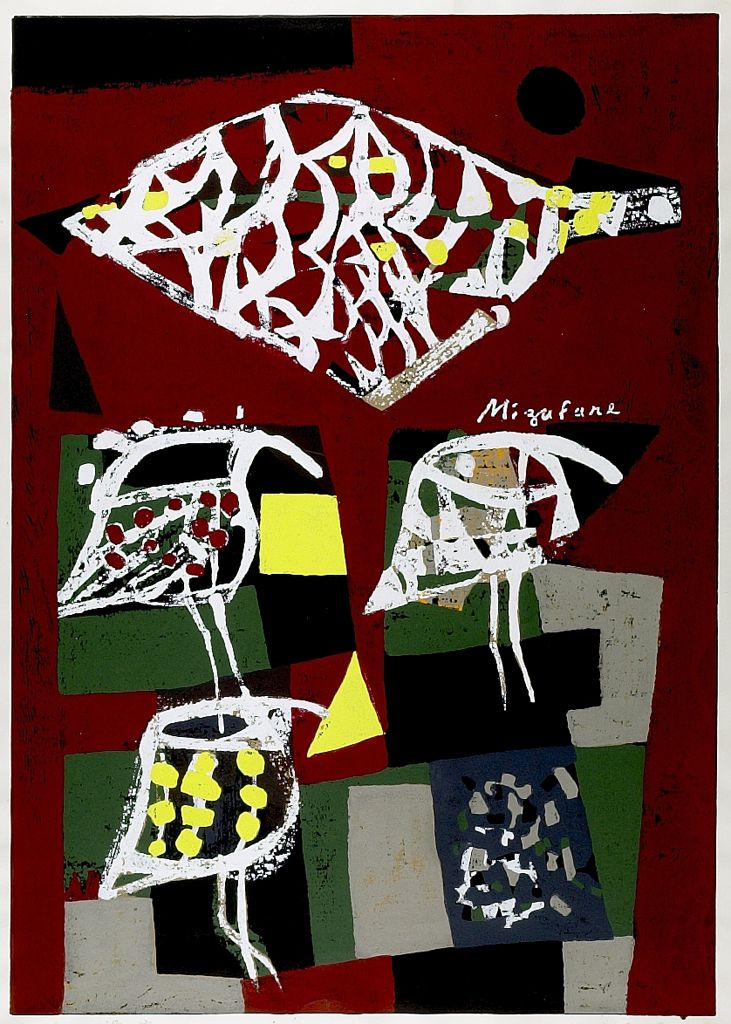
East of the Sea, Shôwa period, circa 1960s
Woodblock print
Rainbow Music
mid 20th century
Woodblock print, ink and color on paper
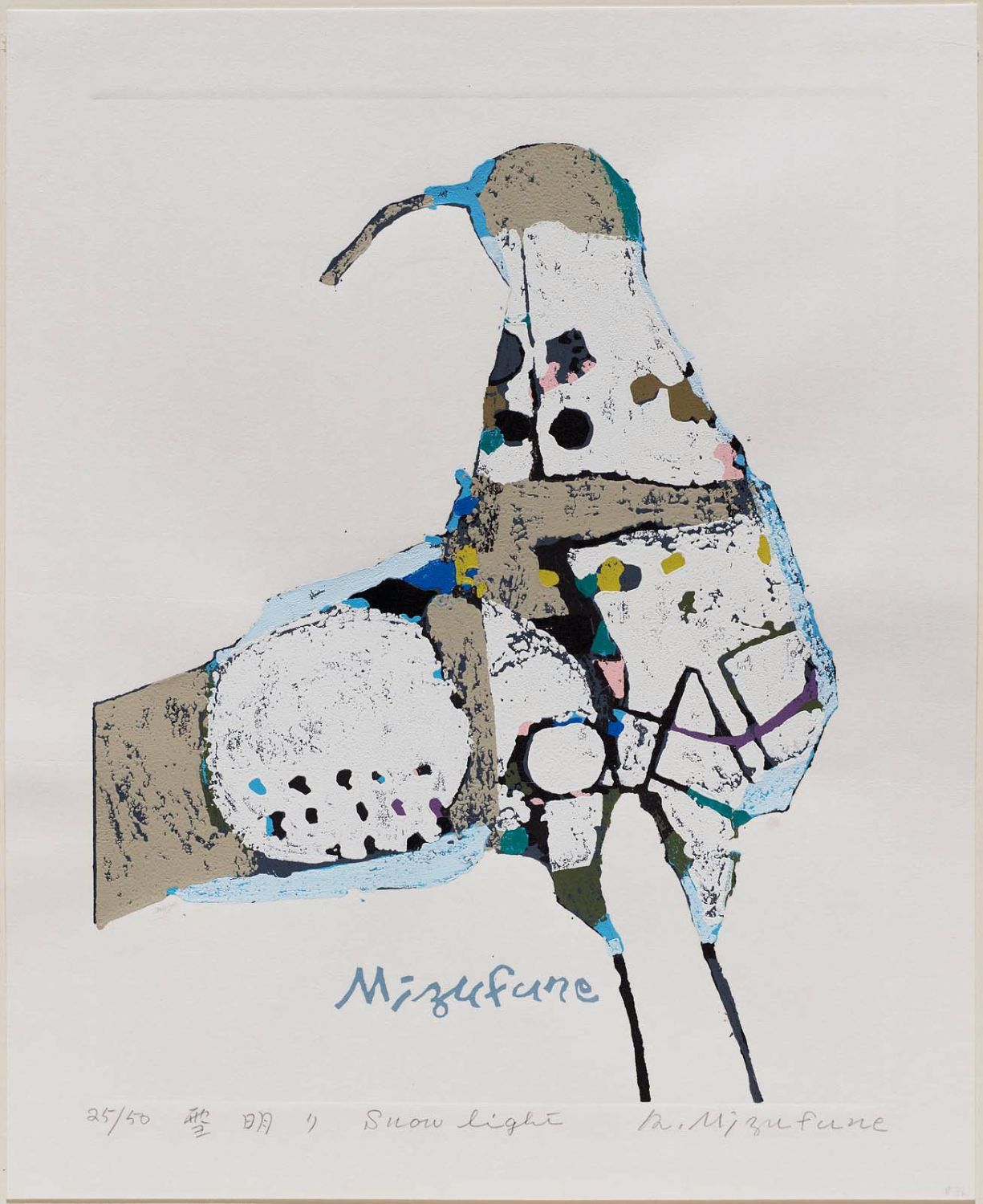
Snow Light (Yuki akari)
Woodblock print

Tear Stone
Woodblock print
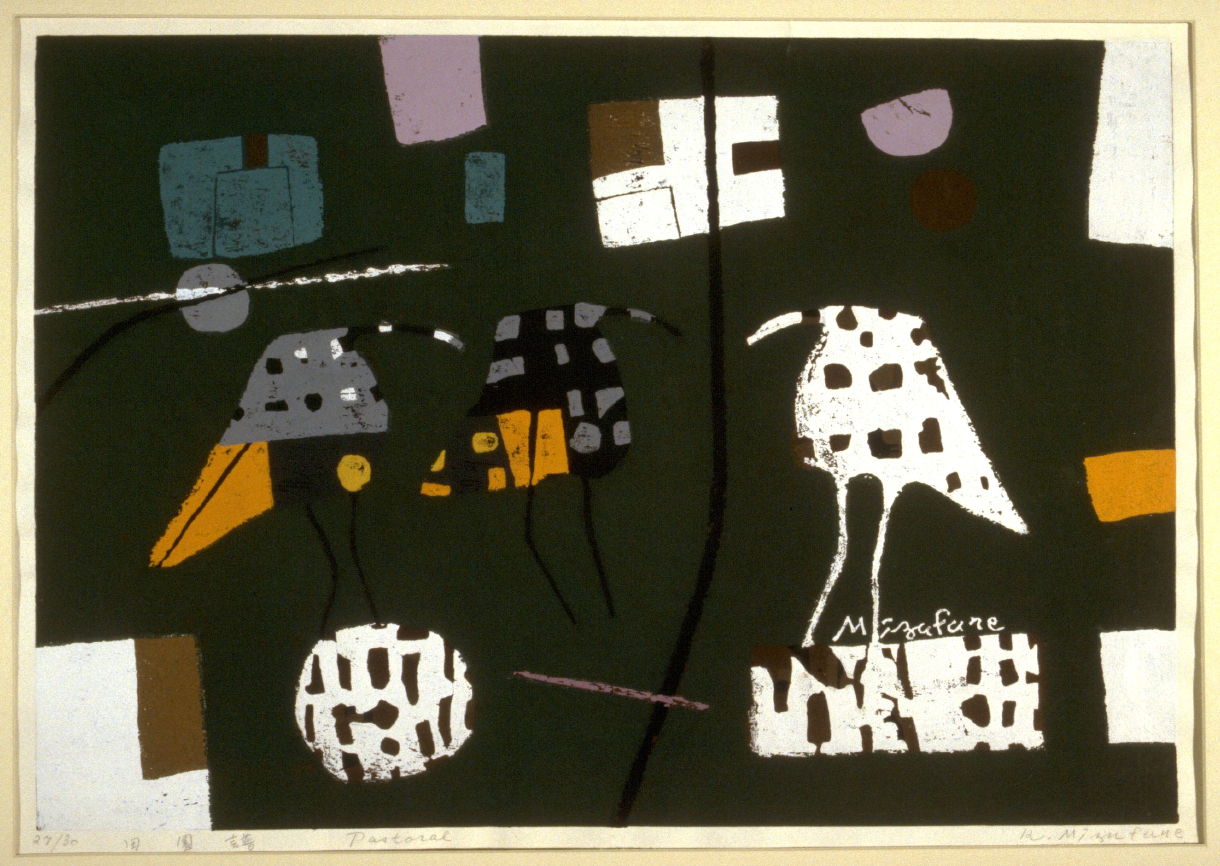
Pastoral
Woodblock print

Worm Basket
Woodblock print
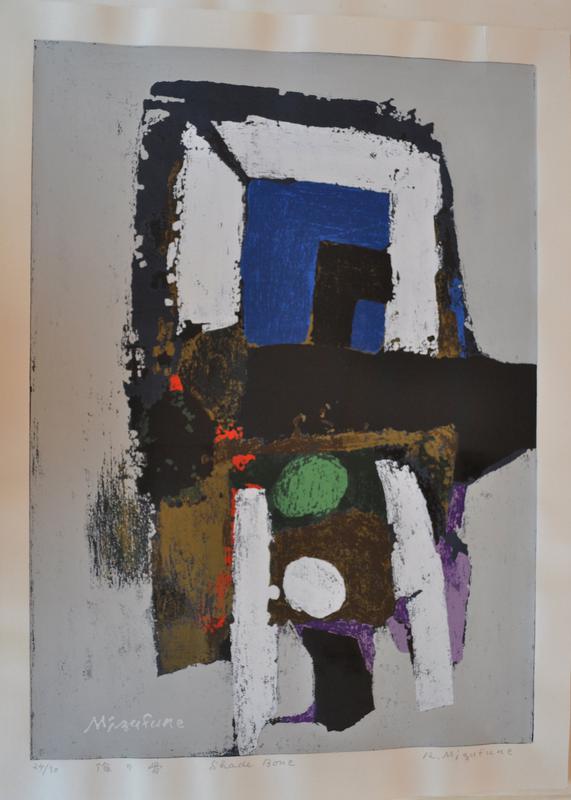
Shade Bone
mid 20th century
Woodblock print, ink and color on paper
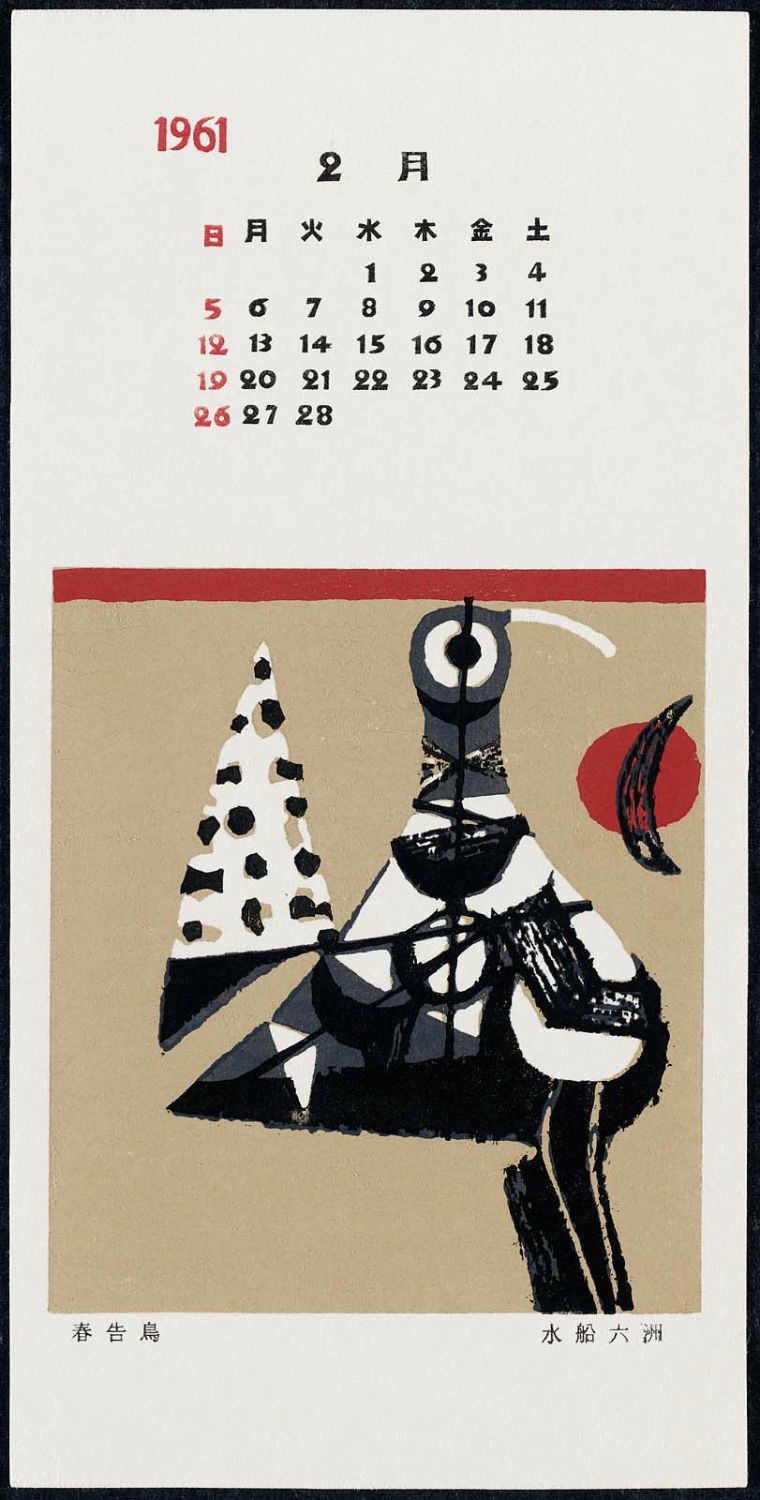
Shunkokucho
Woodblock print

Feast of the Sea (Umi no kyoen)
Woodblock print
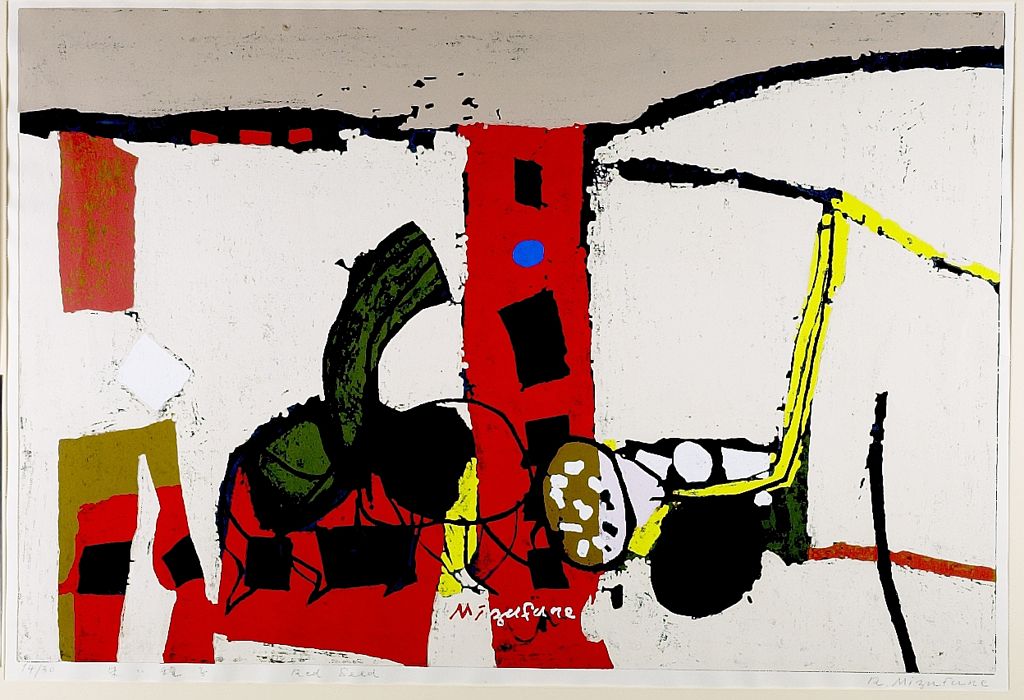
Rokushu Mizufune
Woodblock print
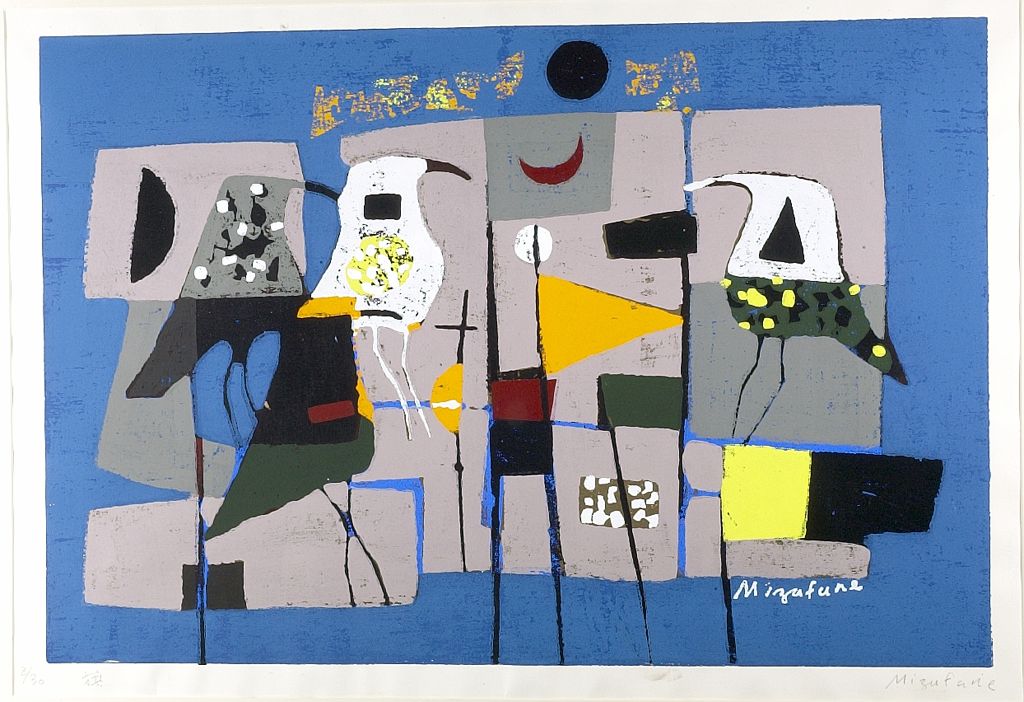
Abstraction, Shôwa period, circa 1960
Woodblock print

Waterslide
mid 20th century
Screen print, ink and color on paper
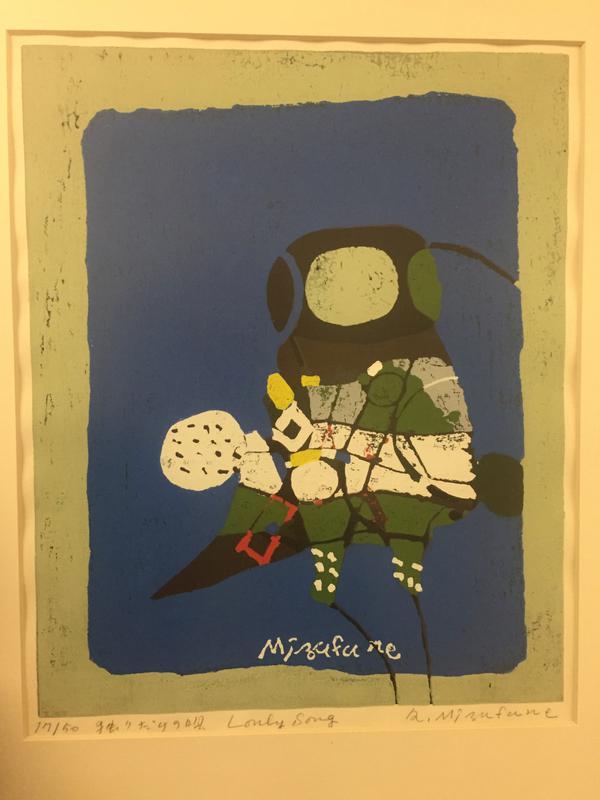
Lonely Song
20th century
Woodblock print, ink and color on paper
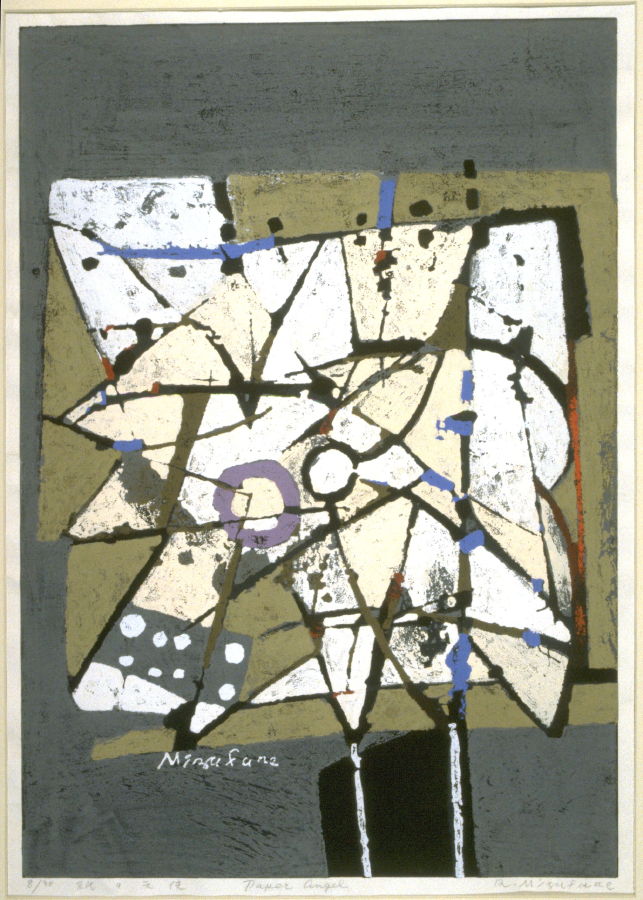
Paper Angel
Woodblock print