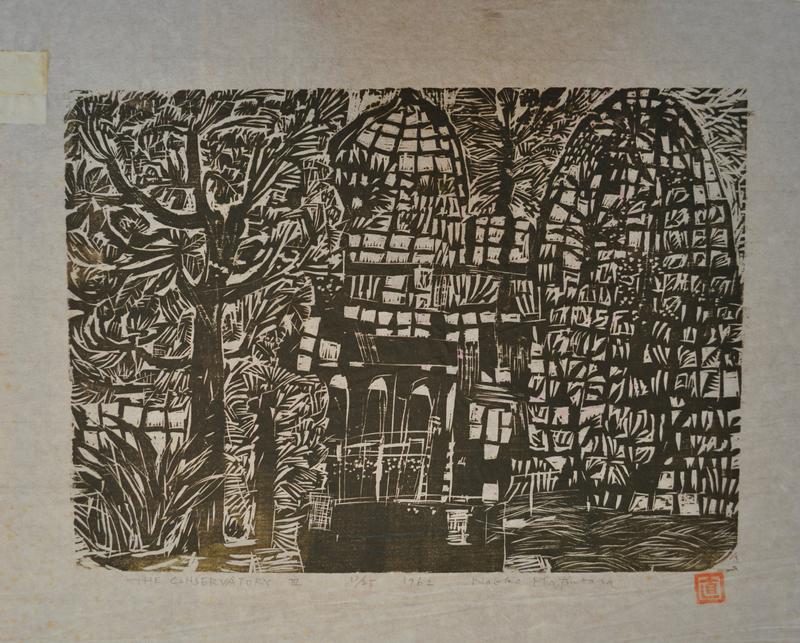
Biography
Naoko Matsubara (松原直子, born 1937) is a Japanese-Canadian woodblock print artist whose expressive, boldly carved prints draw on Japanese spiritual and literary traditions and the natural world to create works of powerful visual and emotional impact. Based in Ontario, Canada, for most of her career, Matsubara has built an extensive body of work that bridges Eastern and Western artistic traditions while remaining rooted in the sosaku-hanga philosophy of the artist as sole creator.
Born in 1937 in Tokushima, on the island of Shikoku, Matsubara grew up in Kyoto, surrounded by the ancient capital's rich artistic and religious heritage; her father was a Shinto priest. She earned a BFA from the Kyoto Academy of Fine Arts in 1960, an education that instilled a deep appreciation for the woodblock medium and its centuries-long history in Japanese culture. As a student she developed the method that would become her signature — carving directly into the block without a preliminary drawing. She then traveled to the United States as a Fulbright scholar, completing an MFA at the Carnegie Institute of Technology (now Carnegie Mellon University) in Pittsburgh in 1962.
Matsubara eventually settled in Canada in the early 1970s, making her home in the province of Ontario, where she has lived and worked for decades. The move to North America did not diminish her connection to Japanese artistic traditions; rather, the distance seems to have deepened her engagement with the spiritual and aesthetic roots of her heritage. Her work consistently draws on Japanese poetry and literary tradition and the contemplative observation of nature that is central to Japanese aesthetics.
Matsubara's prints are characterized by bold, vigorous carving that leaves visible the marks of the tools and the grain of the wood. Her approach to the woodblock is physical and direct — she carves with energy and confidence, creating images that possess a raw, expressive power that recalls the bold, gouged manner of Munakata Shiko, a formative influence on her work. Her figures — literary characters, spiritual subjects, and human forms in contemplative poses — are rendered with broad, sweeping lines and dramatic contrasts of black and white that give them iconic presence.
While many of her prints are primarily black and white, exploiting the stark contrast between carved and uncarved areas of the block, Matsubara also produces color prints of considerable sophistication. Her color work typically employs a limited but carefully chosen palette — deep indigos, warm earth tones, and occasional touches of vermillion or gold — that enhances the atmosphere of her subjects without diminishing the graphic power of the composition.
Book illustration has also been an important part of her career, and her illustrated editions of literary classics have been praised for their ability to illuminate their texts through a thoroughly contemporary artistic vision. Alongside these works, Matsubara produces prints inspired by the landscape — forests, lakes, and wilderness — subjects she approaches with the same contemplative attention she brings to spiritual and literary themes. These landscape prints, with their bold carving and atmospheric sensitivity, demonstrate how the sosaku-hanga tradition can accommodate new subjects and environments while maintaining its essential character.
Matsubara has exhibited extensively in Canada, the United States, Japan, and internationally, and she is a member of the Royal Canadian Academy of Arts; in 2009 she received an honorary Doctor of Fine Arts from Chatham University in Pittsburgh. Her prints are held in major collections including the British Museum, the Harvard Art Museums, the Ashmolean Museum in Oxford, and both the Kyoto and Tokyo National Museums of Modern Art. Now in her late eighties, she stands as a testament to the enduring vitality of the sosaku-hanga tradition.
Key Facts
- Active Period
- 1937
- Nationality
- 🇨🇦Canada
- Movements
- Contemporary MokuhangaSōsaku-hanga
- Works Indexed
- 70
Frequently Asked Questions
Naoko Matsubara (松原直子, born 1937) is a Japanese-Canadian woodblock print artist whose expressive, boldly carved prints draw on Japanese spiritual and literary traditions and the natural world to create works of powerful visual and emotional impact. Based in Ontario, Canada, for most of her career, Matsubara has built an extensive body of work that bridges Eastern and Western artistic traditions while remaining rooted in the sosaku-hanga philosophy of the artist as sole creator.
Naoko Matsubara was active born in 1937. They were associated with the Contemporary Mokuhanga and Sōsaku-hanga movements.
Naoko Matsubara's work was shaped by the Contemporary Mokuhanga and Sōsaku-hanga traditions in Japanese woodblock printmaking. Contemporary Mokuhanga: Contemporary mokuhanga (literally "wood-block print") encompasses artists working from approximately 1970 to the present who continue or reinvent traditional Japanese woodblock printing techniques. Sōsaku-hanga: ## What is sōsaku-hanga? Sōsaku-hanga (創作版画, "creative prints") was a twentieth-century Japanese print movement defined by a single commitment: the artist must design, carve, and print every work alone.
Naoko Matsubara's prints frequently feature trees, landscapes, architecture, urban scenes, religious, figures.
Original prints by Naoko Matsubara can be found in collections including wbp, Harvard Art Museums, mfa, British Museum.
Woodblock Prints by Naoko Matsubara (70)
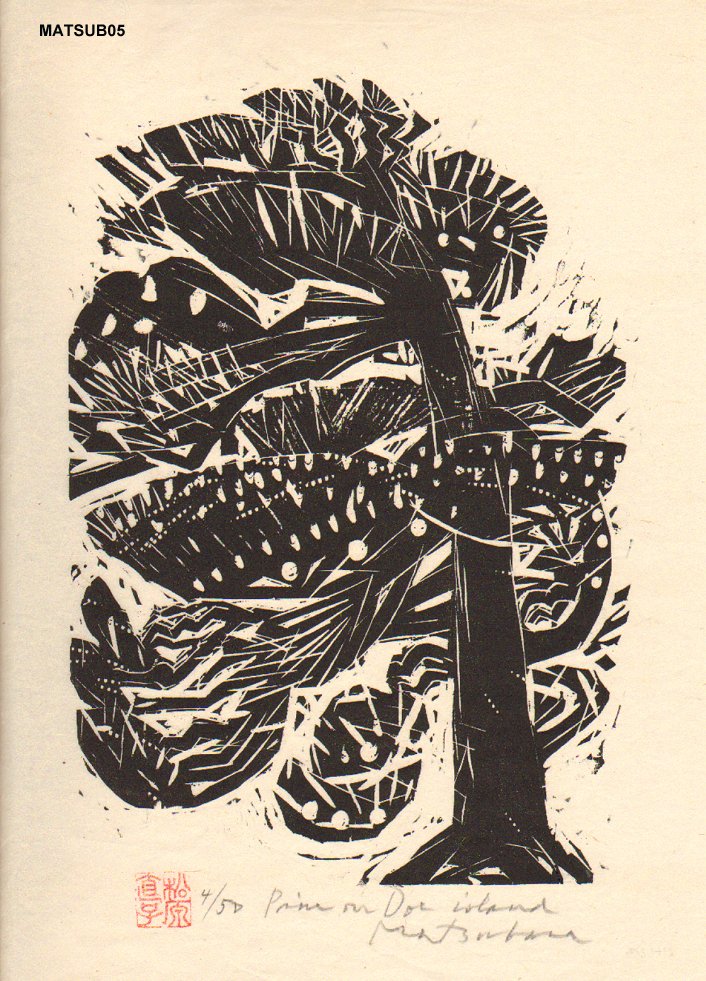
Pine on Doi Island
Woodblock print

Solitude
Mokuhanga (Japanese woodblock)

Iris and poem (not translated)
Woodblock print
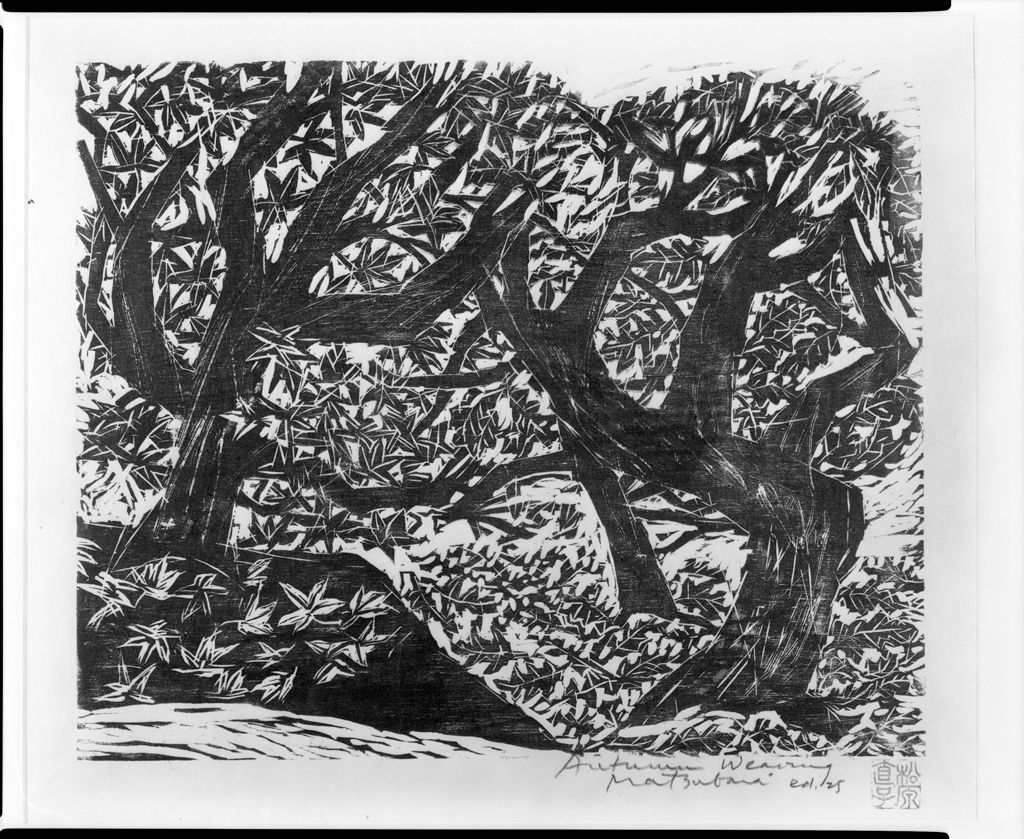
Autumn Weaving, Shôwa period,
Woodblock print
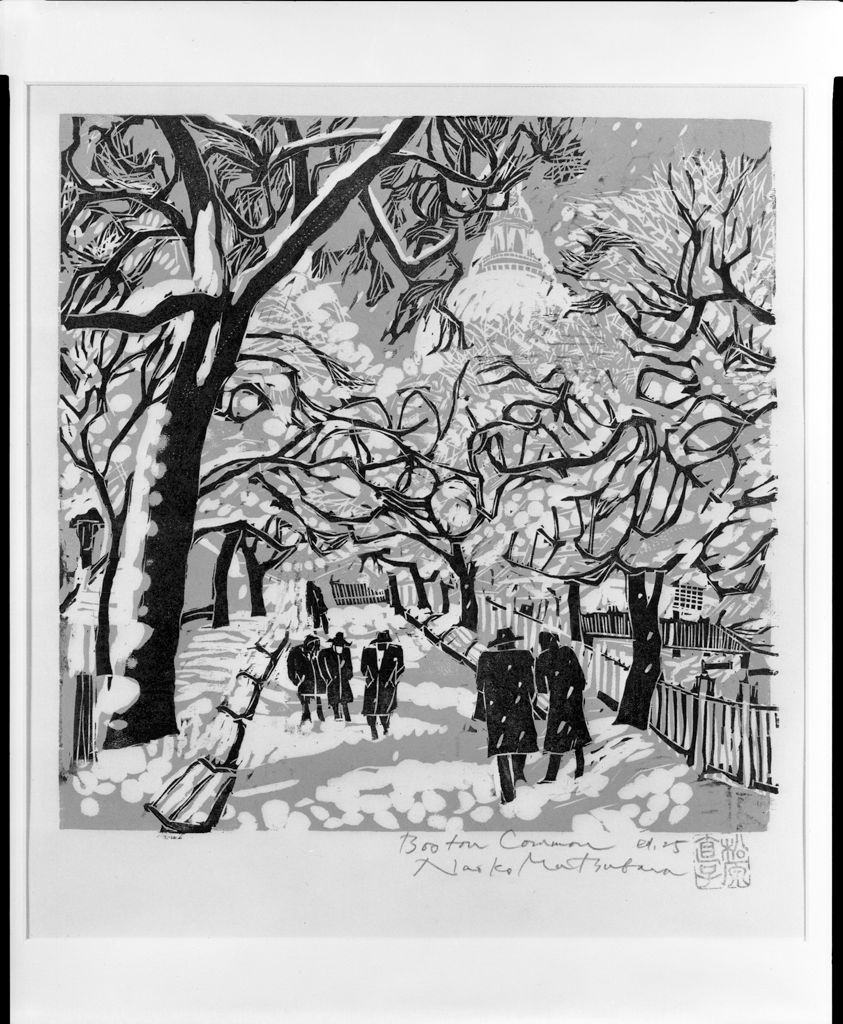
Boston Common, Shôwa period,
Woodblock print
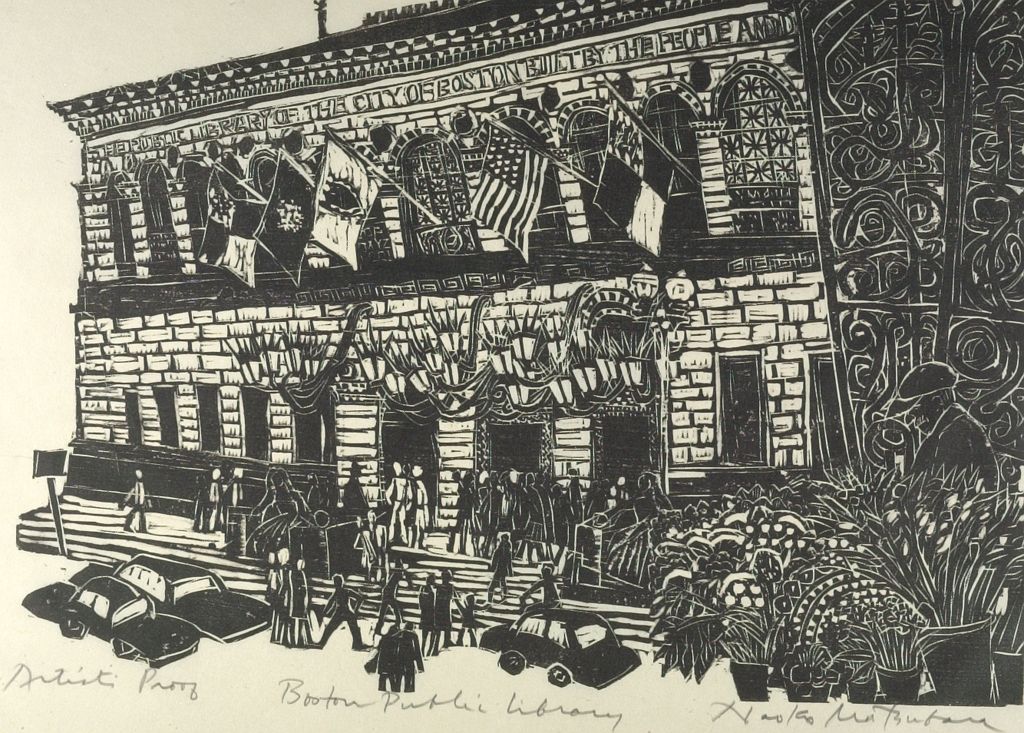
Boston Public Library, Shôwa period, dated 1969
Woodblock print
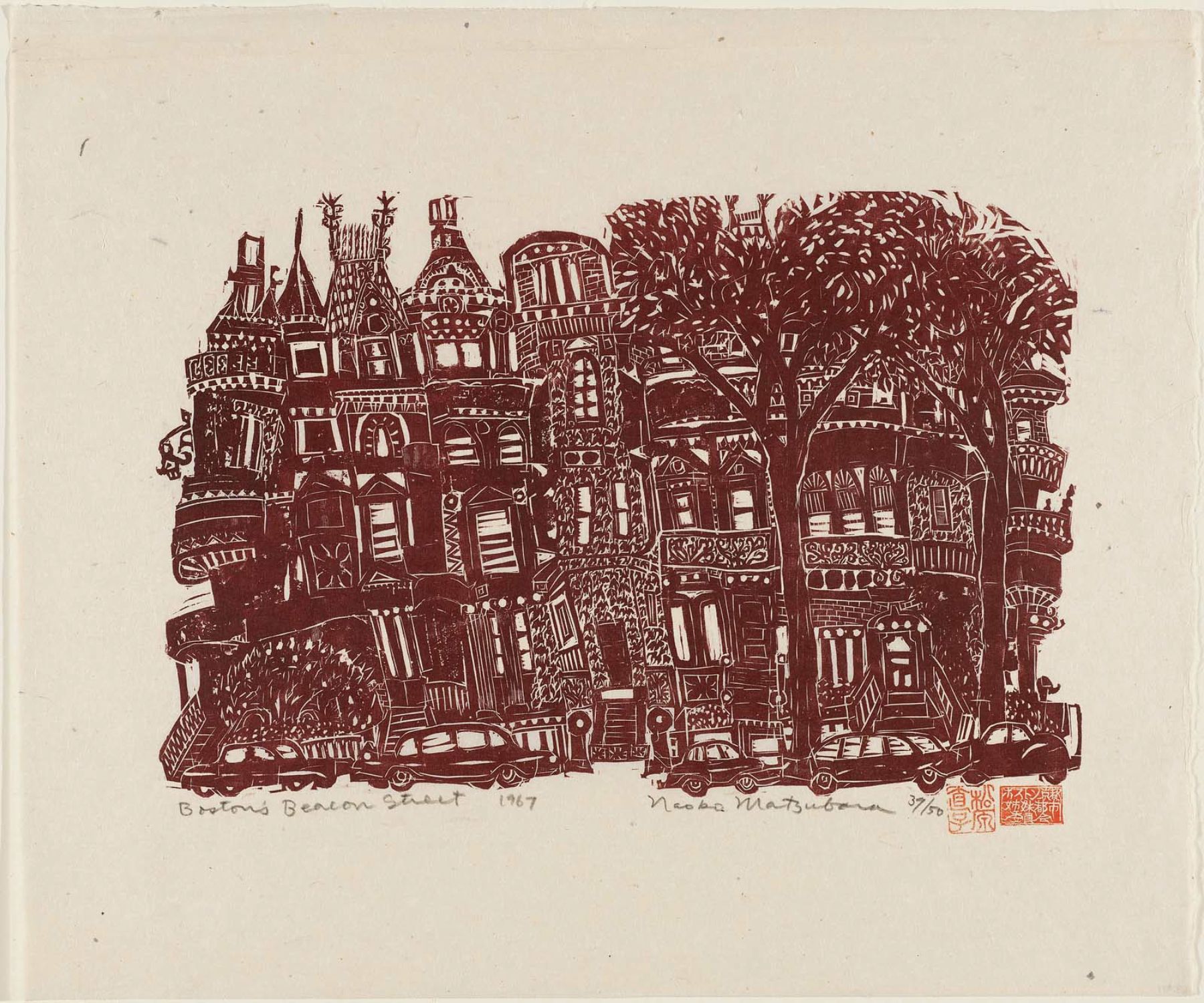
Boston's Beacon Street
Woodblock print

Chinese Theatre, Shôwa period, dated 1959
Woodblock print
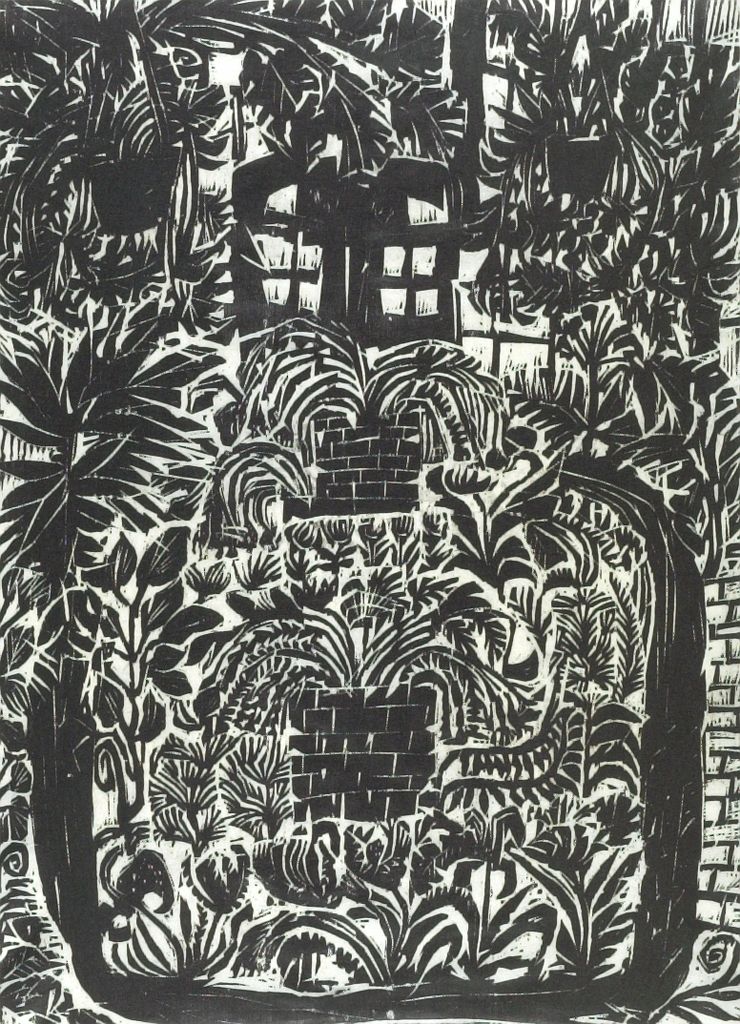
Conservatory I, Shôwa period, dated 1962
Woodblock print
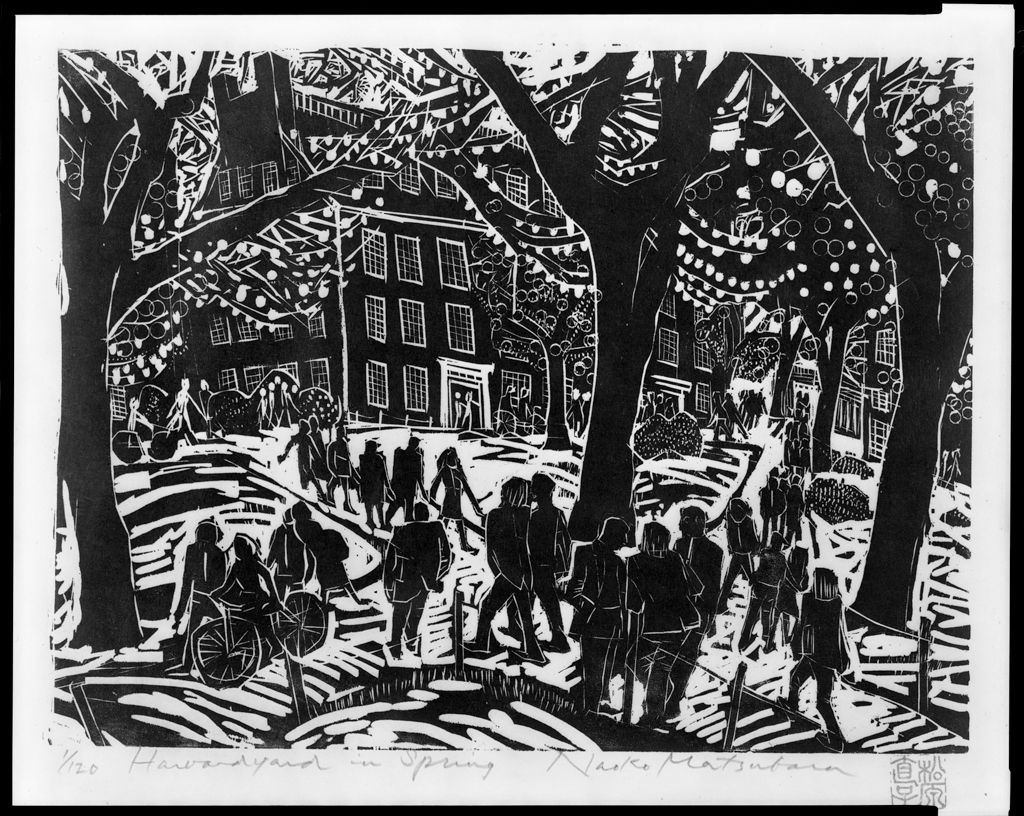
Harvard Yard in Spring, Shôwa period,
Woodblock print
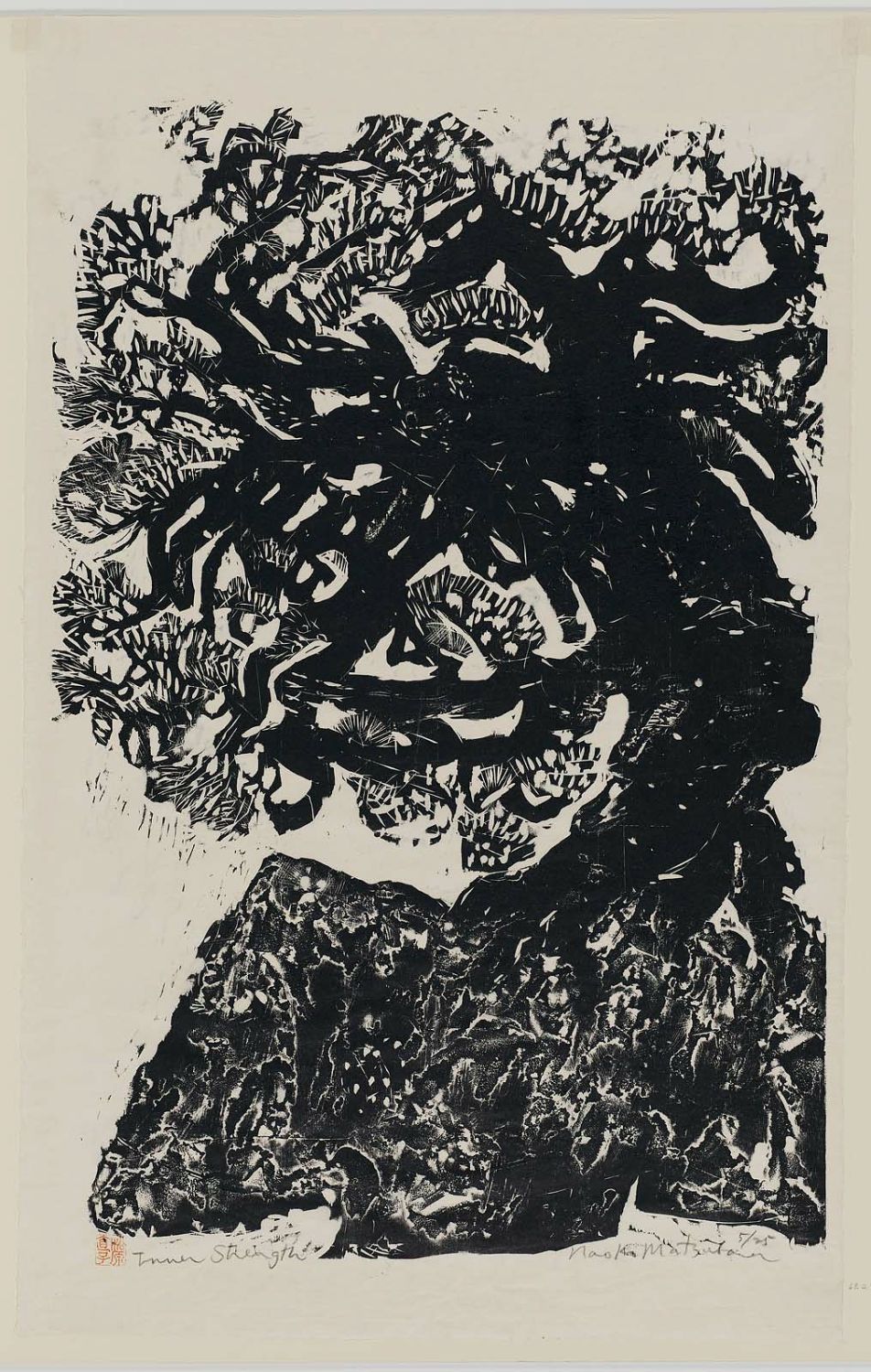
Inner strength
Woodblock print

Kyoto Woodcuts
Woodblock print
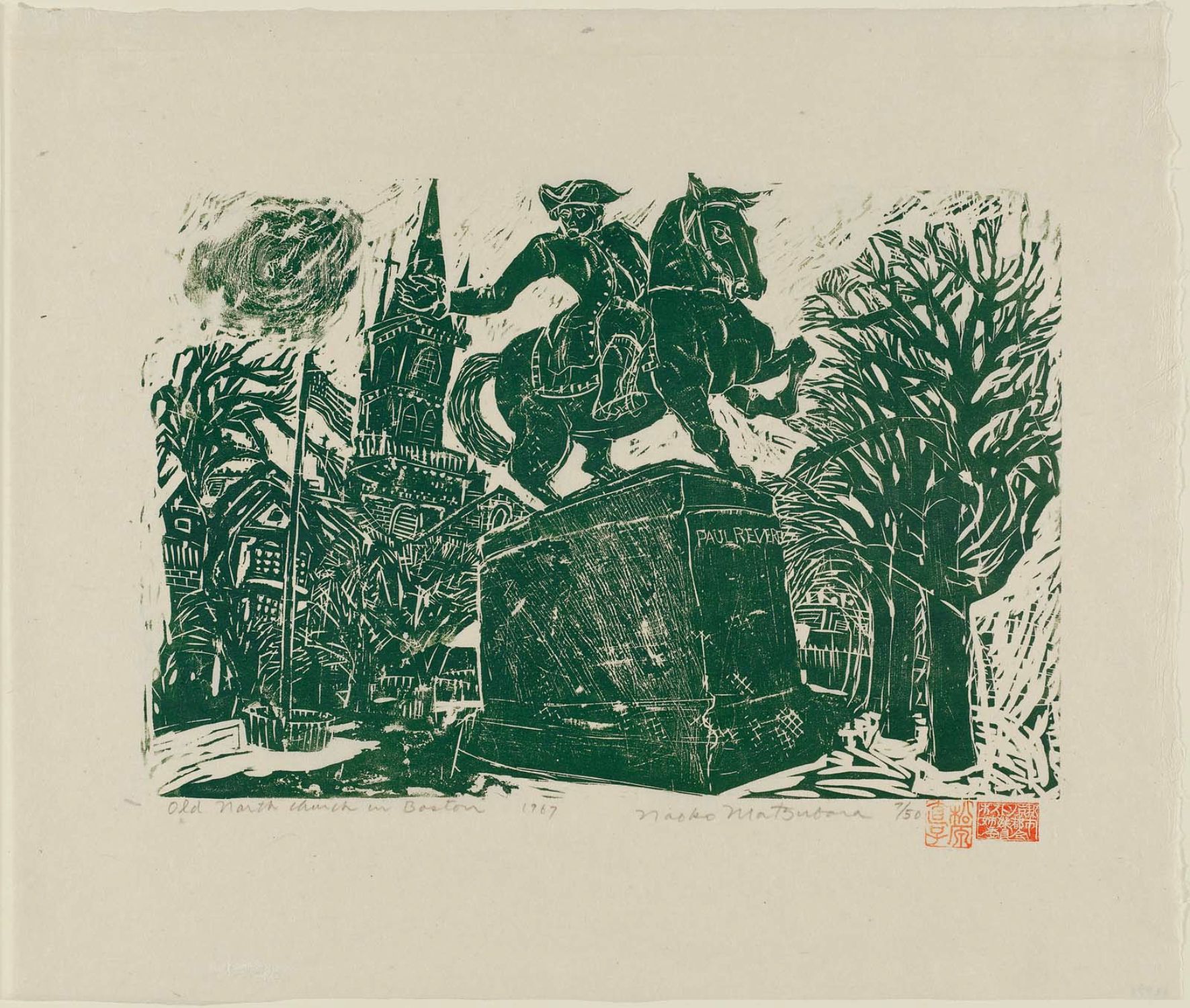
Old North Church in Boston
Woodblock print
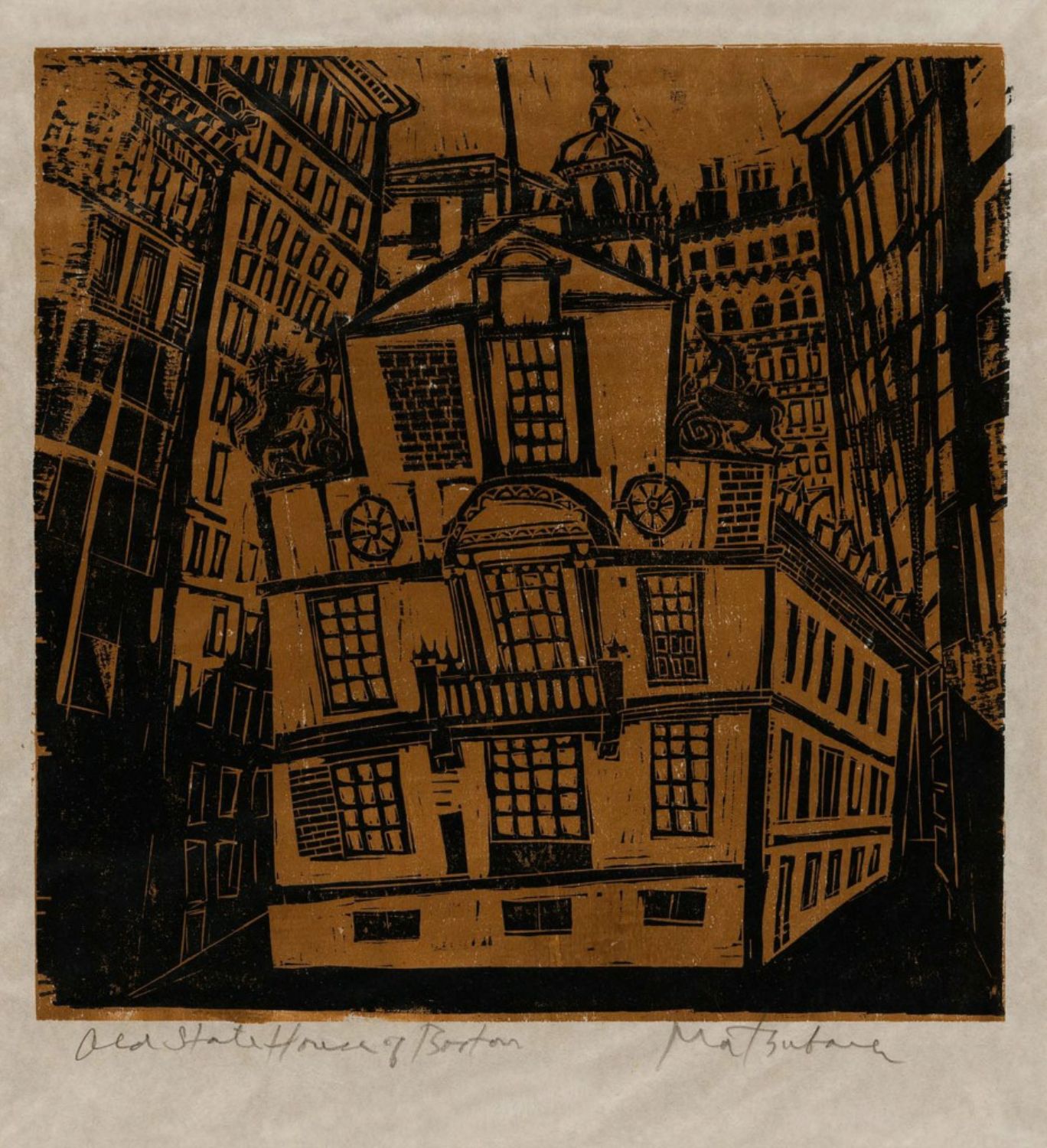
Old State House of Boston
Woodblock print
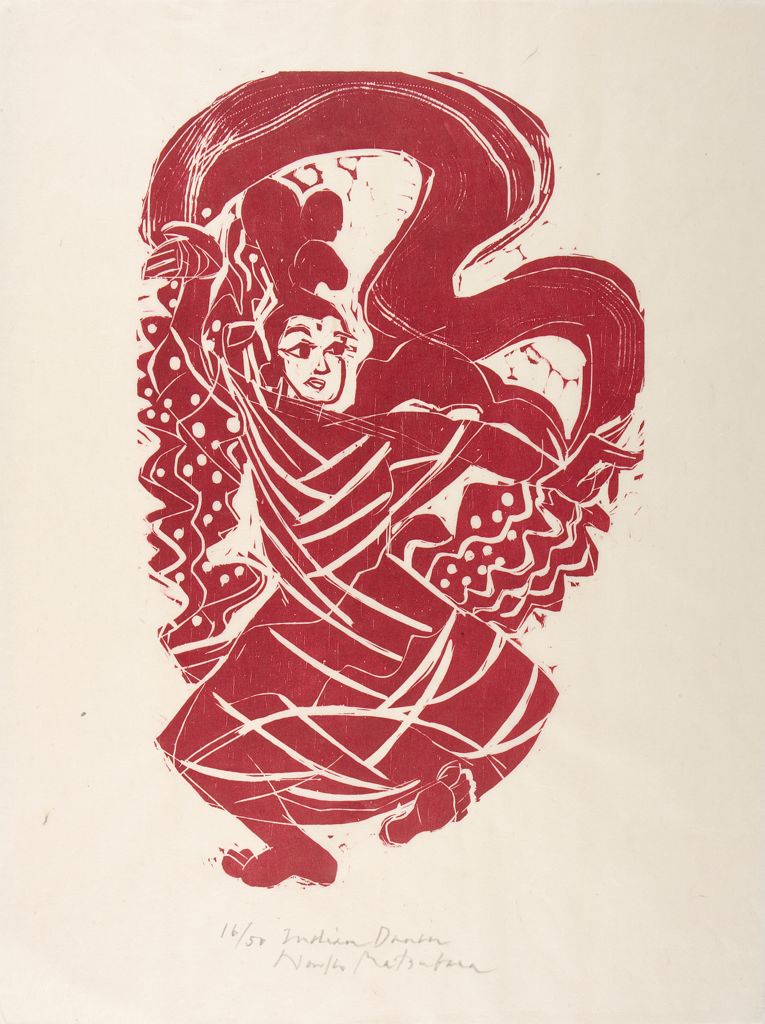
Page from Hagoromo (Feathered Robe), Shôwa period, circa 1984-1986
Woodblock print
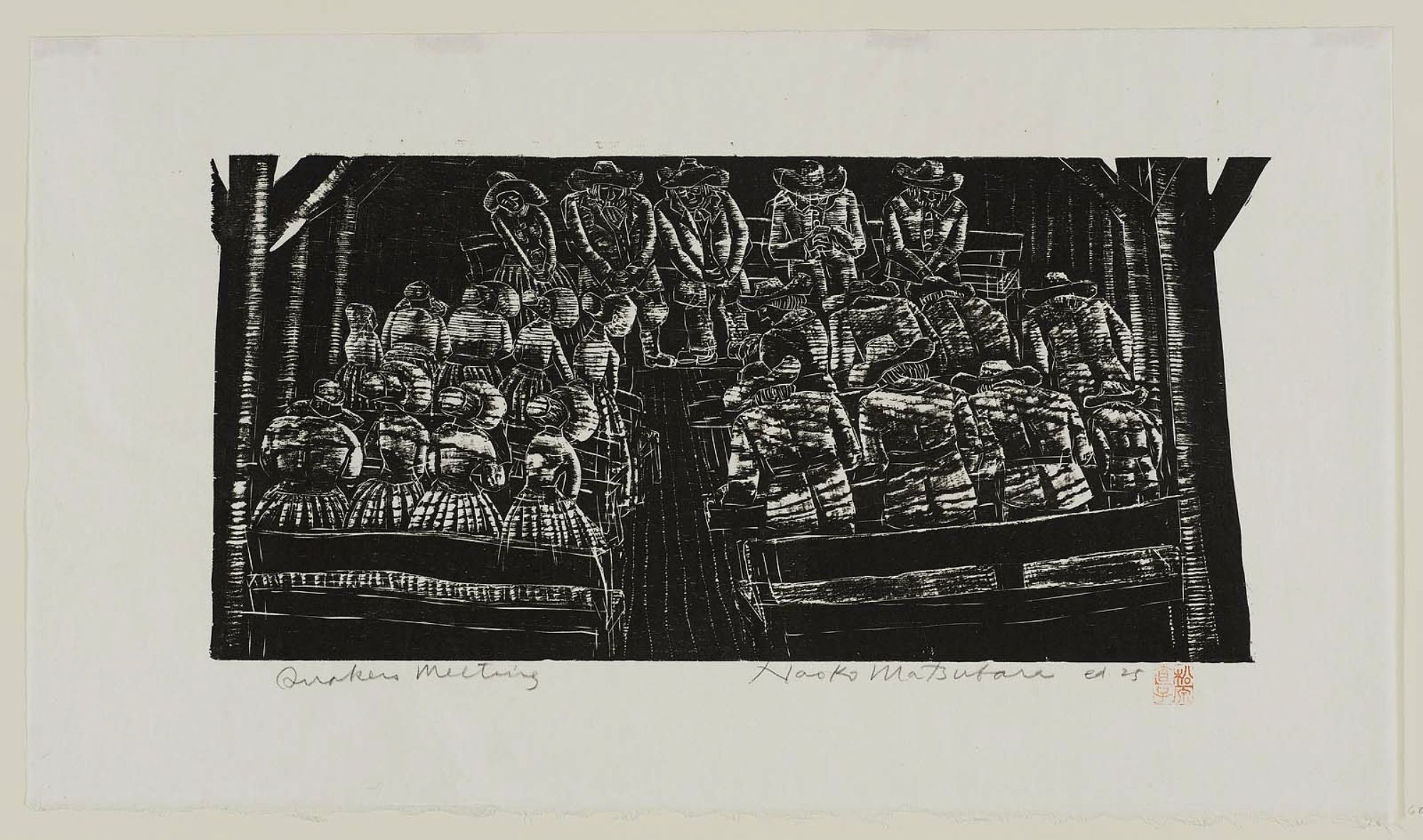
Quaker Meeting
Woodblock print
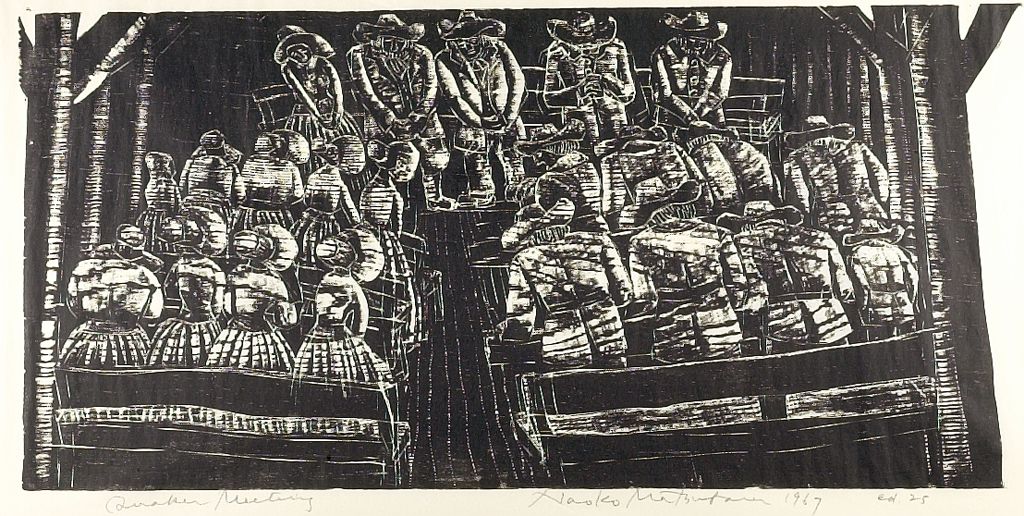
Quaker Meeting, Shôwa period, dated 1967
Woodblock print

Solitude
Woodblock print
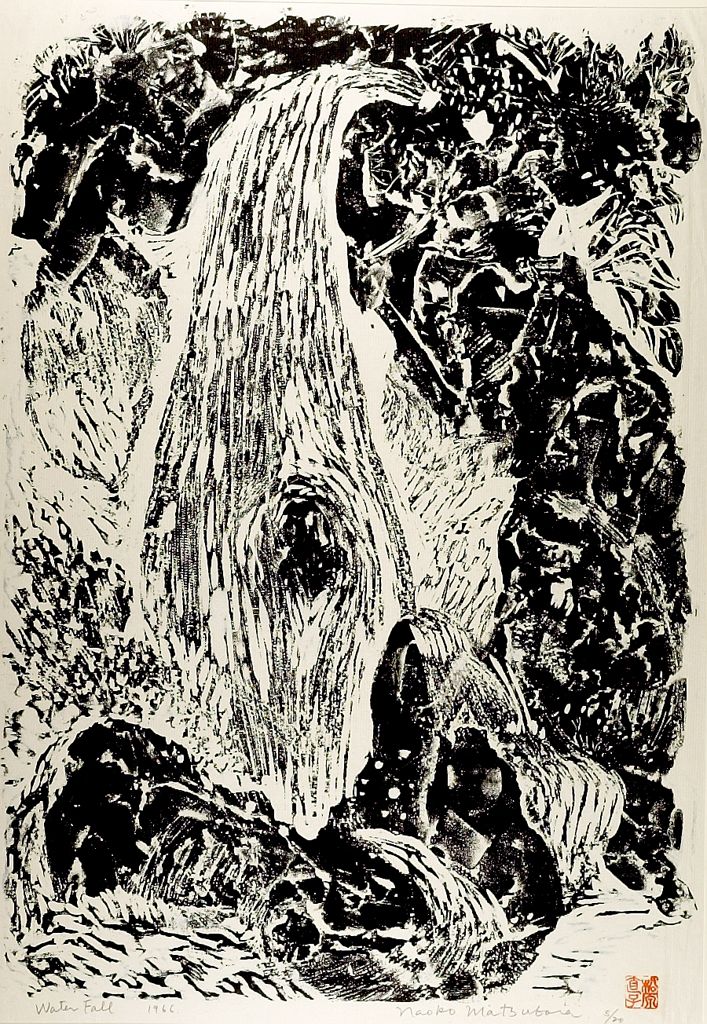
Waterfall, Shôwa period, dated 1966
Woodblock print
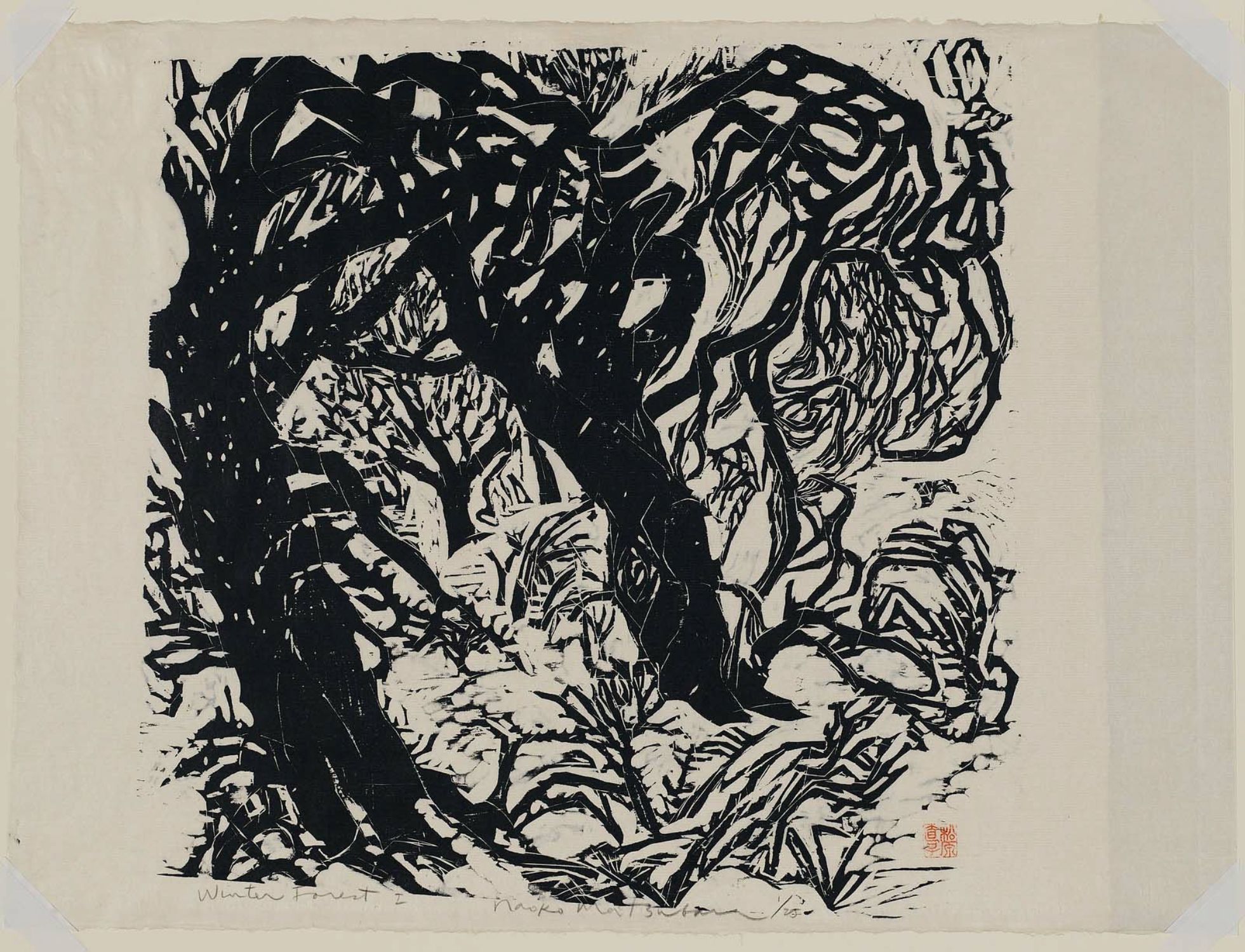
Winter Forest I
Woodblock print
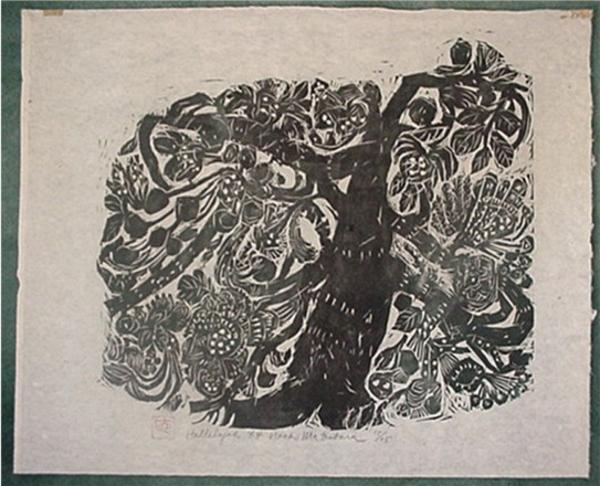
Hallelujah
Woodblock print
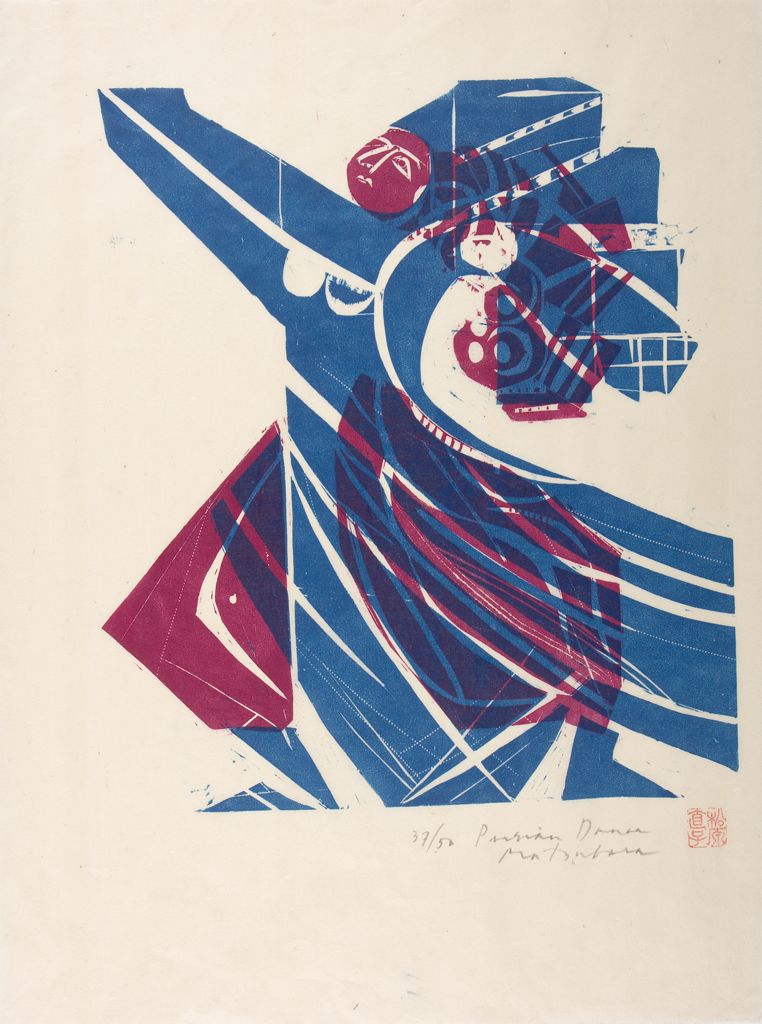
Untitled (naoko-matsubara)
Woodblock print