Noro Kaiseki
野呂介石
1747–1828
Japan
Biography
Noro Kaiseki (1747-1828) was a late Edo nanga (Southern School) painter from Kii Province in present-day Wakayama Prefecture, one of the most accomplished provincial literati artists of his generation and a principal continuator in his region of the painting lineage descended from Ike no Taiga. Working largely outside the Kyoto-Osaka-Edo axis where most bunjinga (literati painting) reputations were built, Kaiseki nevertheless achieved sufficient stature that the daimyo of Kii engaged him as official domain painter, a recognition unusual for a nanga practitioner in a period when most domain ateliers still preferred Kano-school orthodoxy.
Kaiseki was born in 1747 near Wakayama Castle in Kii Province, into a Wakayama family that had once held samurai status but by his generation were established as townspeople. His given name was Ryu, and the art name Kaiseki (介石) became the name under which he was known throughout his mature career; among the several other art names he used were Konsai and Daigoryu. The cultural environment of Kii—with its dense temple architecture, the Nachi waterfalls and Kumano shrines, and the literary networks that radiated outward from Kyoto—provided early exposure to the classical Chinese poetic landscape tradition that would shape his lifelong work.
As a young man Kaiseki traveled to Kyoto to pursue formal training, entering the studio of Ike no Taiga (1723-1776), the towering figure of mid-Edo nanga painting and a master who, alongside Yosa Buson, had established the bunjinga vocabulary on a Japanese footing. Under Taiga, Kaiseki absorbed the essentials of literati landscape practice: the imaginative geography drawn from Chinese painting manuals such as the Mustard Seed Garden Painting Manual (Jieziyuan huazhuan), the broken-ink and short hemp-fiber strokes (cunfa) of the Yuan and Ming masters Huang Gongwang and Shen Zhou, and the philosophical orientation that treated landscape painting as a form of cultivated leisure inseparable from poetry, calligraphy, and reflection on the natural world. His wider literati formation also drew on early Confucian studies under the Kii scholar Ito Rangu, on training in the Nagasaki manner under the Obaku priest-painter Kakutei, and on his association in his home province with the senior nanga painter Kuwayama Gyokushu (1746-1799), all of which deepened his command of Chinese pictorial sources.
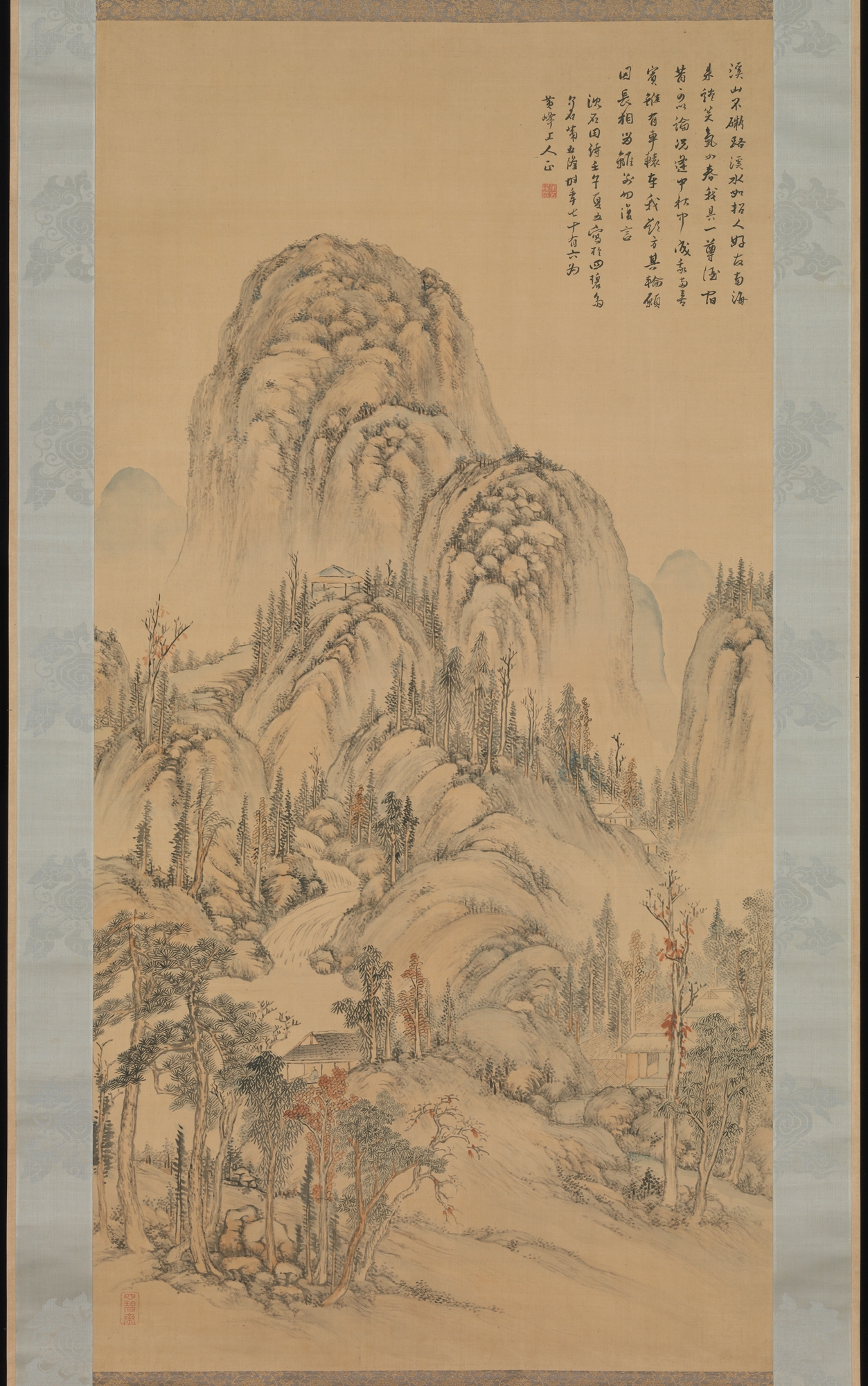
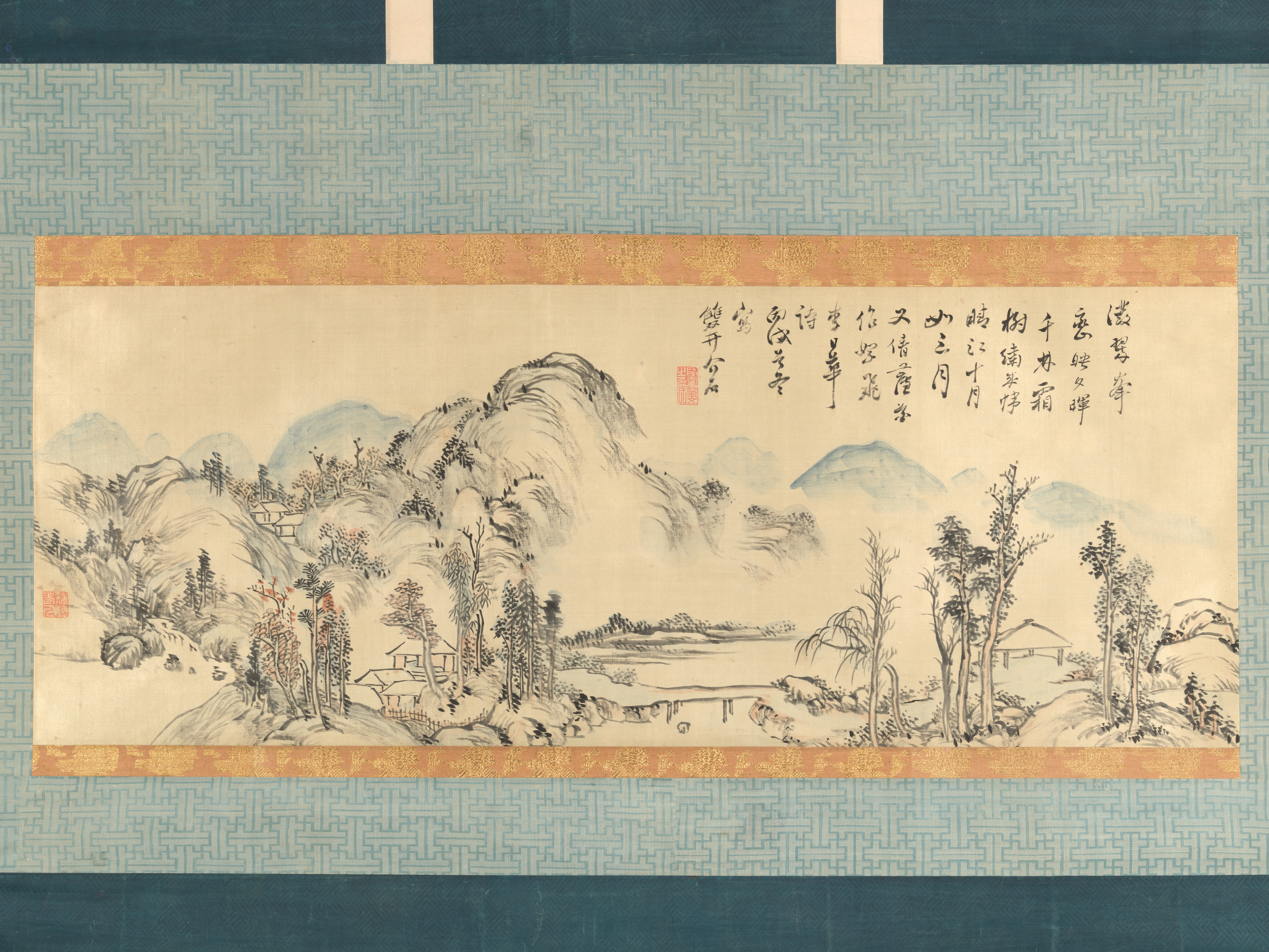
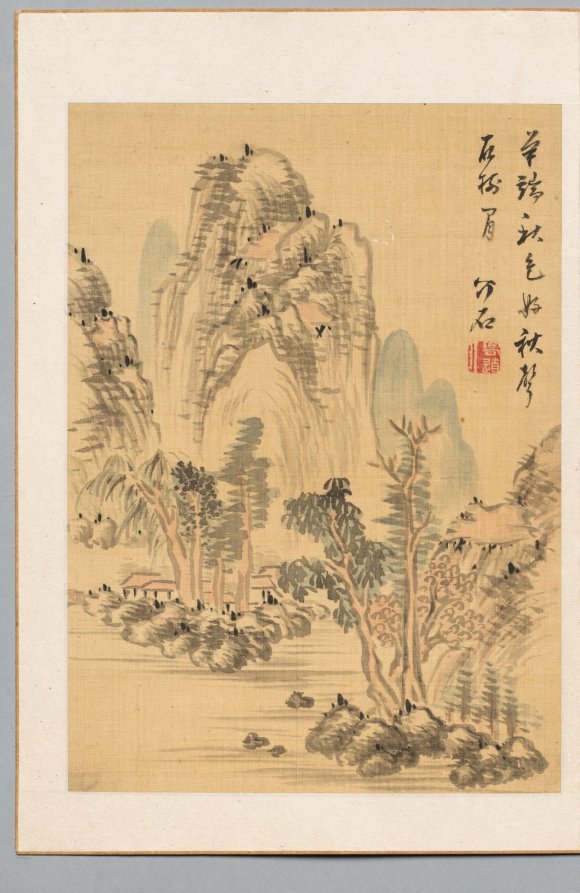
In the 1790s, after years of practice and travel between Kyoto and Kii, Kaiseki returned permanently to his home province, where—summoned into the domain's service in his forties—he was appointed official painter to the lord of Kii domain, a Tokugawa cadet branch (gosanke) headquartered at Wakayama Castle. The appointment placed him in an institutional structure normally reserved for Kano-school orthodoxy and reflected both the growing prestige of nanga in the late Edo period and the personal taste of the Kii daimyo. From this base Kaiseki produced the bulk of his surviving mature work: hanging scrolls and handscrolls of mountain landscapes in the Chinese literati manner, sets of waterfall paintings drawing on the dramatic local subject of the Three Waterfalls of Nachi (Nachi no sandaki), and album leaves and fan paintings circulated among local literati and the broader Kyoto-Edo bunjinga network. His Meeting with a Friend on an Autumn Day, dated 1822 and now in the Metropolitan Museum of Art, exemplifies his late style: a finely brushed scholar-and-companion composition set within an autumnal landscape of ink and quiet color, executed in his seventy-fifth year. His Green Peaks of 1826 in the same collection, painted near the end of his life, is a section of a handscroll subsequently mounted as a hanging scroll, depicting layered green mountains rendered in the textured short strokes Kaiseki had refined over decades of working with Chinese landscape conventions.
Kaiseki's Nachi waterfall paintings hold a special place in his oeuvre. The Three Waterfalls of Nachi, sacred to the Kumano cult and one of the supreme natural monuments of Kii, became for Kaiseki a subject through which he fused the imported Chinese vocabulary of literati landscape with a specifically local and devotional Japanese sacred geography. He returned to the theme repeatedly—roughly a dozen of his Nachi waterfall paintings are today authenticated—and versions survive in Japanese and Western collections, among them a Nachi Waterfalls scroll at the Honolulu Museum of Art and a Three Waterfalls of Nachi in the Metropolitan Museum of Art.
Kaiseki is grouped among the late Edo nanga painters—figures such as Aoki Mokubei, Rai San'yo, Tanomura Chikuden, and Uragami Gyokudo—who shared his Chinese-oriented sensibility and his preference for ink-dominated landscape painting over the more polychrome production of the Kano or Maruyama-Shijo traditions, and he was among those who carried the bunjinga tradition into the nineteenth century in southwestern Japan. He died in Wakayama in 1828 at the age of eighty-one, leaving a body of work that survives in Japanese public collections, particularly in his native Wakayama, and in American collections including the Metropolitan Museum of Art, the Art Institute of Chicago, the Honolulu Museum of Art, and the Asian Art Museum in San Francisco. Among historians of Japanese painting, Kaiseki is recognized as one of the most accomplished provincial bunjinga masters of the late Edo period and as a key figure in the continuation of Ike no Taiga's painting lineage into the nineteenth century.
Key Facts
- Active Period
- 1747–1828
- Nationality
- 🇯🇵Japan
- Subjects
- Autumn Foliage
- Works Indexed
- 2
Frequently Asked Questions
Noro Kaiseki (1747-1828) was a late Edo nanga (Southern School) painter from Kii Province in present-day Wakayama Prefecture, one of the most accomplished provincial literati artists of his generation and a principal continuator in his region of the painting lineage descended from Ike no Taiga. Working largely outside the Kyoto-Osaka-Edo axis where most bunjinga (literati painting) reputations were built, Kaiseki nevertheless achieved sufficient stature that the daimyo of Kii engaged him as official domain painter, a recognition unusual for a nanga practitioner in a period when most domain ateliers still preferred Kano-school orthodoxy.
Noro Kaiseki was active from 1747 to 1828.
Noro Kaiseki's prints frequently feature autumn foliage.
Original prints by Noro Kaiseki can be found in collections including Metropolitan Museum of Art.