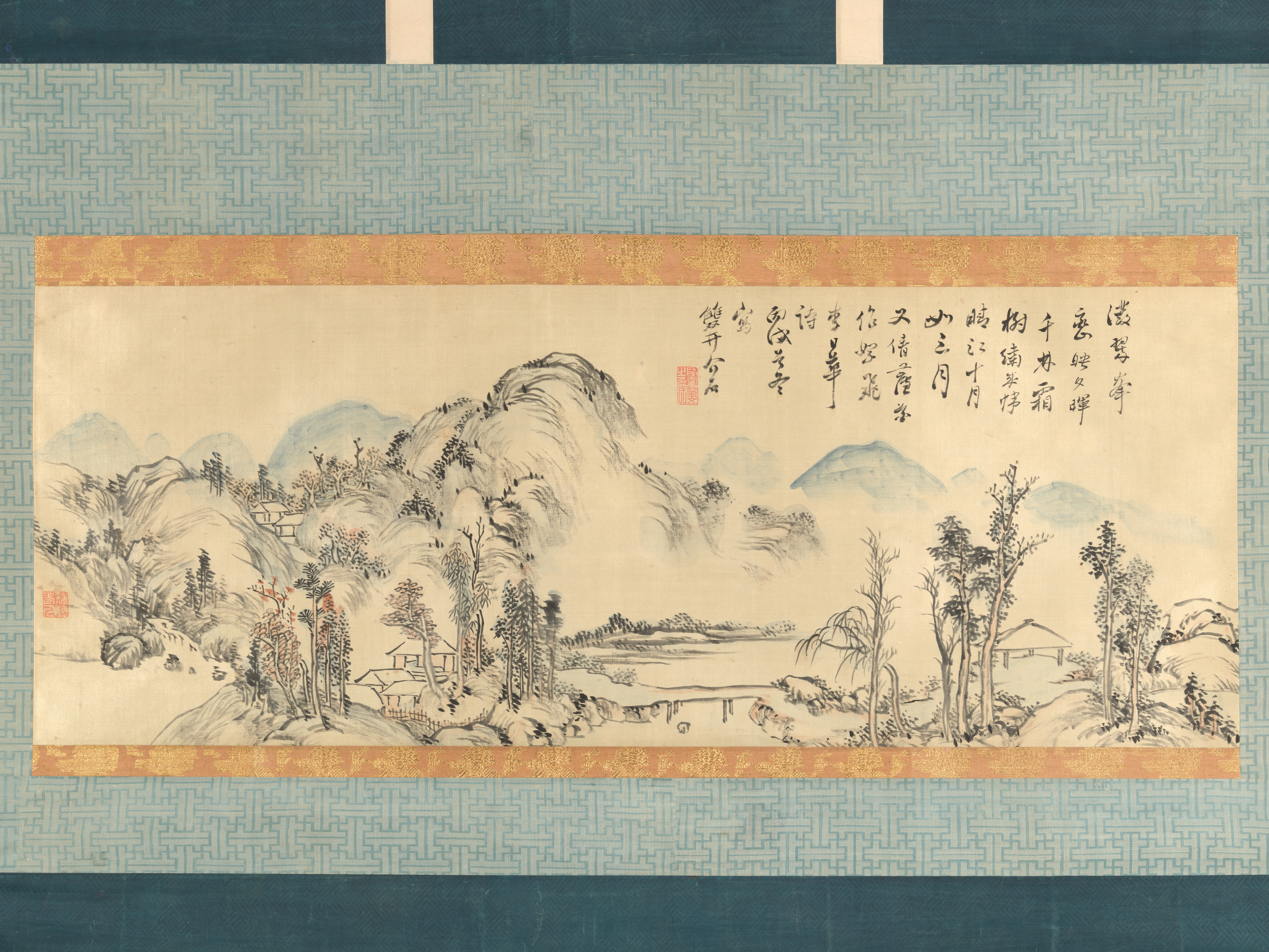
Green Peaks
by Noro Kaiseki
- Date:
- 1826
- Medium:
- Handscroll section mounted as a hanging scroll; ink and color on silk
- Source:
- Metropolitan Museum of Art
Description
Green Peaks, dated 1826, is a hanging-scroll landscape by Noro Kaiseki (野呂介石, 1747-1828), held by the Metropolitan Museum of Art (accession recorded at https://www.metmuseum.org/art/collection/search/670940). The 1826 date places the painting in the final two years of Kaiseki's life and locates it within his very late mature production. Green peaks — a literati subject in which the verdure of summer or late spring mountain ranges is rendered with cooler, more saturated mineral pigment and ink wash — descends from a particular strand of the Chinese landscape tradition in which color rather than ink alone carries the structural weight of the composition. The 'blue-green' landscape (qinglu shanshui) had been a major mode of Chinese landscape painting since the Tang masters Li Sixun and Li Zhaodao and was elaborated in Song and later periods as one of the principal alternatives to monochrome ink landscape. Although Japanese bunjinga tended on the whole toward the ink-dominant manner of the later Ming and Qing scholar-painters, the green-peak landscape was a recognized variant within the literati repertoire and one that Edo nanga painters periodically essayed when their compositional ambitions called for the cooler tonalities of saturated mineral pigment over rock and tree. As a Kii-province literati painter who had absorbed the lineage of Ike no Taiga (1723-1776) and worked as a near-contemporary of Okada Beisanjin (1744-1820), Kaiseki belongs to the first mature generation of Kansai bunjinga that established the literati landscape as a serious idiom in the region. His brushwork carried the personal rhythm and slightly unschooled directness the literati ideal prized.
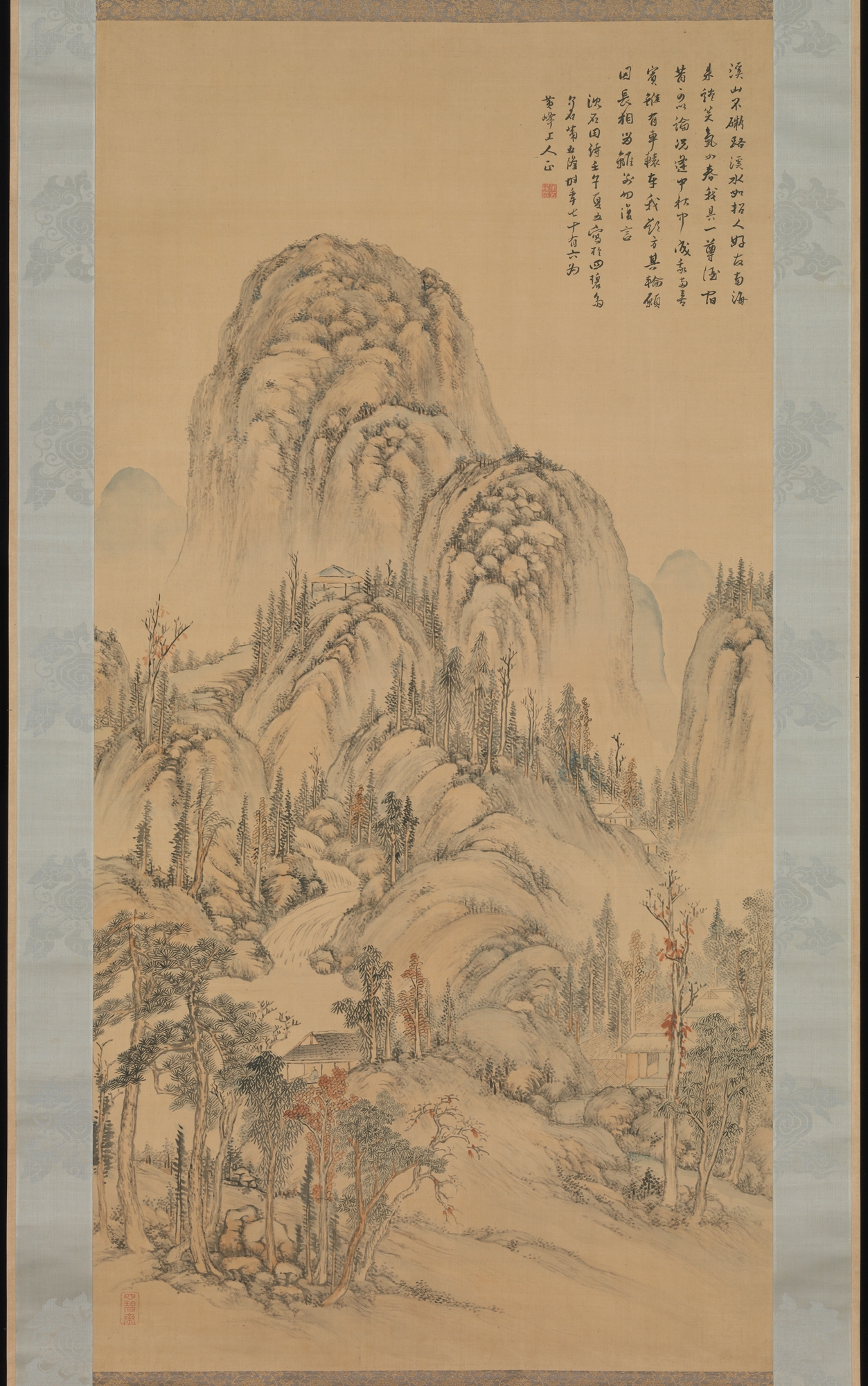
More Prints by Noro Kaiseki
Frequently Asked Questions
Green Peaks was created by Noro Kaiseki (野呂介石) in 1826.