Oda Kazuma — Japanese Shin-hanga artist

Oda Kazuma

織田一磨

Also known as: Oda Kazeuma

1882–1956

Japan

Biography

Oda Kazuma (1882-1956) was a pioneering Japanese printmaker who occupied a unique position in the landscape of modern Japanese art, working across both the shin-hanga and sosaku-hanga movements and mastering both woodblock printing and lithography. His landscapes and cityscapes of Tokyo, Osaka, Kobe, and other Japanese cities constitute one of the most important visual records of Japan's rapidly modernizing urban environment in the early twentieth century, capturing scenes of harbors, bridges, factories, and city streets with a distinctively modern sensibility that set his work apart from the more traditionally minded artists of his era.

Born in 1882 in Tokyo, Oda showed artistic talent from an early age and pursued formal training in Western-style painting, studying at the Shibaura Middle School and later at the Pacific Western Painting Research Institute (Taiheiyo Gakai Kenkyujo). This grounding in Western techniques — particularly in perspective, atmospheric rendering, and the observation of light — would fundamentally shape his approach to printmaking. Unlike many of his contemporaries in the Japanese print world, Oda was trained primarily as a Western-style painter, and this background gave his prints a distinctive quality that combined Japanese compositional sensibility with Western pictorial realism.

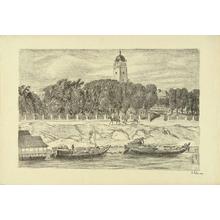
Oda's significance in the history of Japanese printmaking rests in large part on his role as a pioneer of artistic lithography in Japan. While lithography had been used commercially in Japan since the Meiji period for maps, advertisements, and reproductions, Oda was among the first Japanese artists to embrace the medium as a vehicle for original artistic expression. Beginning around 1910, he produced lithographic prints that demonstrated the medium's potential for subtle tonal effects, atmospheric rendering, and nuanced depictions of light and weather — qualities that made it ideally suited to the landscape and cityscape subjects that were his primary interest.

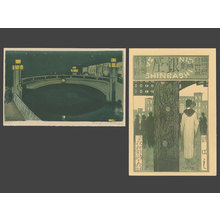
His lithographic series "Scenes of Tokyo" (Tokyo Fukei, 1915-1930s) and "Views of Osaka and Kyoto" are landmark works in the history of Japanese prints. These series document the rapidly changing urban landscape of early twentieth-century Japan with a sensitive eye for the interplay between traditional architecture and modern development. Prints such as "Yanagibashi at Night" and "Shimbashi Station" capture the atmospheric character of Tokyo's streets, bridges, and waterways with a combination of topographic accuracy and poetic mood that makes them both valuable historical documents and compelling works of art.

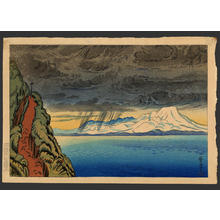
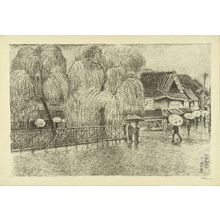
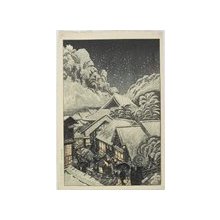
Oda's cityscapes are particularly notable for their treatment of atmosphere and weather. He was a master of depicting fog, rain, twilight, and the distinctive qualities of light at different times of day and in different seasons. His views of Kobe harbor, with ships emerging from morning mist, and his Tokyo street scenes bathed in the warm glow of gas lamps, demonstrate a sensitivity to atmospheric effects that allies his work with the Impressionist tradition in Western art while remaining distinctly Japanese in composition and sensibility.

In addition to his lithographic work, Oda also produced woodblock prints, working in both the shin-hanga collaborative model (with publishers and craftsmen) and the sosaku-hanga self-created approach. This dual allegiance was unusual in an era when the two movements were often seen as philosophically opposed, and it reflects Oda's pragmatic, technique-oriented approach to printmaking. For Oda, the choice between collaborative and solo production, between woodblock and lithography, was a practical matter dictated by the requirements of each particular image, not a matter of ideological commitment. This flexibility allowed him to select the medium and method best suited to each subject, resulting in a body of work of unusual range and versatility.

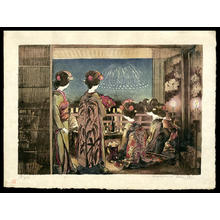
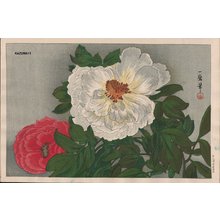
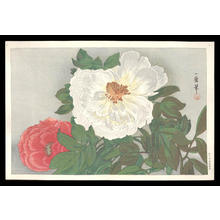
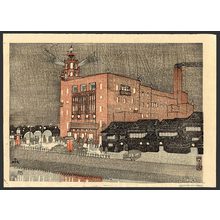
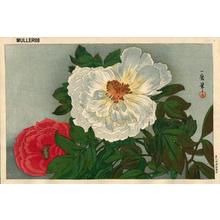
His woodblock prints, while fewer in number than his lithographs, include some distinguished landscapes produced for publishers including Watanabe Shozaburo. These prints demonstrate his command of the traditional woodblock medium and its particular strengths — flat color, bold line, and the distinctive texture of pigment on handmade paper — while retaining the observational precision and atmospheric sensitivity that characterize his lithographic work.

Oda was also an important figure in the organizational life of the Japanese print world. He was a founding member of the Nihon Sosaku-Hanga Kyokai (Japan Creative Print Association), established in 1918, alongside Yamamoto Kanae, Onchi Koshiro, and other pioneers of the sosaku-hanga movement. Through his participation in this and other organizations, Oda contributed to the development of the institutional infrastructure that supported creative printmaking in Japan during a period when the art form was struggling for recognition within the broader Japanese art establishment.

His contributions to artistic lithography in Japan were recognized during his lifetime. Oda was invited to participate in major art exhibitions, and his prints were collected by both Japanese and foreign institutions. He wrote extensively about printmaking techniques, contributing articles and books that helped disseminate knowledge of lithographic methods among Japanese artists. His advocacy for lithography as a fine art medium helped establish a tradition that would be continued by later Japanese artists.

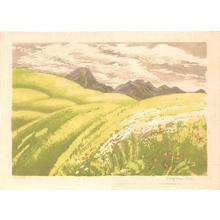
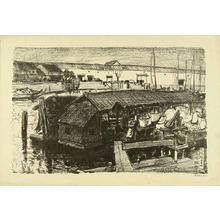
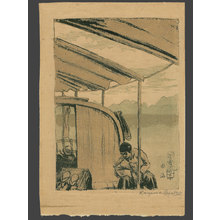
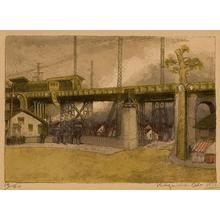
Oda's subject matter ranged beyond cityscapes to include harbor views, industrial scenes, and rural landscapes. His prints of Kobe harbor and the Inland Sea capture the maritime character of western Japan with particular effectiveness, while his views of factories and railway stations document the industrial transformation of the country during the Taisho and early Showa periods. These subjects — modern, urban, industrial — were unusual in Japanese printmaking, which had traditionally favored temples, gardens, mountains, and other subjects associated with the natural and historical landscape. Oda's willingness to engage with the modern built environment as worthy subject matter for fine art printmaking was progressive and forward-looking.

The technical quality of Oda's prints, both lithographic and woodblock, is consistently high. His lithographs display a mastery of tonal gradation and atmospheric effects that exploits the medium's capacity for subtle, painterly rendering. His woodblock prints demonstrate a confident command of the traditional medium's distinctive qualities. Across both media, his draftsmanship is assured and his sense of composition is sophisticated, reflecting his training in Western painting and his deep understanding of pictorial space.

Oda Kazuma died in 1956, leaving behind a body of work that is increasingly recognized for its importance in the history of modern Japanese art. His pioneering role in establishing artistic lithography in Japan, his bridging of the shin-hanga and sosaku-hanga movements, and his sensitive documentation of Japan's modernizing landscape make him a figure of considerable significance. His prints are held in numerous museum collections, including the Tokyo National Museum of Modern Art, the British Museum, the Art Institute of Chicago, the Museum of Fine Arts Boston, and the National Museum of Modern Art Tokyo. For collectors and scholars of Japanese prints, Oda's work represents a vital bridge between traditional and modern approaches to the printed image, and his best prints stand among the finest achievements of early twentieth-century Japanese art.

Key Facts

Active Period
1882–1956
Nationality
🇯🇵Japan
Works Indexed
20

Frequently Asked Questions

What is Oda Kazuma known for?

Oda Kazuma (1882-1956) was a pioneering Japanese printmaker who occupied a unique position in the landscape of modern Japanese art, working across both the shin-hanga and sosaku-hanga movements and mastering both woodblock printing and lithography. His landscapes and cityscapes of Tokyo, Osaka, Kobe, and other Japanese cities constitute one of the most important visual records of Japan's rapidly modernizing urban environment in the early twentieth century, capturing scenes of harbors, bridges, factories, and city streets with a distinctively modern sensibility that set his work apart from the more traditionally minded artists of his era.

When was Oda Kazuma active?

Oda Kazuma was active from 1882 to 1956. They were associated with the Shin-hanga and Sōsaku-hanga movements.

What artistic movements influenced Oda Kazuma?

Oda Kazuma's work was shaped by the Shin-hanga and Sōsaku-hanga traditions in Japanese woodblock printmaking. Shin-hanga: The "new prints" movement (c. Sōsaku-hanga: The "creative prints" movement (c.

What subjects did Oda Kazuma depict?

Oda Kazuma's prints frequently feature landscapes, urban scenes, bridges, rivers & lakes, night scenes, seascapes.

How much do Oda Kazuma prints cost?

Oda Kazuma prints occupy a niche but growing market among collectors of modern Japanese art. Known primarily as a lithographer who also produced distinctive woodblock prints in both the shin-hanga and sosaku-hanga traditions, Oda holds a unique position. Most of his prints sell for $500–$5,000, with exceptional pieces reaching higher. Oda's woodblock prints published by Watanabe Shozaburo follow the standard Watanabe edition hierarchy: pre-earthquake printings (before September 1923) are the most valuable, followed by post-earthquake recuts and later editions. However, Oda also self-published and produced works through other publishers, making his edition landscape more complex than most shin-hanga artists. His self-published sosaku-hanga works — where he designed, carved, and printed himself — are artist-pulled originals with no posthumous editions possible. Watanabe-published editions: $800–$3,000. Self-published works: $500–$5,000 depending on subject and rarity. His lithographs and woodblock prints are collected somewhat independently, with different collector communities for each medium. Among woodblock prints, his atmospheric landscape and cityscape scenes are the most sought-after, while his lithographic work appeals to collectors interested in the broader modernist movement in Japanese art. Oda's market has grown steadily as scholarship has highlighted his pioneering role in bridging Western printmaking techniques with Japanese subject matter. Prints with exhibition history or published references command notable premiums.

External Resources

Woodblock Prints by Oda Kazuma (20)