Biography
Nobuyuki Osaki (born 1975 in Osaka, and based in Aichi Prefecture) is a Japanese contemporary artist whose practice originated in printmaking — he graduated from Kyoto City University of Arts in 2000, where he specialised in printmaking — and has subsequently expanded into projection art, installation, and sculpture, while maintaining intermittent print-exhibition participation. In 2022 he was selected for the 3rd PATinKyoto Print Art Triennale in Kyoto.
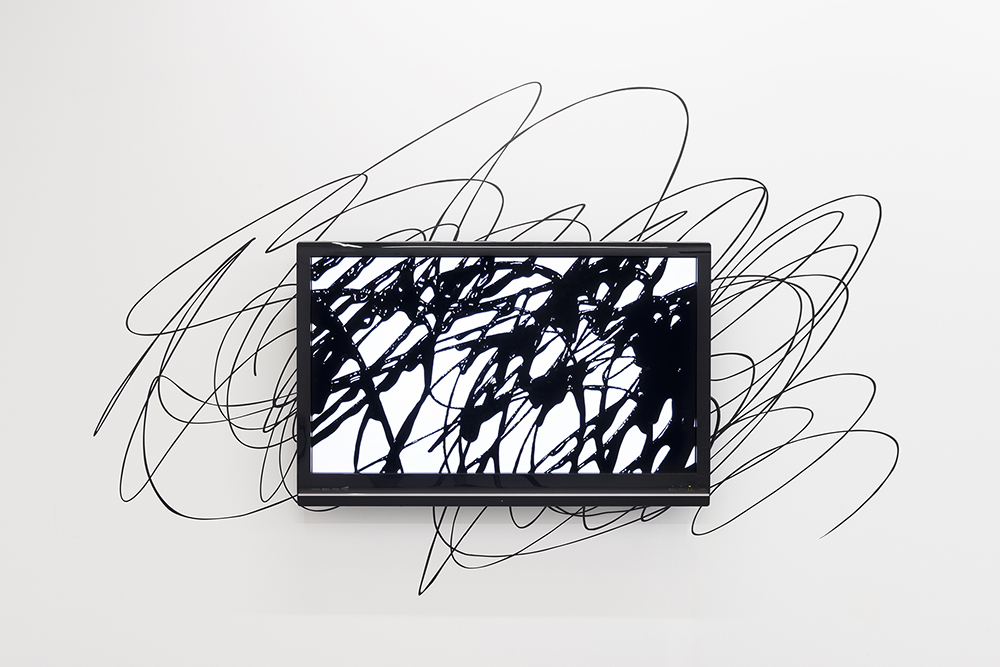
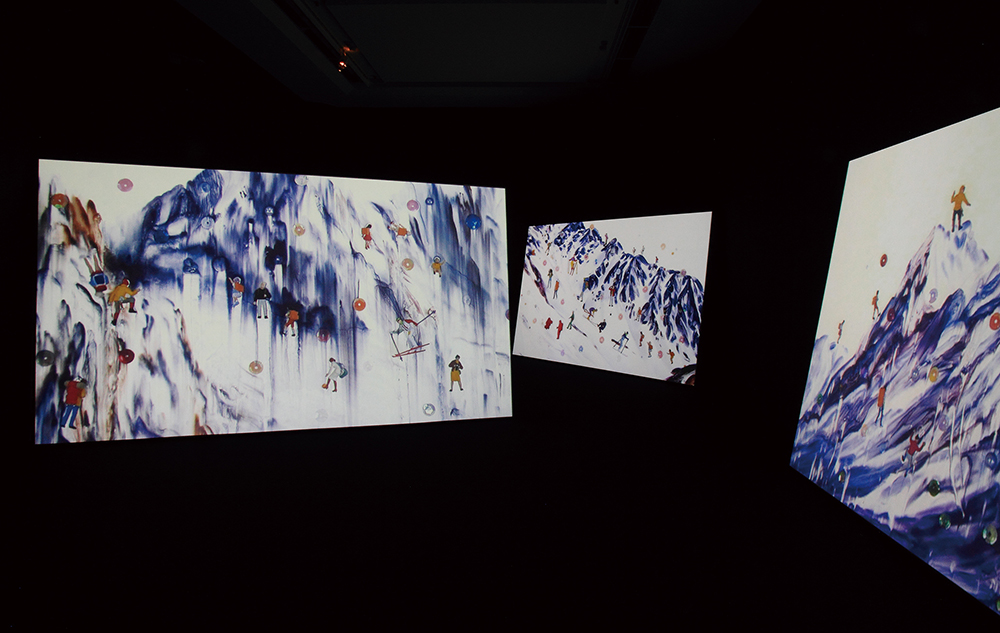
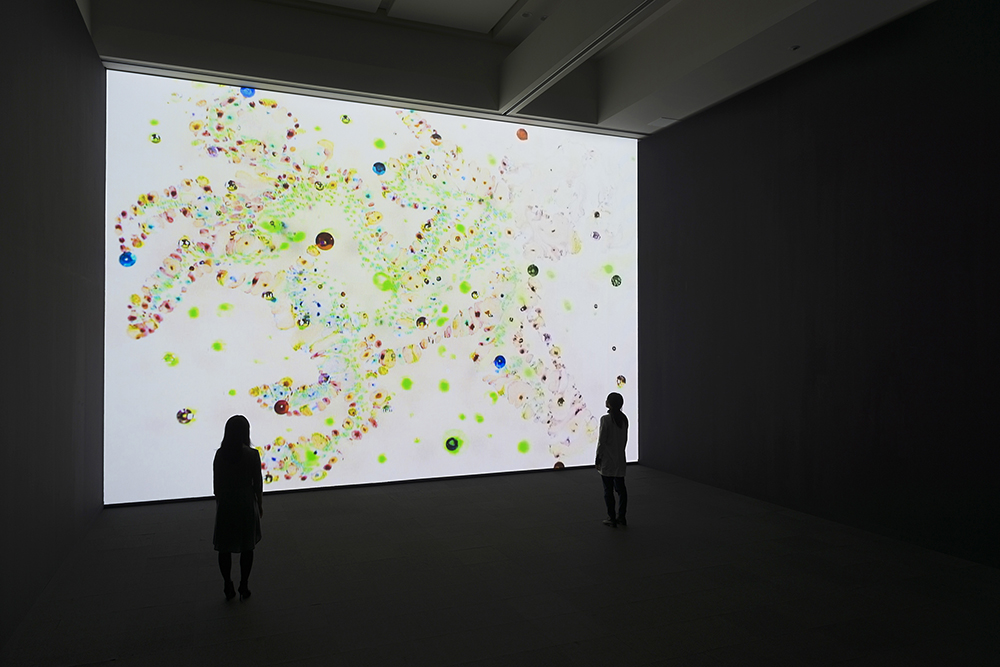
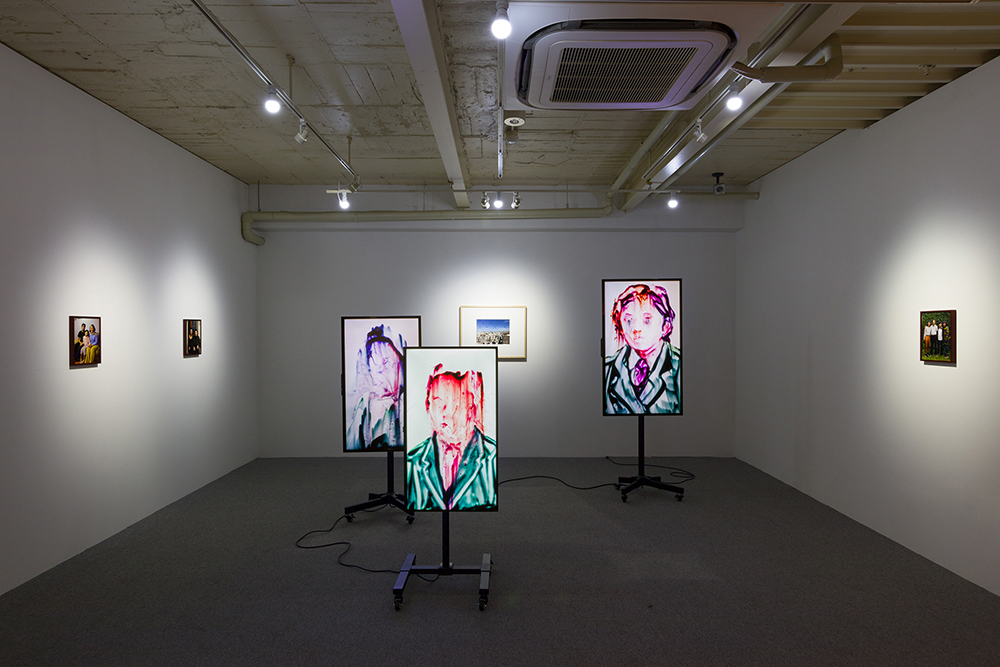
Osaki's central technique, which he calls "Melting Images," is produced through painstaking organic animation: he films his own paintings as he allows them to physically dissolve, then selects the frame that most perfectly captures the artwork's life-cycle from completion to destruction. Images of dissolving faces, bodies, and patterns leave a strong impression on viewers; the slow, consistent motion lets contours morph into tender shapes through which Osaki draws what he calls 'the uncertainty of reality.' The procedure is print-adjacent in the sense that it depends on the relationship between an original artwork and its mediated copy — the photograph or video frame extracted from the original's destruction — but it does not produce conventional printed editions.
His early career was anchored in the Kyoto print scene: at the Kyoto Exhibition (Kyo-ten) in 2001 he received the Kyoto Municipal Museum of Art's Purchase Prize, and he took part in group print shows including Power of Printmaking at the Museum of Kyoto (2004) and Distance of Printmaking at the Kyoto Art Center (2007). Subsequent recognition includes the Fine Work Award at VOCA 2013 (Ueno Royal Museum), the Nagoya City Encouragement Award for Artists (2015), and the Sakuya Konohana Award from Osaka City (2017).
Osaki's mature exhibition history extends across Japan, Germany, the United States, China, and Austria, beginning around 2001. In 2021 he undertook a residency in Stuttgart, Germany, supported by the Japanese Agency for Cultural Affairs' overseas-study program for artists. International venues have included the Ludwig Forum Aachen and, through the cross-institutional Forms in Flux project, the School of the Museum of Fine Arts, Boston. His Aichi exhibitions include volatilecolors at the masayoshi suzuki gallery, Aichi Art no Mori at the Toyo Logistics Tenant Building, and the 2019 solo Fading, Emerging and Extending Memories at Galleria Finarte. Public collections holding his work include the Machida City Museum of Print Art (Tokyo), Kyoto City Museum of Art, Kyoto City University of Arts, the Contemporary Print Center in Sannohe, and the Sekiguchi Private Museum of Art (Tokyo).
His works shown at the 2022 PATinKyoto Print Art Triennale continue his ongoing investigation of the dissolving image and of physical and photographic deterioration, concerns that connect to the recurring themes of memory and uncertainty that run through his practice. He is represented by Mikiko Sato Gallery (Hamburg), Yuka Tsuruno Gallery (Tokyo), and Gallery Hosokawa (Osaka). His position within the contemporary Japanese print scene is that of a printmaker who has expanded into projection-based and dissolution-based work while retaining the original-to-copy critical concern central to print thinking.
Key Facts
- Active Period
- 1975
- Nationality
- 🇯🇵Japan
- Movement
- Contemporary Mokuhanga
- Works Indexed
- 4
Frequently Asked Questions
Nobuyuki Osaki (born 1975 in Osaka, and based in Aichi Prefecture) is a Japanese contemporary artist whose practice originated in printmaking — he graduated from Kyoto City University of Arts in 2000, where he specialised in printmaking — and has subsequently expanded into projection art, installation, and sculpture, while maintaining intermittent print-exhibition participation. In 2022 he was selected for the 3rd PATinKyoto Print Art Triennale in Kyoto.
Nobuyuki Osaki was active born in 1975. They were associated with the Contemporary Mokuhanga movement.
Nobuyuki Osaki's work was shaped by the Contemporary Mokuhanga tradition in Japanese woodblock printmaking. Contemporary Mokuhanga: Contemporary mokuhanga (literally "wood-block print") encompasses artists working from approximately 1970 to the present who continue or reinvent traditional Japanese woodblock printing techniques.