Biography
Reika Iwami (岩見禮花, 1927-2020) transformed woodblock printing into something closer to sculpture. Born in Tokyo in 1927, she spent much of her early life on the island of Kyushu. She studied at Bunka Gakuin and spent some eleven years learning doll-making under Ryūjo Hori before turning to woodblock printmaking in the mid-1950s, studying with Kōshirō Onchi, the leading figure of the sōsaku-hanga (creative print) movement. She combined deep embossing with metallic leaf and monochrome pigments to make prints that shimmer and shift as the viewer moves.
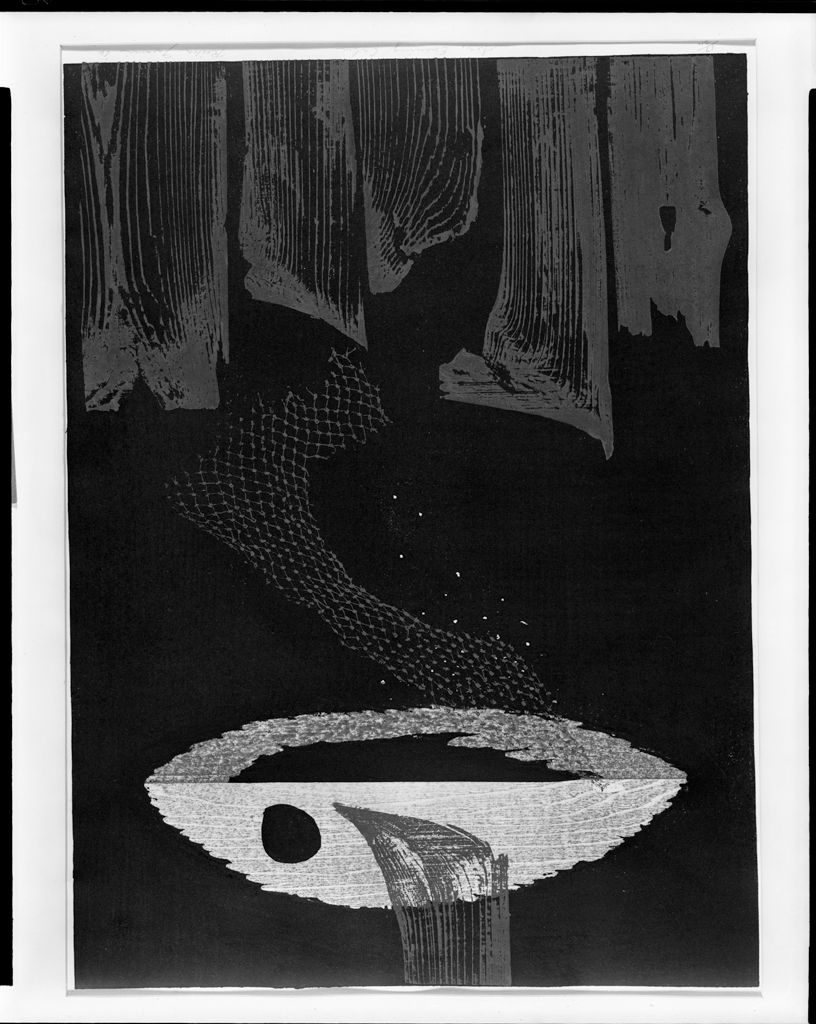
Her signature works evoke water in motion. She returned again and again to water, drawing flowing patterns out of the natural grain and texture of the wood itself and pressing relief embossing so deeply into the paper that the prints acquired a three-dimensional surface. 'Round Shadow No. 1' (1957), now in the Art Institute of Chicago, is characteristic of her vocabulary of circular and flowing forms rendered through texture as much as line. Her palette was deliberately restrained, favoring monochrome compositions and sumi black set against gold and silver, so that the play of light across the relief surface became the primary visual event.
Iwami exhibited internationally from the 1950s onward, showing at major print biennials and at the College Women's Association of Japan (CWAJ) exhibitions. The Museum of Modern Art in New York, the British Museum, and the Art Institute of Chicago all acquired her work. She joined the Nihon Hanga Kyōkai (Japan Print Association) in 1955 and exhibited regularly in its shows, and in 1957 she was among the co-founders of the Joryū Hanga Kyōkai, an association formed to promote the work of women printmakers.
What set Iwami apart was her insistence that printmaking could engage touch and reflected light, not merely vision. Where many printmakers worked toward ever-greater graphic precision, she moved in the opposite direction, toward near-monochrome surfaces whose meaning emerged from physical depth and the behavior of light on metallic pigments. One of the first women to win wide recognition in the sōsaku-hanga world, she continued to make prints late in her life, paring her water motifs down to quiet, luminous undulations. She died in 2020, leaving a body of work that occupies a singular position between printmaking, relief sculpture, and meditation on natural phenomena.
Key Facts
- Active Period
- 1927–2020
- Nationality
- 🇯🇵Japan
- Movement
- Sōsaku-hanga
- Works Indexed
- 28
Frequently Asked Questions
Reika Iwami (岩見禮花, 1927-2020) transformed woodblock printing into something closer to sculpture. Born in Tokyo in 1927, she spent much of her early life on the island of Kyushu. She studied at Bunka Gakuin and spent some eleven years learning doll-making under Ryūjo Hori before turning to woodblock printmaking in the mid-1950s, studying with Kōshirō Onchi, the leading figure of the sōsaku-hanga (creative print) movement. She combined deep embossing with metallic leaf and monochrome pigments to make prints that shimmer and shift as the viewer moves.
Reika Iwami was active from 1927 to 2020. They were associated with the Sōsaku-hanga movement.
Reika Iwami's work was shaped by the Sōsaku-hanga tradition in Japanese woodblock printmaking. Sōsaku-hanga: ## What is sōsaku-hanga? Sōsaku-hanga (創作版画, "creative prints") was a twentieth-century Japanese print movement defined by a single commitment: the artist must design, carve, and print every work alone.
Reika Iwami's prints frequently feature seascapes, abstract, moonlight, music, winter, landscapes.
Original prints by Reika Iwami can be found in collections including Victoria and Albert Museum, robynbuntin, Art Institute of Chicago, wbp.
Woodblock Prints by Reika Iwami (28)
Sea: Evening Calm, Shôwa period, dated 1964
Shôwa period, 1926-1989
Woodblock print

Round Shadow No. 1
1957
Color woodblock print

Fruit C
1959
Color woodblock print
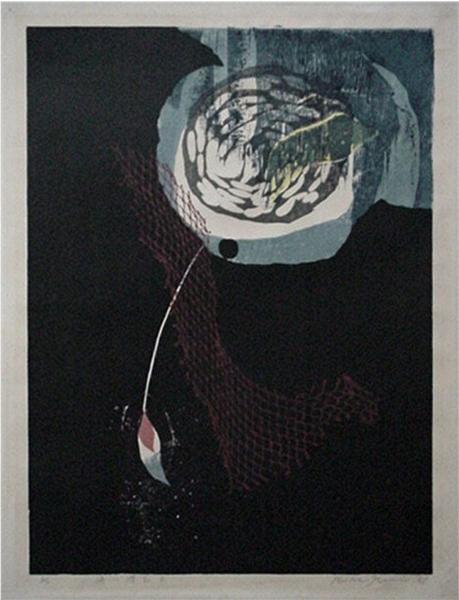
Unknown
1961
Woodblock print
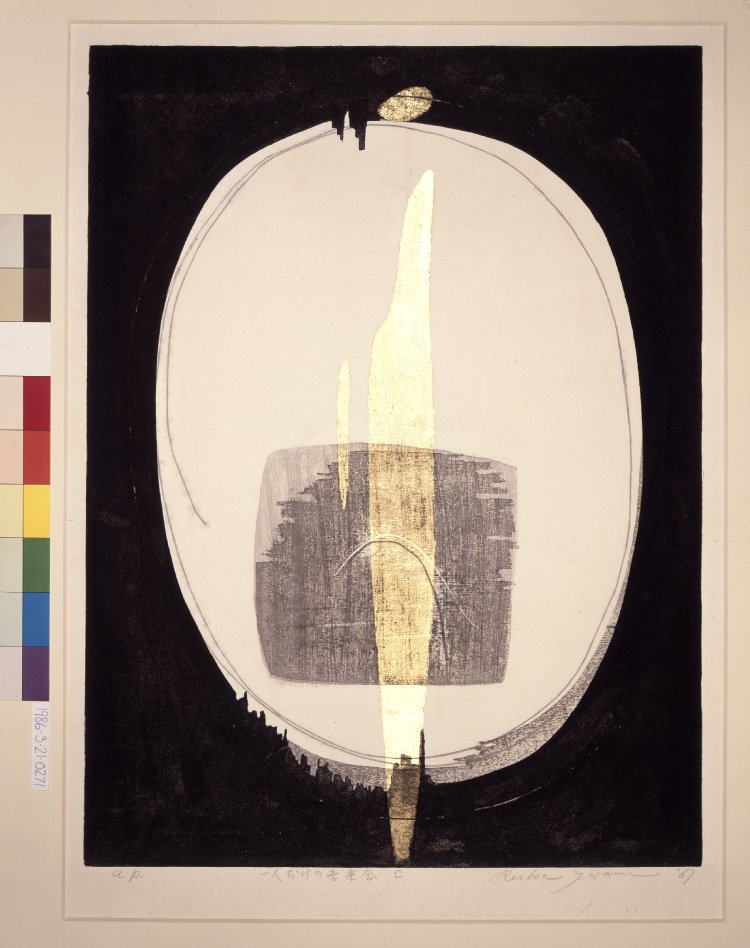
Hitori dake no ongakkai, C (Concert of One, C)
1967
Woodblock print
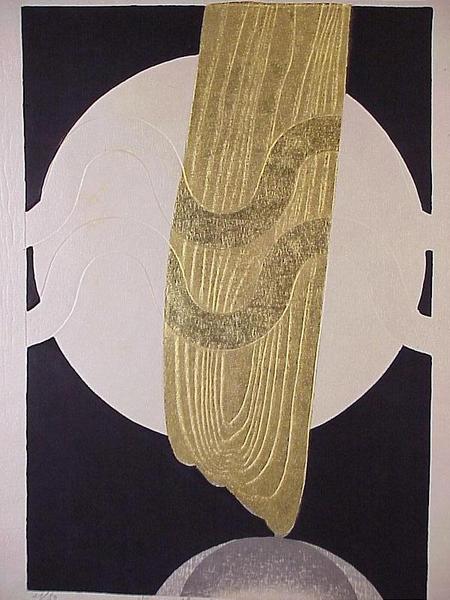
Song of Water S
1971
Woodblock print

Horizon B (Suihen B)
1973
Woodblock print with gold foil
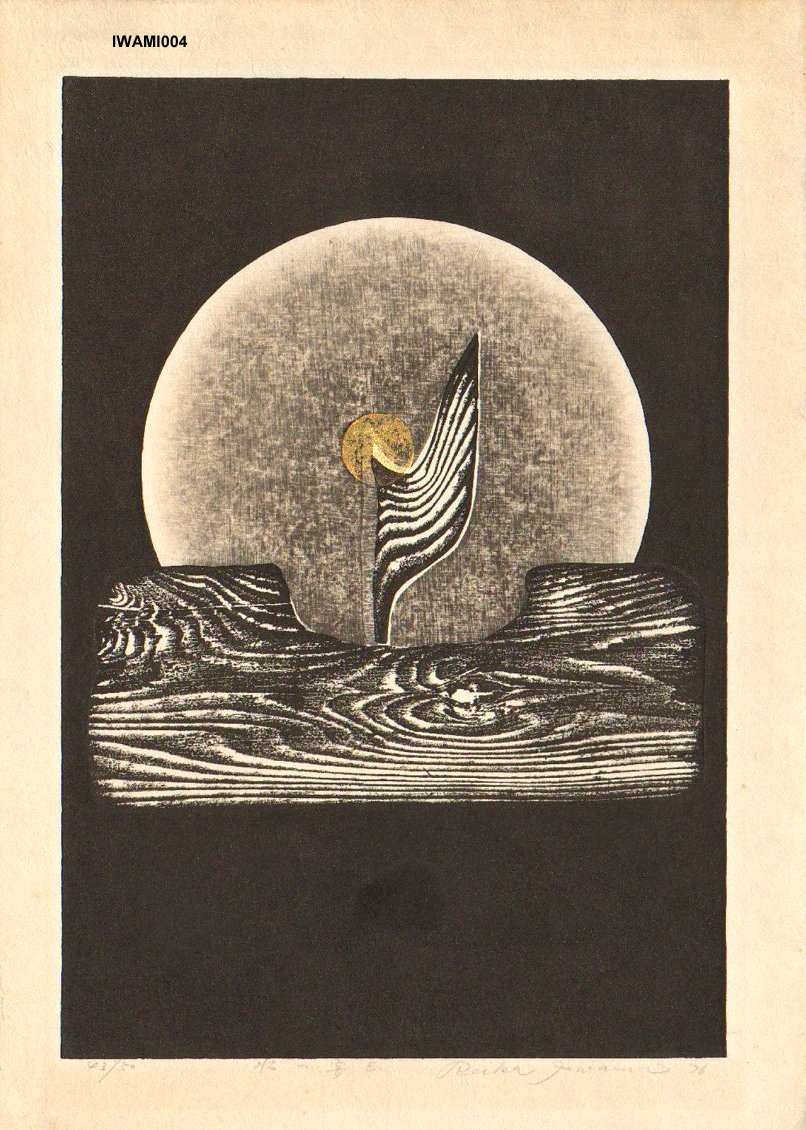
Peaceful water
43/50, 1976
Woodblock print

Liberty Bell
1976
Woodblock print
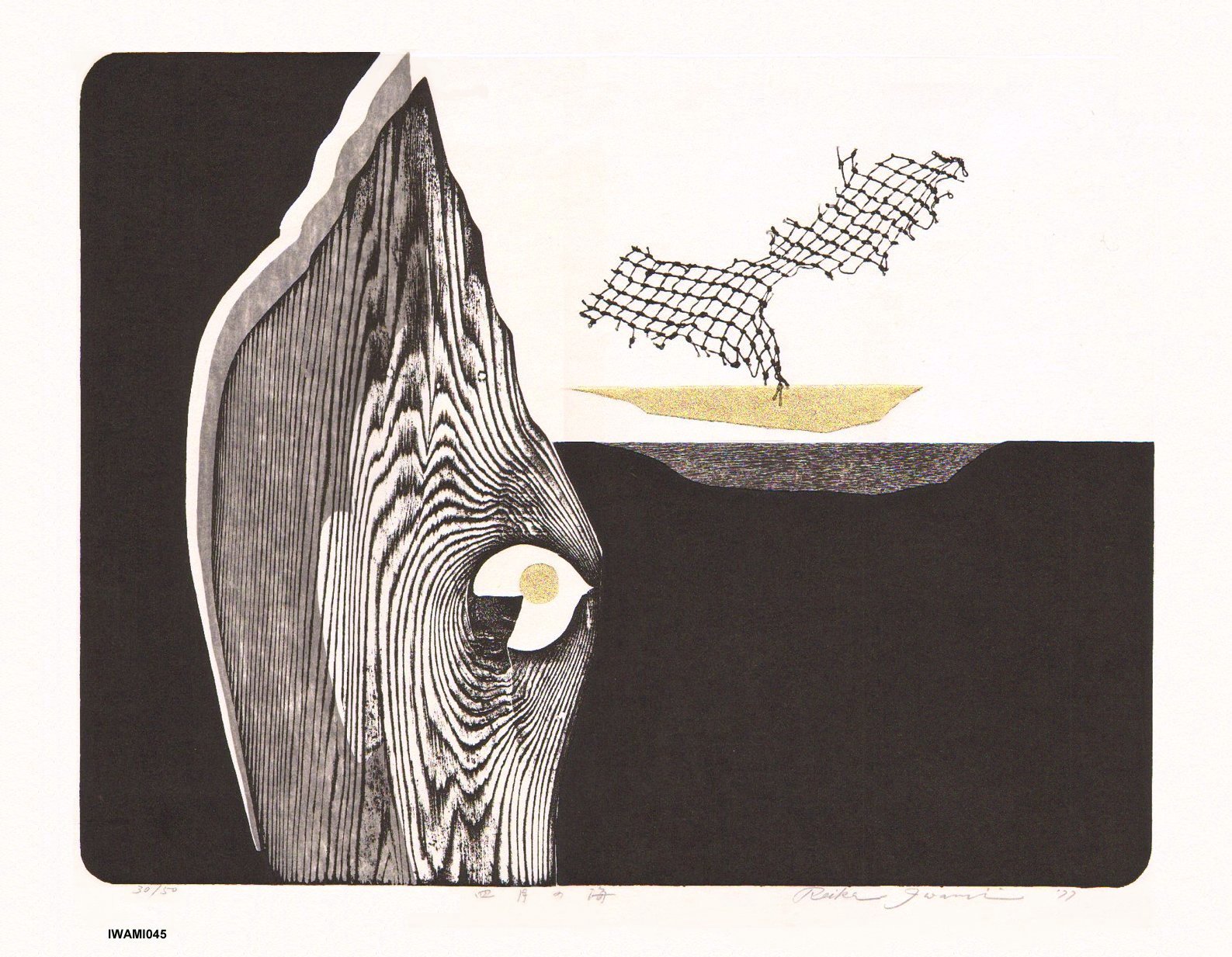
Sea in April
30/50, 1977
Woodblock print
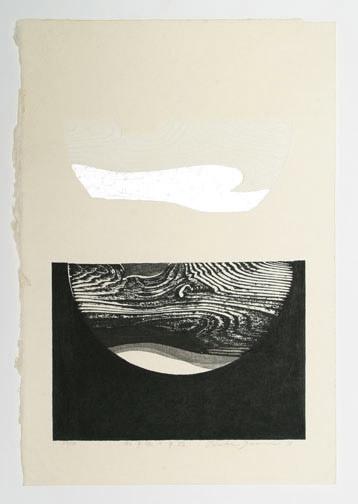
Afternoon on the Horizon (ed. 19/50)
1978
Woodblock print

Ode to Water (ed. 31/50)
1978
Woodblock print
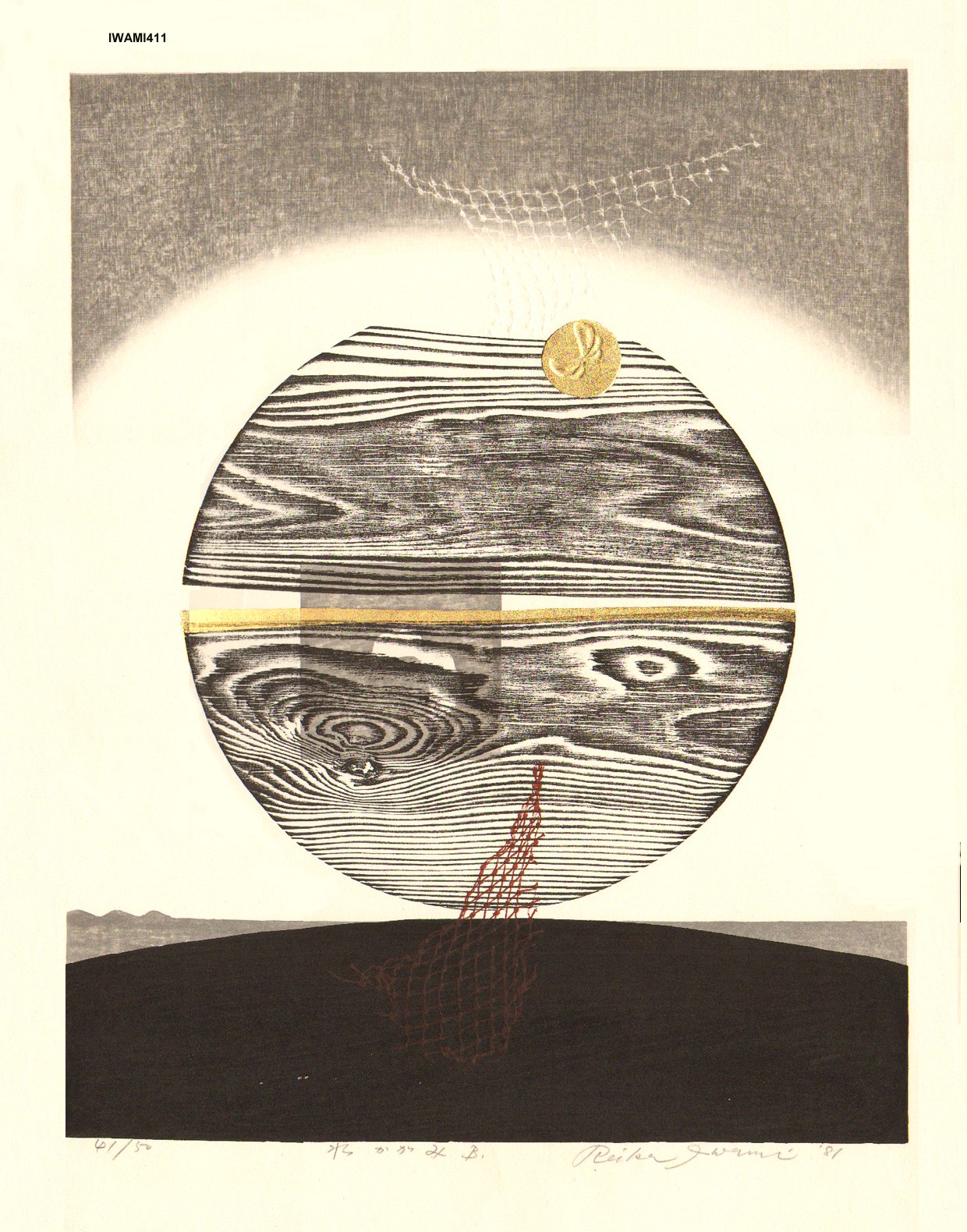
Water Mirror-B
41/50, 1981
Woodblock print
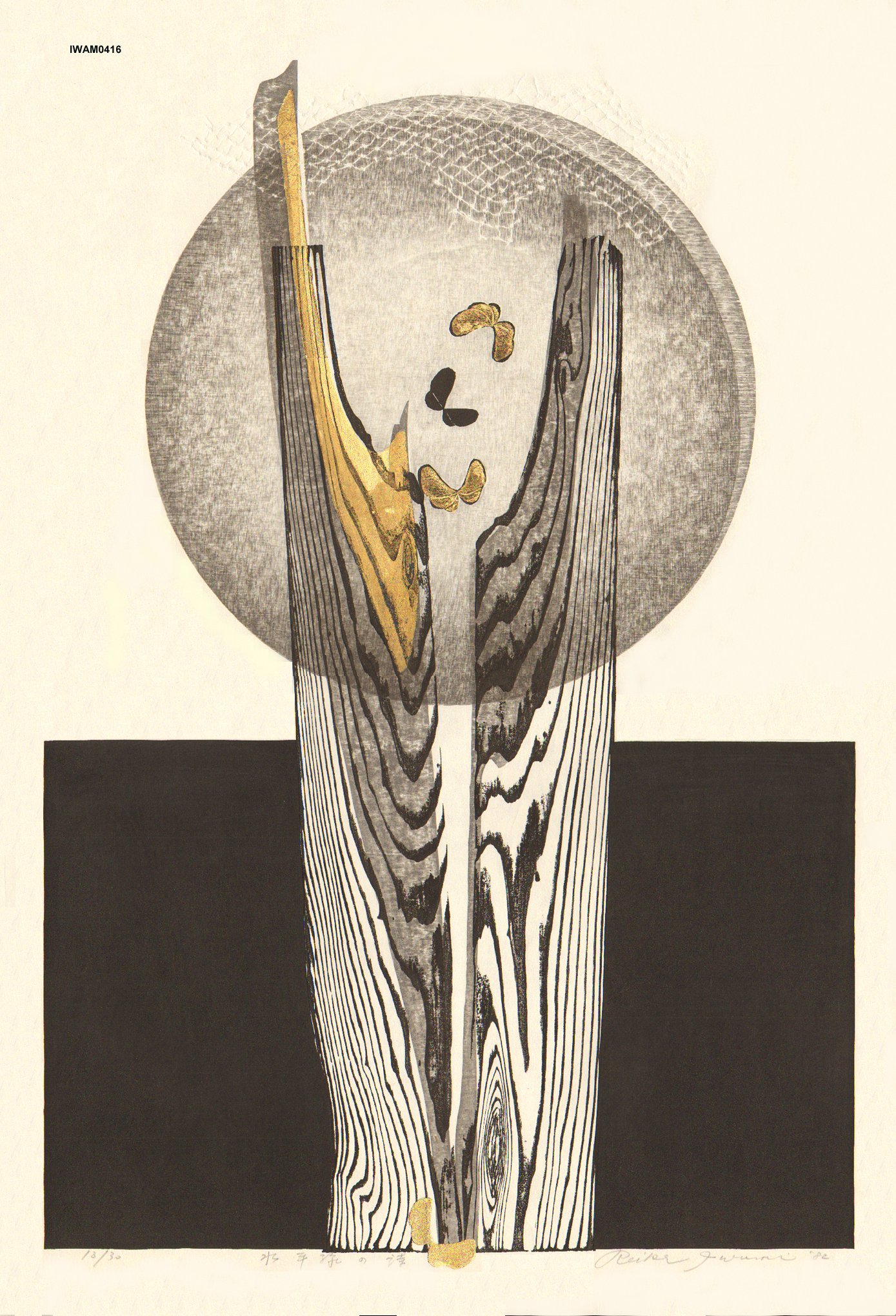
Poem of the Horizon
13/30, 1982
Woodblock print

Ode to the Sea - E
10/70, 1983
Woodblock print

Unasaka-B
25/80, 1986
Woodblock print

Ginza Fantasy (One Hundred Views of Tokyo, Message to the 21st Century 東京百景 21世紀へのメッセジ)
1989-99
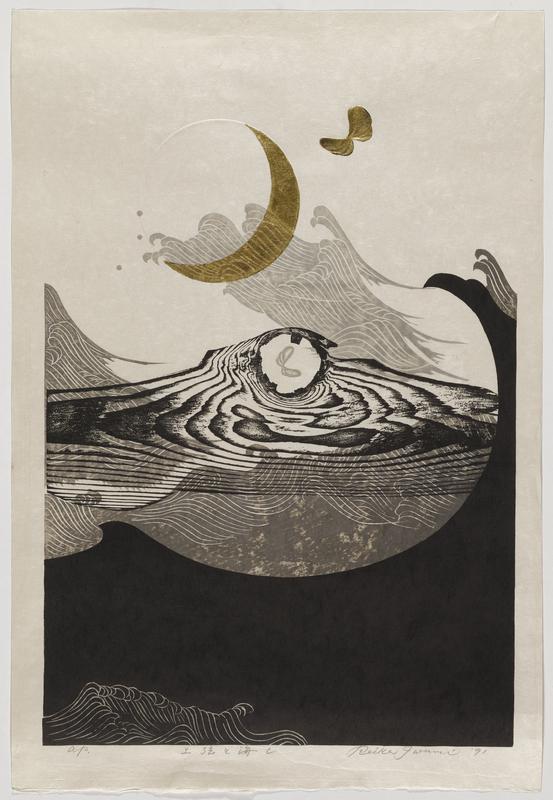
Crescent Moon and Sea C
1991
Woodblock print, ink and gold leaf on paper
Song of Wave 2
Not set
Woodblock print

Round Shadow C

Composition with moon and butterflies
Mokuhanga (Japanese woodblock)

Golden butterflies
Mokuhanga (Japanese woodblock)

Untitled

Flirting Waves (Nami no Tawamure)
波の戯れ
Woodblock print with embossing