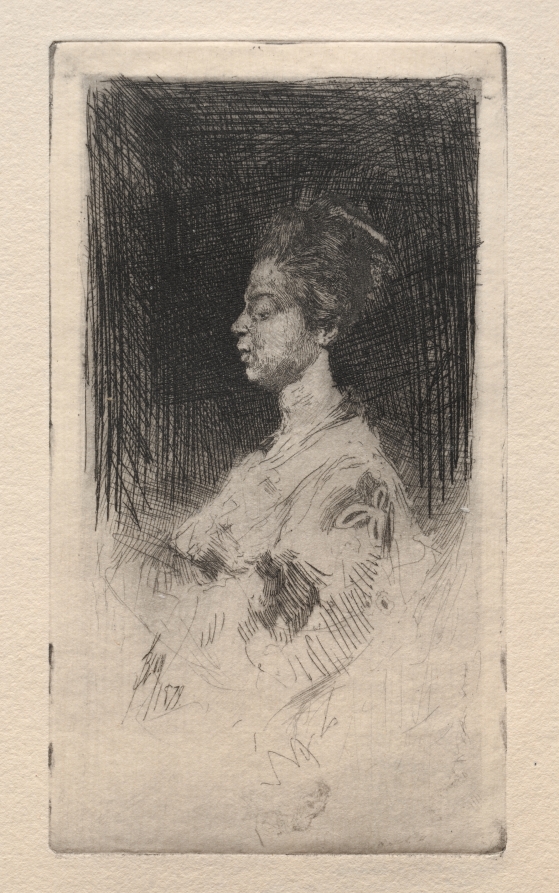
Robert Blum
1857–1903
Japan
Biography
Robert Frederick Blum (1857-1903) was a Cincinnati-born American painter, etcher and illustrator whose long working stay in Japan between 1890 and 1892 produced one of the most ambitious bodies of paintings of Meiji-era street life made by any nineteenth-century Western observer. Although Blum never worked as a woodblock artist himself, his place in the Hanga roster is secured by the depth and the documentary value of the Japan work, which forms one of the principal Western pictorial responses to the same Meiji print culture that gave rise to Yōshū Chikanobu, Kobayashi Kiyochika, Mizuno Toshikata and the founding generation of shin-hanga publishers a decade later.
Blum was born on 9 July 1857 in Cincinnati, Ohio, the son of German immigrant parents. He left school young to apprentice as a lithographer at the Cincinnati firm of Gibson & Co., and his early work there drew him toward drawing. He studied at the McMicken School of Design and, from 1874, attended the evening drawing classes taught by the painter Frank Duveneck, whose energetic dark-toned manner shaped an early generation of Cincinnati painters. In 1876 the young Blum — by then also a registered student at the Pennsylvania Academy of the Fine Arts — travelled to Philadelphia to see the Centennial Exposition, where he encountered for the first time the work of Mariano Fortuny (1838-1874), whose brilliantly handled small-scale genre scenes would become one of his most decisive influences; the Japanese displays at the same exposition provided the second of his lifelong subjects.
From 1879 Blum was based in New York, where he showed his drawings to the art editor of Scribner's Monthly (which became The Century Magazine in 1881) and began a long career as an illustrator of Spain, Holland and above all Venice; he was also a member of the Society of American Artists. He first travelled to Venice in 1880, joining the circle of American artists working there, and returned repeatedly through the mid-1880s. In Venice he was a neighbour of James McNeill Whistler, who encouraged his use of pastel and deepened his interest in Japanese design. The resulting Venetian street scenes, etchings and watercolours — among them the Venetian Lace Makers (1887, Cincinnati Art Museum) and a long series of small etchings — established his reputation as one of the finest American draughtsmen of his generation. He was elected a full member of the National Academy of Design in 1893.
In 1890 Blum left New York for Japan on a commission from Scribner's Magazine, which had engaged him to illustrate a series of articles on Japan by Sir Edwin Arnold. Blum landed at Yokohama in the summer of 1890 and remained in Japan until late 1892, working principally from a small house in Tokyo with shorter campaigns elsewhere in the country. Unlike most Western visitors of the period, Blum lived among the Japanese rather than in the Western quarter and worked outdoors in the streets and at temple festivals; the resulting body of oil paintings, watercolours, pastels and drawings constitutes one of the most sustained pictorial responses by any American painter to Meiji urban life. His illustrations accompanied Arnold's articles in Scribner's Magazine across 1890 and 1891, and were gathered, with Arnold's text, into the book Japonica (Charles Scribner's Sons, 1891), one of the most widely circulated American treatments of Japan of the period. Blum's own account of his experiences, Artist's Letters from Japan, appeared in Scribner's Magazine in 1893.
The principal canvases of the Japan period include The Ameya (circa 1893) and The Silk Merchant, Japan, together with a number of Japanese costume studies. The Ameya — depicting the candy-seller (ameya) drawing out heated sugar into animal shapes for a crowd of children — is the masterpiece of the group and one of the finest Western paintings of a Meiji street scene; it was owned by Blum's patron, the collector Alfred Corning Clark, whose estate gave it to the Metropolitan Museum of Art in 1904. A wood engraving after one of Blum's Japanese subjects by the noted engraver Henry Wolf carried the imagery still more widely through the illustrated press.
Blum returned from Japan at the end of 1892 already established as a leading American painter of Japanese subjects, and much of the decade between his return and his early death was occupied with a large mural decoration for Mendelssohn Hall, home of the Mendelssohn Glee Club in New York. The work was carried out under the patronage of Alfred Corning Clark, and the canvases passed to the Brooklyn Museum after the hall's demolition. Among the largest decorative cycles produced by an American painter of his generation, they drew on his Venetian, Japanese and Spanish travels and united the linear refinement of his Japan work with the brilliance of palette he had absorbed from Fortuny. He died of pneumonia in New York on 8 June 1903 at the age of forty-five.
Blum's reputation, eclipsed in the early twentieth century by the rise of the American Impressionists and by the scholarly preference for Whistler as the American interpreter of Japan, has since steadily recovered. His principal holdings are at the Cincinnati Art Museum, which holds the largest collection of his work, together with the Metropolitan Museum of Art, the Brooklyn Museum, the Smithsonian American Art Museum, the Cleveland Museum of Art and the Art Institute of Chicago, with further works at the New Britain Museum of American Art, the Library of Congress, the Princeton University Art Museum and the Virginia Museum of Fine Arts.
Key Facts
- Active Period
- 1857–1903
- Nationality
- 🇯🇵Japan
- Subjects
- Children
- Works Indexed
- 13
Frequently Asked Questions
Robert Frederick Blum (1857-1903) was a Cincinnati-born American painter, etcher and illustrator whose long working stay in Japan between 1890 and 1892 produced one of the most ambitious bodies of paintings of Meiji-era street life made by any nineteenth-century Western observer. Although Blum never worked as a woodblock artist himself, his place in the Hanga roster is secured by the depth and the documentary value of the Japan work, which forms one of the principal Western pictorial responses to the same Meiji print culture that gave rise to Yōshū Chikanobu, Kobayashi Kiyochika, Mizuno Toshikata and the founding generation of shin-hanga publishers a decade later.
Robert Blum was active from 1857 to 1903.
Robert Blum's prints frequently feature children.
Original prints by Robert Blum can be found in collections including Brooklyn Museum, Cleveland Museum of Art, New Britain Museum of American Art, Cincinnati Art Museum.
Woodblock Prints by Robert Blum (13)
Profile Head of a Japanese Girl
1879
Etching
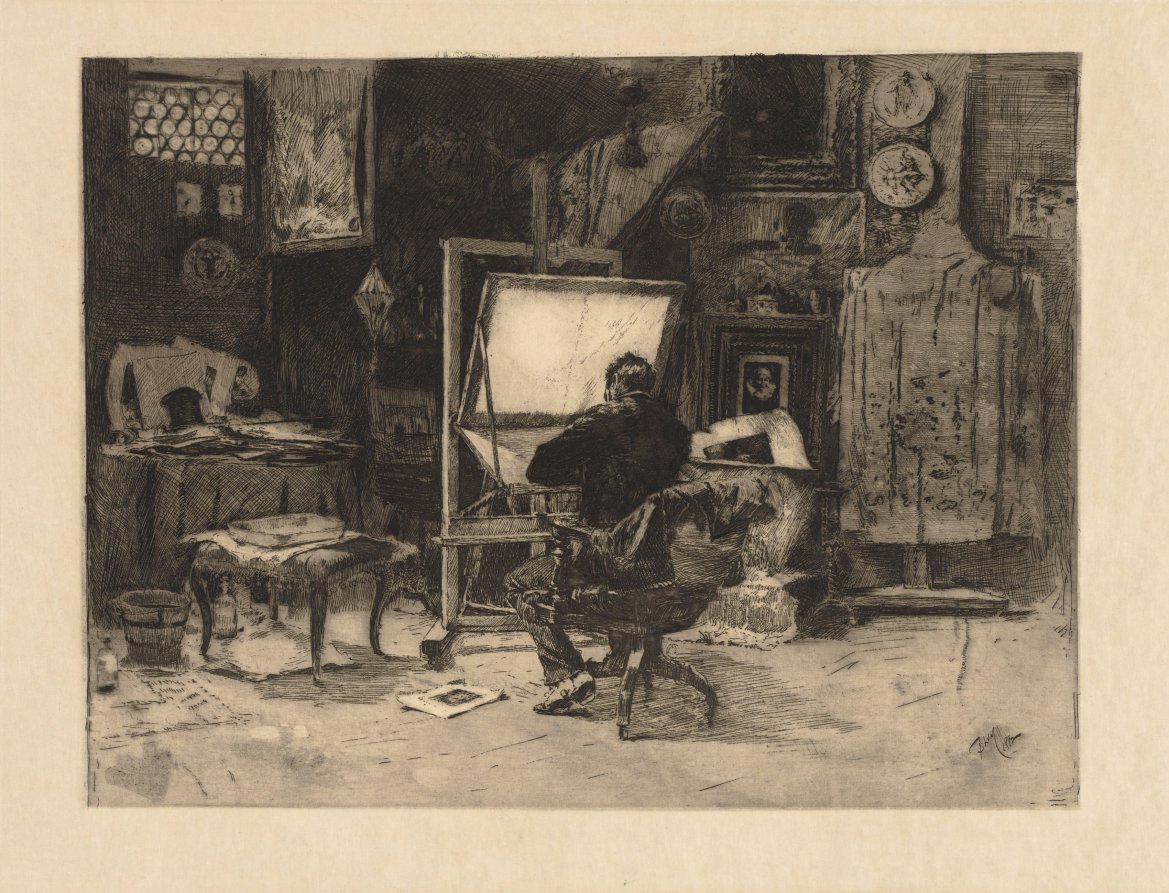
The Etcher
1882
Etching

Studio of Robert F. Blum
1883–1884
Oil on canvas

Canal in Venice, San Trovaso Quarter
1885
Oil on canvas

Venetian Lacemakers
1887
Oil on canvas

Japanese Girl (The Musmee)
1891
Wood engraving after a painting by Robert Blum, by Henry Wolf

Pestling the Paddy
n.d. (c. 1890–1893)
Black watercolor on ivory wove paper, laid down on tan wove board

Study in Japanese Costume
1890–1892
Oil on canvas

Japanese Woman
c. 1891
Oil on canvas

Gun-hammer Queue
1890–1892
Oil on canvas

Woman in Japanese Costume
1890–1892
Oil on canvas

The Ameya
1893
Oil on canvas
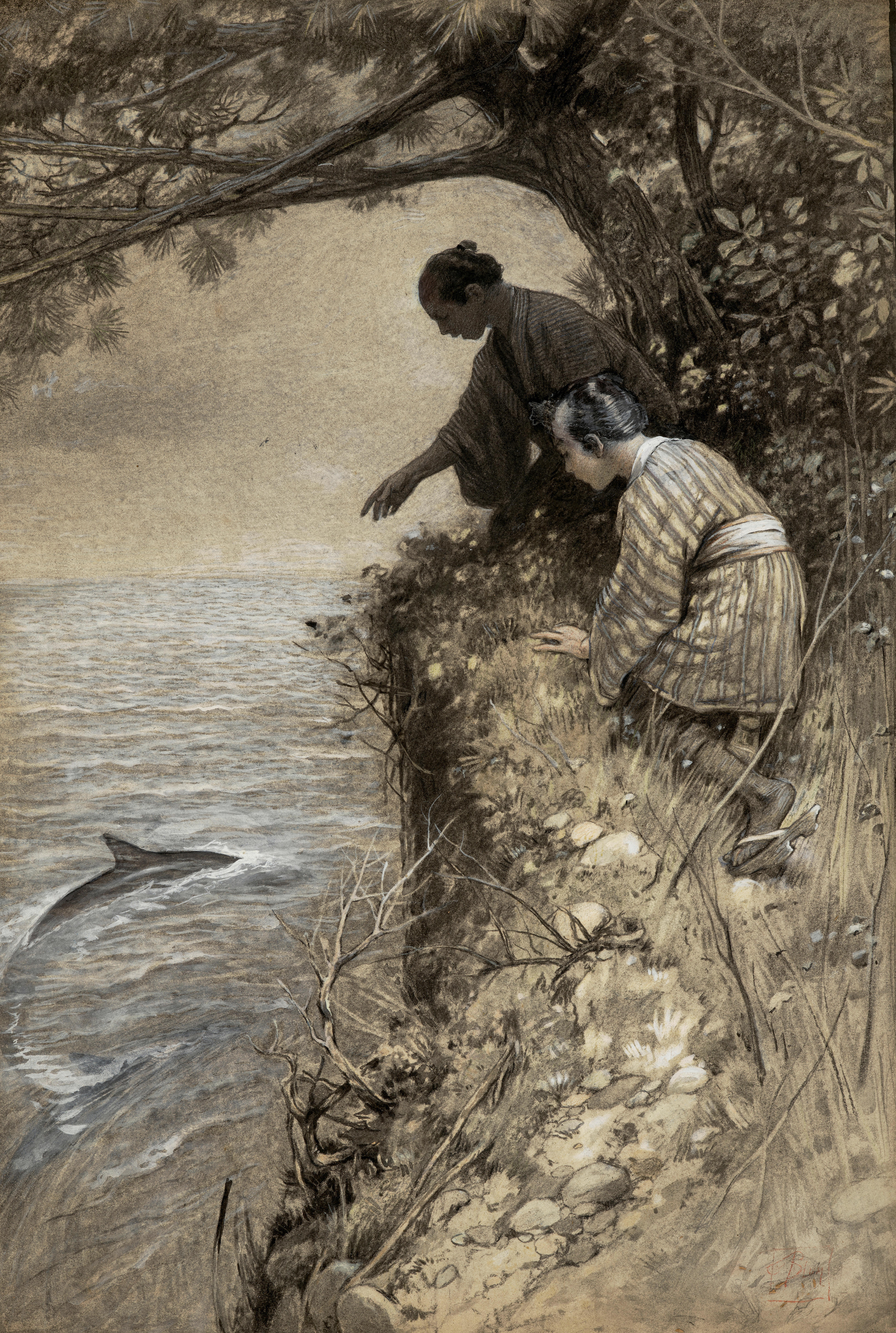
Japanese Scene
c. 1890–1893
Oil