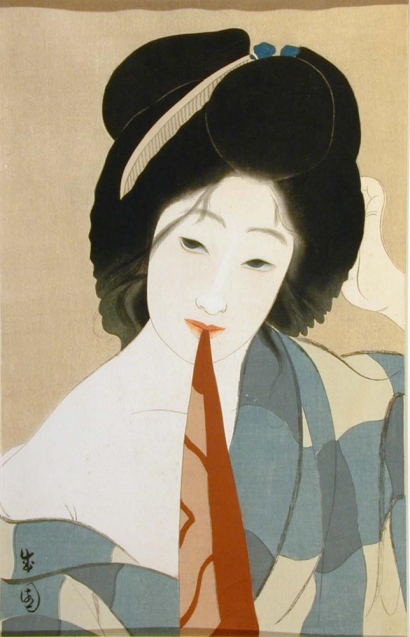
Biography
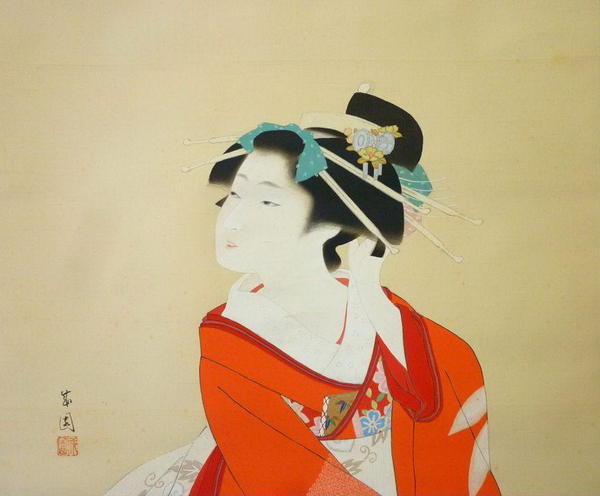
Shima Seien (島成園, 1892–1970) was a distinguished nihonga painter from Osaka who specialized in bijin-ga (images of beautiful women), earning recognition as one of the most accomplished female painters of the Taisho and early Showa eras. Working in the culturally vibrant but often overshadowed Osaka art world, Seien created images of women that combined the refined elegance of the bijin-ga tradition with a modern sensibility and psychological depth that set her apart from more conventional practitioners of the genre.
Born in Sakai, Osaka Prefecture, in 1892, Seien showed artistic talent from a young age and studied nihonga painting under Kitano Tsunetomi, a leading Osaka painter known for his own bijin-ga subjects. Under Kitano's guidance, she developed the technical skills in brush painting, mineral pigment application, and compositional design that formed the foundation of her career. The Osaka art world, while less internationally celebrated than those of Tokyo and Kyoto, had its own rich traditions and distinctive aesthetic character, and Seien's work reflects the particular warmth and sensuality associated with the Osaka school of bijin-ga.
Seien achieved early success, winning prizes at major exhibitions while still in her twenties. Her paintings of women are characterized by their attention to the textures and patterns of kimono fabrics, the subtle rendering of facial expressions, and a warmth of palette that reflects the Osaka tradition. Unlike the more austere and idealized women of the Kyoto school typified by Uemura Shoen, Seien's subjects tend toward a more approachable, sensual beauty — women depicted in moments of relaxation, amusement, or quiet contemplation that suggest real personalities and emotional lives.
One of Seien's most discussed works is a self-portrait that includes a prominent birthmark or scar on her face, a startlingly honest and unconventional choice that challenged the idealized conventions of bijin-ga and asserted the artist's own identity within a genre traditionally devoted to depicting others. This willingness to introduce personal experience and psychological complexity into the bijin-ga tradition links Seien to the broader modernist impulse in Taisho-era Japanese art.
Seien continued to paint and exhibit throughout the Showa era, though like many artists of her generation, her later career was affected by the disruptions of World War II and the changing artistic landscape of postwar Japan. She died in 1970. Her works are held primarily in Japanese collections, and she is recognized as an important figure in Osaka's artistic heritage and as a significant contributor to the modern bijin-ga tradition.
Key Facts
- Active Period
- 1892–1970
- Nationality
- 🇯🇵Japan
- Movement
- Meiji/Taishō Prints
- Works Indexed
- 20
Frequently Asked Questions
Shima Seien (島成園, 1892–1970) was a distinguished nihonga painter from Osaka who specialized in bijin-ga (images of beautiful women), earning recognition as one of the most accomplished female painters of the Taisho and early Showa eras. Working in the culturally vibrant but often overshadowed Osaka art world, Seien created images of women that combined the refined elegance of the bijin-ga tradition with a modern sensibility and psychological depth that set her apart from more conventional practitioners of the genre.
Shima Seien was active from 1892 to 1970. They were associated with the Meiji/Taishō Prints movement.
Shima Seien's work was shaped by the Meiji/Taishō Prints tradition in Japanese woodblock printmaking. Meiji/Taishō Prints: Meiji and Taishō era prints (1868–1926) bridge the transition from traditional ukiyo-e to the modern shin-hanga and sosaku-hanga movements.
Shima Seien's prints frequently feature bijin-ga, figures, summer, portraits, warriors, mythology.
Original prints by Shima Seien can be found in collections including Japanese Art Open Database, ukiyo-e.org, Ohmi Gallery, wbp.
Woodblock Prints by Shima Seien (20)
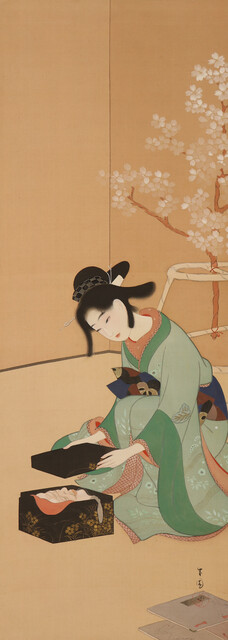
Beautiful Woman
1892
Silk
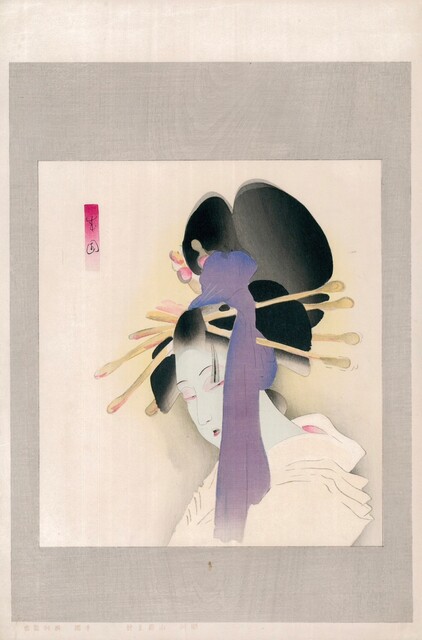
Morning Fog
1920
Woodblock Print
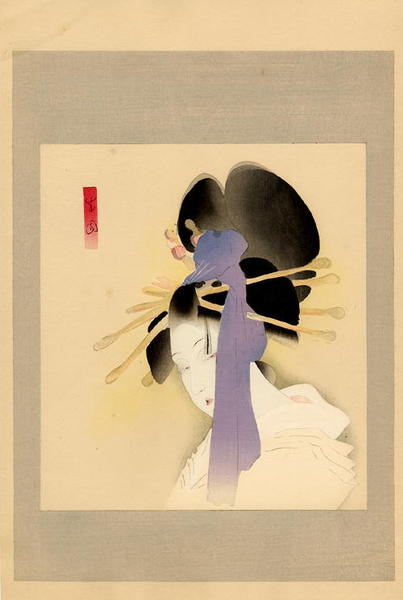
Untitled (shima-seien)
Woodblock print
![The Heroine Yûgiri, from the Chikamatsu play Yûgiri Awa no Naruto (published in The Complete Works of Chikamatsu [Dai Chikamatsu zenshû]), Taishô period, published 1923 by Shima Seien](https://data.ukiyo-e.org/harvard/HUAM-CARP07179.jpg)
The Heroine Yûgiri, from the Chikamatsu play Yûgiri Awa no Naruto (published in The Complete Works of Chikamatsu [Dai Chikamatsu zenshû]), Taishô period, published 1923

After the Bath
Various artists
Woodblock print

Complete Works of Chikamatsu: The Heroine Yugiri (Dai Chikamatsu zenshu furoku mokuhan: 'Yugiri Awa no Naruto' no Yugiri)

Female Samurai Ghost
Woodblock print
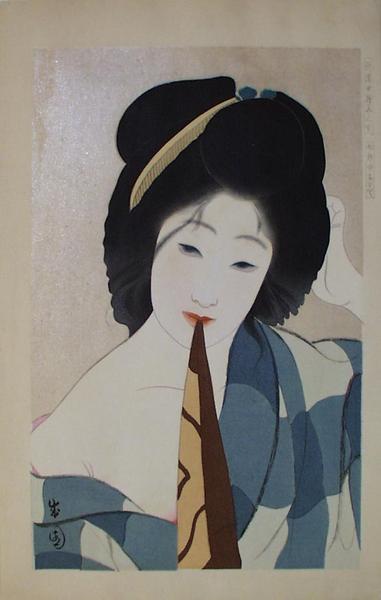
July, after the bath — Shichigatsu Yuagari
Woodblock print

Maiko
Mokuhanga (Japanese woodblock)

The heroine Yujiri in the play "Yugiri Awa no Naruto
Mokuhanga (Japanese woodblock)

After the bath
Mokuhanga (Japanese woodblock)

Maiko
Mokuhanga (Japanese woodblock)

The Departed Spirit of a Courtesan

Volume 10 - Masterpiece Selection 2
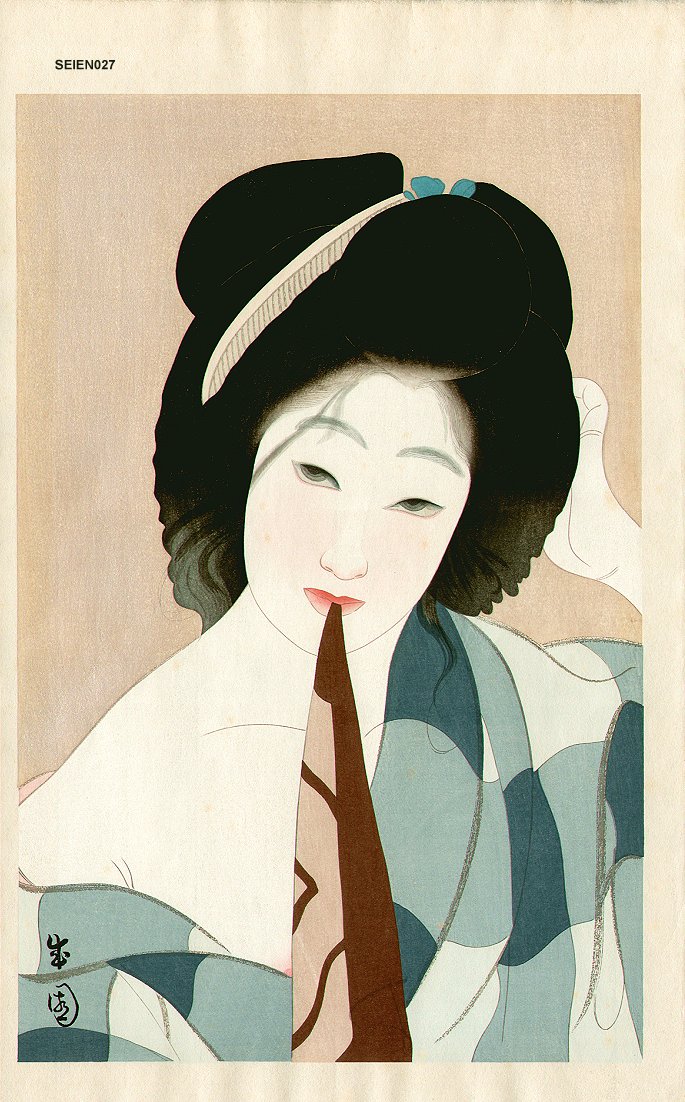
July, After a Bath
Woodblock print

Harvard Art Museum
Woodblock print
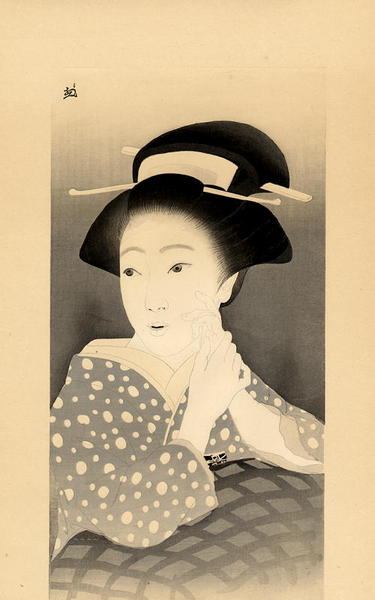
Bijin Bust
Woodblock print
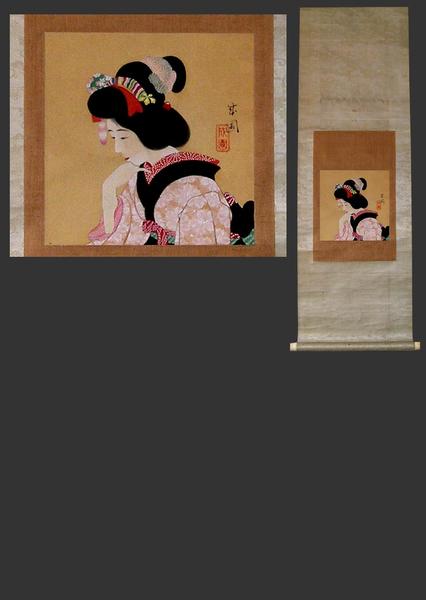
Bijin Contemplating
Woodblock print
Geisha - 1
Woodblock print