Biography
Shōkōsai Hanbei (松好斎半兵衛, active c. 1795–1809) was a leading Osaka actor-print designer of the late Kansei and early Bunka periods and, through his pupil Shunkōsai Hokushū, a pivotal teacher who helped anchor the Osaka kamigata-e tradition that flourished through the 1810s, 1820s, and into the 1830s. Working in a regional kabuki market entirely distinct from Edo ukiyo-e, Shōkōsai produced single-sheet portraits of Osaka stage stars, color-printed actor books, and illustrated kabuki playbooks (e-iri nehon) that together helped establish the documentary template later kamigata-e designers — Hokushū, Gigadō Ashiyuki, Shunbaisai Hokuei, and ultimately Konishi Hirosada — would extend. Though only a small body of his single-sheet work survives, it forms an essential pre-Hokushū chapter in any account of Osaka kamigata-e.
Like nearly every Osaka print designer of the period, Shōkōsai left almost no biographical trace beyond his signed prints. His personal name is recorded as Hanbei, his birth and death dates are unknown, and his career is reconstructed entirely from dated and dateable print designs running from approximately 1794–1795 through 1809. He was a pupil of Ryūkōsai Jokei (流光斎如圭, active c. 1776–1809), the founder of the Osaka school of actor portraits, and inherited from Ryūkōsai the careful documentary practice that linked each print to a specific kabuki production, theater, and month of performance. His pupils in turn — Shunkōsai Hokushū above all, but also Sekkōsai, Rokōsai, Shinkō, and Jukōdō Yoshikuni — carried the Osaka actor-print tradition forward into the next generation.
Shōkōsai's signature alternated among Shōkōsai (松好斎); Konan Shōkōsai (江南松好斎), the prefix Kōnan ("south of the river") used on at least three hosoban and pointing to his residence south of the Yodo River in Osaka; and the casual literary personae Gijokōjin (戯場好人, "theater lover"), Naniwa gakō (浪花画工, "artist of Osaka"), and Eirakujin (詠楽人, "one who likes to compose poems"). The last reflects his practice of contributing his own kyōka (comic verse) to his prints alongside those of professional poets — a feature that set his designs apart from Ryūkōsai's stricter documentary register. He worked in the hosoban (narrow vertical) format and in large-head bust portraits (ōkubi-e), and his most ambitious publications were two actor books: Ehon futaba no aoi (絵本二葉葵, "Picture Book of Hollyhock Seedlings," 1798), the first full-color illustrated actor book published in Osaka and a landmark for kamigata-e generally, issued by the publisher Shioya Chōbei (塩屋長兵衛); and Ehon santō yakusha masukagami (絵本三都俳優ますかゞみ, "Picture Book: A Clear Mirror of Actors of the Three Cities," 1806), a picture book gathering portraits of the leading kabuki actors of Edo, Osaka, and Kyoto. He also produced a series of illustrated kabuki playbooks between about 1801 and 1809.
The Osaka kamigata-e tradition Shōkōsai inhabited differed sharply from its Edo counterpart. Where Edo prints concentrated on a handful of celebrity actors and were mass-published for a citywide commercial market, Osaka kamigata-e were produced in smaller editions for a more discerning local audience, often printed with restrained colors, heavier papers, and occasional embossing and metallic pigments. Shōkōsai's prints conform closely to these conventions: the actor is identified by inscription, the role and play title are recorded, and the composition privileges psychological character study over decorative spectacle. His actor portraits covered the major Osaka stars — among them Arashi Sangorō II and Arashi Kichisaburō II — as well as supporting players whose performances would otherwise be unrecorded.
Shōkōsai's documented work disappears around 1809, the cause and date of his death unrecorded. His pupils — Shunkōsai Hokushū above all — carried the Osaka actor-print tradition into the Bunka, Bunsei, and Tenpō eras. His surviving single-sheet output is small; barely more than twenty designs are known today, preserved in public and private collections in Japan, Europe, and America. Together they sustain Shōkōsai's standing as an indispensable link between Ryūkōsai's late-eighteenth-century founding studio and the Hokushū generation that defined the Osaka school's mature period.
Key Facts
- Nationality
- 🇯🇵Japan
- Movement
- Ukiyo-e
- Works Indexed
- 9
Frequently Asked Questions
Shōkōsai Hanbei (松好斎半兵衛, active c. 1795–1809) was a leading Osaka actor-print designer of the late Kansei and early Bunka periods and, through his pupil Shunkōsai Hokushū, a pivotal teacher who helped anchor the Osaka kamigata-e tradition that flourished through the 1810s, 1820s, and into the 1830s. Working in a regional kabuki market entirely distinct from Edo ukiyo-e, Shōkōsai produced single-sheet portraits of Osaka stage stars, color-printed actor books, and illustrated kabuki playbooks (e-iri nehon) that together helped establish the documentary template later kamigata-e designers — Hokushū, Gigadō Ashiyuki, Shunbaisai Hokuei, and ultimately Konishi Hirosada — would extend. Though only a small body of his single-sheet work survives, it forms an essential pre-Hokushū chapter in any account of Osaka kamigata-e.
Shōkōsai Hanbei's work was shaped by the Ukiyo-e tradition in Japanese woodblock printmaking. Ukiyo-e: ## What is ukiyo-e? Ukiyo-e ([浮世絵](/glossary/ukiyo-e)) — literally "pictures of the floating world" — is the Edo-period Japanese print and painting tradition that flourished from roughly 1660 to 1868, depicting the pleasures of urban life in Edo (modern Tokyo): courtesans, kabuki actors, sumo wrestlers, famous landscapes, and seasonal beauties.
Original prints by Shōkōsai Hanbei can be found in collections including British Museum, Ritsumeikan University Art Research Center, Tsubouchi Memorial Theatre Museum, Waseda University.
Woodblock Prints by Shōkōsai Hanbei (9)
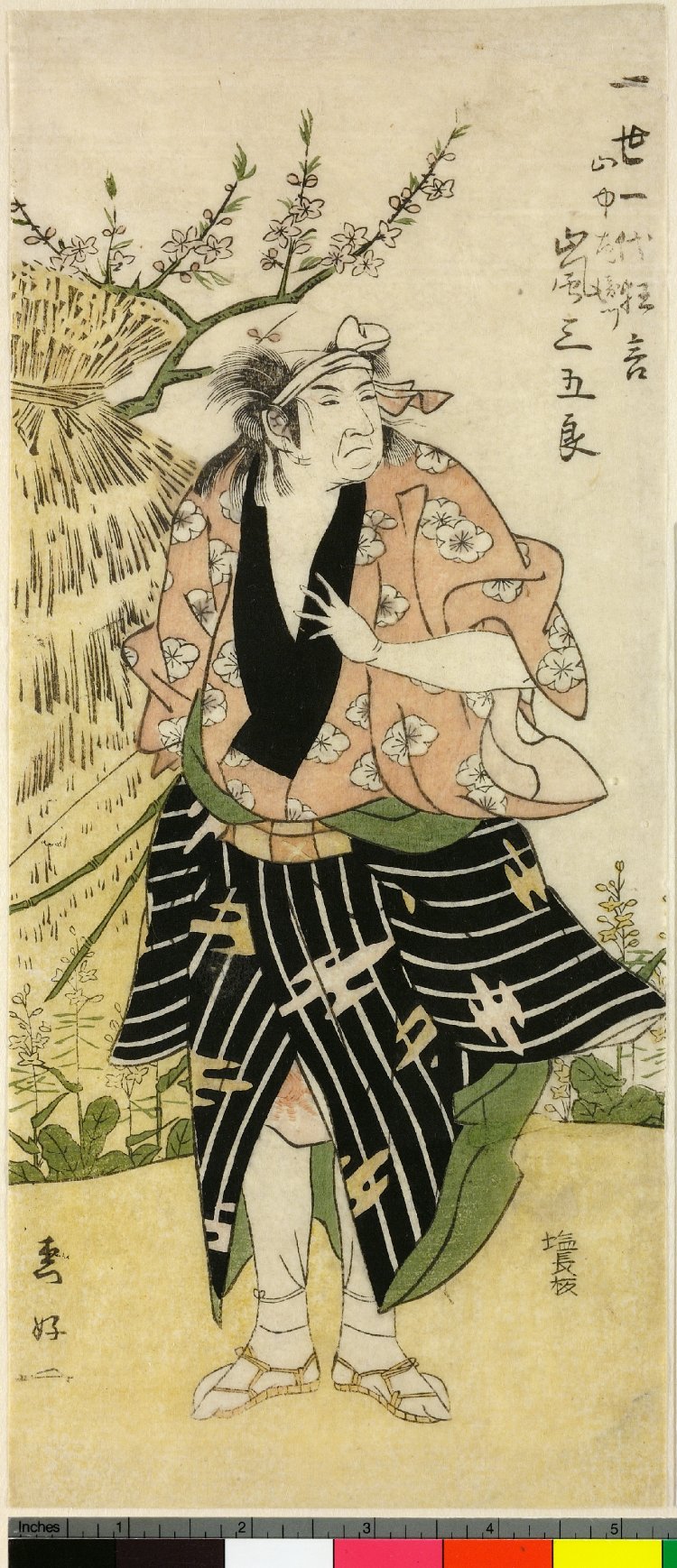
Portrait of Arashi Sangorō II as Yamanaka Saemon
1798 (third month)
Colour woodblock print
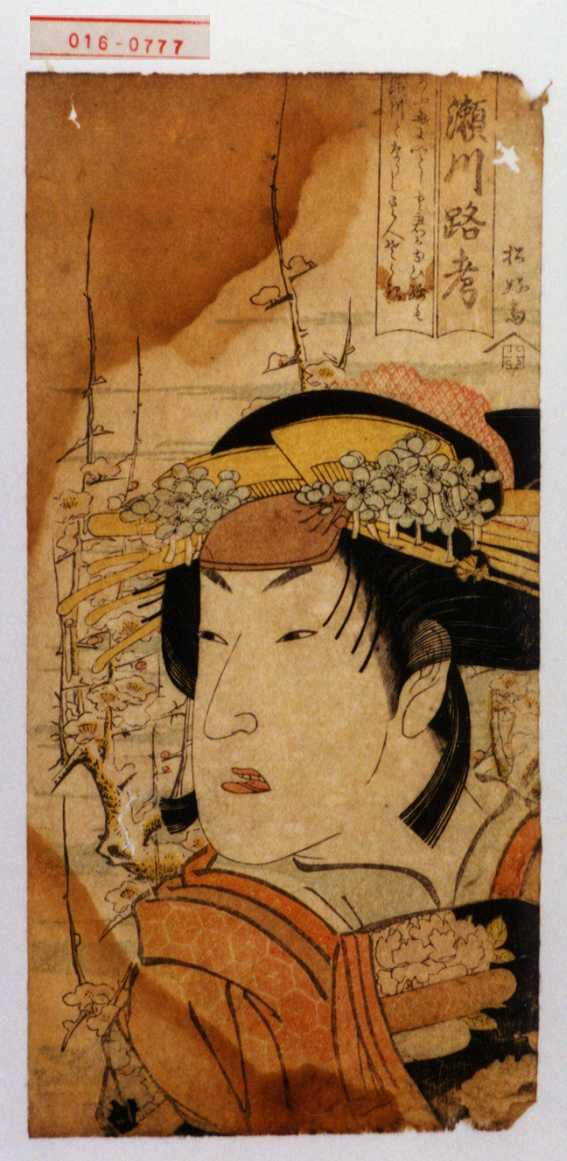
Segawa Rokō (Segawa Kikunojō III)
「瀬川路考」
1801
Colour woodblock print
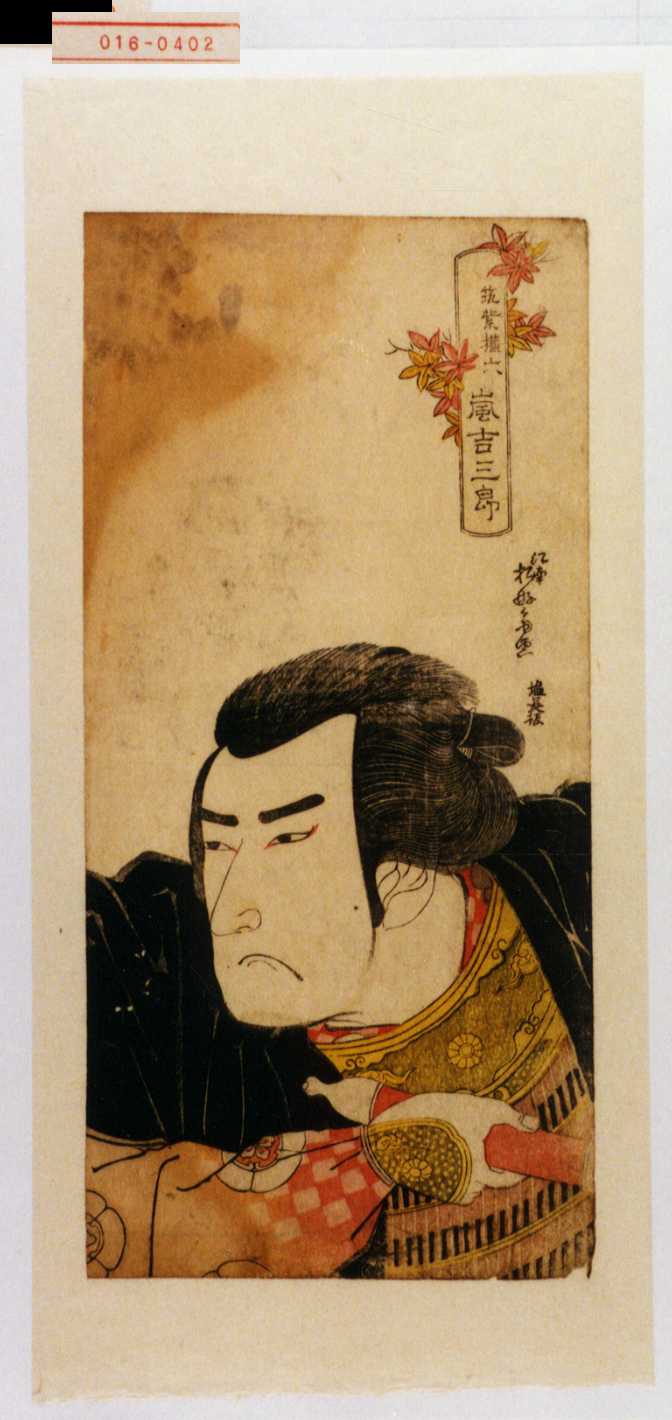
Tsukushi no Gonroku, Arashi Kichisaburō
「筑紫権六 嵐吉三郎」
1804
Colour woodblock print
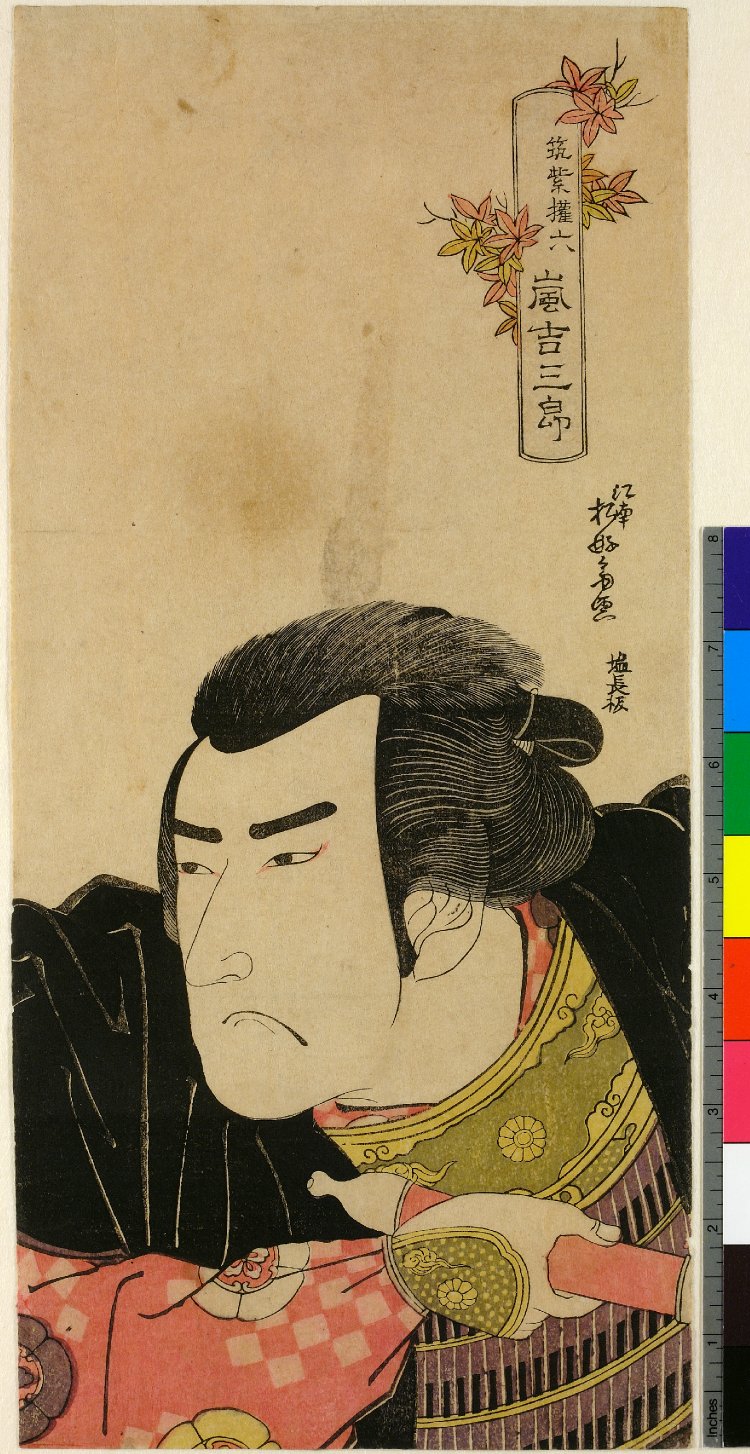
Arashi Kichisaburō II as Tsukushi no Gonroku (from Keisei hako denju)
1804 (first month)
Colour woodblock print
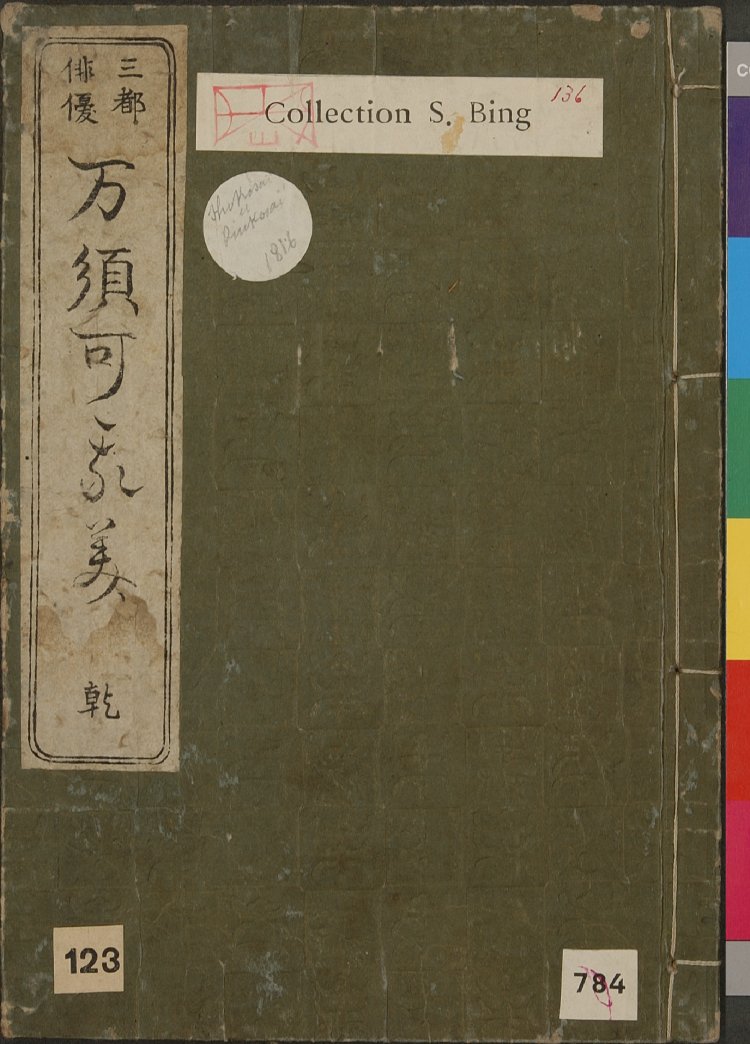
Santō yakusha masukagami (A Clear Mirror of Actors of the Three Cities)
三都俳優ますかゞみ
1806
Colour woodblock-printed illustrated book, two volumes
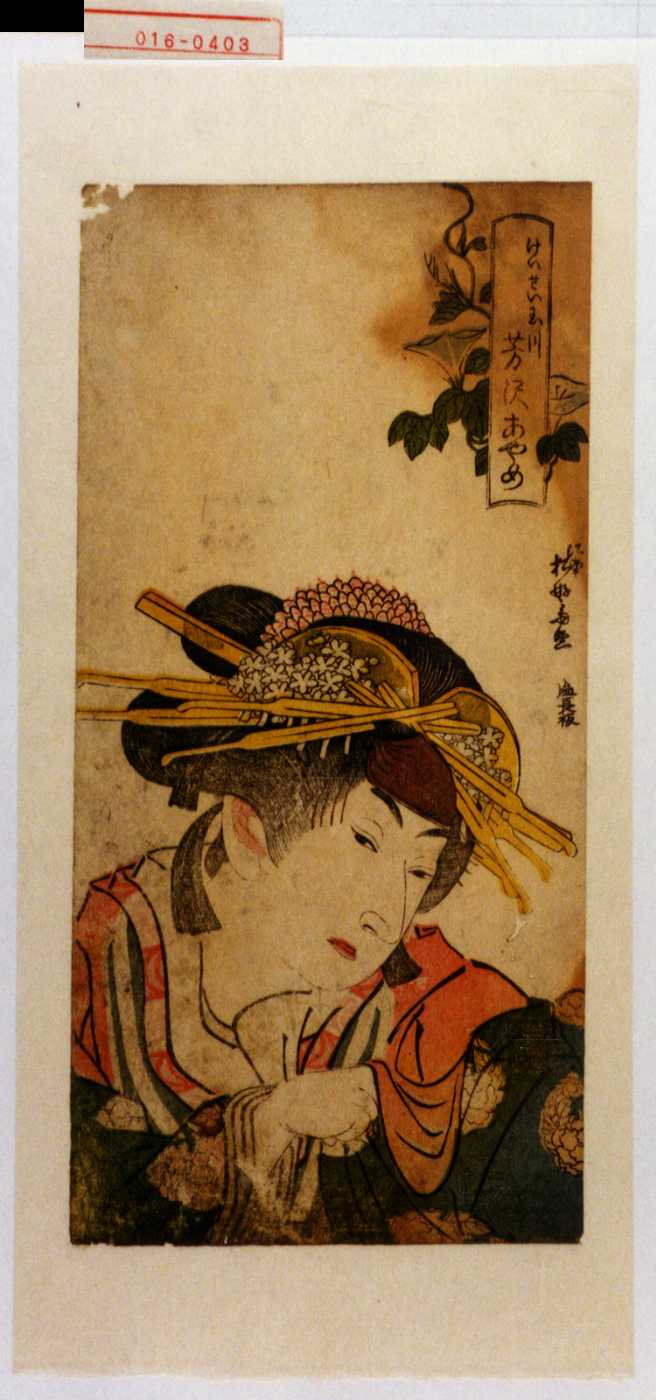
Keisei Tamagawa, Yoshizawa Ayame
「けいせい玉川 芳沢あやめ」
1808
Colour woodblock print
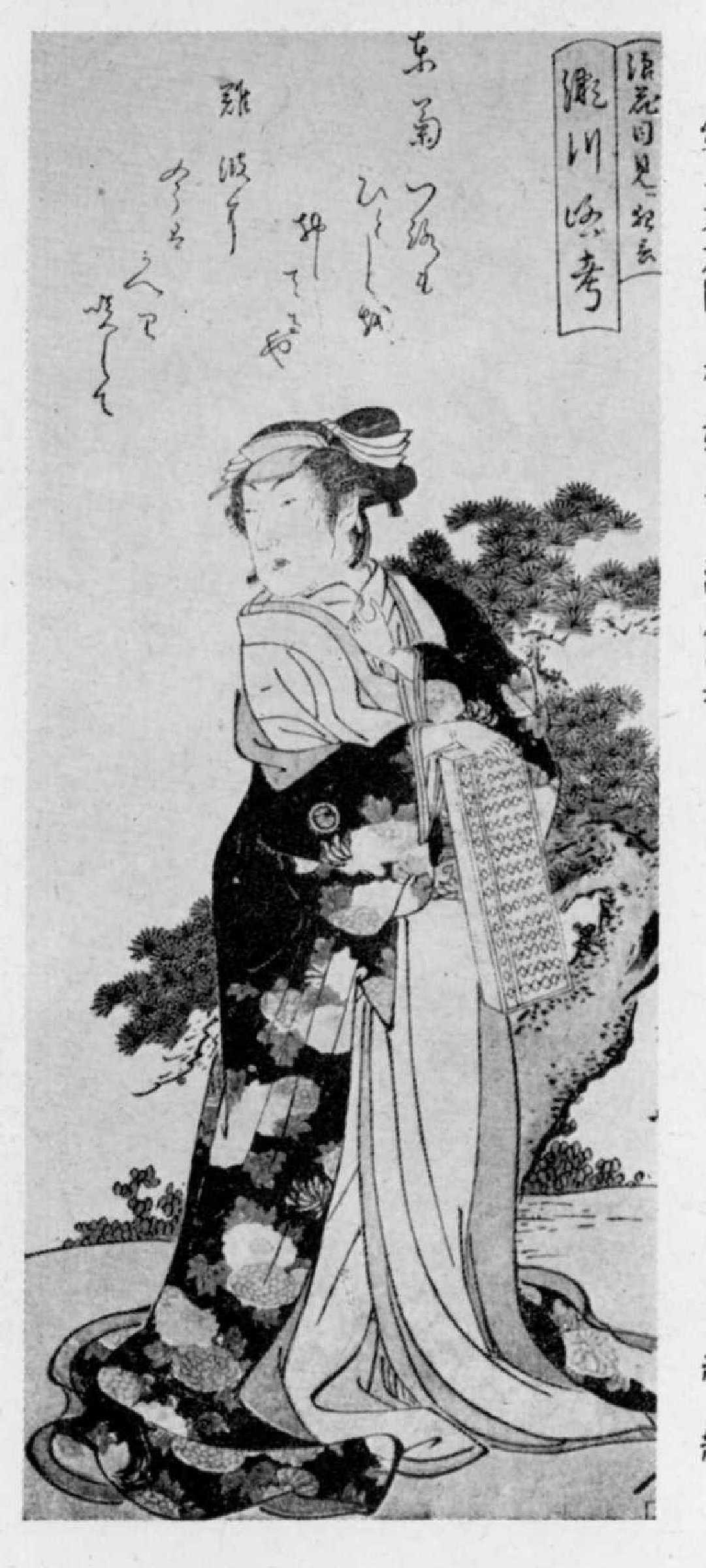
Segawa Rokō (Segawa Kikunojō III)
「瀬川路光」
c. 1795-1809
Colour woodblock print
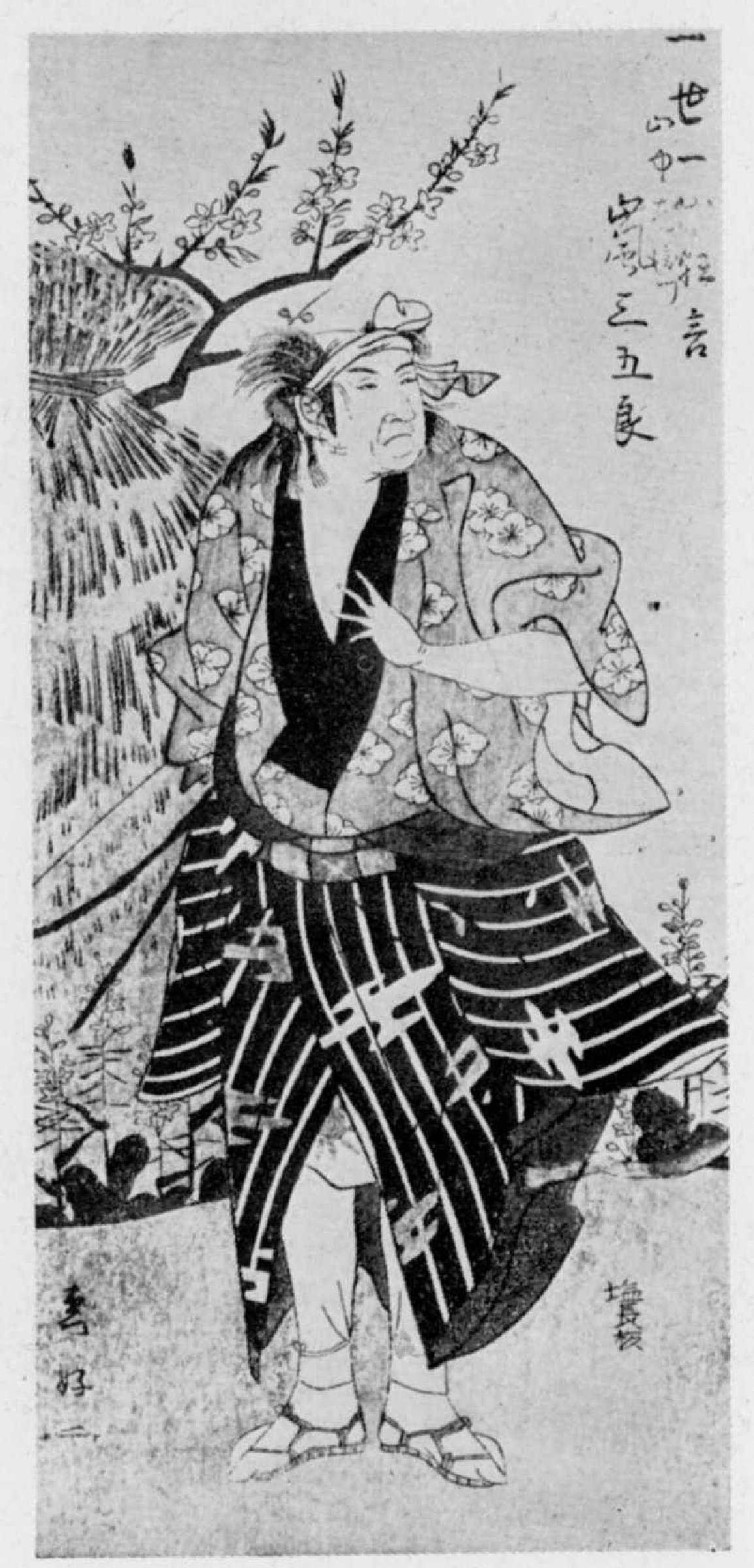
Arashi Sangorō as Shinjū Saemon
「嵐三五郎 心中左衛門」
c. 1795-1809
Colour woodblock print
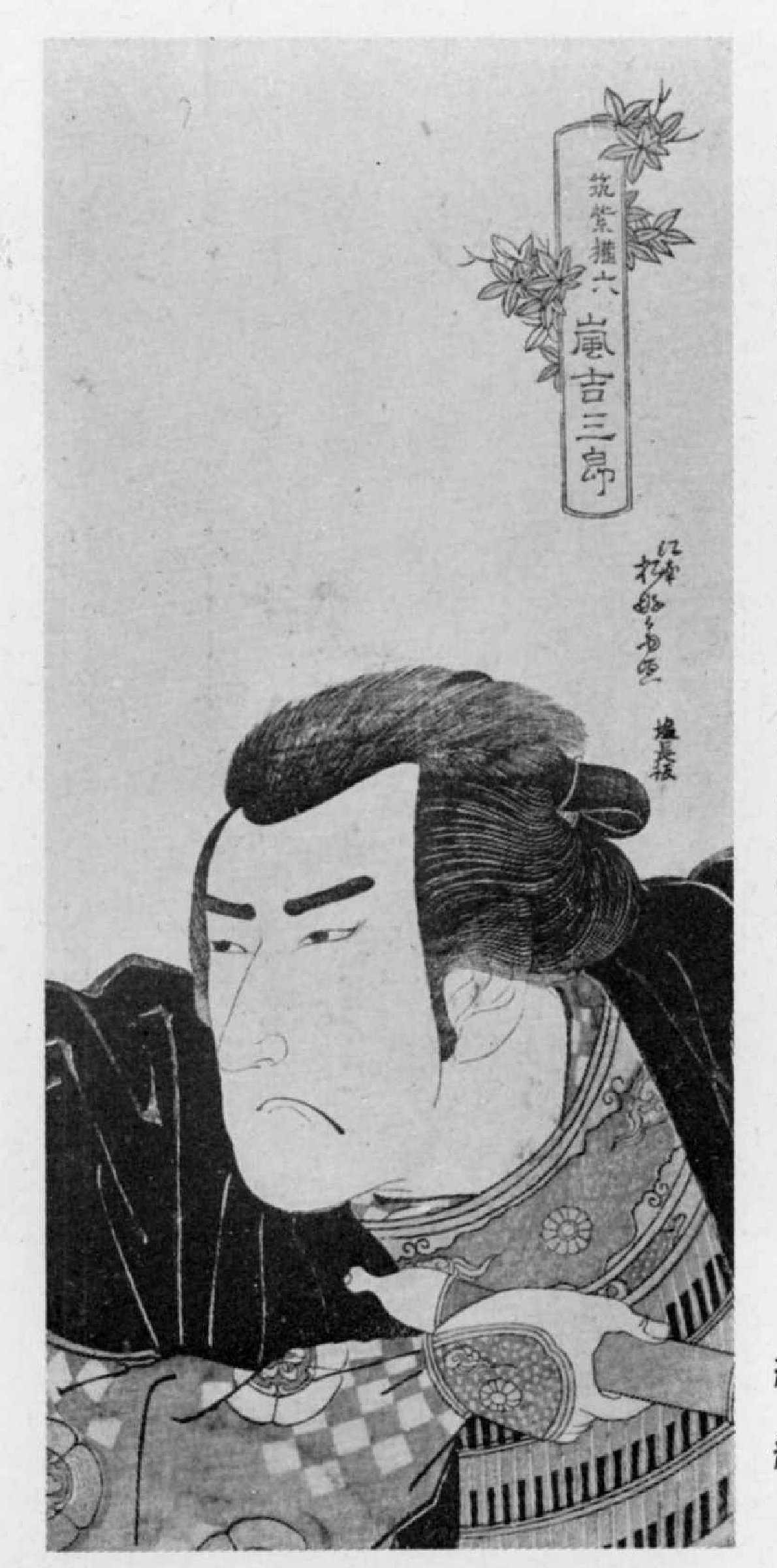
Arashi Kichisaburō as Tsukushi no Gonroku
「嵐吉三郎 筑紫権六」
c. 1800-1804
Colour woodblock print