Biography
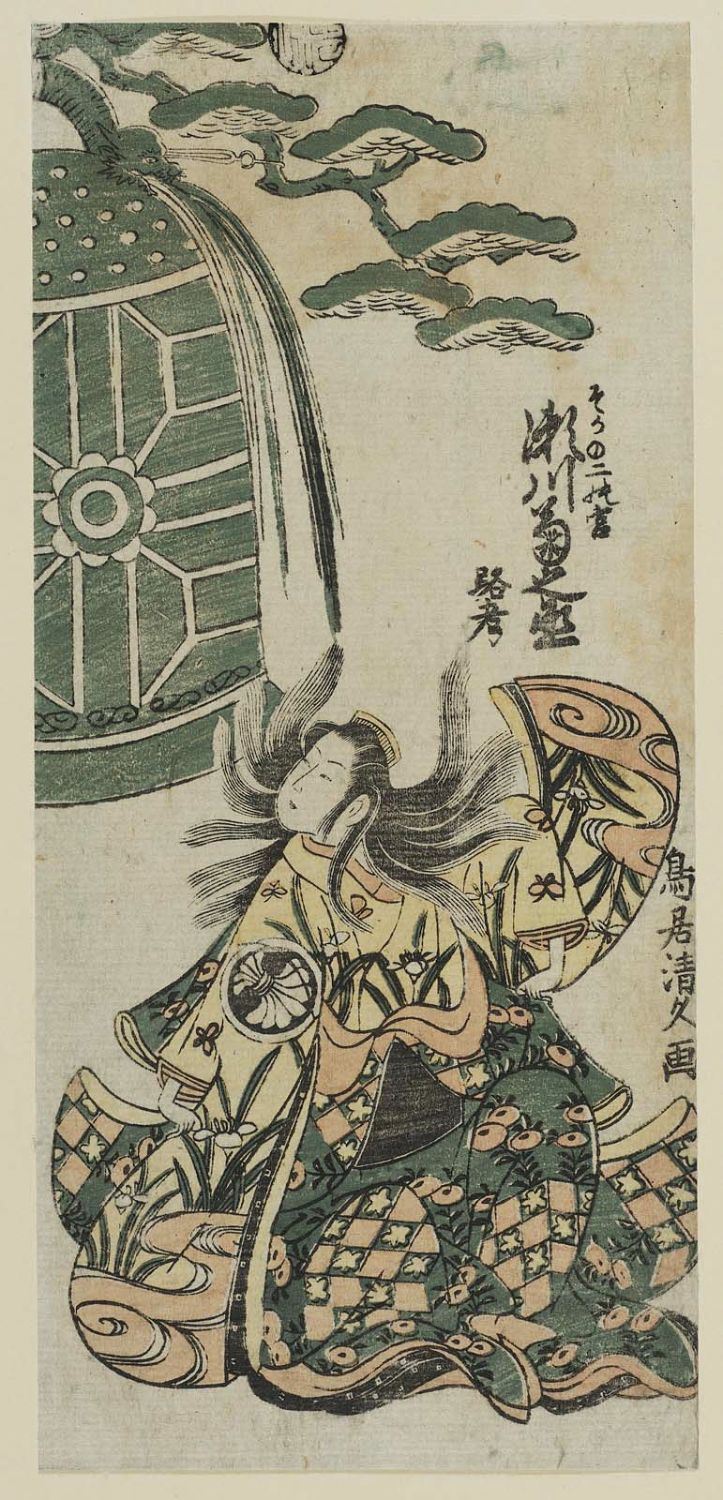
Torii Kiyohisa (鳥居清久, active c. 1751-1771) was a minor pupil of the Torii school in mid-eighteenth-century Edo, working in the immediate orbit of his teacher Torii Kiyomitsu I (1735-1785), the third head of the school. His exact birth and death dates are not recorded in the surviving documentation, and his career left far fewer traces than those of his more prominent fellow pupils - a typical fate for the workshop assistants and second-rank designers who supplied the Torii atelier's prodigious output of kabuki publicity material during the years immediately surrounding the introduction of full-colour nishiki-e printing around 1765.
What is recorded of Kiyohisa places him in Nihonbashi Komatsuchō, the central commercial district of Edo, and dates his activity to the Hōreki (1751-1764) and Meiwa (1764-1772) eras. Like nearly every artist of the Torii lineage, his surviving work is dominated by the school's defining genre - yakusha-e (actor pictures) of the Edo kabuki stage - and is concentrated in the benizuri-e (rose-print) palette of two- or three-colour registration over a black key block that defined Edo woodblock printing in the years before Suzuki Harunobu's nishiki-e revolution of the mid-1760s. The Torii school under Kiyomitsu's leadership held the exclusive contract to design billboards, illustrated programs, and single-sheet publicity prints for the three licensed Edo theatres - the Nakamura-za, Ichimura-za, and Morita-za - and pupils such as Kiyohisa would have worked alongside the head designer on the workshop's continuous flow of theatrical commissions.
The surviving record of Kiyohisa's work, fragmentary as it is, identifies several distinctive contributions beyond the standard hosoban single-actor portraits that constituted the school's core production. He designed perspective stage views (shibai-uki-e) - a sub-genre that adapted the European one-point perspective acquired by Edo artists from imported optical prints to the depiction of kabuki stage sets viewed from the audience's vantage point - and produced large-format perspective compositions of subjects such as the Eight Views of Ōmi (Ōmi hakkei). He also illustrated kuro-hon (black books) - the small popular fiction booklets that supplied a parallel market for Torii-school illustration alongside the more prestigious single-sheet prints - producing illustrations for titles including Otokodachi Sangokushi (1752) and Yamato Kasumi Sumi Mukashi (1762). Most strikingly for a Torii-school pupil of this period, Kiyohisa designed fan-shaped half-length actor portraits (sensumen yakusha-e), a format that scholars have noted bears a close compositional relationship to the early fan paintings of the Katsukawa school - the Katsukawa Shunshō atelier that would, in the decades following Kiyohisa's brief documented career, take over the dominant position in Edo yakusha-e from the Torii school.
Kiyohisa's documented activity is confined to the Hōreki and Meiwa eras, and no works under his signature are recorded thereafter. Whether he died young, abandoned the woodblock trade, or simply stopped signing his work is unknown. His surviving prints, scattered across a handful of major collections, are valued by scholars of mid-Edo theatrical print culture as small but characteristic examples of the second-rank Torii-school production that filled out the Edo kabuki publicity market during the technological and stylistic transition from benizuri-e to full polychrome nishiki-e.
Key Facts
- Nationality
- 🇯🇵Japan
- Movement
- Ukiyo-e
- Works Indexed
- 1
Frequently Asked Questions
Torii Kiyohisa (鳥居清久, active c. 1751-1771) was a minor pupil of the Torii school in mid-eighteenth-century Edo, working in the immediate orbit of his teacher Torii Kiyomitsu I (1735-1785), the third head of the school. His exact birth and death dates are not recorded in the surviving documentation, and his career left far fewer traces than those of his more prominent fellow pupils - a typical fate for the workshop assistants and second-rank designers who supplied the Torii atelier's prodigious output of kabuki publicity material during the years immediately surrounding the introduction of full-colour nishiki-e printing around 1765.
Torii Kiyohisa's work was shaped by the Ukiyo-e tradition in Japanese woodblock printmaking. Ukiyo-e: ## What is ukiyo-e? Ukiyo-e ([浮世絵](/glossary/ukiyo-e)) — literally "pictures of the floating world" — is the Edo-period Japanese print and painting tradition that flourished from roughly 1660 to 1868, depicting the pleasures of urban life in Edo (modern Tokyo): courtesans, kabuki actors, sumo wrestlers, famous landscapes, and seasonal beauties.
Original prints by Torii Kiyohisa can be found in collections including Museum of Fine Arts, Boston.