
Biography
Uemura Shoen (上村松園, 1875–1949) was one of the greatest female painters in the history of Japanese art and a foremost master of bijin-ga (beautiful women pictures) in the nihonga tradition. Though she worked primarily as a painter rather than a printmaker, her refined and psychologically penetrating images of women profoundly influenced the aesthetic of bijin-ga across all media, including the shin-hanga woodblock prints that drew on the visual language she helped define. In 1948, she became the first woman to receive Japan's Order of Culture, the nation's highest cultural honor.
Born Uemura Tsune on April 23, 1875, in Kyoto, Shoen grew up in modest circumstances. Her father, a tea merchant, died two months before her birth, and she was raised by her mother, Nakako, who ran the family tea shop. Nakako's unwavering support of her daughter's artistic ambitions — at a time when it was virtually unheard of for a woman to pursue a career as a professional painter — was a formative influence that Shoen acknowledged throughout her life. She gave that devotion lasting form in 'Mother and Child' (Boshi, 1934), painted in the year of Nakako's death and among her most celebrated works: a tender image, now an Important Cultural Property, suffused with longing for the mother who had made her career possible.
Shoen entered the Kyoto Prefectural Painting School at the age of twelve, studying under Suzuki Shonen, from whom she took her art name. She subsequently studied with Kono Bairei, one of the leading Kyoto painters of the Meiji era, and later with Takeuchi Seiho, who introduced her to broader artistic horizons through his own engagement with Western painting and Chinese art. This progressive education, rooted in the classical traditions of the Kyoto painting schools but open to new influences, gave Shoen a technical foundation of extraordinary depth and refinement.
Shoen's breakthrough came in 1890, when she was just fifteen years old. Her painting was selected for exhibition at the Third National Industrial Exposition and was purchased by Prince Arthur, Duke of Connaught, who was visiting Japan — an extraordinary achievement for a teenage girl in Meiji-era Japan. This early success launched a career of continuous distinction: Shoen exhibited regularly at the most prestigious venues, winning prizes and recognition that placed her at the forefront of the nihonga world despite the enormous barriers faced by women in the Japanese art establishment.
Shoen devoted her career almost exclusively to bijin-ga, painting women from all periods of Japanese history with an intimacy and psychological depth that transcended the decorative conventions of the genre. Her subjects ranged from Heian-period court ladies and medieval heroines to Edo-period townswomen and contemporary beauties, each rendered with meticulous attention to the textures and patterns of kimono fabrics, the styling of hair, and the subtleties of posture and gesture that convey character and emotion.
Among her most celebrated works is 'Flame' (Honoo, 1918), a disturbing and powerful painting depicting Lady Rokujo, the jealous noblewoman from 'The Tale of Genji,' whose rage transforms her into a vengeful spirit. The painting shows a beautiful woman biting a strand of her own hair in an expression of barely suppressed fury, her elegance masking an inner violence that is all the more disturbing for its restraint. 'Flame' represents a departure from the conventional beauty and serenity of bijin-ga, revealing the darker emotional currents that Shoen was willing to explore beneath the surface of feminine grace.
Other major works include 'Jo-no-mai' (1936), depicting a woman performing a stately Noh dance with exquisite poise — celebrated as the first painting by a Japanese woman to be designated an Important Cultural Property; 'Late Autumn' (Banshu), a contemplative portrait of a mature woman in autumn; and 'Evening' (Yugure), showing a woman quietly sewing at dusk. Throughout these works, Shoen's brushwork is characterized by its extraordinary refinement — her line drawing (sen-byo) is considered among the finest in twentieth-century nihonga, with each stroke possessing both precision and expressive vitality.
Shoen faced significant personal and professional challenges as a woman in the male-dominated Japanese art world. She never married but bore a son, Uemura Shoko, who became a distinguished nihonga painter in his own right. The social stigma of being an unmarried mother in Meiji- and Taisho-era Japan added to the difficulties she faced, yet she persisted in her artistic career with remarkable determination. Her experiences of prejudice and perseverance informed the emotional depth of her portrayal of women, lending her bijin-ga a quality of understanding and empathy that distinguishes them from the more objectifying traditions of the genre.
While Shoen was primarily a painter working in mineral pigments and ink on silk, her influence on woodblock printmaking was substantial. The shin-hanga publishers and artists who produced bijin-ga prints in the 1920s and 1930s — including Ito Shinsui, Torii Kotondo, and Hashiguchi Goyo — worked within an aesthetic framework that Shoen had helped establish. Her emphasis on psychological presence, the beauty of textiles, and the dignity of her female subjects set a standard that the best shin-hanga bijin-ga strived to meet. Some of her paintings were also reproduced as woodblock prints, making her imagery more widely accessible.
Shoen received the Order of Culture in 1948, one year before her death on August 27, 1949, in Nara. She was seventy-four years old. The award recognized not only her artistic achievements but her significance as a pioneer for women in the Japanese arts. Her works are held in the most important Japanese collections: 'Flame' is in the Tokyo National Museum and 'Mother and Child' in the National Museum of Modern Art, Tokyo, while 'Jo-no-mai' belongs to the Tokyo University of the Arts. The Shohaku Art Museum in Nara, opened in 1994, is devoted to the art of Shoen, her son Uemura Shoko, and her grandson Uemura Atsushi. Her legacy endures as a definitive vision of feminine beauty and dignity in modern Japanese art.
Key Facts
- Active Period
- 1875–1949
- Nationality
- 🇯🇵Japan
- Movement
- Meiji/Taishō Prints
- Works Indexed
- 52
Frequently Asked Questions
Uemura Shoen (上村松園, 1875–1949) was one of the greatest female painters in the history of Japanese art and a foremost master of bijin-ga (beautiful women pictures) in the nihonga tradition. Though she worked primarily as a painter rather than a printmaker, her refined and psychologically penetrating images of women profoundly influenced the aesthetic of bijin-ga across all media, including the shin-hanga woodblock prints that drew on the visual language she helped define. In 1948, she became the first woman to receive Japan's Order of Culture, the nation's highest cultural honor.
Uemura Shoen was active from 1875 to 1949. They were associated with the Meiji/Taishō Prints movement.
Uemura Shoen's work was shaped by the Meiji/Taishō Prints tradition in Japanese woodblock printmaking. Meiji/Taishō Prints: Meiji and Taishō era prints (1868–1926) bridge the transition from traditional ukiyo-e to the modern shin-hanga and sosaku-hanga movements.
Uemura Shoen's prints frequently feature bijin-ga, figures, snow scenes, night scenes, nature, spring.
Original prints by Uemura Shoen can be found in collections including Ohmi Gallery, Japanese Art Open Database, ukiyo-e.org, Harvard Art Museums.
Series by Uemura Shoen
Woodblock Prints by Uemura Shoen (52)
The Snow Woman (Yuki Onna) in the play Yuki Onna Gomai Hagoita, from the book Dai Chikamatsu Zenshū
1922 (Taishō 11)
Woodblock print; ink, color and gold on paper
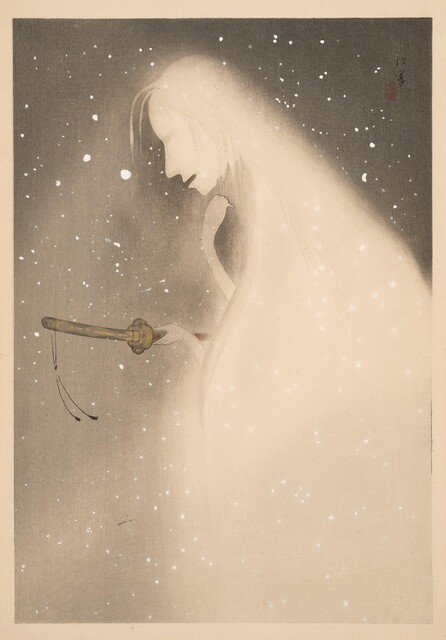
The Snow Woman (Yuki Onna)
1922
Woodblock print on paper
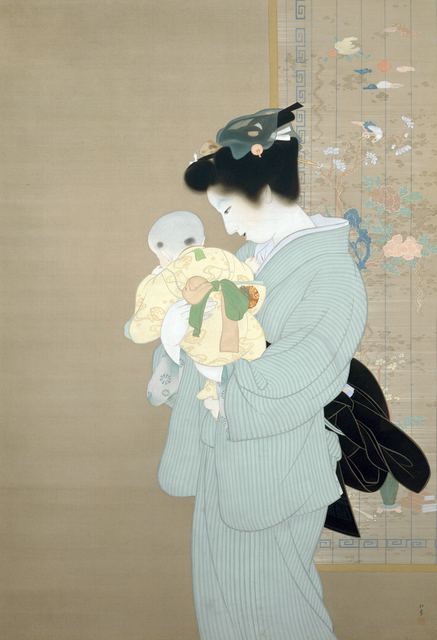
Mother and Child
1934
Color on silk, framed
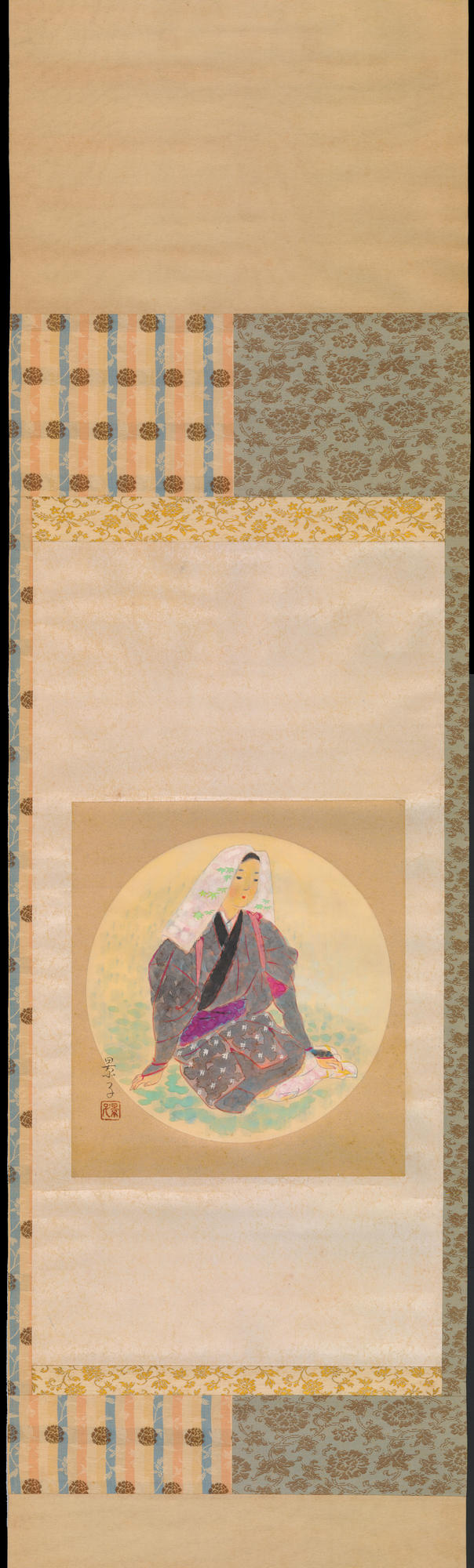
Oharame- female vendor (1)
Woodblock print

Snow — 雪
Woodblock print

(untitled)

Shower in late autumn — しぐれ
Woodblock print

Bijin Holding Candle (1)
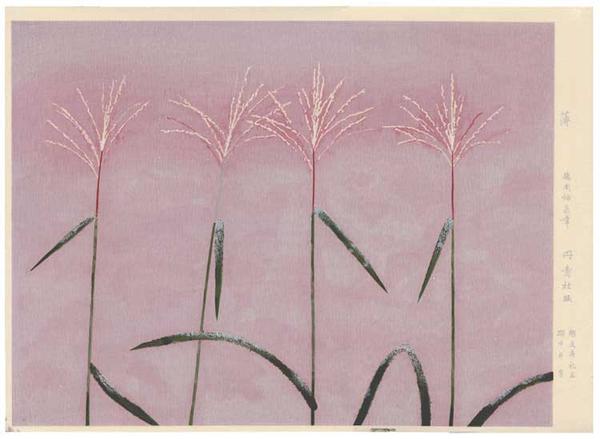
Tokuoka Shinsen (1896-1972)
Woodblock print
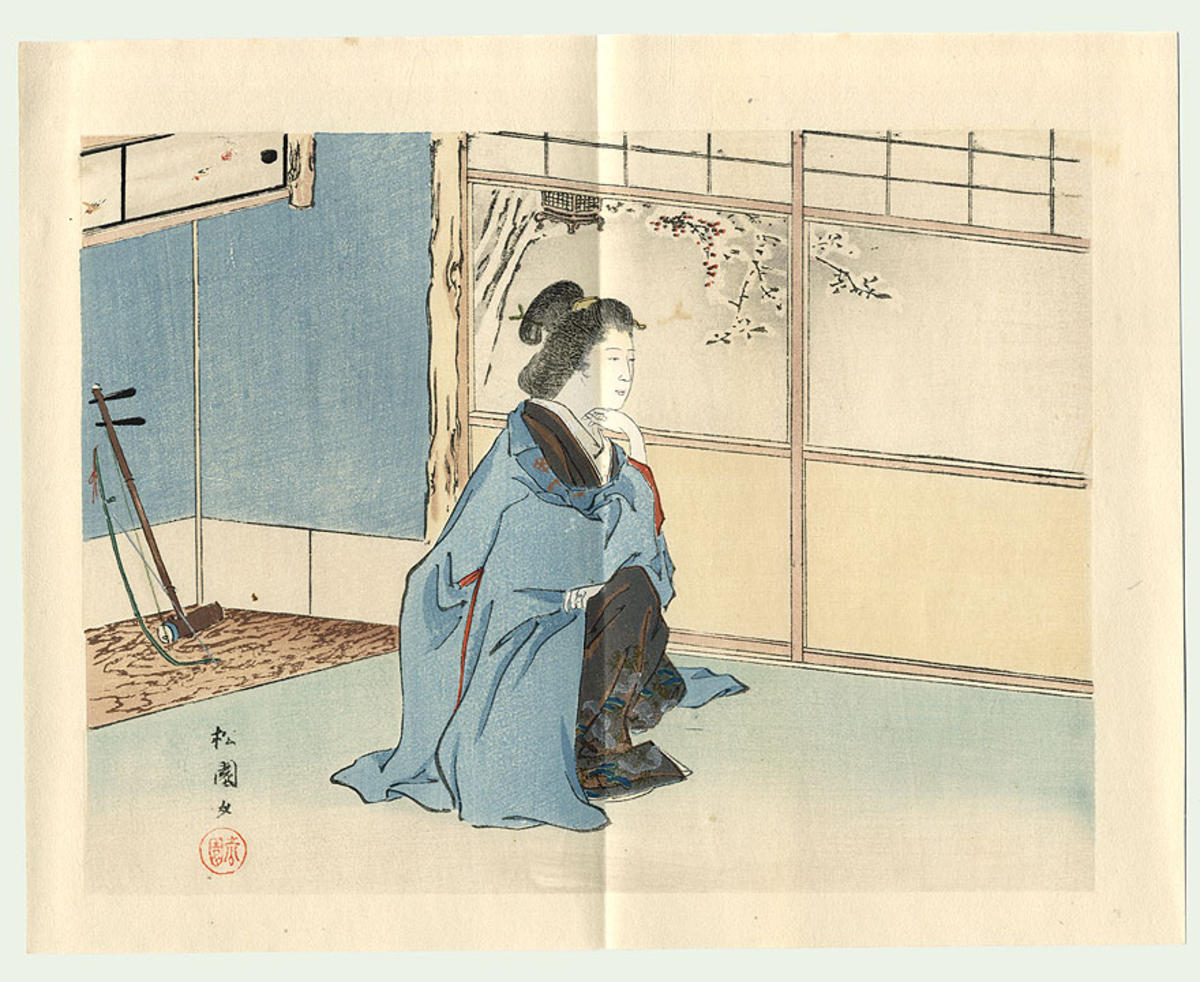
Bijin Contemplating
Woodblock print
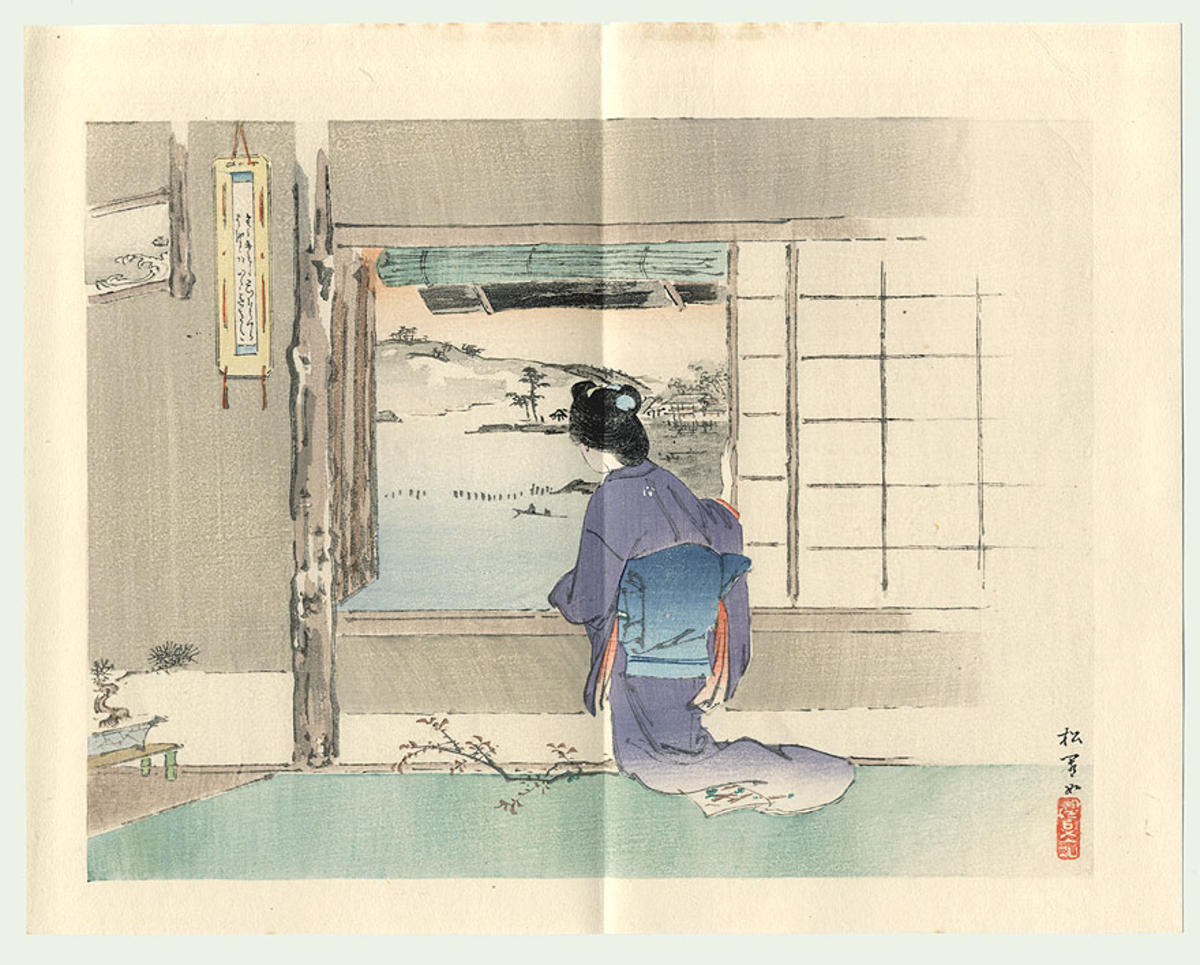
Bijin enjoying the view
Woodblock print
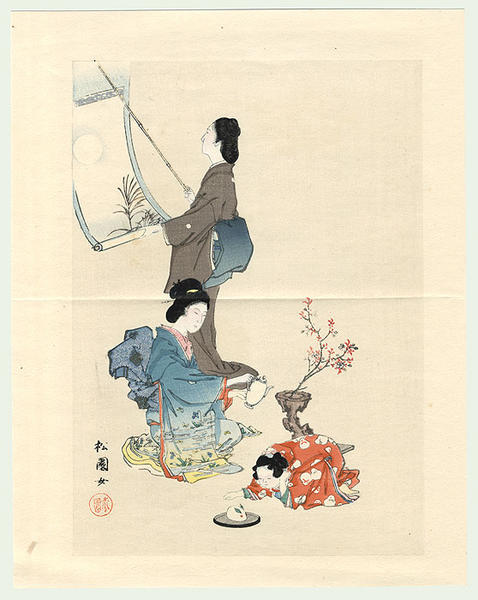
Bijin hanging a scroll
Woodblock print
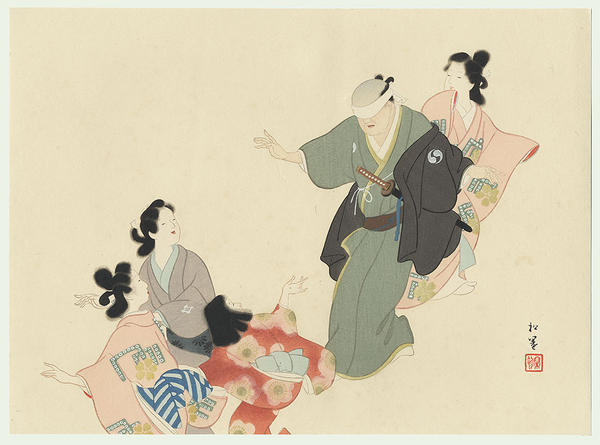
Blindfold Game
Woodblock print
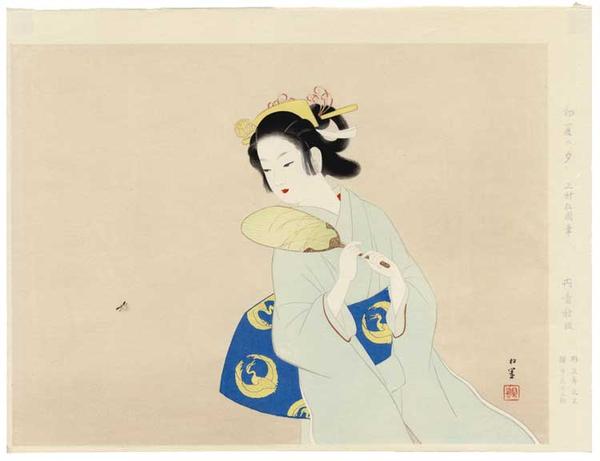
Early Summer Evening
Woodblock print
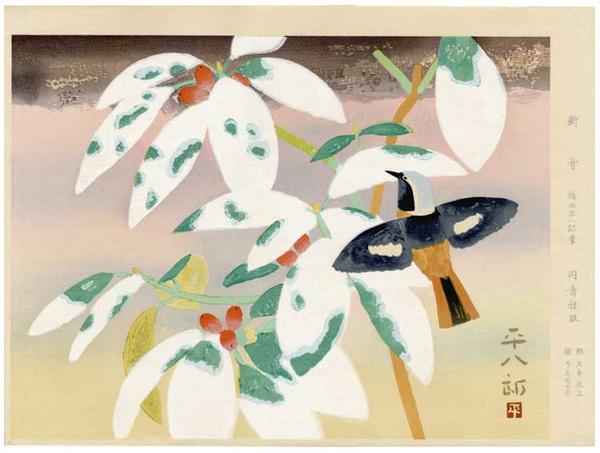
New Snow — 新雪
Woodblock print
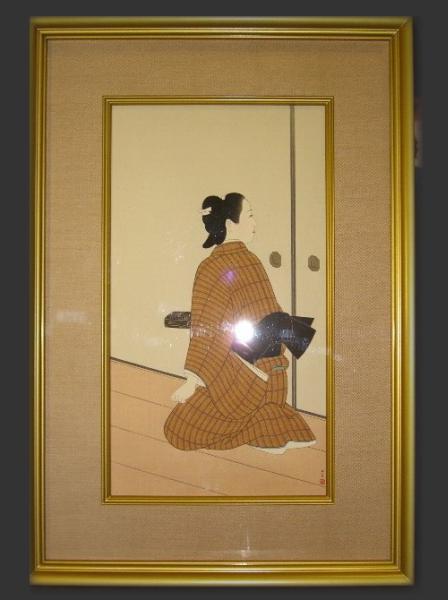
Kagamiyama Woman — 鏡山のはつ女
Woodblock print
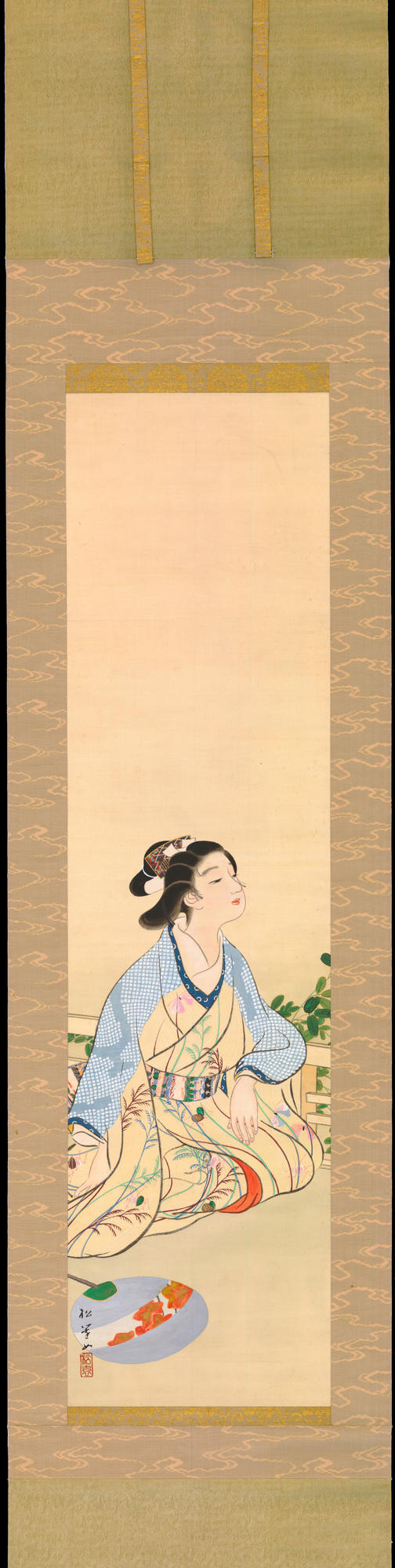
Summer Bijin (1)
Woodblock print

An Evening Shower
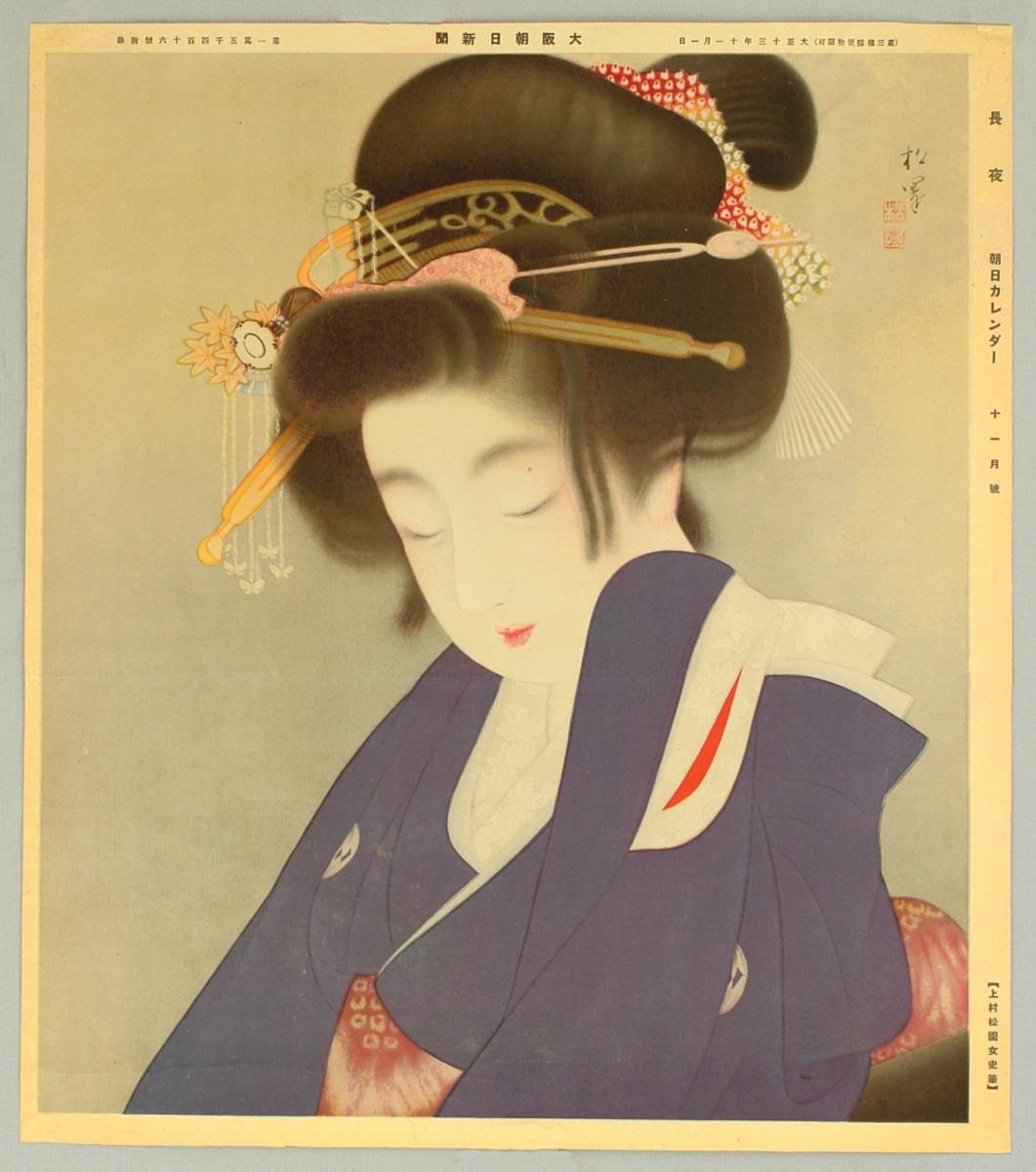
Long Night
Woodblock print
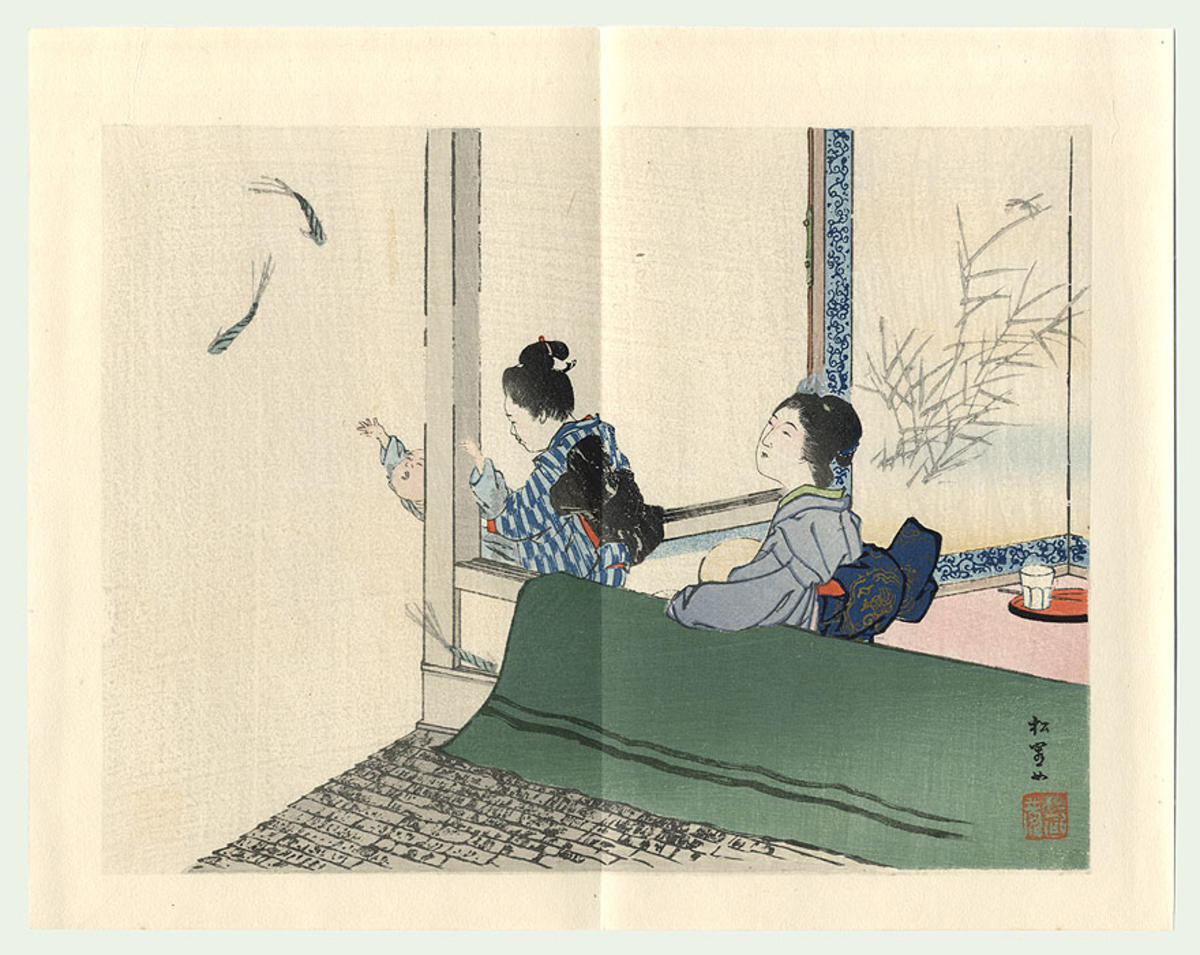
Two Bijin and Child
Woodblock print
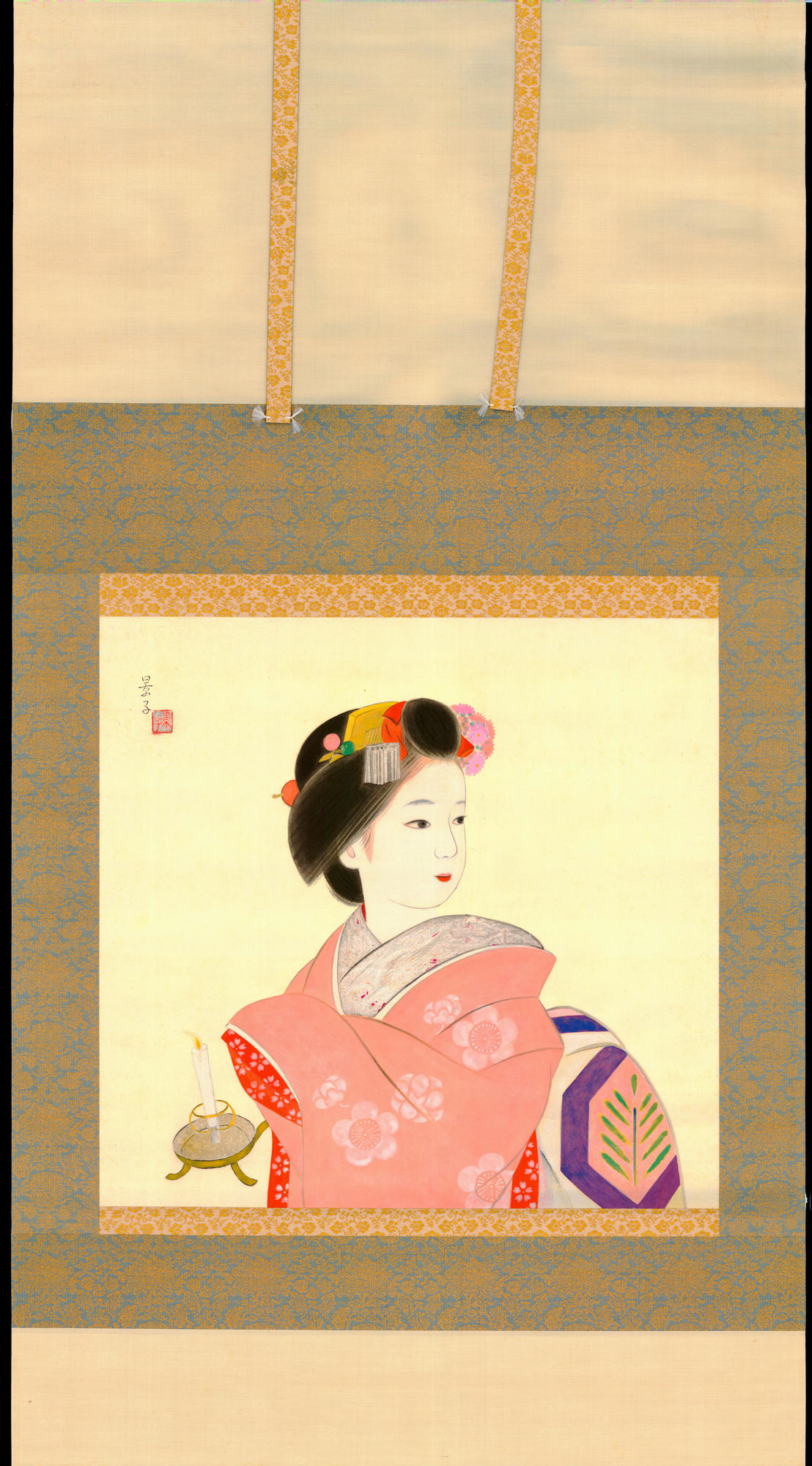
Yurimoto, Keiko
Woodblock print
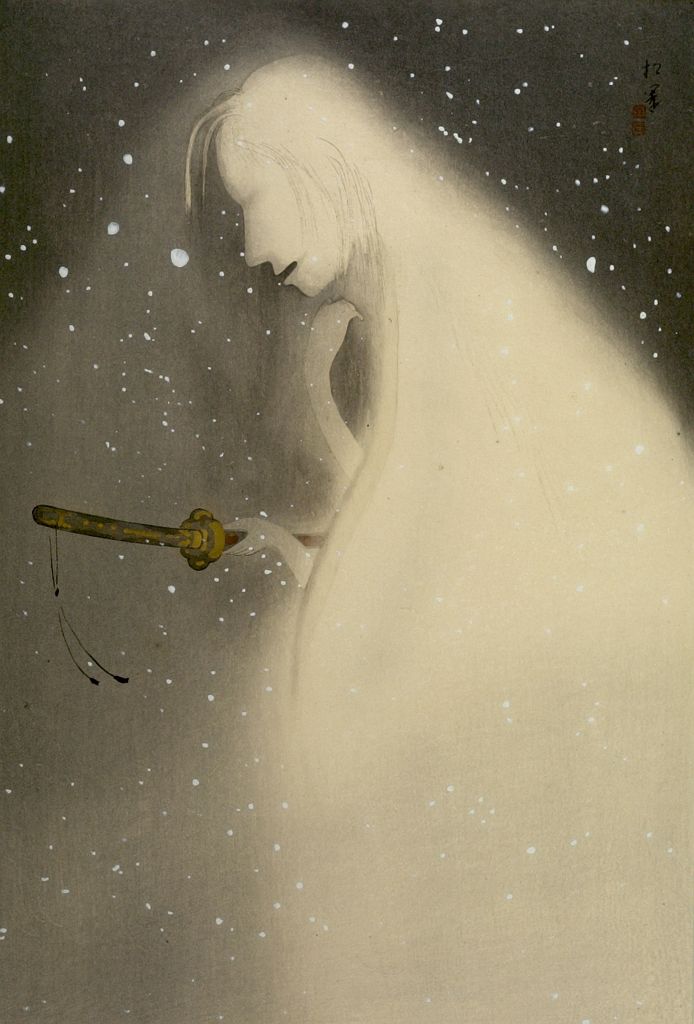
Uemura, Shoen
Woodblock print
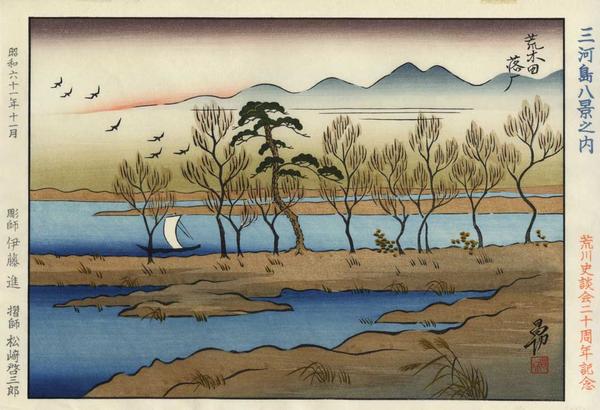
Arakida
Woodblock print
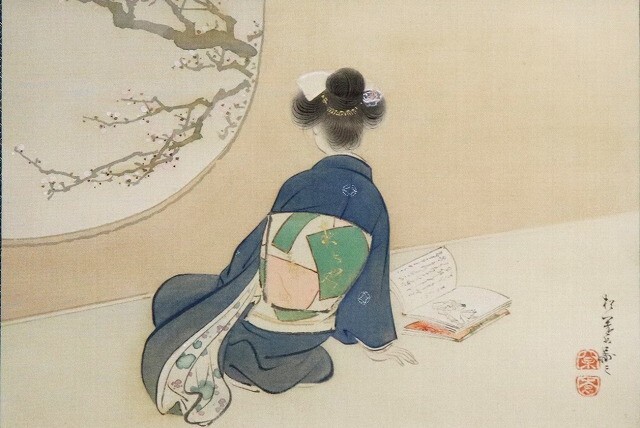
Early Plum Blossom
Nihonga (natural mineral pigments) on silk / Hanging Scroll